Discover the best meditation books backed by science and mindfulness teachers. From beginner guides to advanced techniques—find your perfect read here.
.webp)
The best meditation books combine practical techniques with scientific backing to help readers develop sustainable practices. Top picks include Jon Kabat-Zinn's 'Wherever You Go, There You Are' for mindfulness fundamentals, Dan Harris's '10% Happier' for skeptics, and Thich Nhat Hanh's 'The Miracle of Mindfulness' for everyday practice. For secular practitioners, books focusing on neuroscience and evidence-based methods provide measurable results without spiritual components.
Finding the right meditation book can transform a scattered practice into something sustainable and meaningful. But the shelves are packed with options—spiritual guides, scientific analyses, practical manuals, and everything in between.
The challenge? Not every book resonates with every reader. Some need secular, science-backed approaches. Others want spiritual depth. Many just want something that actually works.
According to the National Center for Complementary and Integrative Health (NCCIH), meditation has a history that goes back thousands of years, with various practices focusing on mind and body integration to calm the mind and enhance well-being. Research shows meditation techniques can help with conditions ranging from high blood pressure to anxiety and chronic pain.
Here's what matters when choosing a meditation book: practical application, evidence-based techniques, and an approach that matches your worldview. This guide cuts through the noise to highlight the books that mindfulness teachers and practitioners actually recommend—and why they work.
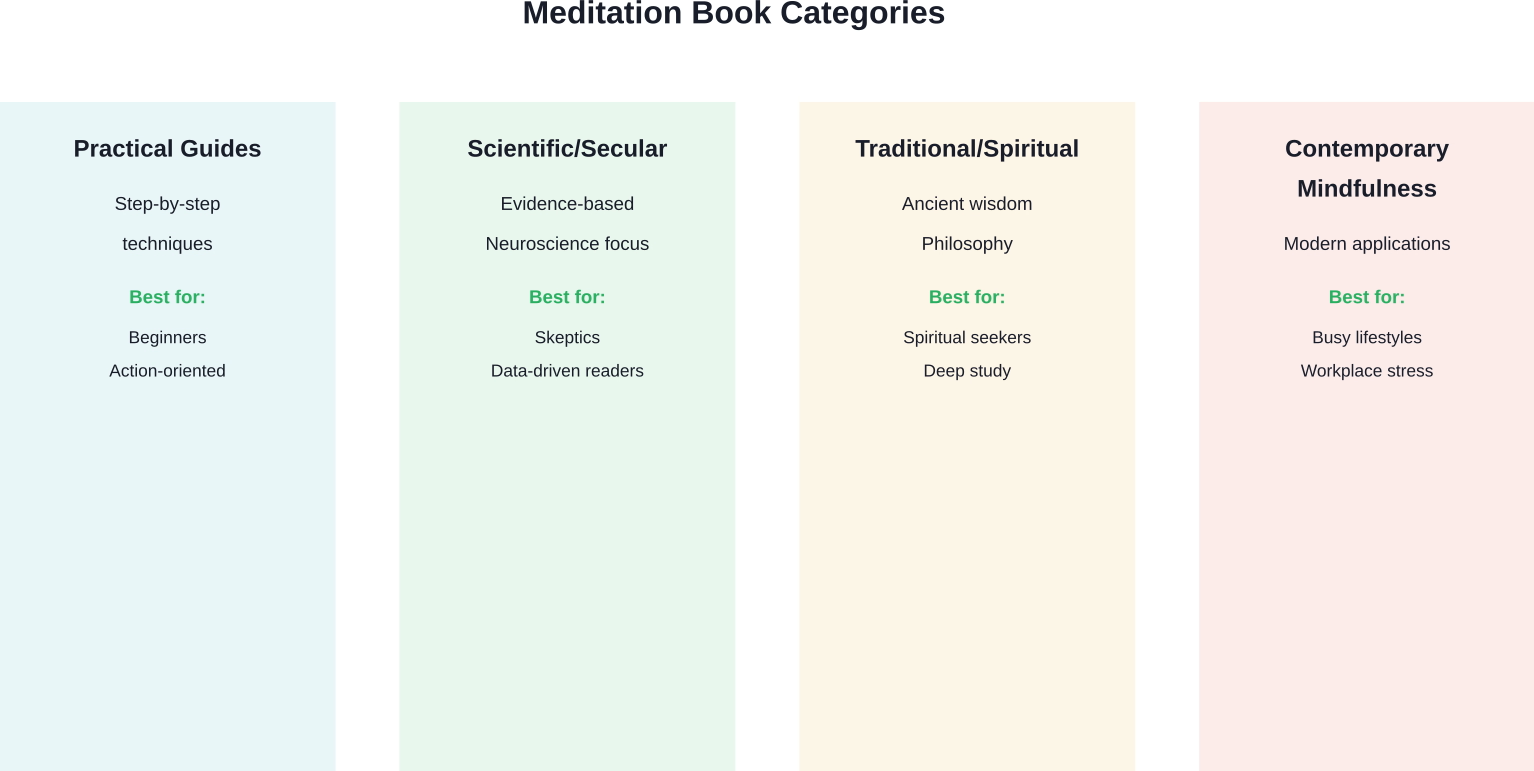
Not all meditation books serve the same purpose. Some teach specific techniques. Others explore philosophy. A few combine both.
The best choice depends on what brings someone to meditation in the first place.
These books focus on the how-to. Step-by-step instructions, troubleshooting common problems, and building a consistent practice.
They typically avoid heavy philosophy in favor of actionable methods. Perfect for beginners who want clear direction or experienced practitioners looking to refine their approach.
Most include guided exercises, timing recommendations, and progress markers. The emphasis stays on doing rather than discussing.
For those seeking evidence without spirituality, this category delivers.
These books cite neuroscience research, psychological studies, and measurable outcomes. They strip meditation down to its cognitive and physiological effects—what happens in the brain, how stress responses change, and why regular practice creates lasting benefits.
According to NCCIH research, mindfulness meditation evokes pain neural patterns, or signatures, in a way that differs from the placebo effect, demonstrating it is not acting through the placebo effect. A 2020 review examining 83 studies with 6,703 participants found that 55 studies reported negative experiences related to meditation practices, with researchers concluding that about 8 percent of participants had a negative effect—similar to other wellness interventions—highlighting the importance of proper technique.
This approach resonates with skeptics, atheists, and anyone who prefers data over doctrine.
These books root meditation in its historical and spiritual contexts. Buddhist teachings, Hindu philosophy, Taoist wisdom—traditions that developed these practices over centuries.
They often include ethical frameworks, cosmological perspectives, and meditation as part of a broader spiritual path. The techniques connect to larger questions about consciousness, purpose, and liberation.
Not everyone wants this depth. But for those who do, these texts provide richness that purely practical guides can't match.
A newer category blending ancient wisdom with modern life. These books adapt traditional practices for contemporary challenges—digital distraction, workplace stress, relationship dynamics.
Writers in this space often have backgrounds in both meditation traditions and modern psychology or neuroscience. They translate timeless principles into language and applications that fit current lifestyles.
Many focus on integrating brief practices into busy schedules rather than requiring hour-long sessions.
Certain titles appear repeatedly when mindfulness teachers and experienced practitioners discuss their recommendations. These books earned their reputations through practical effectiveness and accessibility.
Jon Kabat-Zinn brought mindfulness into mainstream Western medicine and psychology. This book distills his approach into accessible, everyday language.
The core message? Mindfulness isn't about achieving special states or escaping present reality. It's about fully inhabiting each moment, regardless of what that moment contains.
Kabat-Zinn explains meditation without requiring adherence to any religious tradition. The practices work whether someone seeks spiritual development or simply wants to reduce stress and improve focus.
Community discussions frequently cite this book as the starting point that made meditation feel approachable rather than esoteric. The writing style balances simplicity with depth—easy to understand but not superficial.
According to academic resources from the University of Kentucky, MBCT was developed by Oxford professor Mark Williams and his colleagues at the Universities of Cambridge and Toronto and colleagues at Cambridge and Toronto, building on Kabat-Zinn's foundational work. By investing just 10-20 minutes daily, practitioners can experience measurable benefits.
Dan Harris was a news anchor who had a panic attack on live television. His journey from skeptic to meditator makes this book particularly valuable for those resistant to meditation's perceived mysticism.
Harris approaches meditation with journalistic skepticism, asking hard questions and demanding evidence. The result is a narrative that validates doubts while demonstrating why meditation works despite initial resistance.
The title itself—10% Happier—sets realistic expectations. This isn't promising enlightenment or radical transformation. Just meaningful, measurable improvement in daily life.
The book works especially well for analytical types, professionals dealing with workplace stress, and anyone who finds traditional meditation books too ethereal or demanding of belief.
Thich Nhat Hanh, a Vietnamese Buddhist monk, writes with poetic simplicity about integrating mindfulness into ordinary activities. Washing dishes, walking, drinking tea—all become meditation practices.
This approach solves a common problem: finding time to meditate. When daily activities themselves become practice opportunities, the distinction between "meditation time" and "regular life" dissolves.
The book includes specific exercises but emphasizes attitude and awareness over technique. It's less about sitting perfectly still and more about bringing full attention to whatever's happening right now.
Many readers report this book fundamentally changed how they relate to routine tasks, transforming chores and transitions into sources of calm rather than obstacles to rush through.
Harris's follow-up to 10% Happier tackles the practical obstacles that prevent people from maintaining a meditation practice. The excuses, the difficulties, the reasons practices fall apart after initial enthusiasm.
The book documents a cross-country road trip with meditation teacher Jeff Warren, working with real people facing real barriers. It's less theoretical, more applied troubleshooting.
Each chapter addresses specific objections: "I don't have time," "My mind is too busy," "I can't sit still," "It's too boring." Then it provides concrete solutions rather than dismissive reassurances.
This practical focus makes it valuable even for experienced meditators who've established practices but face consistency challenges.
Pema Chödrön, an American Buddhist nun, writes about meditation during difficult times. Not as escape, but as a way to work directly with pain, fear, and uncertainty.
The book challenges the common assumption that meditation's purpose is feeling better or achieving peace. Instead, it frames practice as developing capacity to stay present with whatever arises—including discomfort.
This perspective helps when meditation doesn't produce expected results or when life circumstances make calmness seem impossible. The practice becomes about resilience and responsiveness rather than achieving particular states.
Many readers turn to this book during life transitions, losses, or crises when other meditation books feel disconnected from their reality.
Different life situations and goals call for different approaches. These selections address particular circumstances and objectives.
Starting meditation without guidance can feel confusing. Where to sit? How long? What to do when the mind wanders constantly?
Beginner-focused books provide clear instructions without assuming prior knowledge. They explain basics that experienced practitioners take for granted—posture, breath awareness, handling distraction.
"Mindfulness in Plain English" by Bhante Gunaratana offers straightforward instruction in accessible language. The title delivers on its promise: meditation explained clearly without jargon or complexity.
The book walks through common beginner experiences and problems, validating that yes, everyone's mind wanders constantly at first, and no, that doesn't mean someone's doing it wrong.
Secular meditation strips away religious context while retaining effective techniques. This approach acknowledges that meditation's benefits don't require belief in karma, rebirth, or enlightenment.
Books in this category emphasize psychological and neurological mechanisms. They reference studies showing changes in brain structure, stress hormone levels, and emotional regulation capacity.
"The Science of Meditation" by Daniel Goleman and Richard Davidson examines research evidence for meditation's effects. Both authors are scientists who've studied meditation extensively, combining insider understanding with academic rigor.
According to research from the National Center for Complementary and Integrative Health, mindfulness meditation activates different neural patterns than placebo effects when reducing pain, demonstrating specific neurological mechanisms rather than mere belief-based outcomes.
This evidence-based approach satisfies those who need scientific validation before investing time in a practice.
Meditation shows particular effectiveness for stress-related conditions. But not all meditation books address this application specifically.
The NCCIH notes that stress produces the "fight-or-flight" response—increased heart rate, breathing rate, blood pressure, muscle tension, and sweating. While occasional stress represents normal coping, chronic stress contributes to or worsens digestive disorders, cardiovascular problems, and mental health conditions.
"Full Catastrophe Living" by Jon Kabat-Zinn details the Mindfulness-Based Stress Reduction (MBSR) program developed at the University of Massachusetts Medical Center. The eight-week program has been studied extensively for stress, chronic pain, and anxiety.
The book provides the complete program in written form, allowing readers to work through it independently. It includes guided meditation instructions, body scan exercises, and gentle yoga movements.
Many healthcare providers recommend this book to patients dealing with chronic stress, pain conditions, or anxiety disorders as a complement to medical treatment.
While meditation often gets associated with relaxation, many practitioners seek it primarily for improved concentration and mental clarity.
Certain meditation styles emphasize sustained attention on a single object—breath, sound, or visual focus. These concentration practices build the mental muscle of maintaining focus despite distractions.
"The Mind Illuminated" by Culadasa (John Yates) provides a detailed, stage-by-stage training program for developing concentration. The approach combines traditional Buddhist meditation instruction with cognitive neuroscience.
The book maps a clear progression from beginner practices to advanced states, with specific techniques for each stage. It's systematic and comprehensive—almost a textbook for meditation training.
This appeals to goal-oriented practitioners who want measurable progress markers and structured development paths.
Not every popular meditation book delivers lasting value. Some criteria separate genuinely helpful books from forgettable ones.
The best meditation books don't just discuss meditation philosophically. They provide specific, repeatable instructions that readers can follow immediately.
Vague guidance like "be present" or "observe your thoughts" leaves beginners confused. Effective books specify: sit this way, breathe like this, when X happens do Y.
Detail matters. How long should sessions last for beginners? What posture works best? Where should attention focus during breath meditation—nostrils, chest, abdomen?
Books that answer these practical questions reduce the friction between reading about meditation and actually doing it.
Claims about meditation's benefits should connect to actual research, not just tradition or anecdote.
The most credible books cite studies, acknowledge limitations, and distinguish between well-supported benefits and speculative claims. They don't promise miracles or guarantee specific outcomes.
Research from NCCIH examining 83 studies with 6,703 participants found that 55 studies reported negative experiences related to meditation practices, with about 8 percent of participants experiencing negative effects. This rate is similar to other behavioral interventions, highlighting that meditation isn't universally positive for everyone.
Honest books acknowledge this reality. They discuss who might benefit most, who should approach cautiously, and what realistic expectations look like.
Every meditator encounters difficulties: restlessness, boredom, physical discomfort, emotional resistance, scheduling challenges.
Books that acknowledge these problems and offer solutions prove more valuable than those presenting meditation as effortlessly blissful. Real practice involves working through obstacles, not avoiding them.
The most helpful books normalize struggles, explain why they occur, and provide specific strategies for working with them. This troubleshooting guidance often determines whether someone maintains a practice or abandons it after a few frustrated attempts.
A book perfect for one reader might frustrate another. Effectiveness depends on alignment between the book's approach and the reader's needs.
Someone seeking spiritual depth won't find satisfaction in purely clinical neuroscience texts. Someone uncomfortable with religious frameworks will struggle with traditional Buddhist teachings.
The best book is the one that meets readers where they are—speaking their language, addressing their concerns, and offering approaches that fit their worldview and objectives.
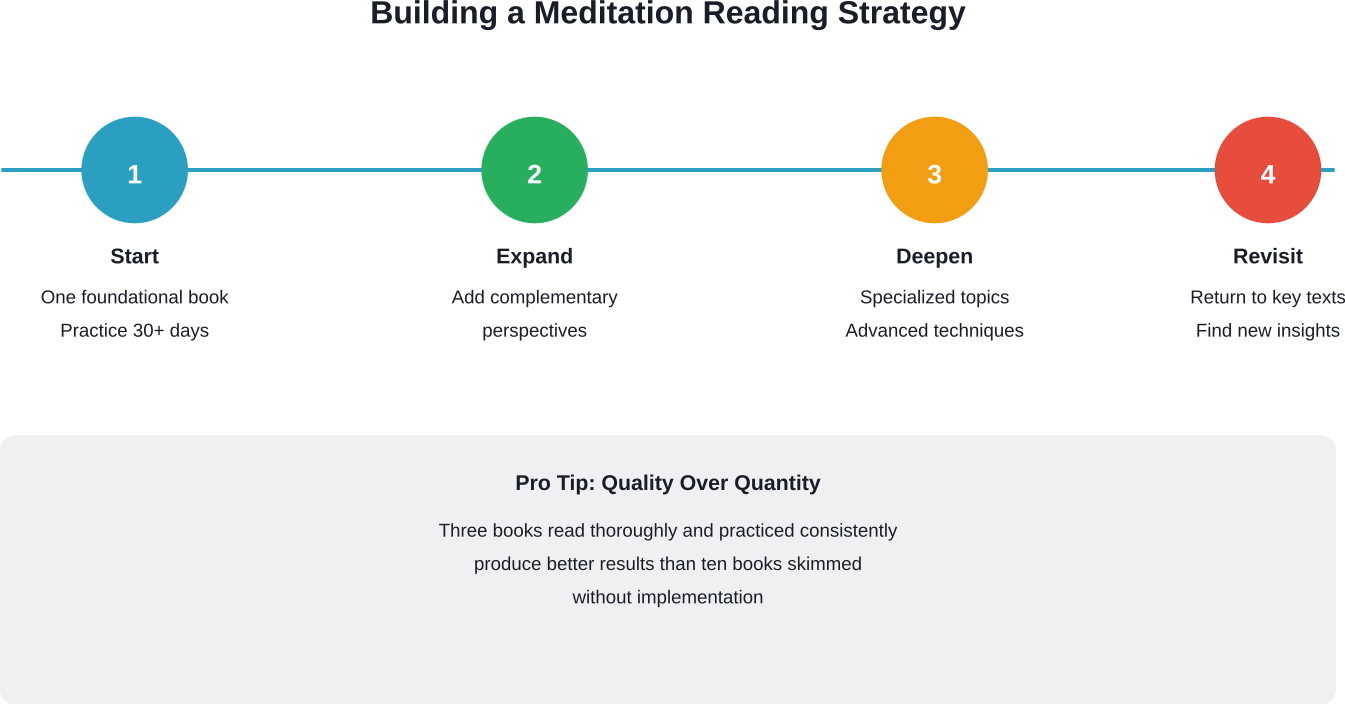
Rather than reading one book and stopping, building a small collection that addresses different aspects of practice creates a more comprehensive foundation.
Begin with a single book that matches current needs and background. Read it thoroughly, try the practices, and give them time to develop.
Jumping between multiple approaches simultaneously creates confusion. Each book presents a slightly different method or framework. Mixing them before understanding any single approach deeply often produces frustration.
Spend at least a month with one book's approach before adding others. This allows enough time to assess whether the method resonates and produces benefits.
After establishing basic practice, adding books with different angles enriches understanding. A scientific text might complement a more traditional one. A book focused on specific applications might build on general instruction.
These additional perspectives prevent practice from becoming stale or rigid. They introduce new techniques to try and different frameworks for understanding experience.
But timing matters. Adding too many perspectives too quickly can undermine rather than enhance practice.
Rereading important books at different stages of practice reveals new layers. Instructions that seemed simple or obvious initially take on deeper meaning with experience.
Many experienced practitioners report that books they read as beginners become far more valuable when revisited after years of practice. The words haven't changed, but capacity to understand them has.
Building a small personal library of particularly valuable books allows this kind of return and rediscovery.
Certain patterns lead people to books that don't serve their actual needs. Avoiding these pitfalls improves the chances of finding genuinely helpful resources.
Bestseller lists reflect what's selling, not necessarily what's most effective. Marketing budgets, celebrity endorsements, and trending topics drive sales independent of actual quality.
A book can be genuinely excellent and also popular. But popularity itself doesn't guarantee value. Some highly rated books present oversimplified approaches or make unsupported claims.
Better selection criteria include: recommendations from experienced practitioners, alignment with personal goals, and evidence-based approaches rather than promises of quick fixes.
No single book addresses every aspect of meditation perfectly. Each author brings particular strengths, perspectives, and limitations.
Waiting to find the one perfect comprehensive guide that covers everything delays actually starting practice. Better to begin with a good-enough book and refine from there.
Meditation develops through doing, not just reading. The book that inspires someone to actually practice consistently matters more than the theoretically ideal text that sits unread.
Reviews describe what worked for the reviewer—not necessarily what will work for someone else. A book praised as transformative by someone with religious background might alienate a secular reader.
Consider personal factors: comfort with spiritual language, preference for detail versus brevity, need for scientific validation, and specific goals driving interest in meditation.
A book that matches these factors produces better results than one objectively excellent but misaligned with individual needs.
The biggest mistake? Collecting meditation books without actually meditating. Reading about practice differs fundamentally from practicing.
Books provide maps and instructions. The actual territory requires direct experience. Knowledge about meditation techniques doesn't equal the benefits of doing those techniques.
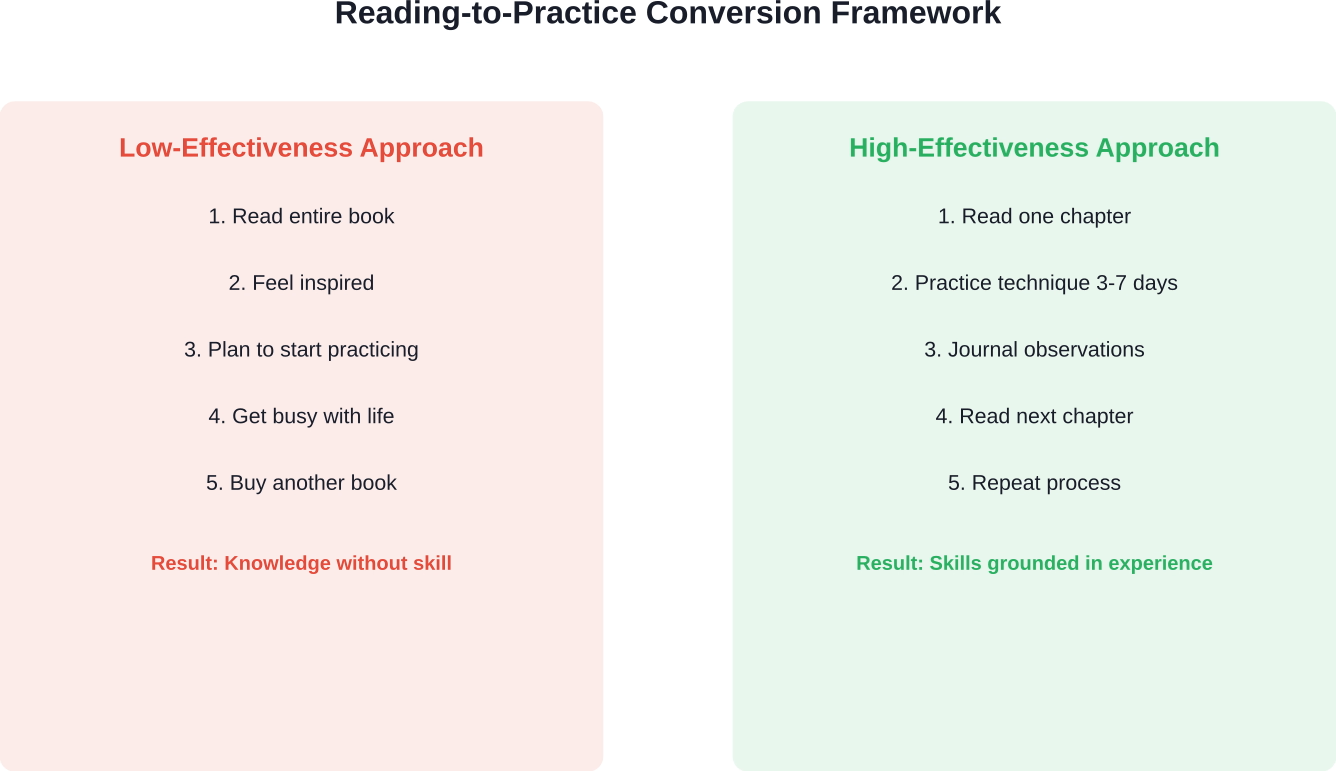
Set a simple rule: practice what each chapter describes before moving to the next. This transforms reading from passive consumption to active learning.
Experience level influences which books provide the most value at any given stage.
During initial practice, simple, clear instructions matter most. Philosophical depth or advanced techniques create overwhelm rather than inspiration.
Books for this stage should answer: How do I sit? Where do I focus attention? What do I do when my mind wanders? How long should I practice?
They should normalize beginner experiences—restlessness, skepticism, wondering if it's working. This validation prevents premature abandonment.
After establishing basic practice, practitioners often seek deeper understanding of what they're experiencing. Why does concentration vary from session to session? What's happening when strong emotions arise during meditation?
Books for this stage can introduce more nuanced concepts while remaining accessible. They might explore different meditation styles or applications to specific life areas.
This is when adding complementary perspectives becomes valuable rather than confusing.
Experienced practitioners often want specialized knowledge—advanced concentration techniques, working with difficult mind states, integrating practice with daily activities.
Books for this stage can assume foundational knowledge and focus on refinement. They might address subtle aspects of practice or explore connections between meditation and broader questions about consciousness and well-being.
This is also when revisiting foundational texts reveals layers that weren't accessible as a beginner.
Books aren't the only way to learn meditation. Understanding their strengths and limitations helps integrate them with other resources.
Meditation apps provide guided sessions, timers, progress tracking, and structured programs. They excel at making daily practice convenient and accessible.
Books offer deeper conceptual understanding and flexibility to adapt practices to individual needs. They explain the why behind techniques, not just the what.
The combination works well: use apps for guided practice while reading books for understanding and problem-solving when challenges arise.
Teachers provide personalized feedback, answer specific questions, and correct misunderstandings that books can't address individually.
Books make knowledge accessible regardless of location or budget. They allow learning at individual pace and revisiting information whenever needed.
Neither replaces the other entirely. Books provide foundational knowledge and ongoing reference. Teachers offer accountability, community, and tailored guidance.
Online courses combine video instruction, structured progressions, and sometimes community forums. They blend some advantages of books (self-paced learning) with some benefits of teaching (demonstration and guidance).
Books typically cost less and don't require internet connectivity or specific devices. They're portable, don't have completion deadlines, and can be referenced quickly.
Many practitioners use both: courses for initial learning and community connection, books as ongoing references and for exploring topics not covered in courses.

Many meditation books offer helpful techniques for building focus, reducing stress, and creating a consistent mindfulness routine. Reading about meditation can be a great starting point, but practicing regularly is what brings the real benefits.
Mesmerize helps turn meditation into a guided visual experience with slow animated patterns, breathing cues, relaxing sounds, and structured sessions designed for focus and relaxation.
The app includes:
If you want to move from reading about meditation to practicing it daily, try Mesmerize - available to download on the App Store or Google Play.
Certain reader characteristics influence which meditation books will resonate most effectively.
Those who need evidence and logic before accepting new practices require books that respect this perspective rather than demanding faith.
Scientific meditation books acknowledge doubts as reasonable, provide research support for claims, and avoid mystical language. They frame meditation in terms of cognitive training and stress physiology rather than spiritual development.
Authors with backgrounds in both meditation and science—neuroscientists, psychologists, physicians—often write most effectively for this audience. They understand both the practice and the need for empirical validation.
Time-constrained readers need books that respect demanding schedules rather than requiring hour-long daily sessions.
Effective books for this group focus on integrating brief practices into existing routines, emphasize efficiency, and address workplace-specific applications like managing meeting stress or improving decision-making.
They should acknowledge time limitations as reality rather than failure, then work within those constraints.
Meditation shows promise for various health issues, but not all books address medical applications appropriately.
Books focusing on health applications should cite research, acknowledge what meditation can and can't do, and emphasize working with healthcare providers rather than replacing medical treatment.
A 2017 review with 4 studies on qigong for fibromyalgia (201 participants) found that people with fibromyalgia who did diligent qigong practice—30 to 40 minutes daily for 6 to 8 weeks—experienced consistent benefits for pain, sleep, and physical function in people with fibromyalgia. This illustrates how regular practice duration influences outcomes for health conditions.
Books addressing conditions like chronic pain, anxiety disorders, or depression should be written by authors with relevant clinical expertise, not just general meditation knowledge.
Meditation books written for adult audiences often don't connect well with younger readers whose concerns and life contexts differ.
Books for younger practitioners should address relevant challenges: academic pressure, social media stress, identity formation, relationship dynamics.
Academic resources from institutions like the University of Kentucky note specialized texts on acceptance and mindfulness treatments for children and adolescents, showing how third-wave behavioral and cognitive therapy methods can be modified for younger age groups.
The gap between reading and doing often determines whether meditation books produce real benefits or just occupy shelf space.
Rather than finishing entire books before practicing, try techniques as they're introduced. Read a chapter, practice the method described for several days, then continue reading.
This grounds conceptual understanding in direct experience. When the book discusses common difficulties or subtle points, they connect to actual practice rather than remaining theoretical.
It also prevents accumulating knowledge without corresponding skill development.
Recording practice experiences alongside reading creates dialogue between instructions and implementation. Questions that arise during meditation can be noted and addressed when returning to the book.
Insights from practice can be compared with what authors describe. Sometimes experience confirms what books explain. Sometimes it diverges, which itself provides valuable information.
This documentation also tracks progress and patterns over time in ways that memory alone doesn't capture reliably.
Many meditation books have associated reading groups or discussion forums. These communities share how different people interpret and apply the same instructions.
Hearing how others work with specific techniques or overcome particular obstacles enriches understanding beyond what solo reading provides. It also creates accountability for actually practicing rather than just reading.
Community discussions frequently surface in online spaces where practitioners share which books deeply affected their meditation performance, exchanging practical experiences and recommendations.
Accessing meditation books involves several options, each with distinct advantages.
Libraries provide free access to many meditation titles, allowing exploration without financial commitment. This matters when unsure which books will resonate.
Try several books through the library before purchasing those worth keeping permanently. Many library systems now include digital lending for e-books and audiobooks as well.
Librarians can also suggest titles based on interests and help navigate the often extensive mindfulness and meditation sections.
Independent booksellers often have knowledgeable staff who can provide personalized recommendations. They may stock carefully curated selections rather than every available title.
Shopping locally supports community businesses and allows browsing physical books before purchasing—seeing layout, reading sample pages, assessing whether the writing style connects.
Online bookstores offer the widest selection and convenience, particularly for titles not stocked locally. Reader reviews, though requiring critical evaluation, provide multiple perspectives on books.
Look-inside features allow previewing content before purchasing. Price comparison across sellers can identify deals, though checking current pricing on official sites remains important since costs change frequently.
Many meditation books remain valuable regardless of publication date, making used copies excellent options. Classic texts often appear at significant discounts through used book platforms.
This allows building a personal library affordably. Physical condition matters less for instructional texts than for collectibles—a worn copy teaches meditation just as effectively as a pristine one.
The right meditation book serves as both instruction manual and companion on a journey that's ultimately experiential. No book can meditate for someone, but the best ones remove obstacles, answer questions, and provide the confidence to begin and continue practicing.
For most beginners, starting with Jon Kabat-Zinn's "Wherever You Go, There You Are" or Dan Harris's "10% Happier" provides solid grounding. Those seeking stress relief benefit from "Full Catastrophe Living," while people wanting concentration training should explore "The Mind Illuminated."
But the specific title matters less than the commitment to actually practice what's learned. A decent book paired with consistent practice outperforms the perfect book left unread.
According to the National Center for Complementary and Integrative Health, meditation practices focus on mind and body integration to calm the mind and enhance overall well-being. Research demonstrates specific neurological mechanisms and measurable outcomes for conditions from chronic pain to anxiety.
The evidence supports meditation as a valuable practice. Books simply make that practice accessible.
Start with one book that matches current needs and background. Read a section, practice the technique described, observe what happens. Continue this cycle through the book, allowing understanding to develop through direct experience rather than just intellectual comprehension.
Then, if desired, expand with complementary perspectives. Build a small personal library over time rather than all at once. Return to key texts periodically as practice deepens.
Most importantly, remember that meditation develops on the cushion, not the bookshelf. Choose a book, start practicing, and let experience become the real teacher.
I canceled my subscription with Headspace and I now pay for Mesmerize instead. I was hooked after the free trial! I love how customizable the sounds, meditations, and visuals are! Using this app has honestly become my favorite part of my day! ☺️ It helps me relax, meditate, visualize, sleep, and it does wonders for my anxiety/phobia/ocd tendencies. Thank you Mesmerize for giving us this amazing mental health tool! I told my therapist about this app and have been telling all my friends too. It’s just so helpful!
This is the second or third app in the mindfulness and meditation realm, and it’s the most scientific approach I have found. I have found these combinations of open monitoring, and focused attention meditation techniques are the most viable for those suffering from more severe forms of sleep, pain, and anxiety dysfunction one may be suffering from. Many of these approaches are used by professionals in a cognitive behavioral therapy setting. A truly complete approach in mindfulness and meditation.
I suffer from clinical depression and sometimes I get into a bad headspace but this app has really helped me whenever I’m in a bad mood I turn on the app listen to some person taking about breathing and look at cool figures on my phone and it makes me feel so much better I would highly recommend this app it’s worth the money
It didn’t take but five minutes of using this app to buy a yearly subscription. Worth it on so many levels. Easy to manipulate to what I like. Massive library of music, videos, etc.
Clear your mind and relax with a unique audio visual meditation experience.


.jpeg)