Discover how meditation reduces anxiety and depression symptoms backed by research. Learn practical techniques, what science says, and how to start today.
.webp)
If you're dealing with anxiety or depression, you've probably heard someone suggest meditation. Maybe your therapist mentioned it, or you've seen it recommended online. But does sitting quietly and breathing actually help with something as overwhelming as depression or anxiety?
Here's the thing: meditation isn't some magical cure-all. But the research is pretty compelling. According to the National Center for Complementary and Integrative Health, meditation programs can result in small to moderate reductions of multiple negative dimensions of psychological stress. That's not marketing speak—that's what the data shows.
I've seen people roll their eyes at meditation advice because it sounds too simple to work. But sometimes the simplest tools are the most powerful, especially when they're backed by actual science.

Let's talk evidence. Research has examined mindfulness-based therapy across multiple studies. The findings show that mindfulness-based therapy is effective for reducing anxiety, depression, and stress.
But wait—how effective are we talking?
Research shows that meditation and yoga can improve anxiety symptoms and quality of life in clinical populations. More importantly, meditation can provide benefits in reducing depressive symptoms when practiced regularly.
Studies on focused meditation training have found that meditation was effective in reducing depression and anxiety symptoms. However—and this is crucial—maintenance of these reductions only occurred for those who continued meditating. While consistent practice is generally recommended to maintain peak benefits, some studies on Mindfulness-Based Cognitive Therapy (MBCT) suggest that even an 8-week structured program can provide long-term protective effects against depression relapse for several months or even years.
Think of it like exercise. You wouldn't go to the gym for six weeks, stop completely, and expect to maintain the same fitness level.
Most studies show measurable changes within 4-8 weeks of regular practice. But some people notice subtle shifts even sooner—better sleep, slightly less racing thoughts, or moments of calm that weren't there before.
Research on mindfulness breathing meditation showed reductions in depression, anxiety, and stress markers among participants. The key word? Regular. We're talking consistent daily practice, not occasional sessions when you remember.
Depression and anxiety affect people across all ages. So what's actually happening in your brain when you meditate?
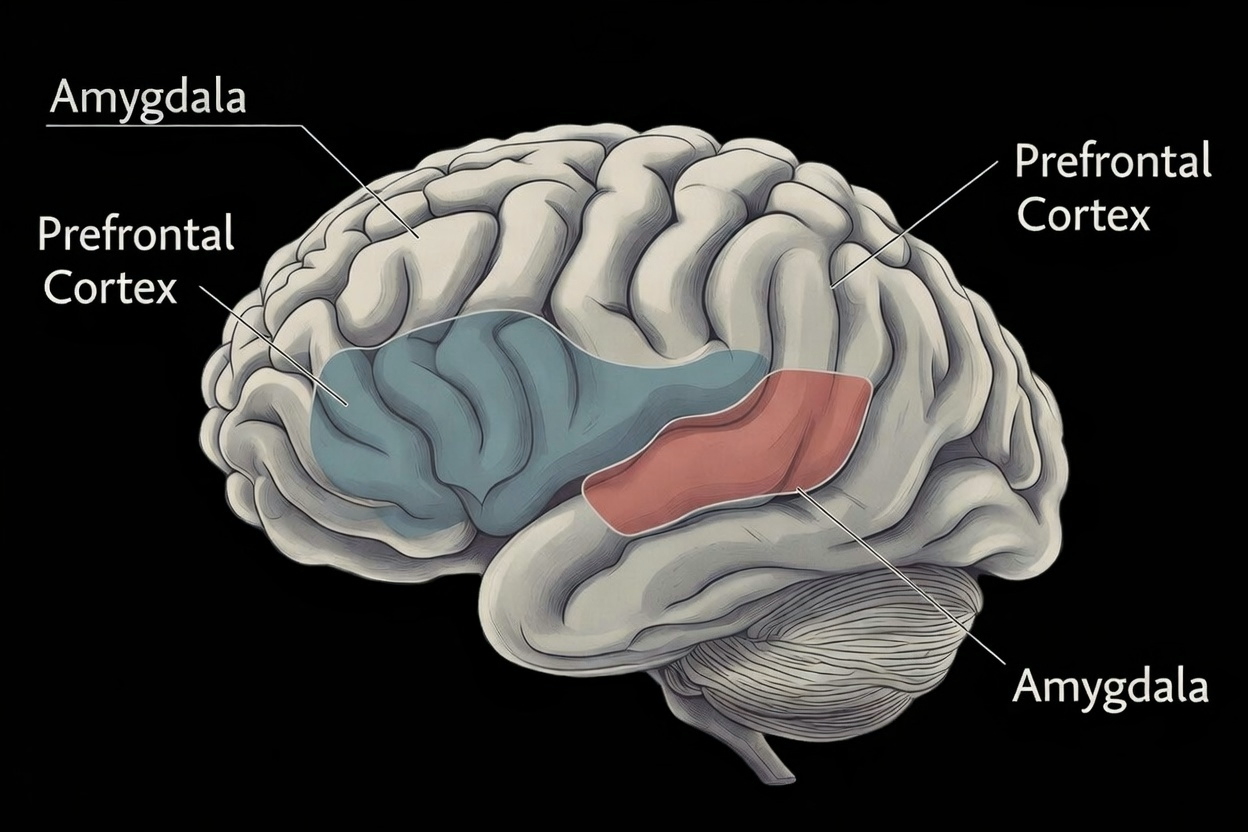
Your brain reacts to stress and anxiety in predictable patterns. When you're anxious, your amygdala (the brain's alarm system) goes into overdrive. Meditation helps by strengthening the connections between your prefrontal cortex and that alarm system, essentially helping your brain better manage stress responses.
Real talk: this isn't immediate. You're literally rewiring neural pathways, which takes time and repetition.
According to community discussions from people who practice meditation for mental health, many report that meditation helps them recognize that anxiety is just a thing that's happening in that moment—it will pass. This shift in perspective alone can be powerful.
Not all meditation is the same. Some types work better for anxiety and depression than others. Let's break down what actually helps.
This is the most researched type for anxiety and depression. Mindfulness meditation involves focusing your attention on the present moment without judgment. You observe your thoughts and feelings without getting caught up in them.
One user described their experience: "Gaining mindfulness through meditation allows you to recognize that anxiety is just a thing that's happening in that moment, that it will pass." That's exactly what mindfulness training does—it creates space between you and your anxious thoughts.
If sitting in silence makes your mind race (which is common with anxiety), guided meditation can help. Someone talks you through the practice, giving your mind something to follow instead of spiraling into worry.
Many people with depression or anxiety find that starting with guided sessions makes meditation more accessible. You're not left alone with your thoughts—there's a gentle structure.
This technique is particularly helpful for people who struggle with depression. According to user experiences, body scan meditations help you begin feeling uncomfortable feelings in your body rather than avoiding them.
Here's how it works: you systematically focus attention on different parts of your body, noticing sensations without trying to change them. It sounds simple, but it's powerful for reconnecting with physical sensations when depression has left you feeling numb.
Research on mindfulness breathing meditation found it effective for reducing depression, anxiety, and stress. The practice is straightforward: focus on your breath as it moves in and out.
When your mind wanders (and it will), you gently bring attention back to the breath. That's not failure—that's the practice.

One of the hardest parts of managing anxiety and depression is the cycle of rumination—the "racing thoughts" that make traditional silent meditation feel like a battle rather than a relief. At Mesmerize, we’ve designed an experience specifically for those who find silence overwhelming. By utilizing Focused-Attention Meditation (FAM), our app provides a mesmerizing visual anchor that keeps your mind engaged. This isn't just a distraction; it’s a science-backed method to activate your Anterior Cingulate Cortex (ACC). As the article notes, this part of the brain is the "command center" for self-regulation, helping you detect and steer away from the interference of anxious thoughts before they spiral.
Beyond the mental shift, we focus on the physiological "reset" your body needs during a depressive or anxious episode. Research shows that concentration-based meditation like FAM significantly increases Heart Rate Variability (HRV), which is a direct indicator of your nervous system's ability to bounce back from stress. By combining 3D audio narrations with customizable visual breathing patterns, Mesmerize helps you physically lower your stress response in real-time. Whether you are dealing with the physical "racing heart" of a panic attack or the emotional numbness of depression, our highly customizable platform ensures you have a reliable, evidence-based tool that makes consistent daily practice not just possible, but enjoyable.
Okay, so you're convinced meditation might help. Now what? The gap between knowing meditation is beneficial and actually doing it can feel massive when you're depressed or anxious.
Start small. I can't stress this enough. If you're new to meditation, start with just five minutes a day. Find a quiet space, sit comfortably, and focus on your breath. That's it.
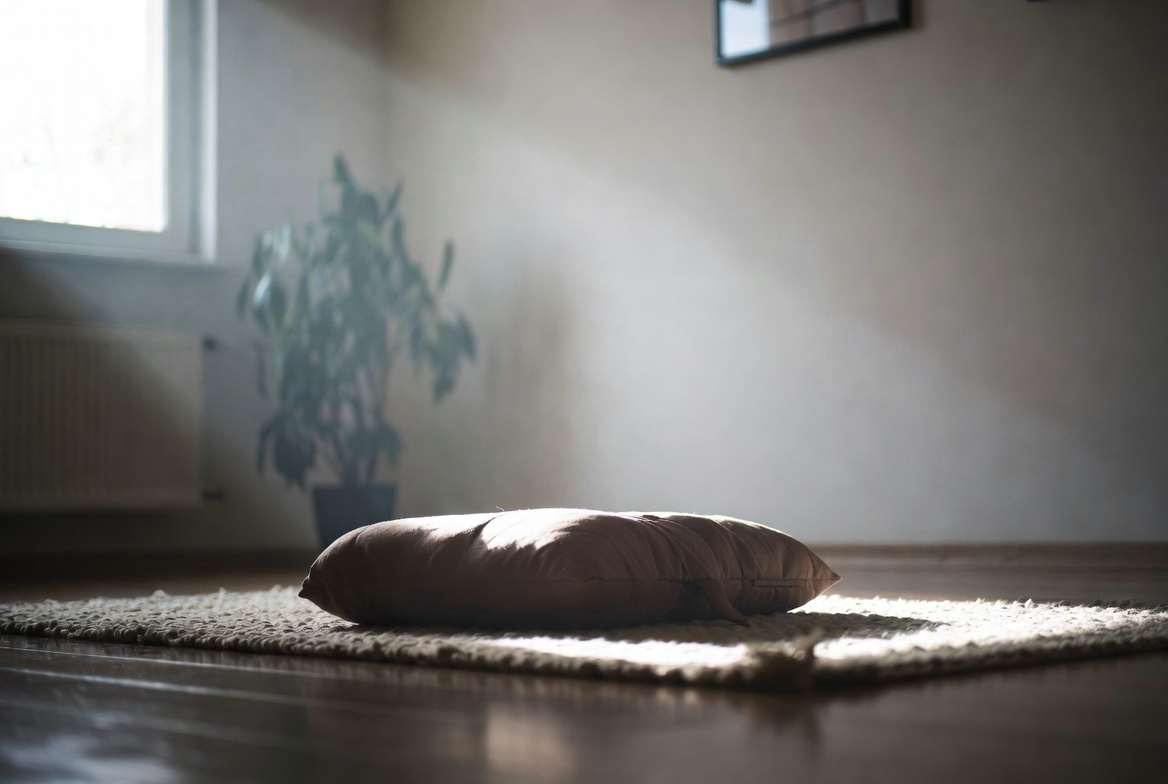
Don't overthink the setup. You don't need special cushions or a perfectly quiet room. Sit on your bed, your couch, or a chair with your feet on the floor. Close your eyes or soften your gaze downward.
Set a timer for five minutes. Focus on the physical sensation of breathing—the air moving through your nostrils, your chest rising and falling, your belly expanding and contracting.
Your mind will wander. When you notice it has (and this might happen twenty times in five minutes), simply return your attention to your breath. No judgment. No frustration. Just come back.
That moment of noticing your mind has wandered and choosing to return? That's the actual practice. That's what's rewiring your brain.
Research shows that the benefits only stick if you keep practicing. But how do you build a meditation habit when depression makes everything feel impossible?
Anchor it to something you already do. Meditate right after brushing your teeth in the morning. Or right before bed. Attaching it to an existing habit makes it more likely to stick.
Some days will feel easier than others. On bad mental health days, even five minutes might feel like climbing a mountain. That's okay. Those are actually the most important days to practice, even if you just sit for two minutes.
Let's manage expectations here. Meditation helps, but it's not a magic pill. You won't finish your first session feeling completely cured of anxiety or depression.
What you might notice initially are small shifts. Maybe one afternoon, you catch yourself spiraling into anxious thoughts and you're able to recognize it's happening. That awareness alone is progress.
In community discussions, one person shared: "Meditation diminishes long-standing anxiety and depression dramatically. It absolutely changes the brain for the better." But that same person emphasized it took consistent practice over time.
Some people find that trying to focus during silent meditation actually makes anxiety worse, at least initially. If that's you, you're not broken—you might just need a different approach.
One person noted: "Trying to focus on silent meditation will make it worse. Chakra meditation seems to work for me." Others find that guided meditations or movement-based practices like walking meditation work better.
The point is to find what works for you, not to force yourself into a practice that increases distress.
Here's something crucial: meditation is not a replacement for therapy or medication when those are needed. It's a complementary practice.
Antidepressants and psychotherapy are the usual first-line treatments for depression and anxiety disorders. Many people turn to meditation, yoga, tai chi, or similar practices as adjunct treatments—meaning alongside conventional care.
If your therapist recommends meditation, that's a good sign to explore it. Many therapeutic approaches now integrate mindfulness practices because the evidence supports their effectiveness.
But if you're experiencing severe depression, suicidal thoughts, or debilitating anxiety, please prioritize professional mental health care. Meditation can be part of your toolkit, not the only tool.
Let's address the stuff that trips people up, because knowing these challenges exist makes them easier to navigate.
This is the number one complaint. Good news: that's completely normal. The goal isn't to stop your thoughts—it's to change your relationship with them.
Meditation encourages a calm awareness of the breath and a gentle detachment from the habits of rumination (over-thinking). You're not trying to force thoughts away. You're learning to let them pass without grabbing onto them.
Five minutes. That's all you need to start. You have five minutes. We all waste more than that scrolling social media or staring at the fridge trying to decide what to eat.
If you practice meditation first thing in the morning before your day gets chaotic, you're more likely to actually do it.
Use reminders. Set a daily alarm. Put a sticky note on your bathroom mirror. Make it unavoidable until the habit forms.
Some people use apps that send notifications. Whatever works to keep it front of mind until it becomes automatic.
This can happen, especially if you've been avoiding difficult emotions. When you sit quietly, stuff comes up. That's not meditation failing—that's actually part of the process.
However, if meditation consistently increases distress rather than gradually helping you process emotions, work with a therapist. You might need guidance on how to practice safely given your specific mental health situation.
.avif)
How do you know if meditation is helping? The changes can be subtle, so tracking helps you notice progress you might otherwise miss.
Keep a simple journal noting your anxiety or depression levels on a scale of 1-10 before you start meditating regularly. Check in weekly. You're looking for trends over weeks and months, not dramatic daily changes.
Also pay attention to:
These small indicators often show progress before you feel dramatically better.
You don't have to figure this out alone. Tons of resources exist to support your practice.
Apps like Headspace, Calm, and Insight Timer offer guided meditations specifically for anxiety and depression. Many have free versions that give you enough to start.
YouTube has thousands of free guided meditations. Search for "guided meditation for anxiety" or "body scan for depression" and you'll find plenty of options to try.
Many communities offer mindfulness-based stress reduction (MBSR) classes. These are structured programs, typically 8 weeks long, that teach meditation systematically.
Structured programs like MBSR show evidence for reducing anxiety and mood problems in clinical populations.
If you're serious about meditation and have the resources, working with an experienced meditation teacher can accelerate your progress. They can troubleshoot challenges and tailor practices to your specific needs.
Meditation doesn't only happen on a cushion. You can practice mindfulness throughout your day in ways that support mental health.
Try mindful eating—actually tasting your food instead of eating while scrolling your phone. Or mindful walking, where you pay attention to each step and the sensations in your body.
These informal practices reinforce the skills you're building in formal meditation sessions. They help you bring that awareness into moments when anxiety spikes or depression tries to pull you under.
Even washing dishes can become a meditation if you're fully present with the sensation of warm water, the smell of soap, the sound of plates clinking.
So does meditation help with anxiety and depression? According to extensive research, yes—but with important caveats.
The National Center for Complementary and Integrative Health notes that clinicians should be prepared to talk with their patients about the role that a meditation program could have in addressing psychological stress. That's a recommendation based on evidence showing small to moderate reductions in anxiety and depression symptoms.
But meditation requires consistency. The benefits build over time and fade if you stop practicing. It's not a quick fix, and it works best as part of a comprehensive approach to mental health that might include therapy, medication, lifestyle changes, and social support.
That said, meditation is one of the few interventions for mental health that's free, has no side effects, and you can do anywhere. Those aren't small advantages.
If you're struggling with anxiety or depression, meditation is worth trying. Start small, be patient with yourself, and remember that every time you notice your mind has wandered and choose to come back, you're strengthening your brain's ability to manage difficult emotions.
Look, starting a meditation practice when you're anxious or depressed isn't easy. Your brain will give you a hundred reasons why you don't have time, why it won't work for you, or why you should start tomorrow instead.
But here's what I know: the research is solid. Meditation works for reducing anxiety and depression when practiced consistently. Not perfectly, not magically, but genuinely and measurably.
You don't need to commit to an hour a day or become a meditation expert. Just five minutes. Tomorrow morning, before you check your phone, set a timer for five minutes. Sit comfortably. Close your eyes. Focus on your breath.
When your mind wanders, come back. When it wanders again, come back again. That's the practice. That's what starts to change your brain's relationship with anxiety and depression.
Your mental health is worth five minutes of your day. Start there and see where it takes you.
I canceled my subscription with Headspace and I now pay for Mesmerize instead. I was hooked after the free trial! I love how customizable the sounds, meditations, and visuals are! Using this app has honestly become my favorite part of my day! ☺️ It helps me relax, meditate, visualize, sleep, and it does wonders for my anxiety/phobia/ocd tendencies. Thank you Mesmerize for giving us this amazing mental health tool! I told my therapist about this app and have been telling all my friends too. It’s just so helpful!
This is the second or third app in the mindfulness and meditation realm, and it’s the most scientific approach I have found. I have found these combinations of open monitoring, and focused attention meditation techniques are the most viable for those suffering from more severe forms of sleep, pain, and anxiety dysfunction one may be suffering from. Many of these approaches are used by professionals in a cognitive behavioral therapy setting. A truly complete approach in mindfulness and meditation.
I suffer from clinical depression and sometimes I get into a bad headspace but this app has really helped me whenever I’m in a bad mood I turn on the app listen to some person taking about breathing and look at cool figures on my phone and it makes me feel so much better I would highly recommend this app it’s worth the money
It didn’t take but five minutes of using this app to buy a yearly subscription. Worth it on so many levels. Easy to manipulate to what I like. Massive library of music, videos, etc.
Clear your mind and relax with a unique audio visual meditation experience.


.jpeg)