Discover how meditation reduces pain by 32% through proven techniques. Learn mindfulness methods backed by research to manage chronic pain naturally.
.webp)
If you're dealing with chronic pain, you've probably tried everything. Pills, physical therapy, maybe even surgery. But here's something you might not have considered: your mind could be your most powerful pain management tool.
According to research from the National Center for Complementary and Integrative Health, mindfulness meditation doesn't just reduce pain—it actually uses different neural pathways than placebo effects. We're talking real, measurable changes in how your brain processes pain signals.
And the results? Significant. A seminal study published in the Journal of Neuroscience found that mindfulness meditation reduced pain intensity by 40% and pain unpleasantness by 57% compared to rest.

Look, I get the skepticism. Meditation sounds like something that belongs in a yoga studio, not a pain management clinic. But the science tells a different story.
Research published in the Cureus journal identifies meditation as "a promising approach for alleviating chronic pain." What makes it special is how it tackles the multidimensional nature of pain—the sensory, cognitive, and affective factors all working together.
Pain isn't just a physical sensation. It's an experience that involves your emotions, memories, and expectations. Meditation addresses all these components simultaneously, which is why it can work when other treatments fall short.
Brain scans from UC San Diego researchers reveal something fascinating: mindfulness meditation engages separate neural pathways from the placebo effect. This demonstrates meditation involves distinct biological processes beyond placebo mechanisms.
When you meditate, you're essentially training your brain to separate pain sensations from the emotional suffering they typically cause. The pain signals still reach your brain, but your relationship with those signals changes fundamentally.
Not all meditation is created equal when it comes to pain management. Here are the approaches backed by actual research:
This is the gold standard. MBSR programs typically run 8 weeks and teach you to observe pain without judgment. The VA healthcare system now offers telehealth mindfulness-based interventions specifically for chronic pain, and their data shows these programs are effective for pain management.
Studies on chronic low back pain patients found MBSR improved both pain levels and quality of life. Research in peer-reviewed journals has documented improvements in patients who struggle with persistent lower back pain.
This technique involves concentrating your attention on a specific object, sensation, or area of the body. Research shows focused meditation produces comparable improvements to self-care exercises for chronic low back pain.
Here's an interesting approach from community discussions: some practitioners use minor sensations (like gentle pressure on a fingertip) as a meditation focus, training the mind to observe discomfort without reactivity. You're not trying to make pain disappear—you're changing how you relate to it.
This involves systematically moving your attention through different parts of your body. It sounds simple, but it's remarkably effective for interrupting pain-related thought patterns.
Short sessions of 5-10 minutes focusing on breathing "into" the painful area can help. The key is acknowledging the sensation without resistance, which often reduces the intensity naturally.
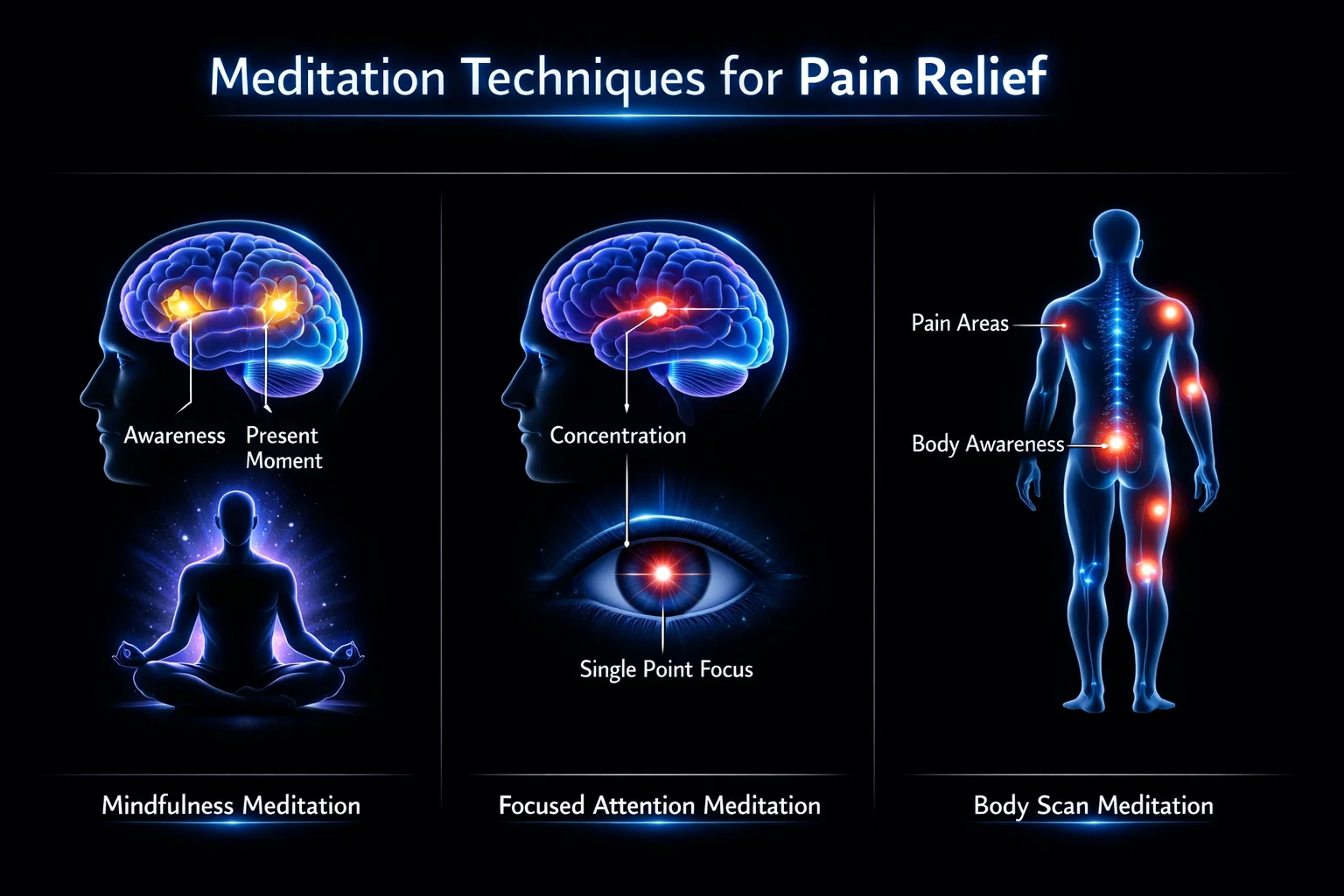
While the science confirms that meditation can reduce pain intensity, our team at Mesmerize understands that focusing on your breath is incredibly difficult when your body is in distress. To bridge this gap, we’ve developed an experience based on Focused-Attention Meditation (FAM). By providing an infinite scroll of shifting visuals, we give your brain a concrete "anchor" to hold onto. This external focus makes it easier to engage the Anterior Cingulate Cortex (ACC)—the area of the brain responsible for self-regulation and managing interference. Instead of fighting to ignore the pain, you are training your brain to stay present and non-reactive through a multisensory experience.
Beyond just a mental shift, our platform is designed to produce measurable physiological changes. Concentration-based meditation like the kind found in Mesmerize has been shown to significantly increase Heart Rate Variability (HRV), which is a key indicator of your body’s ability to handle physical stress and chronic discomfort. By syncing our mesmerizing visuals with customizable breathing patterns and 3D audio soundscapes, you can actively guide your nervous system into a state of resilience. Whether you are dealing with acute flares or long-term chronic pain, having a highly customizable, visual-led tool can make the difference between a frustrating practice and a successful session of relief.
Okay, so how do you actually do this? Here's a practical approach that doesn't require you to sit cross-legged for hours:
Don't try to meditate for 30 minutes on day one. Start with 5 minutes. Seriously. Consistency beats duration every single time.
Find a comfortable position—sitting, lying down, whatever works with your pain levels. You don't need to be uncomfortable to meditate effectively.
Begin by focusing on your breath. Notice the sensation of air moving in and out. When your mind wanders (and it will), gently bring attention back to your breathing.
Now here's where it gets specific for pain: instead of avoiding the painful area, try directing your breath toward it. Imagine breathing in and out of that spot. This approach works by reducing the tension we unconsciously hold around pain.
One approach shared in community discussions involves focusing on a body part far from the pain—like your toes if your back hurts. This redirects neural attention and can provide relief.
Here's the counterintuitive part: don't try to make the pain go away. That creates struggle, which amplifies suffering.
Instead, observe the pain with curiosity. What does it actually feel like? Is it sharp or dull? Does it pulse or stay constant? Is it hot or cold? This investigative approach activates different brain networks than the usual "this hurts, make it stop" response.

Let's talk evidence. The evidence for meditation in pain management continues to grow:
Studies from the National Institutes of Health demonstrate that mindfulness meditation produces measurable reductions in both pain intensity and the emotional distress associated with pain. Brain imaging confirms actual changes in pain processing.
Research on chronic low back pain—identified as a leading cause of disability globally—shows meditation-based interventions produce meaningful improvements, often without the side effects associated with pharmaceutical approaches.
Systematic reviews from major health organizations suggest that while effects vary by individual, mind-body practices including meditation lead to pain reductions in the short term, with potential for sustained benefits with continued practice.
This matters: research demonstrates meditation uses different brain patterns than placebo to reduce pain. Studies funded by the National Center for Complementary and Integrative Health showed meditation activates distinct neural signatures unrelated to expectation or belief effects.
So when someone dismisses meditation as "just placebo," the neuroscience suggests otherwise.
Let's address what actually happens when you try meditation for pain:
That's normal. In fact, that's the whole point—learning to maintain focus despite discomfort. Start with ultra-short sessions. Even 2 minutes counts.
Guided meditations can help tremendously here. Having a voice to follow gives your mind something to anchor to when pain threatens to overwhelm your attention.
Nobody's mind stops racing. Meditation isn't about achieving mental silence—it's about noticing when you've wandered and gently coming back. That returning is the practice.
Right. It won't. Studies showing significant pain reduction typically involve weeks of consistent practice, not a single session. Think of it like physical therapy—results accumulate over time.
That said, many people report some degree of relief even from early sessions. The full benefits develop with regular practice.
Real talk: the best meditation technique is the one you'll actually do consistently.
Consider these approaches based on research recommendations:
While you can start meditation practice on your own, working with trained instructors in MBSR or similar programs may accelerate results. Research generally suggests structured programs can be beneficial for chronic pain management.
Many healthcare systems, including the VA, now offer telehealth mindfulness interventions. These provide professional guidance without requiring you to travel while in pain.
The research is clear: meditation offers a legitimate, scientifically validated approach to managing chronic pain. It's not magic, it's not wishful thinking, and it's not just placebo.
What it is: a learnable skill that changes how your brain processes pain signals. Like any skill, it requires practice. But unlike many pain treatments, it has no side effects, no risks, and costs nothing.
Start small. Five minutes tomorrow morning. Just notice your breath. That's enough to begin.
Your pain might not disappear completely. But your relationship with it can change profoundly. And according to thousands of research participants, that makes all the difference.
Ready to try? Pick one technique from this article and commit to testing it for one week. Track what you notice—not just pain levels, but how you respond to pain. That awareness is where change begins.
I canceled my subscription with Headspace and I now pay for Mesmerize instead. I was hooked after the free trial! I love how customizable the sounds, meditations, and visuals are! Using this app has honestly become my favorite part of my day! ☺️ It helps me relax, meditate, visualize, sleep, and it does wonders for my anxiety/phobia/ocd tendencies. Thank you Mesmerize for giving us this amazing mental health tool! I told my therapist about this app and have been telling all my friends too. It’s just so helpful!
This is the second or third app in the mindfulness and meditation realm, and it’s the most scientific approach I have found. I have found these combinations of open monitoring, and focused attention meditation techniques are the most viable for those suffering from more severe forms of sleep, pain, and anxiety dysfunction one may be suffering from. Many of these approaches are used by professionals in a cognitive behavioral therapy setting. A truly complete approach in mindfulness and meditation.
I suffer from clinical depression and sometimes I get into a bad headspace but this app has really helped me whenever I’m in a bad mood I turn on the app listen to some person taking about breathing and look at cool figures on my phone and it makes me feel so much better I would highly recommend this app it’s worth the money
It didn’t take but five minutes of using this app to buy a yearly subscription. Worth it on so many levels. Easy to manipulate to what I like. Massive library of music, videos, etc.
Clear your mind and relax with a unique audio visual meditation experience.


.jpeg)