Discover how meditation helps teens manage stress, anxiety, and sleep issues. Evidence-based techniques backed by research, plus practical tips to get started.
.webp)
Let's be honest—being a teenager isn't easy. Between school pressure, social media comparisons, hormonal changes, and figuring out who you are, it's no wonder so many teens feel overwhelmed.
Meditation isn't some magic cure-all. But here's what it actually does: it gives your brain a break from the constant noise and teaches you how to respond to stress instead of just reacting to it. And the research backs this up.
According to the National Center for Complementary and Integrative Health (NCCIH), meditation practices can help manage anxiety, depression, and pain. Multiple studies published by the National Institutes of Health have found that mindfulness-based approaches significantly reduce anxiety and improve self-regulation in adolescents.
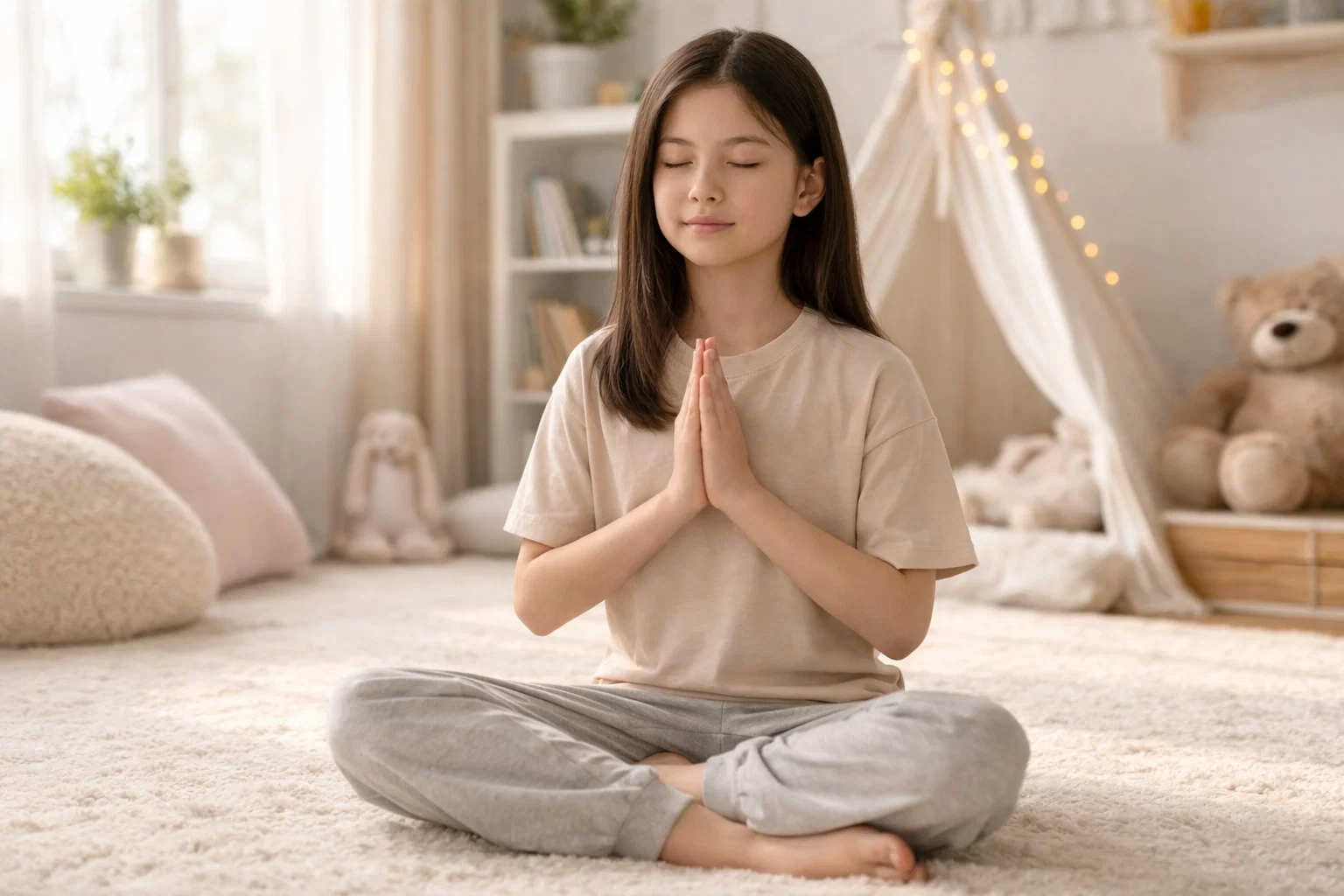
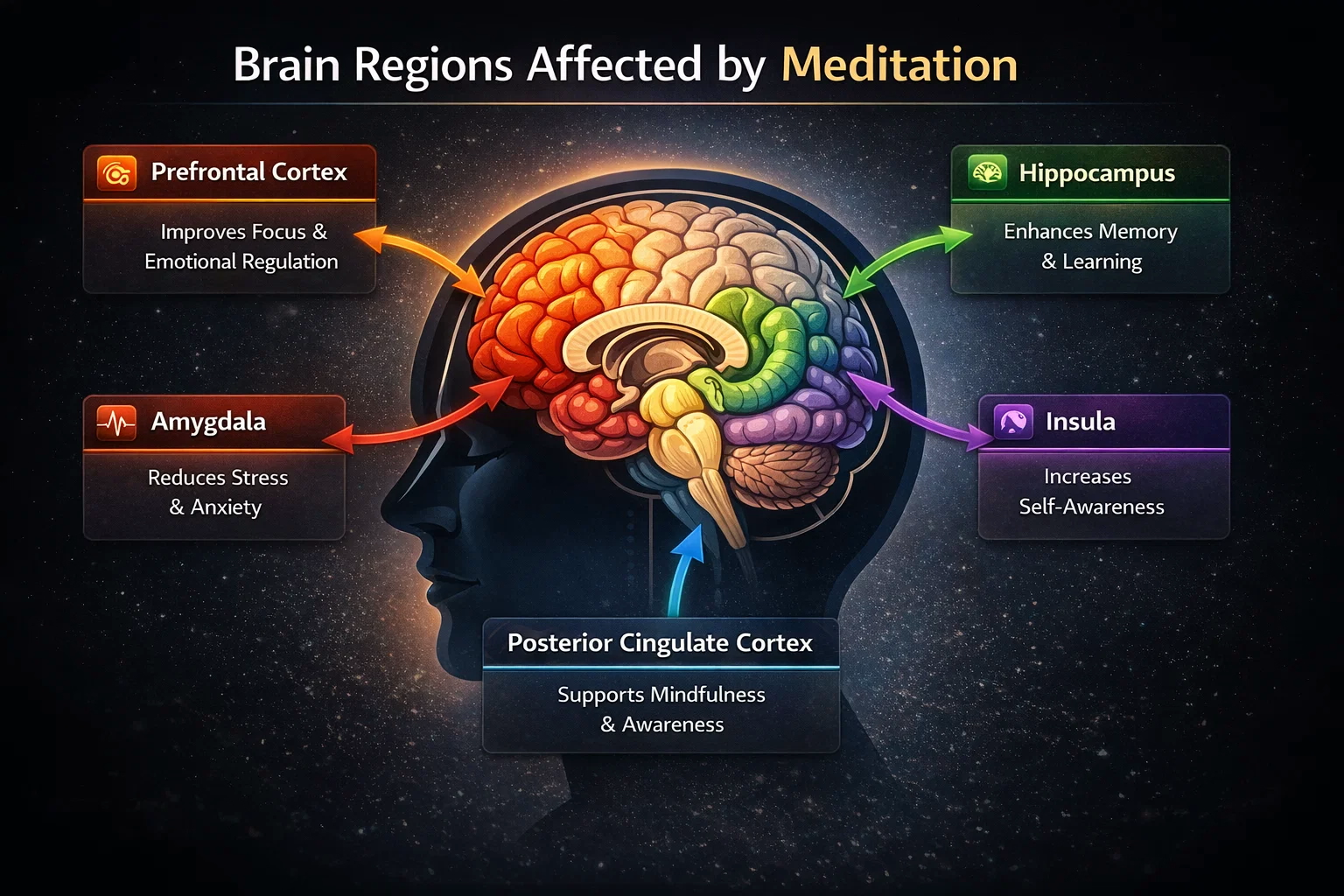
The teenage brain is literally under construction. Your prefrontal cortex—the part responsible for decision-making and impulse control—won't be fully developed until your mid-20s.
This isn't an excuse for bad decisions. It's biology. And it's exactly why meditation can be so powerful during these years.
A study published in Children journal (2021) examined meditation effects on anxiety and resilience in preadolescents and adolescents through a randomized controlled study. The researchers found that meditation worked as a valuable resource to cope with everyday difficulties while reducing anxiety and stress among those who practiced.
Real talk: meditation doesn't make you weird or "uncool." Community discussions on platforms like Reddit show teens who meditate describe it as offering relief from challenging feelings and social pressure.

While traditional sitting meditation is effective, many teens find it difficult to anchor their wandering minds in total silence. Our team at Mesmerize has developed a unique solution by focusing on the science of Focused-Attention Meditation (FAM). Research shows that FAM specifically activates the Anterior Cingulate Cortex—the part of the brain responsible for self-regulation and overcoming distractions. By providing an infinite scroll of captivating visuals paired with beautiful soundscapes, we give the teenage brain a clear focal point, making it easier to build the "pause button" necessary for impulse control and emotional balance.
We believe that meditation should be as engaging as it is relaxing, which is why our platform is designed to be incredibly simple and highly customizable. Whether you are dealing with academic burnout or late-night anxiety, you can sync our shifting visuals with customized breathing patterns or listen to sleep stories designed to quiet a racing heart. With over 30,000 five-star reviews, we’ve seen firsthand how this multisensory approach helps users who previously struggled with traditional methods finally find a sense of calm and improved focus in their daily lives.
Let's look at what actually happens when teens meditate, based on medical research.
Research published in Adolescent Health, Medicine and Therapeutics found that mindfulness-based cognitive therapy (MBCT) helps adolescents effectively deploy and regulate attention to manage stress and anxiety. The practice teaches you to notice anxious thoughts without getting swept away by them.
One study published in Annals of Medicine and Surgery (2023) investigated the effects of mindfulness on academic burnout, showing that mindfulness training significantly reduces emotional exhaustion and improves academic efficacy. Better Self-Regulation
Here's where it gets interesting. According to the NCCIH, there's substantial interest in using mindfulness approaches for preventing substance use and abuse in youth. Why? Because meditation strengthens the exact brain regions responsible for impulse control and decision-making.
Think of meditation as a workout for your brain's pause button. The more you practice, the easier it becomes to create space between a trigger and your response.
A cross-sectional study among Thai high-school students published in PLoS One (2024) examined various meditation styles to determine which were associated with positive mental health outcomes. The research demonstrated clear benefits for adolescent mental health across different meditation approaches.
Students who meditate regularly report better focus, reduced test anxiety, and improved ability to retain information. Not because meditation makes you smarter, but because a calm mind processes information more effectively.
Not all meditation is the same. Here are the most effective approaches for teenagers, based on what actually works in practice.
This is where most teens should start. Guided meditations provide verbal instructions throughout the practice, so you're never just sitting there wondering if you're doing it wrong.
According to user experiences shared in community discussions, resources like the Headspace series on Netflix provide wonderful entry points to meditation for people of all ages. The guided format helps maintain focus and makes the practice feel less intimidating.
Body scan meditation involves paying attention to different parts of your body systematically. Start at your toes and work up to your head, noticing any tension or sensation without trying to change it.
This technique is particularly effective for sleep. Many teens report that body scan meditations help them fall asleep more easily and sleep more soundly.
The simplest and most accessible form. Focus on your breath—the sensation of air moving in and out. When your mind wanders (and it will), gently bring attention back to your breath.
User experiences suggest that focusing on breath is a typical starting point that works just as well for teens as any other technique.

Okay, so what about getting started? You don't need special equipment, apps, or a perfectly quiet room.
Seriously small. Like 2-3 minutes small. The goal isn't to become a meditation master overnight. It's to build a habit you'll actually stick with.
Community discussions emphasize that guided meditations for anxiety around 10 minutes should help students. Starting with even shorter sessions is perfectly fine. As practitioners note, regular meditation practice can improve impulse control and mindfulness.
Morning meditation helps set a calm tone for the day. Evening meditation helps process what happened and prepare for better sleep. There's no wrong answer—just whatever you'll actually do consistently.
Mobile health (mHealth) applications provide new avenues for promoting mindfulness in adolescence. Apps make meditation more accessible and allow teens to practice on their own schedule.
Look for apps offering focused meditations like "Build Focus Meditation" or "Music Meditation" that last around 10 minutes—perfect for students with busy schedules.
Let's clear up some misconceptions that might be holding you back.
The biggest myth? That meditation is about stopping thoughts. That's not humanly possible. Your brain produces thoughts—that's literally its job.
Meditation teaches you to notice thoughts without getting hooked by them. Big difference.
Starting meditation is easy. Doing it consistently? That's where most people struggle.
Here's what actually helps, based on real experiences from teen meditators:
Link it to an existing habit. Meditate right after brushing your teeth or before checking your phone in the morning. Your brain loves habit stacking.
Don't expect perfection. Some sessions will feel great. Others will feel like your mind is a chaotic mess. Both are normal. Both are valuable.
Find your format. Some teens prefer guided meditations. Others like silent practice. Some need music meditation. Experiment until you find what works for you.
Research on adolescent-oriented mindfulness training shows increased effectiveness when the approach is specifically designed for teenage experiences and challenges.

Look, meditation is powerful. But it's not therapy, and it's not medication.
If you're experiencing severe anxiety, depression, or other mental health challenges, meditation should complement professional help—not replace it. According to the NCCIH, meditation works best as part of a comprehensive approach to health and well-being.
Think of meditation as one tool in your mental health toolkit. A really good tool, but still just one tool.
You don't need to become a meditation expert. You just need to start.
Set a timer for 5 minutes. Find a comfortable spot where you won't be interrupted. Close your eyes and focus on your breath. When your mind wanders, notice it and bring attention back. That's it.
Research on mindfulness-based school interventions shows benefits for emotional regulation and overall well-being in adolescents.
The teenage years are intense. Meditation won't make the challenges disappear, but it will give you tools to handle them with more clarity and less reactivity. And in a world that constantly demands your attention, learning to control where you place your focus might be the most valuable skill you develop.
So take a breath. Start small. Be consistent. Your future self will thank you.
I canceled my subscription with Headspace and I now pay for Mesmerize instead. I was hooked after the free trial! I love how customizable the sounds, meditations, and visuals are! Using this app has honestly become my favorite part of my day! ☺️ It helps me relax, meditate, visualize, sleep, and it does wonders for my anxiety/phobia/ocd tendencies. Thank you Mesmerize for giving us this amazing mental health tool! I told my therapist about this app and have been telling all my friends too. It’s just so helpful!
This is the second or third app in the mindfulness and meditation realm, and it’s the most scientific approach I have found. I have found these combinations of open monitoring, and focused attention meditation techniques are the most viable for those suffering from more severe forms of sleep, pain, and anxiety dysfunction one may be suffering from. Many of these approaches are used by professionals in a cognitive behavioral therapy setting. A truly complete approach in mindfulness and meditation.
I suffer from clinical depression and sometimes I get into a bad headspace but this app has really helped me whenever I’m in a bad mood I turn on the app listen to some person taking about breathing and look at cool figures on my phone and it makes me feel so much better I would highly recommend this app it’s worth the money
It didn’t take but five minutes of using this app to buy a yearly subscription. Worth it on so many levels. Easy to manipulate to what I like. Massive library of music, videos, etc.
Clear your mind and relax with a unique audio visual meditation experience.


.jpeg)