Discover the most effective breathing techniques for meditation backed by science. Learn box breathing, diaphragmatic breathing, and more to reduce stress.
.webp)
Quick Summary: The best breathing techniques for meditation include diaphragmatic (belly) breathing, box breathing, alternate nostril breathing, and cyclic sighing. According to research from Stanford Medicine and Harvard Health, practicing slow, controlled breathing for just 5-15 minutes daily can reduce anxiety, lower blood pressure, and improve overall mood more effectively than many other relaxation methods.
Meditation breathing exercises have surged in popularity for good reason. According to the National Center for Complementary and Integrative Health, meditation practice among U.S. adults has increased significantly in recent years. That's demonstrated strong growth in adults turning to these practices for stress relief and mental clarity.
Here's the thing though—not all breathing techniques work the same way. Some activate the parasympathetic nervous system to trigger deep relaxation, while others sharpen focus or manage acute anxiety. The technique that works best depends on what someone needs in that moment.
Conscious breathing does far more than just relax the mind. Research from Harvard Health shows that practicing slow, deep breathing for 15 minutes per day can help lower blood pressure. The mechanism is straightforward: controlled breathing slows heart rate, reduces stress hormones, and shifts the body into a rest-and-digest state.
Slow breathing is usually defined as anywhere from 6 to 10 breaths per minute and features a prolonged exhalation. At rest, most adults take about 12 to 18 breaths per minute.
But wait. Recent findings from Stanford Medicine add another layer. According to Stanford Medicine research, participants in controlled breathing groups experienced a daily increase in positive affect of 1.91 points on the Positive and Negative Affect Schedule scale, compared to 1.22 points for the mindfulness meditation group, an improvement that's greater by about one-third.
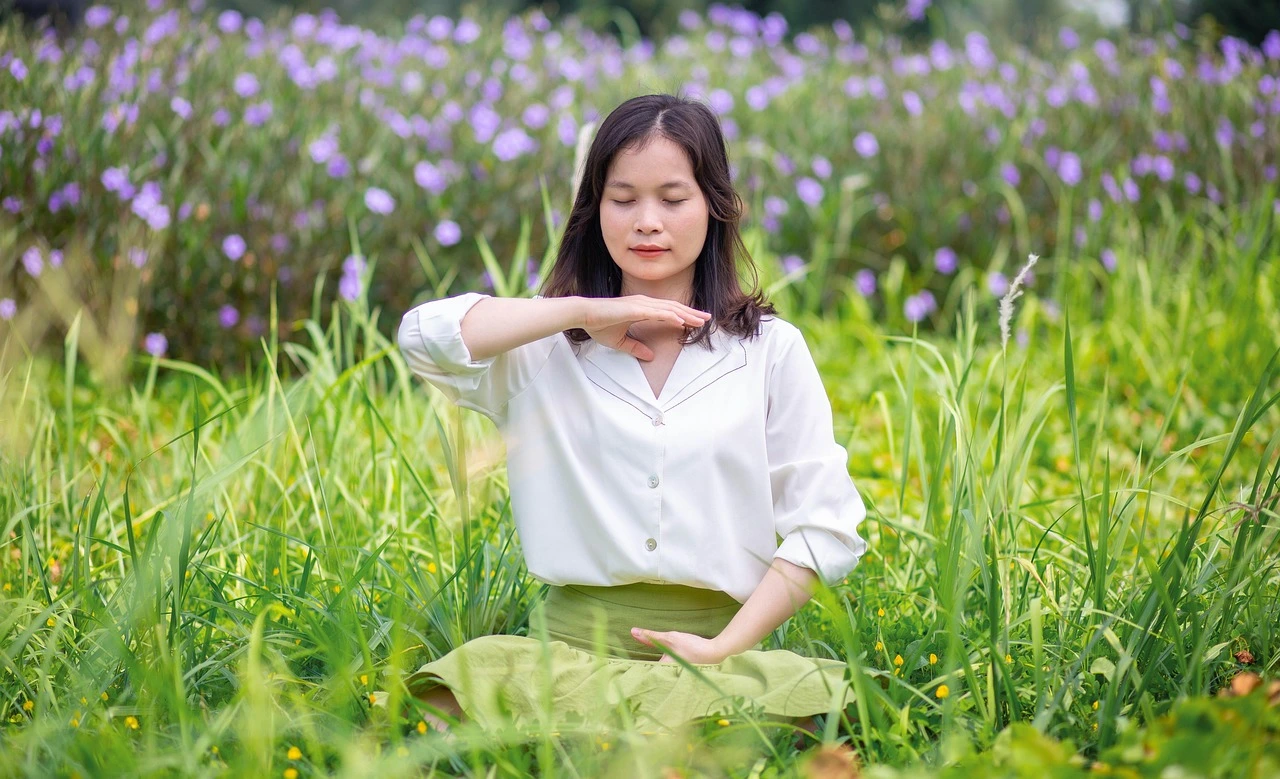
Diaphragmatic breathing, often called belly breathing, forms the foundation of most meditation breathing practices. The technique engages the diaphragm fully, allowing the lungs to expand downward rather than forcing the chest and shoulders upward.
The practice is simple but requires attention at first. Lie down or sit with back support. Place one hand on the chest and another on the belly. Breathe in slowly through the nose, directing air downward so the belly rises while the chest remains relatively still. Exhale slowly, feeling the belly fall.
This technique activates the parasympathetic nervous system, the body's natural brake pedal for stress responses. For beginners who feel overwhelmed by more complex breathwork patterns, belly breathing offers an accessible entry point that delivers measurable benefits.
Box breathing creates a rhythmic pattern that many find easier to follow than open-ended breathing instructions. The technique divides each breath cycle into four equal phases: inhale, hold, exhale, hold.
Start by exhaling completely. Inhale through the nose for a count of four. Hold the breath for four counts. Exhale through the mouth for four counts. Hold empty for four counts. Repeat the cycle for 5-10 minutes.
The equal timing creates a meditative rhythm that occupies the mind just enough to prevent wandering thoughts while still promoting relaxation. Military personnel and first responders often use box breathing to manage acute stress in high-pressure situations.
_converted.webp)
Alternate nostril breathing comes from yogic breathing practices known as pranayama. The National Center for Complementary and Integrative Health notes that pranayama forms one of the core elements of yoga practice in the United States, alongside physical postures and meditation.
The technique involves closing one nostril while breathing through the other, then switching:
That's one complete cycle.
Community discussions suggest this practice helps balance mental states, creating a sense of equilibrium that enhances meditation depth. The pattern requires enough focus to quiet mental chatter without becoming frustratingly complex.
Real talk: sometimes anxiety needs immediate intervention. Cyclic sighing, validated by Stanford Medicine researchers, offers a fast-acting technique specifically designed for anxiety reduction.
The method is straightforward. Take a deep breath in through the nose, then take a second, shorter sip of air to completely fill the lungs. Exhale slowly and fully through the mouth with a sighing sound. The double inhale followed by extended exhale mechanically expands the lungs while the long exhale activates calming neural pathways.
Stanford's research showed that participants practicing cyclic sighing for 5 minutes daily over 30 days reported better mood improvements than those practicing traditional mindfulness meditation. The technique works particularly well for acute anxiety moments when longer meditation sessions aren't practical.
Different breathing techniques serve different purposes. The table below summarizes key characteristics of each method based on research findings and common applications.
Consistency matters more than duration. Research on controlled breathing interventions typically uses 5-minute daily sessions, while traditional meditation sessions often last 20 to 30 minutes. Starting with shorter sessions builds the habit without creating resistance.
Choose a consistent time and place. Morning practice sets a calm tone for the day, while evening sessions can improve sleep quality. The specific technique matters less than regular practice—even 5 minutes daily produces measurable benefits.
Physical comfort supports sustained practice. Sit with back support or lie down if seated meditation feels uncomfortable. Restricting breathing practices to perfect posture creates unnecessary barriers for beginners.
Forcing the breath too deeply can trigger lightheadedness or anxiety. Natural, relaxed breathing always works better than aggressive inhalation. If dizziness occurs, return to normal breathing and reduce the depth of subsequent breaths.
Expecting immediate dramatic shifts sets up disappointment. Subtle changes accumulate over days and weeks. According to NCCIH research, a 2020 review examined 83 studies with a total of 6,703 participants and found that about 8 percent of participants had a negative effect from practicing meditation, often from pushing too hard or practicing with unrealistic expectations.
Skipping practice on difficult days misses the point entirely. Breathing techniques work best precisely when stress levels run high. Even two minutes of conscious breathing on chaotic days maintains the habit and provides immediate relief.

A good breathing technique should be simple enough to practice regularly. Mesmerize offers visual breathing features along with guided meditations, animated visuals, soundscapes, affirmations, hypnosis, and sleep-focused content.
Mesmerize can support breath-focused meditation with:
Download Mesmerize on iOS or Android to explore visual breathing and guided meditation as part of your daily routine.
_converted.webp)
Different situations call for different approaches. The short answer? Match the technique to the immediate need:
Breathing techniques are generally safe for most people, but certain situations warrant caution. Anyone with respiratory conditions, cardiovascular issues, or who is pregnant should consult healthcare providers before beginning intensive breathwork practices.
Some advanced breathing techniques involve extended breath holds or rapid breathing patterns. These fall outside the scope of basic meditation breathing and require qualified instruction. The techniques covered here—diaphragmatic breathing, box breathing, alternate nostril breathing, and cyclic sighing—remain in the gentle, safe range for self-practice.
If lightheadedness, chest pain, or severe anxiety occurs during breathing practice, stop immediately and return to normal breathing. These symptoms suggest the technique is too intense or being practiced incorrectly.
I canceled my subscription with Headspace and I now pay for Mesmerize instead. I was hooked after the free trial! I love how customizable the sounds, meditations, and visuals are! Using this app has honestly become my favorite part of my day! ☺️ It helps me relax, meditate, visualize, sleep, and it does wonders for my anxiety/phobia/ocd tendencies. Thank you Mesmerize for giving us this amazing mental health tool! I told my therapist about this app and have been telling all my friends too. It’s just so helpful!
This is the second or third app in the mindfulness and meditation realm, and it’s the most scientific approach I have found. I have found these combinations of open monitoring, and focused attention meditation techniques are the most viable for those suffering from more severe forms of sleep, pain, and anxiety dysfunction one may be suffering from. Many of these approaches are used by professionals in a cognitive behavioral therapy setting. A truly complete approach in mindfulness and meditation.
I suffer from clinical depression and sometimes I get into a bad headspace but this app has really helped me whenever I’m in a bad mood I turn on the app listen to some person taking about breathing and look at cool figures on my phone and it makes me feel so much better I would highly recommend this app it’s worth the money
It didn’t take but five minutes of using this app to buy a yearly subscription. Worth it on so many levels. Easy to manipulate to what I like. Massive library of music, videos, etc.
Clear your mind and relax with a unique audio visual meditation experience.


.jpeg)