Discover the most effective meditation techniques for cancer patients. Science-backed methods to reduce stress, anxiety, and side effects during treatment.
.webp)
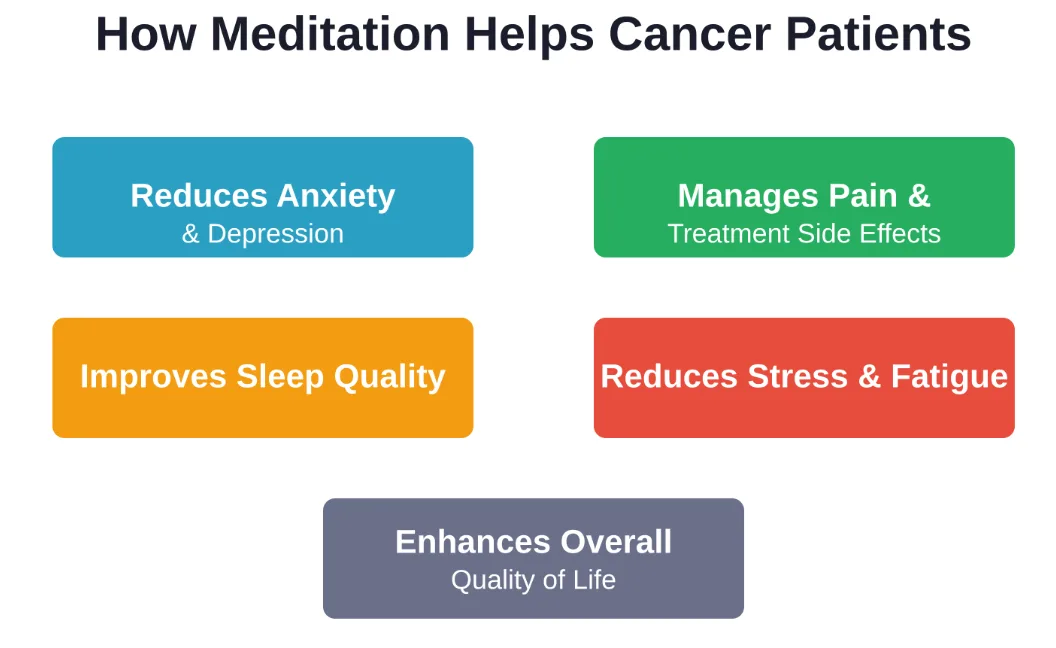
Quick Summary: Mindfulness meditation, guided imagery, and breathing exercises are the most effective meditation practices for cancer patients, with research showing they help reduce anxiety, stress, and treatment side effects. Meditation practices have grown in popularity among U.S. adults in recent years, and studies of cancer patients show mindfulness-based interventions can significantly improve quality of life during and after treatment. Memorial Sloan Kettering, Johns Hopkins, and other cancer centers now offer meditation programs as standard integrative care.
A cancer diagnosis changes everything. The physical challenges of treatment—chemotherapy, radiation, surgery—are just part of the story. Anxiety, fear, fatigue, and pain become constant companions.
But here's something worth knowing: meditation isn't just New Age wellness talk anymore. Major cancer centers including Memorial Sloan Kettering, Johns Hopkins, and UCSF now offer meditation as part of standard integrative oncology care. The research backing this shift is substantial.
According to the National Center for Complementary and Integrative Health, meditation practices have grown in popularity among U.S. adults in recent years. Among cancer patients, that number runs even higher—and for good reason. Studies reviewed by the University of Rochester Medical Center found that more than 40 percent of individuals with cancer report anxiety or depression following diagnosis.
The National Cancer Institute recognizes meditation as a complementary approach that helps people cope with side effects of cancer treatment, including nausea, pain, and fatigue. Research from the NIH examined 110 studies on integrative oncology interventions and found particularly strong evidence for mindfulness meditation.
Real talk: meditation won't cure cancer. No responsible practitioner claims otherwise. What it can do is measurably improve quality of life during one of the most stressful experiences a person can face.
University of South Florida researchers studying breast cancer survivors found that meditation-based stress reduction significantly improved both psychological and physical symptoms. The study received $2.8 million in NCI funding in 2015, reflecting growing institutional support for this research.

Mesmerize is a meditation app with calming visuals, soundscapes, relaxing narrations, sleep stories, affirmations, hypnosis, and visual breathing. It is designed to make meditation easier to start, especially when sitting quietly without support feels difficult.
For cancer patients, meditation tools like Mesmerize may help create a calmer moment during the day, but they should not replace medical care, therapy, or advice from a healthcare professional.
Mesmerize can help with:
👉 Download Mesmerize for iPhone or for Android to try visual meditation for free.
Not all meditation practices are created equal. Some have stronger evidence backing their use in cancer care than others.
MBSR tops the list for cancer patients. Developed at the University of Massachusetts Medical School, this structured program teaches mindfulness meditation over eight weeks.
The NIH has reviewed mindfulness-based stress reduction programs across multiple studies showing improvements in anxiety, depression, and quality of life. Results consistently showed these benefits across diverse populations.
Johns Hopkins Kimmel Cancer Center now includes MBSR in their evidence-based guidelines for cancer patients—the same type of guidelines used for conventional treatments. That's a significant shift in mainstream oncology.
Guided imagery involves visualizing peaceful scenes or positive outcomes while in a relaxed state. Cancer centers including UCSF Health and Memorial Sloan Kettering offer guided imagery specifically designed for patients.
This technique proves particularly helpful before procedures or during chemotherapy. Patients report feeling calmer and more in control when they can direct their mental focus away from clinical environments.
The American Cancer Society recommends breathing exercises as an accessible starting point for patients new to meditation. The simplicity matters—no special equipment, no specific setting required.
According to Cancer.org, patients should focus on breathing and continue for 5 to 20 minutes. Even 5 minutes once a day helps patients learn what relaxation feels like and notice when tension builds during treatment days.
Research on walking meditation has shown potential benefits for breast cancer patients, including cardioprotective effects during chemotherapy. This matters because cardiotoxicity is a known concern with certain chemotherapy drugs.
Walking meditation combines gentle physical activity with mindfulness practice. Patients can practice at home, on outdoor trails, or even on busy hospital corridors between appointments.
Starting a meditation practice while dealing with cancer treatment can feel overwhelming. Keep it simple.
Many cancer centers now offer free meditation resources to patients. Memorial Sloan Kettering's integrative medicine team developed an entire library of guided meditations specifically for cancer patients and caregivers. These recordings address common challenges: coping with treatment changes, preparing for sleep, finding moments of calm.
CancerCare and similar organizations provide free meditation exercises online. These resources remove barriers—no cost, no travel required, accessible whenever needed.
The NIH conducted a comprehensive review examining multiple studies and thousands of participants on meditation practices and adverse effects. This review looked specifically at negative experiences related to meditation practices—important information for cancer patients considering this approach.
Results? About 8 percent of participants experienced negative effects from practicing meditation. This rate is similar to what's seen with other behavioral interventions. Most reported effects were mild and temporary.
For breast cancer survivors specifically, research from Johns Hopkins found that mindfulness meditation demonstrated preliminary short-term efficacy in reducing stress, behavioral symptoms, and proinflammatory signaling in younger survivors. The Pathways to Wellness trial showed measurable improvements in depression markers.
The National Cancer Institute emphasizes that patients should discuss complementary approaches like meditation with their healthcare team. This isn't about getting permission—it's about ensuring all aspects of care work together effectively.
Some considerations matter. Patients dealing with severe depression or PTSD may need additional support when starting meditation. Certain visualization practices might not suit everyone's psychological state.
Cancer centers offering meditation programs typically screen participants to ensure appropriateness. This protective approach helps maximize benefits while minimizing potential distress.
Cost shouldn't be a barrier. Several major institutions provide free meditation resources specifically designed for cancer patients.
Cancer treatment demands everything from patients. Physical strength. Emotional resilience. Mental endurance.
Meditation won't make cancer disappear. But solid research from the NIH, NCI, and major cancer centers demonstrates that it measurably improves quality of life during treatment. The evidence supporting mindfulness-based approaches has grown strong enough that Johns Hopkins, Memorial Sloan Kettering, and other leading institutions now include meditation in evidence-based oncology guidelines.
Starting small makes sense. Five minutes of breathing meditation today. Perhaps guided imagery tomorrow. Building gradually toward a sustainable practice that provides genuine relief during difficult months.
If dealing with cancer treatment, talk to the care team about adding meditation to the treatment plan. Many cancer centers now offer programs specifically designed for patients. The resources exist—often at no cost—waiting to help.
I canceled my subscription with Headspace and I now pay for Mesmerize instead. I was hooked after the free trial! I love how customizable the sounds, meditations, and visuals are! Using this app has honestly become my favorite part of my day! ☺️ It helps me relax, meditate, visualize, sleep, and it does wonders for my anxiety/phobia/ocd tendencies. Thank you Mesmerize for giving us this amazing mental health tool! I told my therapist about this app and have been telling all my friends too. It’s just so helpful!
This is the second or third app in the mindfulness and meditation realm, and it’s the most scientific approach I have found. I have found these combinations of open monitoring, and focused attention meditation techniques are the most viable for those suffering from more severe forms of sleep, pain, and anxiety dysfunction one may be suffering from. Many of these approaches are used by professionals in a cognitive behavioral therapy setting. A truly complete approach in mindfulness and meditation.
I suffer from clinical depression and sometimes I get into a bad headspace but this app has really helped me whenever I’m in a bad mood I turn on the app listen to some person taking about breathing and look at cool figures on my phone and it makes me feel so much better I would highly recommend this app it’s worth the money
It didn’t take but five minutes of using this app to buy a yearly subscription. Worth it on so many levels. Easy to manipulate to what I like. Massive library of music, videos, etc.
Clear your mind and relax with a unique audio visual meditation experience.


.jpeg)