Discover the best meditation gifts for beginners and experienced practitioners. From cushions to singing bowls, find meaningful presents that support mindfulness.
.webp)
Quick Summary: The best meditation gifts range from essential cushions and benches that support proper posture to sensory items like singing bowls, incense, and calming candles. Practical gifts include meditation timers, sound therapy tools, and comfortable clothing, while thoughtful options like mala beads, journals, and curated gift boxes help deepen someone's practice and create a dedicated mindfulness space.
Finding a meaningful meditation gift sounds simple until you start browsing. The market overflows with decorative items that look zen but don't actually support a real practice.
Here's the thing though—meditation has surged in popularity. Meditation has grown significantly in popularity among U.S. adults in recent decades. That's millions more people building daily mindfulness rituals.
But not every meditation gift delivers value. Some gather dust while others become essential to someone's daily practice. The difference? Gifts that solve real problems meditators face—discomfort, distraction, difficulty creating space, or lack of structure.
This guide focuses on gifts people actually use, not just admire once before tucking away in a closet.
Proper posture makes or breaks a meditation session. Sitting on a hard floor causes discomfort within minutes, which derails focus completely.
The round zafu cushion remains the foundation of countless meditation spaces. These cylindrical pillows elevate the hips above the knees, reducing strain on the lower back and allowing the spine to maintain its natural curve.
Traditional zafus use buckwheat hull filling that conforms to body shape while providing firm support. Hemp covers offer durability and a natural aesthetic that fits various home decor styles.
Look for zafus between 5-7 inches in height—taller practitioners often need more elevation, while shorter individuals may prefer lower cushions.
A zabuton (rectangular mat) sits beneath the zafu to cushion knees and ankles. These flat mats typically measure around 28 x 30 inches and use cotton batting or foam filling.
The zafu-zabuton combination creates a complete seating system. Many retailers sell these as matched sets, which makes an excellent gift for someone establishing their first dedicated meditation spot.
Benches offer an alternative for people who find floor cushions uncomfortable. These small wooden stools allow a kneeling position (seiza) that takes pressure off the ankles and knees.
Folding designs work well for practitioners with limited space or those who travel. The angled seat promotes upright posture without requiring flexibility.
Modern tools support traditional practice in surprising ways.
Dedicated timers eliminate phone distractions while providing interval bells for longer sessions. Unlike phone alarms, these devices use gentle chimes that don't jar practitioners out of deep states.
Programmable timers allow custom intervals—useful for practices that alternate between sitting and walking meditation.
Portable sound bath devices have emerged as innovative meditation tools. Some products now offer 8 Solfeggio frequencies in a compact, portable format.
These electronic alternatives to singing bowls provide consistent tones without requiring technique to play. Battery-powered designs work for meditation while traveling.

Mesmerize is a meditation app built around calming visuals, soundscapes, guided narrations, sleep stories, affirmations, hypnosis, and visual breathing. It gives someone a simple way to relax without needing a big setup or a long routine.
For a meditation gift, Mesmerize works well as a thoughtful add-on to candles, cushions, journals, or other quiet-practice items. A subscription can give the gift more use over time, with guided audio, calming visuals, and breathing exercises for home practice, bedtime, or quick calm breaks.
Mesmerize can help with:
👉 Download Mesmerize for iPhone or for Android to try visual meditation for free.
Meditation often incorporates sound as an anchor for attention. Certain tools have proven especially effective over centuries of practice.
Tibetan singing bowls produce resonant tones that mark the beginning and end of sessions. The sustained vibration creates an auditory focal point during practice.
Rin bells offer a clearer, shorter tone. These Japanese-style bells sit on small cushions and produce a pure sound when struck with a wooden mallet.
Mid-range singing bowls typically deliver better sound quality than budget options. Quality options in the $40-80 range offer good resonance without requiring a massive investment.
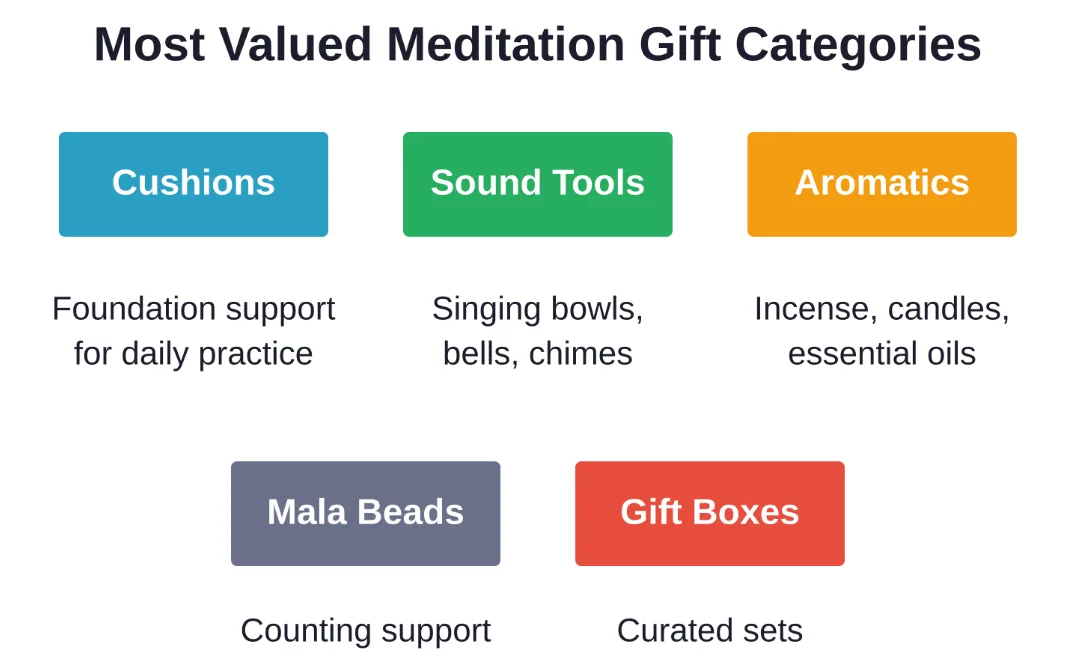
Scent anchors meditation practice to place and ritual. High-quality incense transforms a corner of any room into a dedicated meditation space.
Japanese incense tends to produce less smoke than Indian varieties while offering subtle, complex fragrances. Sandalwood, cedar, and frankincense remain popular choices.
Candles work well for practitioners sensitive to smoke. Beeswax and soy candles burn cleaner than paraffin options.
What practitioners wear affects their ability to sit comfortably for extended periods.
Body temperature drops during stationary meditation. A dedicated shawl prevents this distraction without the bulk of a heavy blanket.
Natural fibers like cotton, wool, or bamboo regulate temperature better than synthetics. Neutral colors maintain the contemplative atmosphere.
Traditional Japanese work clothing (samue) consists of loose pants and a wraparound top. The unrestricted fit accommodates various sitting positions without binding or bunching.
These sets work equally well for yoga, making them practical for people who cross-train between practices. Yoga and meditation communities show significant overlap among U.S. adult practitioners.
Some gifts carry meaning beyond their practical function.
These 108-bead necklaces help practitioners count mantras or breaths. The tactile feedback supports concentration, especially for beginners whose minds wander frequently.
Materials range from wood (sandalwood, rosewood) to semi-precious stones (agate, amethyst, jade). Each tradition attributes different properties to various materials, though the physical reminder matters more than any mystical quality.
Wrist malas (smaller bracelets with 18-27 beads) offer a more subtle option for people who meditate in public spaces or prefer minimalist jewelry.
Visual anchors help some practitioners maintain focus. Small statues of Kuan Yin, Buddha, or abstract forms provide a gazing point during open-eye meditation.
Size matters—oversized statues overwhelm small spaces, while tiny figures get lost. Pieces between 6-10 inches typically work well for home altars.
Pre-assembled gift boxes solve the paralysis of too many choices. These sets typically include complementary items—perhaps a small cushion, incense, a journal, and herbal tea.
Quality varies significantly. The best sets focus on 4-6 well-chosen items rather than cramming in dozens of trinkets. Sustainable packaging and artisan-made products distinguish premium offerings from generic assemblies.
Look for boxes that explain each item's use. Beginners benefit from guidance, not just objects.
Not all meditation gifts are objects you sit on or hold. Some help transform ordinary rooms into contemplative spaces.
Folding screens visually separate meditation areas from the rest of a room. This psychological boundary signals to the brain that entering this space means shifting into a different mode.
Lightweight designs allow easy setup and storage—essential for people in small apartments.
Harsh overhead lighting disrupts the meditative atmosphere. Salt lamps and dimmable LED candles provide soft illumination that doesn't interfere with closed-eye practice.
Warm color temperatures (2700-3000K) create more calming environments than cool blue-white bulbs.
Meditation develops through both practice and understanding.
Classic texts explain techniques in depth. Books covering mindfulness-based stress reduction, Zen meditation, or Vipassana provide structured approaches backed by research.
Research has found that while meditation benefits most practitioners, some experience negative effects—making proper instruction important for safety and effectiveness.
Reflection journals help practitioners track their progress, note obstacles, and identify patterns. Guided journals with prompts work well for beginners, while blank books suit experienced meditators.
The act of writing after meditation extends mindfulness beyond the cushion.
The best meditation gift depends entirely on who's receiving it. Someone just starting exploration needs different support than a practitioner with years of experience.
Consider these factors: Do they have a dedicated meditation space or are they working with limited room? What style of meditation do they practice—breath-focused, mantra-based, or movement meditation? Are they building a home practice or supplementing classes?
The most meaningful gifts solve real problems. Physical discomfort during sitting. Difficulty maintaining focus. Lack of structure or guidance. Inability to create mental separation from daily life.
Sound familiar? Then focus on practical items first—proper cushions, quality timers, instructional resources. Once the foundation exists, sensory and symbolic items enhance rather than substitute for actual practice.
Research on meditation-based mental training has shown promising results for practitioners who maintain consistent practice.
That persistence stems from removing barriers. Which is exactly what the right meditation gift accomplishes.
Whether you're shopping for a holiday gift, thanking a teacher, or treating yourself, choose items that will actually get used. Skip the decorative trinkets. Invest in tools that support real practice. The recipient—and their meditation journey—will benefit for years.
I canceled my subscription with Headspace and I now pay for Mesmerize instead. I was hooked after the free trial! I love how customizable the sounds, meditations, and visuals are! Using this app has honestly become my favorite part of my day! ☺️ It helps me relax, meditate, visualize, sleep, and it does wonders for my anxiety/phobia/ocd tendencies. Thank you Mesmerize for giving us this amazing mental health tool! I told my therapist about this app and have been telling all my friends too. It’s just so helpful!
This is the second or third app in the mindfulness and meditation realm, and it’s the most scientific approach I have found. I have found these combinations of open monitoring, and focused attention meditation techniques are the most viable for those suffering from more severe forms of sleep, pain, and anxiety dysfunction one may be suffering from. Many of these approaches are used by professionals in a cognitive behavioral therapy setting. A truly complete approach in mindfulness and meditation.
I suffer from clinical depression and sometimes I get into a bad headspace but this app has really helped me whenever I’m in a bad mood I turn on the app listen to some person taking about breathing and look at cool figures on my phone and it makes me feel so much better I would highly recommend this app it’s worth the money
It didn’t take but five minutes of using this app to buy a yearly subscription. Worth it on so many levels. Easy to manipulate to what I like. Massive library of music, videos, etc.
Clear your mind and relax with a unique audio visual meditation experience.


.jpeg)