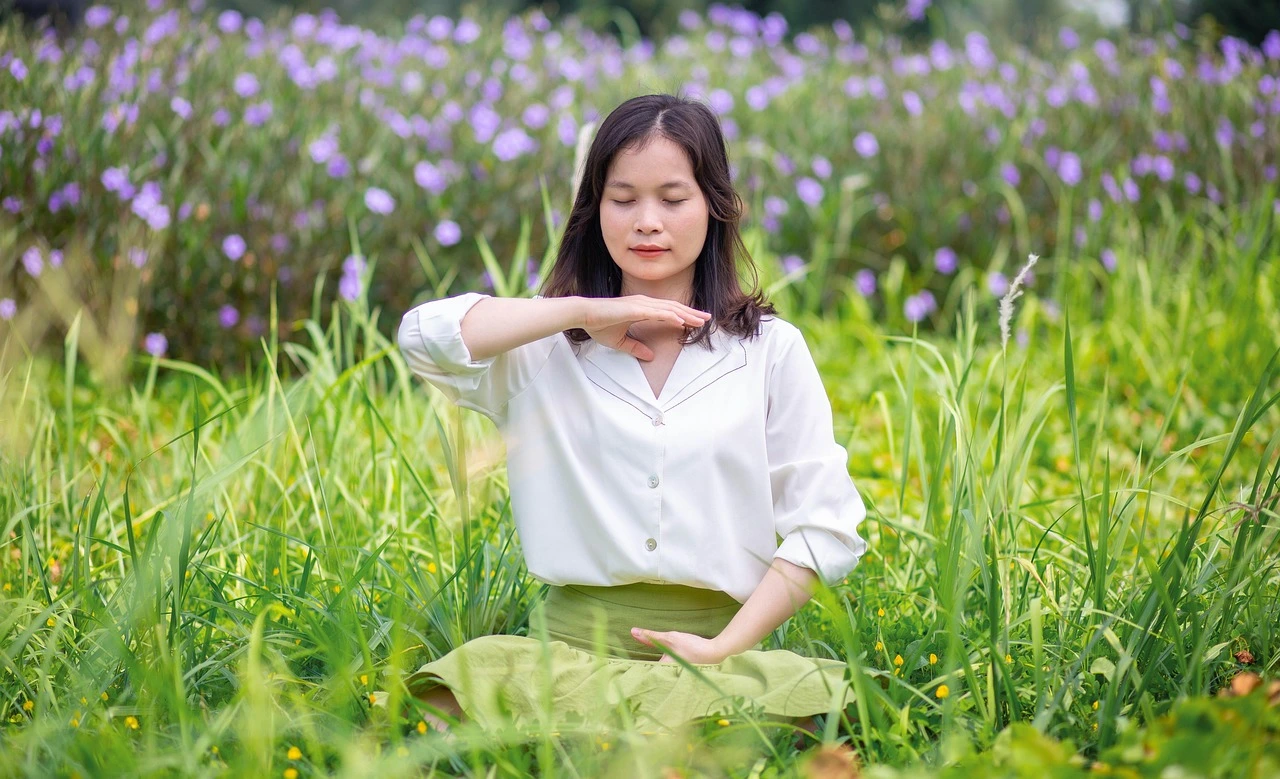
A simple guide to meditation mantras that help you focus, relax, and settle into a steady rhythm without overthinking it.
.webp)
The idea of a “best” meditation mantra rarely leads to a single clear answer. What supports focus and calm often depends on subtle factors like sound, rhythm, and how easily a phrase can be repeated without effort. Even small differences in wording can change how a mantra feels over time.
This article brings together several commonly used mantras, including both traditional and modern variations. Some are rooted in long-standing practices, while others rely on simple, everyday language. Despite their differences, they share a similar role - offering a steady point of attention without adding complexity.
In most cases, effective mantras are quiet and unobtrusive. Repetition becomes less about the meaning of the words and more about the rhythm they create. Over time, that rhythm can support a more settled and consistent meditation experience.

Repeating a mantra sounds simple, but staying with it is not always easy. Mesmerize gives the mind something calm to rest on while the words continue in the background. Its moving visuals, soundscapes, guided meditations, and visual breathing tools can help make a mantra session feel less dry and more focused.
The app can be useful for people who struggle with silent practice or need a softer way into meditation. For a mantra practice, that means less setup, fewer distractions, and a steadier space to return to the phrase.
How Mesmerize works:
Try Mesmerize with your next mantra session.
This mantra sits right at the core of most meditation practices. It does not try to guide attention anywhere new or introduce a complex idea. Instead, it brings awareness back to something very simple - being here, in this moment, without needing to adjust or improve it. The wording is plain on purpose. It gives the mind just enough structure to hold onto, without creating more thinking.
When used during meditation, the phrase often starts as something deliberate, almost mechanical. The mind repeats it, loses it, returns to it again. After a while, the repetition becomes less effortful. The words begin to blend into a steady background rhythm, and attention settles a bit more naturally. It works well in moments when thoughts feel scattered, or when there is a need to slow things down without forcing it.
Gratitude-based mantras tend to work in a quieter, less direct way than expected. This one does not demand a strong emotional response. Instead, it gently shifts attention toward what is already present, even if that awareness feels faint at first. The effect is not immediate or dramatic. It builds slowly, almost in the background.
At times, the phrase may feel flat, especially when the mind is focused on problems or unfinished tasks. That is part of the process. With continued use, the focus begins to change direction. Instead of constantly scanning for what is wrong or missing, the mind starts to notice smaller, more neutral details. That shift can create a more balanced internal state without forcing positivity.
This mantra moves attention in a different direction compared to most others. Instead of focusing or holding onto something, it introduces the idea of release. It works by interrupting the tendency to revisit the same situation again and again, especially when there is no clear outcome or solution.
During meditation, the phrase can be paired with small physical cues. A slower exhale, a relaxed jaw, or simply noticing tension in the body and letting it ease slightly. The words act as a reminder, but the body often follows along. Over time, the reaction to stress can shift. The situation itself may stay the same, but the internal response becomes less intense and less repetitive.
This is one of the more direct and, at times, challenging mantras. There is no explanation or reasoning built into it. It presents a statement that may not immediately feel true, especially in moments of doubt or comparison. That tension is part of how the mantra works.
At first, the phrase may feel uncomfortable or even easy to dismiss. Over time, with steady use, the resistance tends to soften. The words become more familiar, less confrontational. It does not create a sudden shift in confidence or self-image, but it can reduce the constant background pressure to measure up or prove something. The effect is subtle but noticeable in how thoughts start to settle.
This mantra combines two elements that often go together but are not always experienced at the same time. Calm relates more to the body and emotional state, while clarity connects to thinking and decision-making. Bringing them together creates a balanced rhythm that can be followed without much effort.
During practice, the phrase naturally aligns with breathing. One part on the inhale, the other on the exhale. This creates a steady pace that helps slow down internal activity without forcing it. It is especially useful when thoughts feel tangled or when there is a need to step back before reacting. The mantra does not push for clarity. It creates space where clarity can appear on its own.
This mantra introduces the idea that attention can move in different directions, even when worry feels automatic. It does not deny anxiety or try to push it away. Instead, it creates a small pause where a different response becomes possible. That pause is often enough to soften the intensity of the moment.
In practice, the phrase works best when worry starts looping. Thoughts may still come in, but the repetition shifts how they are handled. Rather than following each one, attention returns to the words. Over time, the reaction becomes less immediate. The mind still reacts, but not as quickly, and not as strongly.
This phrase brings a slightly more physical sense of grounding compared to other mantras. The wording suggests stability, almost like standing firmly in one place. It is often used when thoughts drift toward past events or future scenarios, pulling attention away from what is happening now.
During meditation, the effect can feel subtle at first. The mind continues to wander, but the return point feels more solid. Some people naturally pair it with the feeling of the body - feet on the ground, contact with a chair, or the rhythm of breathing. That connection helps the phrase settle more deeply without needing to repeat it forcefully.
This mantra shifts attention toward release, but in a softer and more open way. Instead of focusing on a specific problem, it changes the overall tone of the experience. The words suggest space, movement, and a reduction of mental weight.
During practice, the phrase can feel more abstract than others. It does not anchor attention in a specific point like breath or body. Instead, it creates a general sense of expansion. That can be helpful when emotions feel heavy or stuck, allowing a different kind of mental space to emerge.
This phrase turns attention inward in a more reflective way. Rather than focusing on calming or grounding, it relates to decision-making and intuition. It suggests that clarity does not always need to come from analysis alone.
In practice, the mantra is often used after the mind has already settled a bit. Once there is less noise, it becomes easier to notice subtle thoughts or impressions. The phrase does not provide direct answers, but it creates space where insight can surface without being forced.
This mantra focuses on creating a sense of internal stability, especially during moments of stress or anxiety. It does not depend on external conditions. In fact, it reinforces the idea that safety can be experienced from within, even when things feel uncertain.
During practice, the phrase often works together with physical awareness. Noticing the breath, the body, or simple contact with the environment helps reinforce the meaning. The repetition gradually shifts attention away from threat-based thinking toward something more steady and contained.
This mantra introduces a more receptive mindset. Instead of trying to fix or change something directly, it allows space for change to happen gradually. The phrase does not assume a specific outcome. It focuses on openness rather than control.
In meditation, this can shift the way discomfort is handled. Physical tension, emotional responses, or difficult thoughts are not pushed away. They are noticed, while the phrase stays in the background. That approach often makes the experience feel less resistant and more manageable.
This phrase connects meditation with a broader sense of direction. It does not define what that purpose is. Instead, it reinforces the idea that actions, thoughts, and values can move in the same direction.
During practice, the mantra can bring attention to how certain thoughts or decisions feel. Some feel more consistent, others more forced. The repetition helps highlight that difference. Over time, it can create a clearer sense of what feels natural versus what feels out of place.
This mantra shifts attention toward connection, both inward and outward. It focuses less on solving problems and more on changing the tone of attention. The phrase is simple, but it can feel different depending on the state of mind.
During practice, the repetition can soften internal tension, especially in moments of self-criticism or conflict. It does not require a strong emotional response. Even a neutral repetition can gradually reduce sharp or reactive thinking, making space for a calmer perspective.
This phrase has a slightly different feel from the others. It holds two qualities that don’t always show up together - stillness and strength. One slows things down, the other adds a sense of stability. When combined, they create something balanced rather than passive.
In practice, it often helps during moments when things feel unstable or rushed. The mind might still be active, but the repetition adds a steady backdrop. Instead of trying to eliminate movement, the mantra makes space for it while keeping a sense of control underneath. That contrast is what gives it weight.
This one naturally connects to something that is already happening - breathing. Because of that, it doesn’t require much effort to follow. The phrase simply mirrors the rhythm of inhale and exhale, which makes it easier to stay with.
Rather than pulling attention away from the body, it brings it closer. Sensations become more noticeable - the movement of air, the slight pause between breaths. When thoughts drift, the return point feels clear and immediate. There’s no need to search for it.
Unlike more inward-focused mantras, this one extends attention outward. It introduces the idea that calm is not only something to experience, but also something that can move through a person and into interactions with others.
During meditation, the phrase can shift the focus slightly away from internal states and toward a broader sense of presence. It does not require visualizing anything complex. Even a quiet repetition can change the tone of attention, making reactions feel less sharp and more measured.
This mantra takes a different approach by removing the idea that something is missing. It does not aim to improve or fix anything. Basically, it suggests that nothing needs to be added at that moment.
At first, the phrase can feel abstract or even distant. But with time, it can reduce the habit of constantly looking for the next thing to change or achieve. The mind still moves, but there is less urgency behind it. That shift can make meditation feel less like a task and more like a pause.
This phrase leans more toward a sense of connection beyond the individual. It doesn’t focus on thoughts or emotions directly, but on how they relate to something larger. The wording can feel abstract, but the effect is often more about perspective than belief.
During practice, attention may shift from internal detail to a wider awareness. Sounds, space, and surroundings start to feel less separate. It doesn’t require visual imagery, though some naturally associate it with openness or expansion. The experience tends to be subtle rather than dramatic.
Om is less of a phrase and more of a sound you stay with. There’s nothing to analyze or interpret, which can be a relief if the mind tends to grab onto words and turn them into something else. The focus shifts away from meaning and toward the physical sensation of the sound itself.
When chanted slowly, the sound stretches out and changes as it moves. It usually starts deeper and gradually becomes lighter, almost fading out at the end. That transition gives attention to something continuous to follow, rather than jumping from word to word. For some, it feels more grounding than repeating a sentence. For others, it simply feels quieter inside, even if the sound itself is audible.
So Hum follows the breath in a way that doesn’t require any adjustment. “So” comes in naturally with the inhale, “Hum” with the exhale. Because of that, it tends to feel less forced than other mantras. There’s no need to set a rhythm or remember a sequence - it’s already there.
That simplicity is what makes it reliable. Even when attention drifts, it’s easy to come back because the breath is still moving. The phrase doesn’t interrupt that flow, it just mirrors it. Over time, the repetition blends into the breathing itself, so it feels less like “doing a practice” and more like staying with something that’s already happening.
This mantra has a more defined structure, which gives it a different kind of stability. The repetition feels measured, almost like a steady beat. Even without focusing on its traditional meaning, the pattern itself is enough to hold attention.
It often works well when shorter phrases feel too light or easy to lose. The sequence of sounds gives the mind something more substantial to stay with. At the same time, it doesn’t demand constant focus. Once the rhythm settles in, it tends to carry itself for a while, which makes longer sessions feel less effortful.
There’s a softer, more flowing quality to this mantra. The sounds connect smoothly, so repetition doesn’t feel sharp or segmented. It tends to move in a more continuous way, which can make the experience feel less mechanical.
Because of that, it often works well in longer sittings where shorter phrases start to feel repetitive in a rigid way. The flow of the mantra concentrates on something to follow without needing to push it. It can also slightly shift the tone of the practice, making it feel less tense and more open, especially when emotions are involved.
This mantra is often used toward the end of a session, and it has that kind of feeling to it - like things are winding down rather than building up. The repetition is slower, and the spacing between words naturally stretches the breath.
Saying “Shanti” multiple times isn’t about emphasis as much as it is about pacing. Each repetition gives a bit more space for things to settle. It can help ease the transition out of meditation, especially when the mind is still quiet and there’s no need to rush back into activity right away.
At some point, the question of the “best” mantra starts to matter a bit less. Not because it’s irrelevant, but because the difference usually comes down to how it feels in actual use, not how it looks on a list. A phrase can sound right on paper and still feel off after a few minutes. Another one might seem too simple at first and then quietly stick.
There’s also a noticeable shift that happens after a while. The words themselves stop being the main thing. They’re still there, but more in the background, like a rhythm the mind leans on. What matters more is how easy it is to return to it, especially when attention drifts or the day feels noisy.
Some people end up keeping one mantra for a long time. Others switch depending on what’s going on - something grounding on busy days, something softer when things feel heavy, something more neutral when nothing quite fits. Both approaches work. There isn’t a rule to follow here, just a bit of trial and observation.
If anything, consistency tends to do more than picking the “perfect” option. A short, regular practice with a simple phrase usually goes further than searching for something more advanced. It’s less about finding the right words and more about having something steady to come back to, again and again, without much effort.
I canceled my subscription with Headspace and I now pay for Mesmerize instead. I was hooked after the free trial! I love how customizable the sounds, meditations, and visuals are! Using this app has honestly become my favorite part of my day! ☺️ It helps me relax, meditate, visualize, sleep, and it does wonders for my anxiety/phobia/ocd tendencies. Thank you Mesmerize for giving us this amazing mental health tool! I told my therapist about this app and have been telling all my friends too. It’s just so helpful!
This is the second or third app in the mindfulness and meditation realm, and it’s the most scientific approach I have found. I have found these combinations of open monitoring, and focused attention meditation techniques are the most viable for those suffering from more severe forms of sleep, pain, and anxiety dysfunction one may be suffering from. Many of these approaches are used by professionals in a cognitive behavioral therapy setting. A truly complete approach in mindfulness and meditation.
I suffer from clinical depression and sometimes I get into a bad headspace but this app has really helped me whenever I’m in a bad mood I turn on the app listen to some person taking about breathing and look at cool figures on my phone and it makes me feel so much better I would highly recommend this app it’s worth the money
It didn’t take but five minutes of using this app to buy a yearly subscription. Worth it on so many levels. Easy to manipulate to what I like. Massive library of music, videos, etc.
Clear your mind and relax with a unique audio visual meditation experience.


.jpeg)