Discover the best meditation pillow for your practice. Compare zafu, crescent, and bolster options with expert insights on comfort and support.
.webp)
The best meditation pillows include traditional zafus for classic seated postures, zabutons for added cushioning, crescent cushions for ergonomic support, and bolsters for restorative practices. Key factors include height (typically 5-8 inches for proper spinal alignment), fill material (buckwheat hulls offer adjustability while kapok provides firm support), and shape based on your preferred meditation position.
Finding the right support for meditation practice makes the difference between a focused session and one spent shifting around trying to get comfortable. Research suggests that yoga and meditation practices may help improve general wellness by relieving stress, supporting good health habits, and improving mental/emotional health, sleep, and balance, according to the National Center for Complementary and Integrative Health, with proper posture being essential to an effective practice.
But here's the thing—not all meditation pillows work the same way. The cushion that supports a 30-minute seated practice differs significantly from what's needed for longer sessions or restorative work.
This guide breaks down the most effective meditation pillow types, what makes them work, and how to choose one that actually fits your body and practice style.
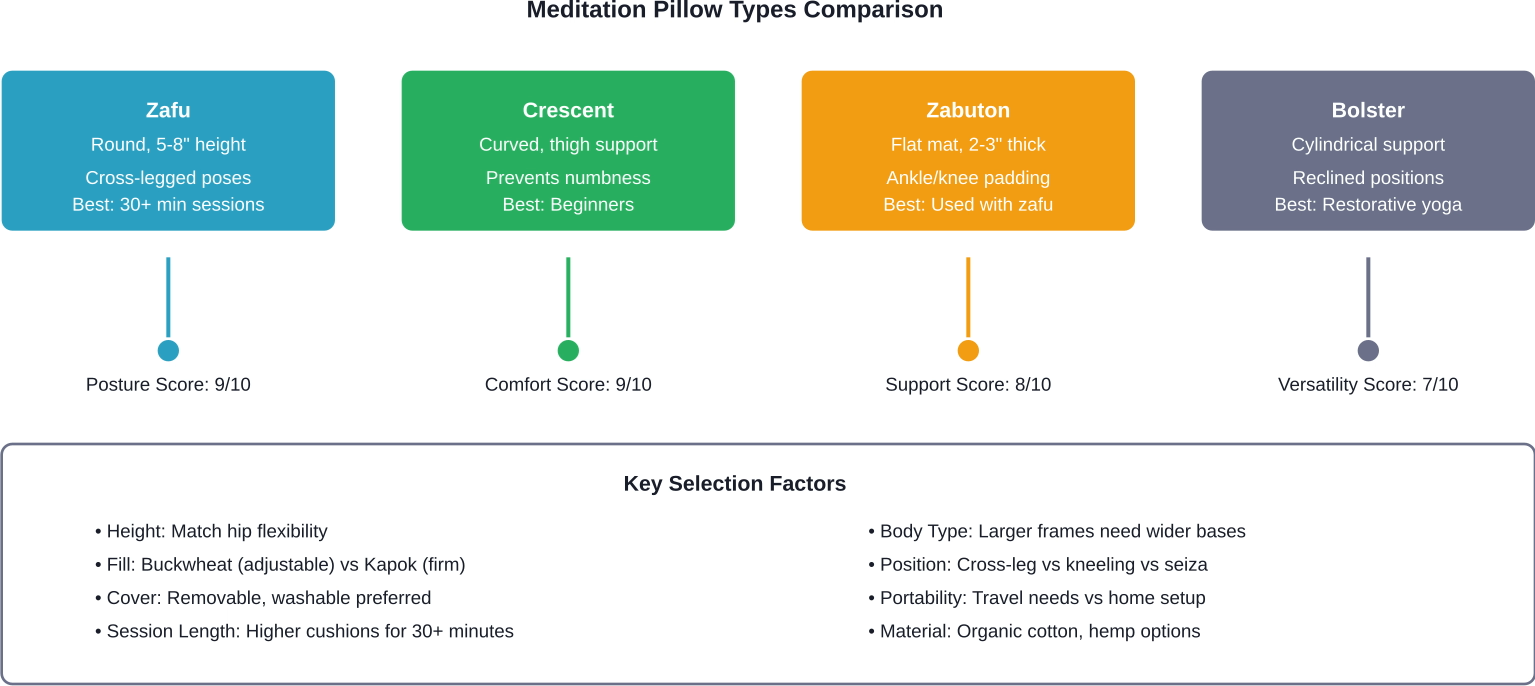
Meditation cushions come in several distinct forms, each designed for specific sitting positions and body types. The main categories include zafus, zabutons, crescents, and bolsters.
Traditional zafus are round cushions that elevate the hips above the knees, creating the proper pelvic tilt for spinal alignment. They typically stand 5-8 inches tall and work well for cross-legged positions like lotus or half-lotus.
Zabutons function as meditation mats placed beneath a zafu or other cushion. They provide padding for ankles, knees, and feet—addressing the pressure points that cause discomfort during longer sessions.
Crescent-shaped cushions wrap around the body, supporting the thighs while elevating the hips. The ergonomic design distributes weight more evenly than round cushions, making them popular for practitioners who experience leg numbness.
Bolsters are cylindrical pillows used primarily in restorative practices. They support reclined or semi-reclined positions rather than upright seated meditation.
The cushion's internal fill determines how it responds to weight and maintains shape over time. Buckwheat hulls remain the most common choice for serious practitioners.
Buckwheat fills offer adjustability—practitioners can add or remove hulls to customize height and firmness. The hulls conform to body shape while maintaining enough structure to prevent sinking. They're particularly effective for meditations lasting 30 minutes or longer.
Kapok, a natural fiber from tropical trees, provides firm, consistent support. It doesn't compress as much as synthetic foams and maintains its loft better than cotton. But it can't be adjusted like buckwheat.
Some cushions use combinations of materials—a kapok core wrapped in buckwheat, for instance. This provides stable base support with surface-level conforming.
Research on ergonomic positioning shows that pillow height directly affects spinal alignment. Studies on pillow ergonomics indicate that proper elevation helps maintain spinal alignment during seated positions.
For meditation specifically, the hips should sit higher than the knees. This anterior pelvic tilt allows the spine to maintain its natural curve without muscular effort. When hips sink below knees, the pelvis tilts backward, rounding the lower back and creating tension.
Most practitioners need 5-6 inches of elevation for comfortable cross-legged sitting. Those with tighter hips or less flexibility may benefit from 7-8 inches. Experienced yogis with open hips might prefer 4-5 inches.
The wrong height creates problems fast. Too low forces a rounded back and compressed breathing. Too high tips the pelvis too far forward, straining the hip flexors.
Here's the real question that doesn't get asked enough. Some practitioners report that folded blankets or regular pillows work adequately for short practice sessions.
For meditations under 15 minutes, makeshift solutions handle the job adequately. Stack two or three blankets to create elevation, and most people won't experience discomfort.
But dedicated cushions become valuable when practice extends beyond 20-30 minutes. Regular pillows compress unevenly, creating instability. Folded blankets shift and lose their shape. The constant micro-adjustments break concentration.
Meditation cushions maintain consistent support throughout longer sessions. They're engineered specifically for the weight distribution and stability requirements of seated meditation. That specialized design matters when sitting becomes a daily practice rather than occasional experimentation.
Traditional zafu cushions excel for established practitioners committed to regular practice. The round design supports classic cross-legged positions effectively, and buckwheat-filled versions from verified manufacturers offer the adjustability serious meditators need.
Crescent cushions work particularly well for beginners or those prone to leg numbness. The curved shape wraps around the body, distributing weight across more surface area. This reduces pressure points that cause pins-and-needles sensations.
For those practicing both meditation and restorative yoga, bolsters provide the most versatility. They support reclined positions, can be used under knees or back, and work for seated meditation when paired with a zabuton.
Combination sets—a zafu paired with a zabuton mat—represent the best value for practitioners planning to meditate regularly. The mat protects joints while the cushion provides proper elevation. Together they create a complete meditation station.
Organic materials have become standard among quality meditation cushion manufacturers. Certified organic cotton covers avoid pesticide residues and synthetic dyes. Hemp fabrics offer exceptional durability while remaining breathable.
Fill materials sourced domestically tend to be fresher and better quality. Some manufacturers claim to source buckwheat hulls directly from farms in the United States, ensuring the material hasn't been stored for extended periods or treated with preservatives.
Covers should be removable and washable. Meditation cushions get used regularly, often in warm environments. Being able to clean the cover extends the product's lifespan significantly.
Look for construction details like reinforced seams and quality zippers. A meditation cushion that's built properly should last for years without the fill leaking or seams splitting.
Starting with shorter sessions allows the body to adapt to new sitting positions gradually. Even with the right cushion, jumping immediately into 30-minute sits can create discomfort.
Begin with 5-10 minute sessions and extend duration as the body adjusts. The muscles and connective tissues need time to adapt to meditation postures, regardless of cushion quality.
Experiment with positioning. Small adjustments—moving forward or back on the cushion, changing leg position slightly—can significantly affect comfort. The ideal setup varies between individuals based on body proportions and flexibility.
Pair the cushion with a zabuton mat even if it wasn't purchased as a set. The additional padding beneath ankles and knees prevents the pressure point discomfort that disrupts practice.

Meditation pillows are often used to support posture and reduce pressure on the knees and hips during longer sessions. A comfortable setup can make it easier to stay focused and relaxed.
Mesmerize can complement your meditation routine with guided sessions, calming soundscapes, and visual breathing cues that help you settle into practice.
Features include:
If you want to combine comfort with guided visual meditation, try Mesmerize by downloading it from the App Store or Google Play.
A quality meditation cushion represents an investment in consistent practice. While folded blankets work temporarily, purpose-built cushions eliminate the setup friction that prevents regular meditation.
The right cushion supports the body efficiently enough that posture stops being a distraction. When physical discomfort drops away, the actual meditation work becomes possible.
For those committed to developing a meditation practice, the cushion matters. Not as a luxury accessory, but as functional equipment that removes barriers to showing up daily. Choose based on body type, flexibility level, and intended session length rather than aesthetics alone. The best meditation pillow is the one that disappears during practice—supporting without demanding attention.
I canceled my subscription with Headspace and I now pay for Mesmerize instead. I was hooked after the free trial! I love how customizable the sounds, meditations, and visuals are! Using this app has honestly become my favorite part of my day! ☺️ It helps me relax, meditate, visualize, sleep, and it does wonders for my anxiety/phobia/ocd tendencies. Thank you Mesmerize for giving us this amazing mental health tool! I told my therapist about this app and have been telling all my friends too. It’s just so helpful!
This is the second or third app in the mindfulness and meditation realm, and it’s the most scientific approach I have found. I have found these combinations of open monitoring, and focused attention meditation techniques are the most viable for those suffering from more severe forms of sleep, pain, and anxiety dysfunction one may be suffering from. Many of these approaches are used by professionals in a cognitive behavioral therapy setting. A truly complete approach in mindfulness and meditation.
I suffer from clinical depression and sometimes I get into a bad headspace but this app has really helped me whenever I’m in a bad mood I turn on the app listen to some person taking about breathing and look at cool figures on my phone and it makes me feel so much better I would highly recommend this app it’s worth the money
It didn’t take but five minutes of using this app to buy a yearly subscription. Worth it on so many levels. Easy to manipulate to what I like. Massive library of music, videos, etc.
Clear your mind and relax with a unique audio visual meditation experience.


.jpeg)