Discover the best meditation stones for deeper practice. Evidence-based guide to amethyst, quartz, selenite & more with scientific insights on effectiveness.
.webp)
Quick Summary: The best meditation stones include amethyst for stress relief, clear quartz for clarity, selenite for deep calm, black tourmaline for grounding, and labradorite for spiritual insight. Scientific research shows meditation stones produce placebo effects driven by belief and conditioning rather than inherent healing properties, though they can enhance practice through focus and intention-setting rituals.
Meditation has become an essential practice for millions worldwide seeking mental clarity, stress relief, and spiritual growth. And there's solid research backing its benefits—studies show meditation programs can result in small to moderate reductions of multiple negative dimensions of psychological stress.
But here's where it gets interesting.
Many practitioners enhance their meditation sessions with crystals and stones, believing these natural minerals amplify focus, calm the mind, and deepen the meditative state. According to research published in BMC Complementary and Alternative Medicine, 63% of study participants were aware of gemstone therapy use.
Real talk: the scientific evidence for crystal healing remains limited. Research on healing crystals found that anxiety reductions attributed to healing crystals reflect placebo responses driven by conditioning and belief-related biases rather than specific therapeutic effects.
That said, the placebo effect is still an effect. When used intentionally as meditation tools—objects to focus attention, set intentions, or create ritual—stones can genuinely enhance practice regardless of any inherent mineral properties.
This guide explores the best meditation stones backed by both traditional use and what science actually tells us about their effectiveness.
Before diving into specific stones, it's worth understanding what meditation crystals actually are—and aren't.
According to the U.S. Geological Survey, a mineral is a naturally occurring inorganic element or compound having an orderly internal structure and characteristic chemical composition, crystal form, and physical properties. Common minerals include quartz, feldspar, mica, amphibole, olivine, and calcite.
Gemstones are minerals, stones, or organic matter that can be cut and polished for use as jewelry or ornament. The USGS notes that the gemstone industry traditionally classifies diamond, ruby, sapphire, and emerald as precious stones, with all other gemstones considered semiprecious.
Research on gemstone therapeutics reveals fascinating insights into why people use these stones. Among study participants, some believed gemstone use increases physical strength, while others believed the practice was based on superstitious beliefs or religious beliefs.
Usage patterns showed that some participants had used gemstone therapeutics formerly, with others being current users at the time of the study.
Scientific reviews of meditation practices note that research in this field commonly fails to include active control groups. Research published in CNS Spectrums examining alternative medical treatments for anxiety found that nonbelievers using rational cognitive processing did not attribute efficacy to healing crystals, and their anxiety-stress levels did not change significantly after use.
Here's the thing though—placebo effects in complementary medicine can still produce genuine physiological changes. When someone believes a stone will calm their mind, and they use it as part of an intentional meditation ritual, that belief and ritual structure can absolutely enhance the practice.
The real mechanism isn't mystical energy—it's psychology and neuroscience.
Holding a stone during meditation provides a tactile anchor point. When the mind wanders (which it will), the physical sensation of the stone's weight, temperature, and texture brings awareness back to the present moment. Research indicates that brief, daily meditation enhances attention, memory, and mood.
Stones also serve as visual focal points during open-eye meditation. The act of gazing at a crystal's structure can induce a gentle trance state that facilitates deeper meditative absorption.
Most importantly, stones create ritual. Picking up your meditation stone signals to your brain that it's time to shift into a contemplative state. This conditioning strengthens with repeated practice.
Mesmerize is a meditation app built around calming visuals, soundscapes, guided narrations, sleep stories, affirmations, hypnosis, and visual breathing. It can help create a steady environment for quiet practice.
For people who use meditation stones, Mesmerize can add sound, visuals, and breathing support while keeping the session simple. The stone can stay as the physical focus, while the app helps shape the background rhythm.
Mesmerize can help with:
👉 Download Mesmerize for iPhone or for Android to try visual meditation for free.
Not all meditation stones serve the same purpose. Different crystals have become associated with specific meditation goals through centuries of traditional use and modern crystal therapy practices.
Here are the top stones for various meditation intentions.
Amethyst consistently tops lists of meditation crystals for good reason. This purple variety of quartz has been used for spiritual practices for thousands of years.
Traditional associations include mental clarity, stress relief, and enhanced spiritual awareness. Amethyst's deep purple color connects it with the crown chakra in traditional energy work systems.
From a practical standpoint, amethyst is widely available, affordable, and visually striking—making it an excellent choice for visual focus during meditation. The natural color variations in amethyst (from pale lavender to deep violet) provide interesting patterns for contemplative gazing.
Amethyst works particularly well for evening meditation practices aimed at quieting mental chatter before sleep. Research shows that mindfulness meditation can effectively improve sleep quality, and the ritual of holding amethyst while preparing for bed meditation reinforces this intention.
Clear quartz holds the title of most versatile meditation stone. Crystal practitioners call it the "master healer" and believe it amplifies intentions and energy.
Scientifically, quartz is simply silicon dioxide—but its perfect crystalline structure and optical clarity make it compelling for meditation. The transparency of clear quartz allows light to pass through, creating interesting visual effects during contemplation.
Clear quartz points (terminated crystals) are especially popular for meditation practices that involve visualization or directing attention. The pointed structure provides a natural focal point and can be used to trace patterns during movement meditation.
This stone pairs well with any meditation intention since it's considered neutral and programmable—practitioners can assign whatever meaning feels personally significant.
Selenite stands out among meditation stones for its unique physical properties. This form of gypsum has a pearly, almost luminous quality that seems to glow from within.
The gentle translucence and soft white color create associations with peace, purity, and mental stillness. Selenite is notably soft (it can be scratched with a fingernail), giving it a different tactile quality than harder crystals.
For meditation practices focused on releasing mental tension and achieving deeper states of calm, selenite's soothing visual aesthetic reinforces that intention. The stone's fragile nature also serves as a reminder to approach practice with gentleness rather than force.
Selenite wands or palm stones work beautifully for body scan meditations. Practitioners often run selenite along their body's meridian lines while maintaining meditative awareness—combining tactile sensation with mindful attention.
Black tourmaline brings a completely different energy to meditation practice. This opaque, deeply black crystal feels heavy and solid—properties that lend themselves to grounding meditation techniques.
Traditional crystal work associates black tourmaline with protection, energetic shielding, and connection to earth energy. For practitioners who struggle with feeling scattered or ungrounded during meditation, the substantial weight and dark color of black tourmaline provide a powerful anchor.
Grounding meditations often involve visualizing roots extending from the body into the earth. Holding black tourmaline during these practices strengthens the mental imagery through sensory association—the stone's weight literally grounds the hands.
Black tourmaline is particularly valuable for highly sensitive individuals who feel overwhelmed during meditation. The stone creates a psychological boundary, giving permission to close off external distractions and turn inward.
Labradorite is the most visually dramatic meditation stone. This feldspar mineral displays labradorescence—brilliant flashes of blue, green, gold, and sometimes purple that appear when light hits the stone at certain angles.
The shifting, iridescent quality makes labradorite exceptional for open-eye contemplative meditation. Gazing at the stone while it moves through different light angles can induce trance states similar to flame gazing or water watching.
Traditional associations link labradorite with spiritual awakening, psychic development, and transformation. For meditation practices aimed at insight, intuition, or exploring consciousness, labradorite's mysterious appearance reinforces those intentions.
The stone's dramatic appearance also makes it feel special—and that sense of working with something extraordinary can deepen commitment to regular practice.
Rose quartz brings meditation practice into the emotional realm. This pale pink variety of quartz has strong associations with love, compassion, and emotional healing.
For loving-kindness meditation (metta practice), holding rose quartz reinforces the heart-opening intention. The gentle pink color connects with the heart chakra in traditional systems and creates associations with softness and care.
Rose quartz is particularly valuable for practitioners working through grief, heartbreak, or self-criticism. The stone becomes a physical representation of self-compassion—a tangible reminder to treat oneself with kindness during difficult meditation sessions.
Smooth, polished rose quartz feels especially soothing to hold. The rounded edges and soft color create a sense of comfort that supports emotionally vulnerable inner work.
With dozens of crystals marketed for meditation, how do practitioners select the right one?
The most important factor is personal resonance. Despite claims about specific crystal properties, research shows that belief and personal connection drive any benefits. A stone that feels meaningful will enhance practice more than one chosen purely from recommendations.
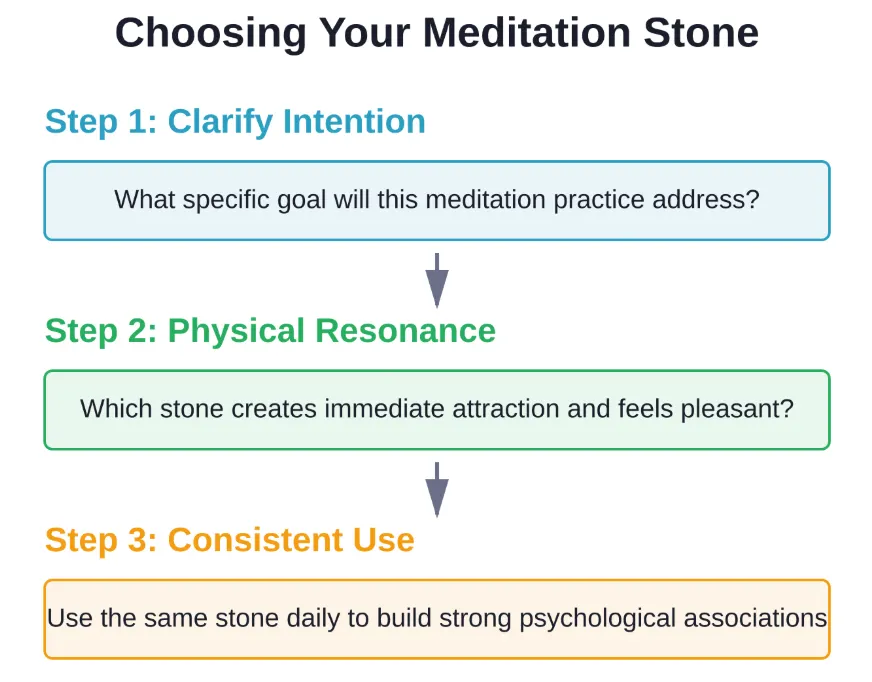
Start by clarifying what meditation practice aims to achieve. Different goals pair naturally with different stone characteristics.
For calming an anxious mind, stones with cool colors (blue, purple, white) and smooth textures create soothing associations. Research on meditation programs shows they can reduce psychological stress—pairing this evidence-based practice with visually calming stones reinforces the relaxation intention.
For energizing and focusing a scattered mind, stones with warm colors (red, orange, yellow) and defined crystal points create associations with clarity and direction.
For emotional work and heart-centered practice, pink and green stones connect with traditional heart chakra associations and create psychological links to love and compassion.
When browsing meditation stones, notice which ones draw immediate attention. This instinctive attraction often indicates personal resonance.
Community discussions among crystal practitioners consistently emphasize choosing stones that "feel right" rather than following rigid rules. If a particular specimen catches the eye repeatedly or feels pleasant to hold, that physical and emotional response matters more than any traditional correspondence.
The brain forms powerful associations through repeated pairing. When a stone feels attractive and special, using it during successful meditation sessions strengthens positive conditioning. Over time, simply picking up that stone can trigger the relaxation response.
Meditation stones come in various sizes and shapes, each offering different practical benefits.
Palm stones (smooth, flat ovals) fit comfortably in the hand and provide maximum tactile surface area. These work beautifully for seated meditation where the stone rests in the palm or between both hands.
Tumbled stones (small, rounded) can be carried in pockets as meditation reminders throughout the day. Touching the stone periodically brings mindful awareness to the present moment.
Points and wands provide directional focus for visualization practices. Their defined geometry creates natural focal points for attention.
Larger display pieces serve as visual anchors for meditation spaces. A substantial crystal on a meditation altar reinforces the dedicated practice area.
Beginning practitioners sometimes accumulate dozens of crystals, hoping more stones equal better results. This rarely works.
Better approach: choose one or two high-quality stones that genuinely resonate and use them consistently. The repetition builds stronger associations than constantly switching between different crystals.
A single amethyst cluster used daily for six months will likely support practice more effectively than twenty different stones rotated randomly. Meditation benefits accumulate through consistent practice—same principle applies to the tools that support it.
Owning meditation stones is one thing. Actually using them effectively is another.
These techniques integrate crystals into established meditation practices rather than replacing core mindfulness skills with magical thinking.
This foundational technique works with any meditation stone and any meditation style.
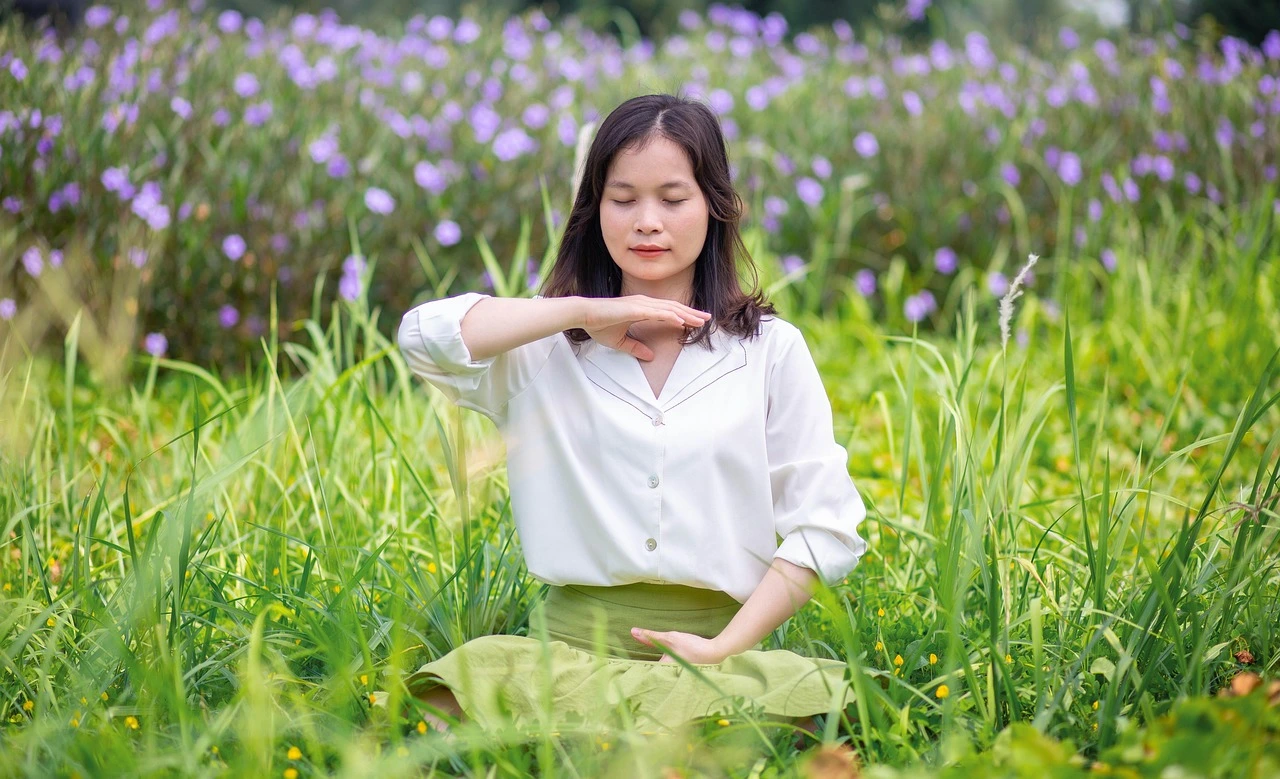
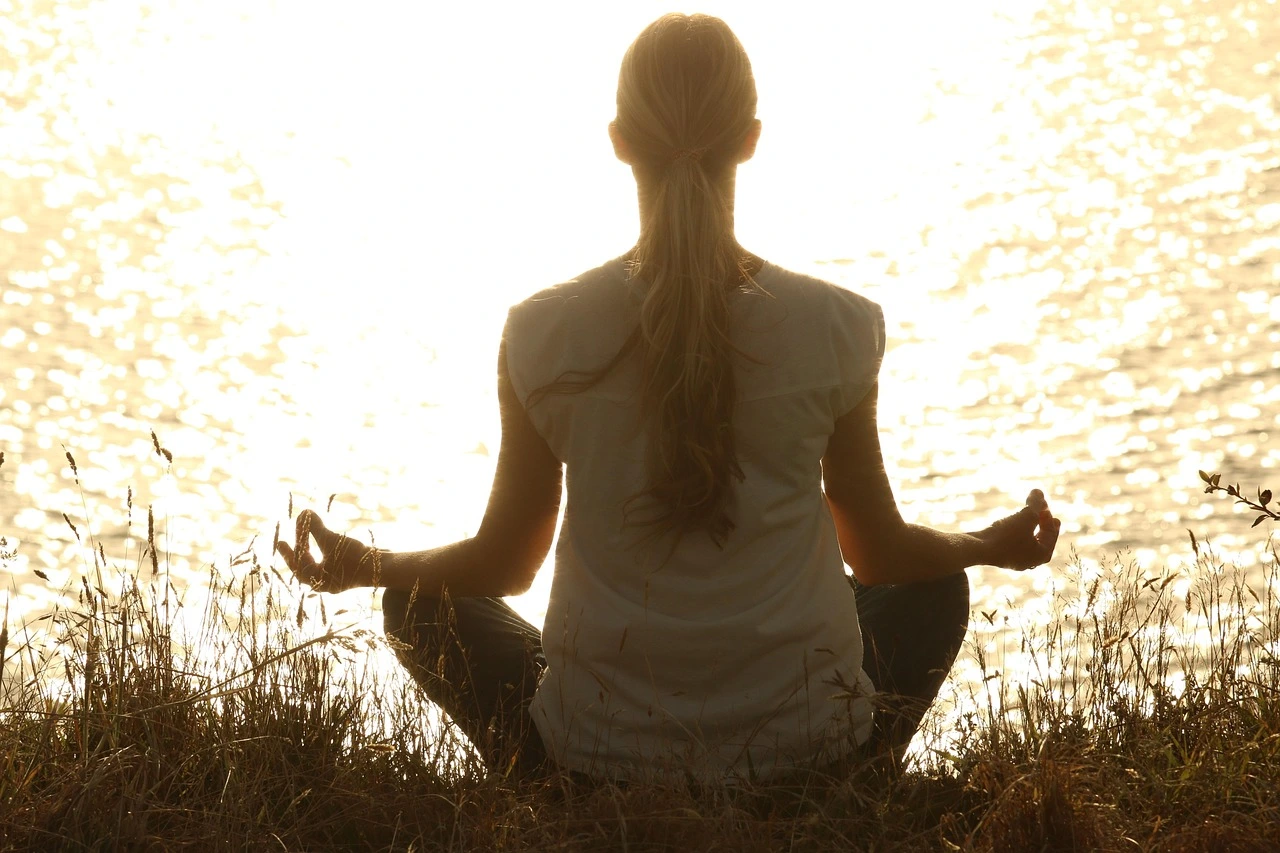
Sit in a comfortable meditation posture. Hold the chosen stone in the dominant hand, resting both hands in the lap or on the knees. Close the eyes and begin the normal meditation practice—breath awareness, body scan, mantra, or whatever technique is established.
When the mind wanders (which it will), bring attention to the physical sensation of the stone. Notice its temperature, weight, texture, and shape. This sensory awareness brings focus back to the present moment.
The stone becomes an anchor—similar to returning attention to the breath, but with a physical object providing the focal point. Over time, the sensation of holding the stone becomes strongly associated with the meditative state.
This technique particularly suits visually interesting stones like labradorite, amethyst clusters, or clear quartz points.
Place the stone at eye level approximately two feet away. Sit comfortably and soften the gaze on the stone without staring intently. Let the eyes rest gently on the crystal while maintaining relaxed awareness.
Notice colors, patterns, light reflections, and internal structures without analyzing or thinking about them. Simply observe with soft, receptive attention.
This practice develops concentration while keeping the eyes open—useful for practitioners who become drowsy during closed-eye meditation. The gentle visual focus prevents both sleepiness and mental wandering.
This technique draws from traditional energy work but functions psychologically through focused body awareness.
Lie comfortably on the back. Place meditation stones on various points along the body's centerline—traditional chakra locations from the base of the spine to the crown of the head.
Common placements include a grounding stone (black tourmaline) near the feet or base of spine, rose quartz on the heart center, and amethyst above the crown of the head.
The physical weight and temperature of the stones create sensation that draws attention to those body areas. This naturally facilitates body scan meditation—bringing awareness sequentially through different regions while noting the presence of each stone.
Small tumbled stones work perfectly for walking meditation practice.
Place a smooth stone in the pocket. During walking meditation, periodically touch or hold the stone while maintaining awareness of physical movement, breath, and surroundings.
The stone serves as a touchstone (literally) for mindfulness throughout the day. Whenever awareness drifts into rumination or worry, touching the stone cues a return to present-moment attention.
This technique extends meditation beyond formal sitting sessions into daily life—which research suggests amplifies benefits. Studies show that mindfulness practices can mediate physiological markers of stress, and these effects compound with consistent application throughout the day.
This practice maximizes the psychological power of meditation stones through explicit intention-setting.
Before beginning meditation, hold the stone in both hands. Clearly articulate (aloud or silently) the session's intention: "May this practice bring clarity," "May this meditation cultivate compassion," or whatever feels appropriate.
This ritual accomplishes several things. It creates a formal transition into meditation space, clarifies the practice focus, and associates the stone with specific intentions through repeated pairing.
Over time, simply holding the stone while stating an intention becomes a powerful conditioning cue. The brain learns: stone + intention = meditative state. This learned association strengthens with every repetition.
Once comfortable working with meditation stones, many practitioners develop curated collections for different purposes.
The key word is "curated." Quality and intentionality matter far more than quantity.
For practitioners beginning with meditation stones, a focused starter set covers most needs without overwhelming choice.
Recommended basic collection: clear quartz (universal amplifier), amethyst (mental clarity and stress relief), rose quartz (compassion and emotional work), and black tourmaline (grounding). These four stones cover the full spectrum of common meditation intentions.
This aligns with what commercial meditation stone sets typically offer. Many retailers sell curated collections in organza pouches specifically designed for meditation practice, often including information about each stone's traditional properties and suggested uses.
Beyond the basics, expand the collection only when a specific meditation need arises that existing stones don't address.
Feeling drawn to deepen spiritual practice? Add labradorite or selenite. Working through creative blocks? Consider carnelian or citrine. Developing concentration? Try fluorite or tiger's eye.
Let genuine practice needs drive acquisition rather than collecting for collecting's sake. Each new stone should serve a clear purpose in supporting specific meditation goals.
Proper care maintains both the physical quality of stones and the psychological associations they carry.
Physical cleaning is straightforward—most stones can be rinsed with water and dried with a soft cloth. Some stones (selenite, malachite, certain others) are water-sensitive and should be cleaned with a dry cloth only.
Many practitioners also perform energetic cleansing rituals. Whether these actually clear "negative energy" or simply provide psychological reset matters less than the intention. Common methods include moonlight exposure, smoke cleansing with sage or palo santo, or placing stones on selenite charging plates.
The cleansing ritual reinforces mindful relationship with the stones. Taking time to care for meditation tools creates respect for the practice itself.
Now for the uncomfortable truth that most crystal websites avoid: scientific evidence for healing properties of meditation stones is extremely limited.
But that doesn't mean they're useless.
Research published in CNS Spectrums examining alternative medical treatments for anxiety found that healing crystals produce effects through placebo mechanisms—specifically through conditioning and belief-related biases rather than inherent mineral properties.
The study noted that nonbelievers who use rational cognitive processing did not attribute efficacy to healing crystals, and their anxiety-stress levels did not change significantly after use. However, believers did experience measurable changes.
Here's what matters: placebo effects are real physiological responses. When someone genuinely believes a stone will help their meditation practice, and they use it with intention and consistency, measurable benefits can occur—not because of the stone's mineral composition, but because belief and ritual affect brain states.
While crystal healing remains scientifically unproven, meditation itself has robust evidence.
Research shows meditation programs result in small to moderate reductions of multiple negative dimensions of psychological stress. Studies demonstrate that mindfulness meditation can improve sleep quality. Evidence indicates that brief, daily meditation enhances attention, memory, and mood.
If meditation stones help people maintain consistent practice through ritual, focus, and intention-setting, they're serving a valuable function—regardless of whether quartz actually emits healing vibrations.
Scientific reviews note that research on performance factors in crystal healing shows that technical skills and standardization are less central to practice than in conventional medicine—crystal healers are less rule-bound and more focused on belief and individual experience.
This observation cuts both ways. Lack of standardization makes crystal healing difficult to study scientifically. But it also highlights that the practice operates through different mechanisms than pharmaceutical interventions—primarily through ritual, belief, and psychological factors.
For meditation stones specifically, this means effectiveness depends largely on the practitioner's approach. Someone using stones as meaningful ritual objects while maintaining realistic understanding may benefit greatly. Someone expecting magical healing while avoiding evidence-based treatment for serious conditions may experience harm through neglect of proper care.
The FDA provides guidance on complementary and alternative medicine products, noting that CAM encompasses practices, products, and therapies distinct from conventional medicine.
The word "complementary" is key. Meditation stones work best when complementing established meditation practice and evidence-based wellness approaches—not replacing them.
The FDA also warns about mixing medications and dietary supplements without consultation, and cautions about products containing undisclosed ingredients. While meditation stones don't pose the same risks as ingested substances, the warning emphasizes the importance of critical thinking with all alternative health products.
Even with realistic expectations, practitioners often make errors that limit the effectiveness of meditation stones.
The biggest mistake is accumulating dozens of crystals without developing consistent meditation practice.
Stones don't do the work. Meditation does. A single stone used during daily twenty-minute sessions produces far more benefit than a hundred crystals sitting unused on a shelf.
If the collection keeps growing while practice time stays static or decreases, priorities need adjustment.
Some people approach meditation stones hoping for instant transformation without the discipline of regular practice.
Research is clear: meditation benefits accumulate through consistent repetition. Studies examining meditation programs measured outcomes after weeks or months of regular practice—not after holding a crystal once.
Stones enhance practice but don't replace it. The hard work of training attention, developing awareness, and sitting with discomfort still falls to the practitioner.
Crystals make meditation more appealing to some people, but shouldn't replace learning proper technique.
Evidence-based meditation practices like mindfulness-based stress reduction (MBSR) have specific protocols that research has validated. Adding stones to these established practices can enhance personal meaning—but stones alone without proper instruction may lead to aimless sitting rather than actual meditation.
Consider learning meditation from qualified teachers or evidence-based programs before relying heavily on crystals as the primary practice structure.
This bears repeating because it's genuinely dangerous: meditation stones are not medical treatment.
Among gemstone believers in research studies, significant percentages attributed physical health benefits to stones. But no scientific evidence supports using crystals to treat medical or psychological conditions as a replacement for proper care.
Meditation itself can complement medical treatment for certain conditions (always with provider consultation). But attributing healing power to the stones rather than the meditation practice reflects magical thinking that can delay necessary treatment.
Paradoxically, practitioners sometimes ignore their own instincts in favor of "rules" about which stones to use.
If traditional correspondences say citrine enhances confidence but smoky quartz feels more personally meaningful for that intention, trust the personal connection. The stone that resonates individually will support practice more effectively than one chosen purely from a chart.
Research shows that belief and personal connection drive placebo responses. That means personal preference isn't superficial—it's actually the primary mechanism through which meditation stones work.
Not all crystals are created equal—quality, sourcing, and ethics matter.
The crystal industry has significant ethical concerns around mining practices, environmental impact, and labor conditions.
Responsible practitioners consider these factors when purchasing stones. Look for retailers who provide transparency about sourcing, prioritize fair trade practices, and support sustainable mining operations.
Some stones have particularly problematic supply chains. Research the specific crystal before purchasing to understand associated concerns.
For meditation purposes, "quality" doesn't necessarily mean museum-grade specimens—it means stones suited to their intended use.
Good meditation stones have pleasant tactile qualities (smooth surfaces for palm stones, interesting textures for sensory focus), appealing visual characteristics (colors and patterns that draw the eye), and appropriate size (comfortable to hold for extended periods).
Natural imperfections don't diminish meditation value. A perfectly clear quartz point costs significantly more than one with inclusions, but both serve meditation practice equally well. Often the inclusions create interesting visual focal points.
Purchase meditation stones from established crystal retailers with good reputations rather than random online marketplaces where authenticity and quality vary wildly.
Reputable sources provide accurate identification (some sellers mislabel stones deliberately or through ignorance), fair pricing, and return policies. They also tend to care more about ethical sourcing.
Local metaphysical shops allow hands-on examination before purchase—valuable for finding stones with good personal resonance. Rock and mineral shows offer wide selection and direct interaction with dealers.
The best meditation stone isn't the rarest specimen or most expensive crystal—it's the one that actually supports consistent practice.
Scientific evidence shows that meditation produces genuine mental health benefits through documented neurological mechanisms. Research also shows that healing crystals work through psychological factors like belief and conditioning rather than mineral properties.
But here's the thing: those psychological factors matter.
When a stone creates meaningful ritual, provides tactile focus, and reinforces intention, it serves a valuable function—regardless of whether it emits measurable energy. The ritual of selecting a stone, the sensory anchor of holding it, and the psychological associations built through repetition can genuinely deepen meditation practice.
The key is approaching meditation stones with balanced perspective. Appreciate them as beautiful natural objects that enhance ritual and focus. Understand they work through psychology and symbolism rather than magic. Maintain realistic expectations while remaining open to personal experience.
Most importantly, let stones support meditation practice without replacing the actual work. Twenty minutes of focused daily sitting with a simple tumbled stone produces vastly more benefit than an elaborate crystal collection gathering dust.
Choose a stone that resonates personally. Use it consistently. Let it become part of the ritual that signals: it's time to turn inward, settle the mind, and cultivate awareness.
That's where the real transformation happens—not in the crystal itself, but in the dedicated practice it helps maintain.
Ready to deepen meditation practice with intentional ritual? Select one meditation stone that genuinely speaks to personal intention. Use it during daily sessions for the next month. Notice whether the ritual enhances consistency, focus, or depth of practice. Let direct experience be the ultimate teacher.
I canceled my subscription with Headspace and I now pay for Mesmerize instead. I was hooked after the free trial! I love how customizable the sounds, meditations, and visuals are! Using this app has honestly become my favorite part of my day! ☺️ It helps me relax, meditate, visualize, sleep, and it does wonders for my anxiety/phobia/ocd tendencies. Thank you Mesmerize for giving us this amazing mental health tool! I told my therapist about this app and have been telling all my friends too. It’s just so helpful!
This is the second or third app in the mindfulness and meditation realm, and it’s the most scientific approach I have found. I have found these combinations of open monitoring, and focused attention meditation techniques are the most viable for those suffering from more severe forms of sleep, pain, and anxiety dysfunction one may be suffering from. Many of these approaches are used by professionals in a cognitive behavioral therapy setting. A truly complete approach in mindfulness and meditation.
I suffer from clinical depression and sometimes I get into a bad headspace but this app has really helped me whenever I’m in a bad mood I turn on the app listen to some person taking about breathing and look at cool figures on my phone and it makes me feel so much better I would highly recommend this app it’s worth the money
It didn’t take but five minutes of using this app to buy a yearly subscription. Worth it on so many levels. Easy to manipulate to what I like. Massive library of music, videos, etc.
Clear your mind and relax with a unique audio visual meditation experience.


.jpeg)