Discover the best nighttime meditation techniques backed by science. Learn proven methods to fall asleep faster and improve sleep quality naturally.
.webp)
Quick Summary: Nighttime meditation improves sleep quality by calming the mind, reducing stress, and preparing the body for rest. Research shows that meditation adoption growing significantly among U.S. adults, with mindfulness practices helping those with sleep disorders. The best nighttime meditation techniques include guided body scans, breathing exercises, and progressive muscle relaxation practiced 20-30 minutes before bed.
Sleep deprivation has become a widespread problem. According to Sleep Foundation data, about 35 percent of Americans get less than the recommended 7 hours of sleep each night, and up to 70 percent report feeling sleep deprived regularly.
Nighttime meditation offers a natural, evidence-based solution. But with hundreds of techniques available, which ones actually work?
Meditation practiced before bed addresses the root causes that keep people awake. The mind races with tomorrow's to-do list, stress from the day lingers, and the body remains tense.
Research from the National Center for Complementary and Integrative Health examined psychological interventions for sleep problems. The review included 2,776 college students ranging from healthy sleepers to those with diagnosed sleep disorders. About 22% of studies specifically investigated relaxation, mindfulness, and similar treatments.
Here's the thing though—meditation isn't a quick fix. It works by training the nervous system to shift from fight-or-flight mode into rest-and-digest mode. Over time, this creates a reliable pathway to sleep.
The American Academy of Sleep Medicine's 2021 clinical practice guidelines recommend psychological and behavioral interventions for chronic insomnia disorder in adults. Relaxation techniques, including meditation, appear in these recommendations based on research evidence.
A 2020 review examined 83 studies involving 6,703 participants who practiced meditation. The researchers found that 55 of those studies reported negative experiences, but only about 8 percent of participants actually experienced negative effects from meditation practice. That's comparable to the side effect rates of many other health interventions.
The majority of participants experienced benefits, particularly improvements in sleep latency (how long it takes to fall asleep) and sleep quality.

Mesmerize combines calming visuals, soundscapes, guided narrations, sleep stories, affirmations, hypnosis, and visual breathing in one app. It also includes focus music, nature sounds, white noise, and a sleep timer for quiet evening use.
For nighttime meditation, this can make it easier to settle into a slower rhythm before sleep. The app gives users a simple way to pair sound, visuals, and breathing without overthinking the session.
Mesmerize can help with:
👉 Download Mesmerize for iPhone or for Android to try visual meditation for free.
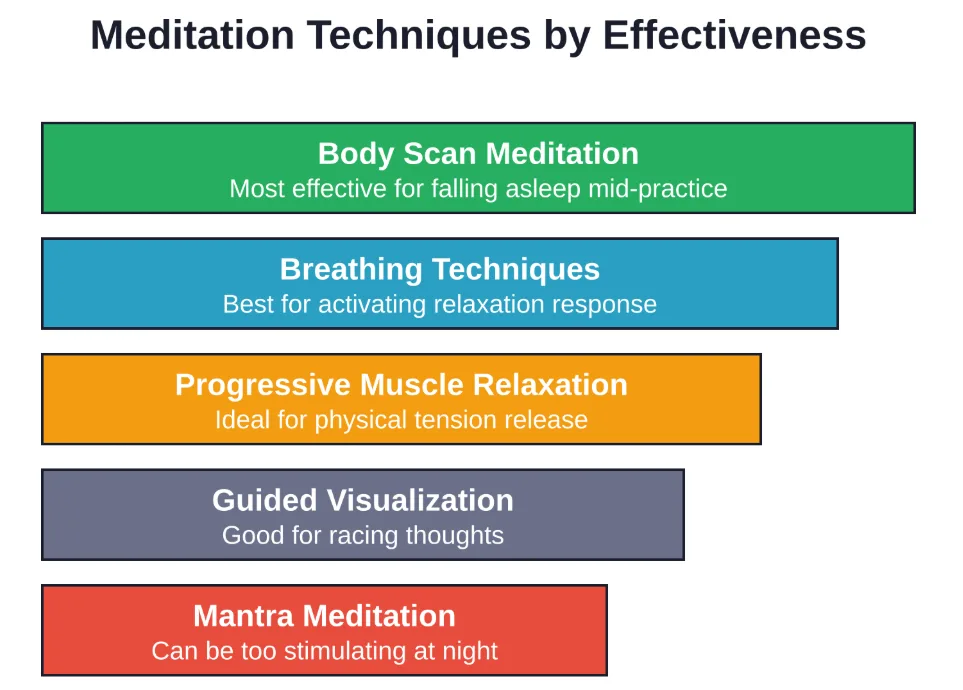
Not all meditation techniques work equally well for sleep. Some methods energize the mind, while others promote relaxation and drowsiness.
Body scan meditation systematically directs attention through different parts of the body, releasing tension as you go. This technique pairs well with bedtime because it's done lying down.
Start at the toes and slowly move attention upward through the legs, torso, arms, and head. Notice sensations without judgment. When tension appears, breathe into that area and let it soften.
Many people don't make it through a complete body scan before falling asleep. That's actually the goal.
Breath awareness forms the foundation of most meditation practices. For sleep specifically, slow, rhythmic breathing activates the parasympathetic nervous system.
The 4-7-8 technique works particularly well: breathe in through the nose for 4 counts, hold for 7 counts, exhale through the mouth for 8 counts. The extended exhale signals safety to the nervous system.
Repeat this cycle 4-8 times. Research from Harvard Medical School suggests that Dr. Herbert Benson recommends practicing mindfulness during the day for 20 minutes, the same amount suggested in studies showing sleep improvements.
This technique alternates between tensing and releasing muscle groups. The contrast helps identify where the body holds stress.
Tense each muscle group for 5 seconds, then release for 30 seconds. Move systematically through the body: feet, calves, thighs, glutes, abdomen, chest, arms, hands, neck, and face.
The physical component makes this especially effective for people who find pure mental meditation challenging.
Guided imagery replaces anxious thoughts with calming mental pictures. The mind can only hold one image at a time—make it peaceful.
Common scenarios include walking through a forest, floating on calm water, or descending a staircase. The key is engaging multiple senses: what do you see, hear, smell, and feel in this imagined place?
Guided recordings handle the narrative, allowing the mind to simply follow along.
Consistency matters more than duration. A 10-minute nightly practice beats an occasional 45-minute session.
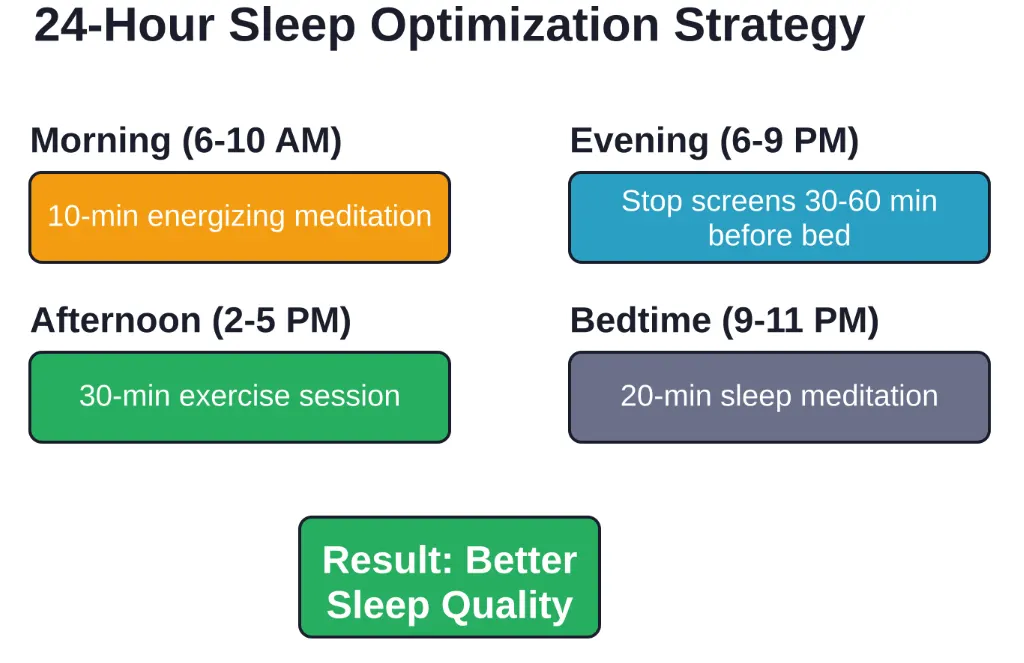
Start meditation 20-30 minutes before the target sleep time. This buffer allows the relaxation response to fully develop.
Sleep research indicates that stopping electronic device use 30-60 minutes before bed supports better sleep. Meditation fits perfectly into this transition period.
Begin with 10 minutes if meditation feels unfamiliar. Extend gradually as the practice becomes comfortable. Most sleep-focused sessions run 15-30 minutes.
The bedroom environment significantly impacts meditation effectiveness. Temperature, lighting, and sound all matter.
Dim the lights 30 minutes before meditation begins. Blue light from screens suppresses melatonin production. If using a meditation app, enable night mode or place the device face-down after starting.
Room temperature between 60-67°F promotes better sleep. Cooler temperatures help the body's natural temperature drop that signals sleep time.
Sound considerations depend on the environment. Quiet spaces work well for unguided meditation. Noisy environments benefit from guided meditations that provide focus points despite distractions.
Most nighttime meditation happens lying in bed. This differs from daytime meditation, which typically uses seated positions to maintain alertness.
Lie on the back with arms at the sides, palms up. This open position reduces physical tension. Place a pillow under the knees if lower back discomfort appears.
Side-lying works too, especially for those who sleep on their side. Use enough pillows to keep the spine aligned.
Sitting upright in bed with back support creates a middle ground. This position works well for people who fall asleep too quickly when lying down and want to complete the full meditation first.
Even with correct technique, challenges arise. Knowing how to handle them prevents abandoning the practice.
The mind will wander. That's not failure—it's normal brain activity.
When attention drifts, gently return focus to the breath, body sensations, or guided voice. No judgment needed. Each return strengthens the mental muscle that supports sleep.
Racing thoughts often signal incomplete processing from the day. Try a brief journaling session before meditation to download lingering concerns onto paper.
Lying still feels uncomfortable at first. The body fidgets. An itch appears. The position needs adjustment.
Allow small movements during the first 5 minutes as the body settles. After that, commit to stillness unless genuine discomfort arises.
Progressive muscle relaxation helps here. The systematic tensing and releasing gives restless energy an outlet before settling into stillness.
Some people fall asleep within minutes of starting meditation. This actually indicates sleep deprivation—the body desperately needs rest.
If the goal is completing a full meditation practice, do it earlier in the evening rather than in bed. Save the in-bed version for when falling asleep mid-practice is welcome.
Meditation improves sleep quality over time, but it's not a knockout pill. Some nights require more time.
If still awake after 20 minutes of meditation, get out of bed. The brain associates the bed with wakefulness if lying there awake for extended periods. Do a quiet activity in dim light for 15 minutes, then return to bed and try again.
The American Academy of Sleep Medicine's cognitive behavioral therapy for insomnia protocols include this stimulus control technique alongside relaxation practices.
Both approaches work, but they suit different situations and experience levels.
Guided meditations provide structure through verbal instructions. A narrator walks through each step: where to place attention, when to breathe, what to visualize. This external focus point helps prevent mind wandering.
Popular platforms offer thousands of sleep-specific guided meditations. Voices, styles, and lengths vary widely. Finding one that doesn't irritate after repeated listening takes some testing.
Unguided meditation requires more self-direction. The practitioner maintains focus without external prompts. This works well for experienced meditators who've internalized the techniques.
Real talk: most beginners benefit from guided meditation. The learning curve is gentler, and adherence rates are higher when someone talks you through the process.
Nighttime meditation works better when supported by daytime habits.
Morning or afternoon meditation sessions train the relaxation response. This makes the nighttime version more effective. The nervous system becomes familiar with the shift from activation to rest.
Research shows that meditation adoption among U.S. adults has increased significantly over the past two decades. This growth reflects increasing recognition of meditation's health benefits beyond just sleep.
Regular daytime practice—even 10 minutes—compounds into better sleep over weeks. The brain builds stronger neural pathways for relaxation.
Physical activity also matters. Research indicates that exercise during the day improves sleep efficiency and duration for adults. Combining exercise with meditation creates powerful synergy for sleep quality.
Sleep problems often stem from accumulated daytime stress. Addressing stress at the source prevents it from interfering with sleep later.
Brief meditation breaks during the workday—even 2-3 minutes of conscious breathing—reduce stress buildup. This means less to decompress when bedtime arrives.
Setting boundaries with technology helps too. Recent survey data shows that nearly two-thirds of children take their phones to bed, and about 40 percent of children own a cell phone by the time they reach fifth grade. Adults fare no better. Creating tech-free periods allows the nervous system to downregulate naturally.
Meditation significantly improves sleep for many people, but it's not a cure-all for every sleep disorder.
Chronic insomnia lasting more than three months warrants professional evaluation. The National Center for Complementary and Integrative Health notes that cognitive behavioral therapy for insomnia (CBT-I) receives the strongest recommendation from the American Academy of Sleep Medicine for treating chronic insomnia disorder.
Sleep apnea, restless leg syndrome, and other physiological sleep disorders require medical treatment. Meditation serves as a helpful complement but shouldn't replace necessary medical care.
That said, relaxation techniques including meditation appear in clinical guidelines alongside other treatments. They're part of a comprehensive approach rather than standalone solutions for serious sleep disorders.
Meditation works best within a broader sleep hygiene framework. Good sleep hygiene includes:
Each element supports the others. Meditation becomes more effective when the body maintains a regular circadian rhythm and the environment promotes rest.
Meditation is generally safe, but negative experiences occasionally occur.
The 2020 review of 83 studies found that about 8 percent of participants experienced negative effects from meditation practice. These effects included increased anxiety, disturbing thoughts, or feelings of dissociation.
People with certain mental health conditions—particularly trauma histories or psychotic disorders—should consult mental health professionals before beginning intensive meditation practices. Guided sleep meditations are typically gentle enough to be safe, but awareness matters.
Stop the practice if meditation consistently increases anxiety or creates disturbing experiences. Different techniques work for different nervous systems.
Knowledge means nothing without implementation. The best meditation technique is the one practiced consistently.
Start small. Commit to just 5 minutes for the first week. This removes the intimidation factor and builds momentum.
Use implementation intentions: "When I finish brushing my teeth, I will lie down and start my sleep meditation." Linking the new habit to an existing routine dramatically increases adherence.
Track practice without judgment. Mark off days on a calendar when meditation happens. Seeing the streak builds motivation, but missing a day isn't failure—just resume the next night.
Expect variability. Some nights meditation produces immediate deep sleep. Other nights the mind races despite practice. Both are normal. Long-term patterns matter more than individual sessions.
The data shows clear benefits: reduced sleep latency, improved sleep quality, and better next-day functioning. But those benefits accrue through regular practice, not occasional experimentation.
Adults need at least 7 hours of sleep nightly, yet 35 percent consistently get less. The resulting sleep deprivation affects job performance, increases accident risk, and undermines health. Nighttime meditation offers an accessible, evidence-based tool for addressing this widespread problem.
Start tonight. Choose one technique from this article—body scan, breathing focus, or progressive muscle relaxation. Practice for 10-20 minutes before the planned sleep time. Notice what happens without judgment.
Better sleep isn't about perfection. It's about consistent practices that support the body's natural rest processes. Nighttime meditation provides exactly that support.
I canceled my subscription with Headspace and I now pay for Mesmerize instead. I was hooked after the free trial! I love how customizable the sounds, meditations, and visuals are! Using this app has honestly become my favorite part of my day! ☺️ It helps me relax, meditate, visualize, sleep, and it does wonders for my anxiety/phobia/ocd tendencies. Thank you Mesmerize for giving us this amazing mental health tool! I told my therapist about this app and have been telling all my friends too. It’s just so helpful!
This is the second or third app in the mindfulness and meditation realm, and it’s the most scientific approach I have found. I have found these combinations of open monitoring, and focused attention meditation techniques are the most viable for those suffering from more severe forms of sleep, pain, and anxiety dysfunction one may be suffering from. Many of these approaches are used by professionals in a cognitive behavioral therapy setting. A truly complete approach in mindfulness and meditation.
I suffer from clinical depression and sometimes I get into a bad headspace but this app has really helped me whenever I’m in a bad mood I turn on the app listen to some person taking about breathing and look at cool figures on my phone and it makes me feel so much better I would highly recommend this app it’s worth the money
It didn’t take but five minutes of using this app to buy a yearly subscription. Worth it on so many levels. Easy to manipulate to what I like. Massive library of music, videos, etc.
Clear your mind and relax with a unique audio visual meditation experience.


.jpeg)