Discover the best teas for meditation backed by research. From L-theanine-rich green tea to calming herbal blends—find your perfect mindfulness companion.
.webp)
Quick Summary: The best teas for meditation include green tea (especially matcha) for L-theanine's calming properties, herbal blends with chamomile and lavender for stress reduction, oolong for balanced focus, and caffeine-free rooibos for evening practice. Research shows L-theanine reduces psychological stress responses while promoting alpha brain wave activity associated with relaxed alertness.
Tea and meditation have shared a profound connection for over a thousand years. Buddhist monks first discovered that certain teas enhanced their contemplative practices, creating what many describe as a state of "calm alertness."
But which teas actually work? And what does the science say?
The U.S. tea market is estimated to top $16 billion, with wellness-focused varieties driving much of that expansion. Not every cup delivers meditation benefits, though. Some varieties can disrupt focus or trigger jitters rather than tranquility.
This guide examines the most effective teas for meditation based on both traditional use and modern research. From the L-theanine content in green tea to herbal blends designed for stress relief, here's what actually makes a difference.
The ritual itself matters. Preparing tea creates a natural transition—a moment to slow down before settling into meditation.
Research published in medical journals reveals that specific compounds in tea modulate brain function. L-theanine, an amino acid found naturally in tea leaves, affects mental state in measurable ways. Studies using electroencephalograph (EEG) monitoring show it promotes alpha brain wave activity associated with relaxed alertness.
Here's what sets meditation teas apart from regular beverages:
Traditional tea ceremonies in Zen Buddhism weren't arbitrary. Monks recognized that the right tea varieties enhanced concentration during long meditation sessions while preventing drowsiness.

Mesmerize is a meditation app with visual breathing, relaxing soundscapes, guided narrations, sleep stories, affirmations, hypnosis, and focus music. It can help create a calmer atmosphere before, during, or after a quiet tea ritual.
For people who use tea as part of meditation, Mesmerize adds a soft visual and audio layer to the routine. It works well for slow breathing, evening wind-down, or a short pause during the day.
Mesmerize can help with:
👉 Download Mesmerize for iPhone or for Android to try visual meditation for free.
Green tea stands out as perhaps the most studied meditation tea. The reason? L-theanine content.
Medical research demonstrates that L-theanine blocks L-glutamic acid binding to glutamate receptors in the brain. This mechanism reduces psychological and physiological stress responses without causing sedation.
What makes green tea particularly effective:
Matcha, a powdered green tea, concentrates these benefits further. Because the entire leaf is consumed rather than steeped, matcha delivers higher L-theanine levels than regular green tea.
The combination of L-theanine and moderate caffeine creates what practitioners describe as "mindful alertness"—present and focused but not wired.
Not everyone wants caffeine during meditation, especially for evening practice. Herbal infusions offer powerful alternatives.
Research on aromatherapy and stress reduction provides evidence for specific herbs. Studies examining lavender and chamomile essential oil inhalation found they decreased depression, anxiety, and stress levels in community-dwelling older adults.
While these studies focused on aromatherapy, drinking herbal teas delivers similar aromatic compounds plus beneficial plant chemicals.
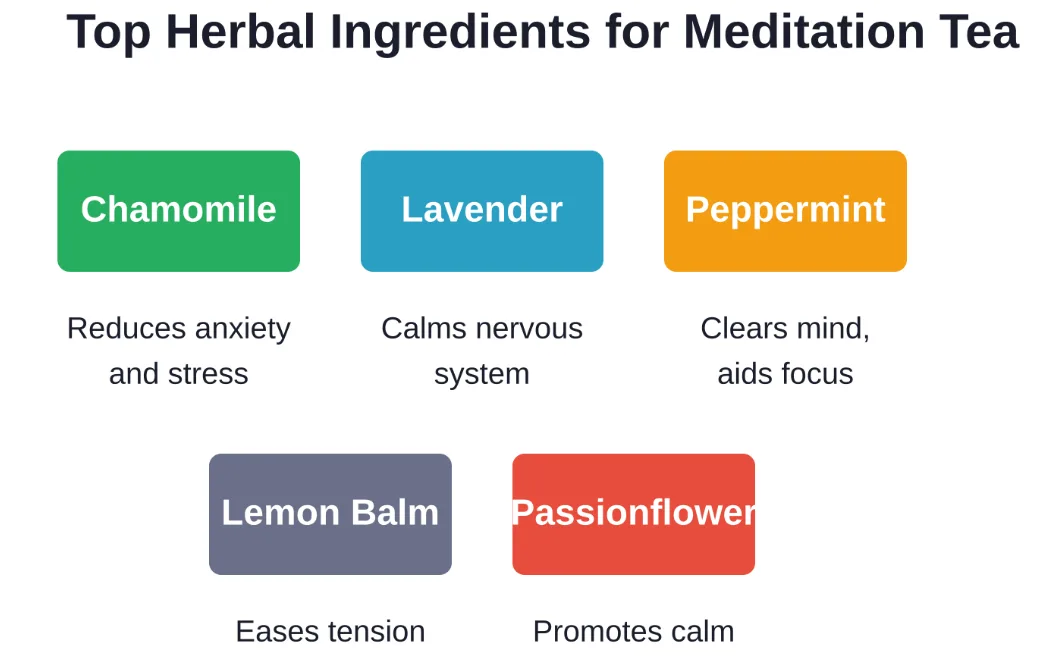
Best herbal ingredients for meditation blends:
Many meditation-specific blends combine several herbs to create synergistic effects. The variety matters less than consistency—using the same blend creates association between the tea's aroma and meditative state.
Oolong occupies the middle ground between green and black tea. Partially oxidized, it offers moderate caffeine with substantial L-theanine content.
Traditional Chinese tea ceremonies often feature oolong varieties. The complex flavor profile requires attention, naturally drawing focus to the present moment.
Why oolong works well for meditation:
Oolong varieties range from light and floral to dark and roasted. Lighter oolongs resemble green tea in effect, while darker varieties approach black tea's boldness. For meditation, many practitioners prefer lighter to medium oxidation levels.
Rooibos, sometimes called red tea, contains zero caffeine naturally. This South African herb offers a completely different chemical profile from true tea.
Rooibos advantages for meditation:
Rooibos won't provide the alert focus of green tea, but that's precisely the point for bedtime meditation. The absence of stimulants allows natural drowsiness to develop after practice.
Choosing the right tea depends on practice style, timing, and personal response to caffeine.
Three key considerations:
Community discussions among meditation practitioners suggest consistency matters more than variety. Using the same tea creates ritual and association—the familiar aroma signals the mind that meditation time has begun.
The preparation itself can extend meditation rather than simply preceding it.
Traditional tea ceremonies elevate brewing to contemplative art. While elaborate ceremonies aren't necessary, mindful preparation enhances the experience.
Basic mindful tea preparation:
This process naturally slows the mind and body. By the time tea is ready, the transition into formal meditation practice feels seamless.
Some practitioners incorporate tea directly into meditation—sipping slowly between periods of sitting, using taste and warmth as focus objects.
Not every tea supports meditation practice. Some varieties or preparations can work against the desired mental state.
Skip these:
Real talk: fancy packaging doesn't guarantee quality. Some "meditation blends" are marketing fluff with premium prices. Look for transparent ingredient lists and reputable sources.
Different meditation styles pair naturally with specific teas.
Transcendental meditation practitioners and other technique-specific groups have explored how tea timing affects practice. A randomized controlled trial on effects of the Transcendental Meditation program found associations between decreased blood pressure and decreased psychological distress, though this wasn't tea-specific.
The point isn't that tea causes meditation benefits—proper technique does that. But the right tea can support and enhance the conditions for effective practice.
The best tea for meditation is ultimately the one that supports your individual practice consistently.
Start with evidence-based choices: green tea or matcha for morning practice when alert focus serves the session. Herbal blends with chamomile and lavender for evening meditation. Oolong when you want balance. Rooibos for bedtime reflection.
Pay attention to how your body and mind respond. Does green tea enhance concentration or create restlessness? Do herbal blends promote calm or cause drowsiness? Individual biochemistry varies—trust your direct experience over general recommendations.
The ritual matters as much as the chemistry. Preparing tea with intention, maintaining consistent timing, using the same cup—these patterns signal your nervous system that meditation time has arrived. The tea becomes both pharmacological support and psychological anchor.
Quality ingredients from reputable sources ensure you're getting actual beneficial compounds rather than pesticides and fillers. Organic certification, transparent sourcing, and pure ingredients without artificial additives make the difference.
But here's the thing: tea supports meditation, it doesn't replace proper technique. Even the best meditation tea won't substitute for consistent practice, proper instruction, and patient cultivation of awareness.
Ready to deepen your practice? Start with one variety that matches your meditation timing and style. Commit to it for two weeks, preparing it mindfully before each session. Notice what shifts. Then you'll know what works—not based on articles or studies, but through your own direct experience.
I canceled my subscription with Headspace and I now pay for Mesmerize instead. I was hooked after the free trial! I love how customizable the sounds, meditations, and visuals are! Using this app has honestly become my favorite part of my day! ☺️ It helps me relax, meditate, visualize, sleep, and it does wonders for my anxiety/phobia/ocd tendencies. Thank you Mesmerize for giving us this amazing mental health tool! I told my therapist about this app and have been telling all my friends too. It’s just so helpful!
This is the second or third app in the mindfulness and meditation realm, and it’s the most scientific approach I have found. I have found these combinations of open monitoring, and focused attention meditation techniques are the most viable for those suffering from more severe forms of sleep, pain, and anxiety dysfunction one may be suffering from. Many of these approaches are used by professionals in a cognitive behavioral therapy setting. A truly complete approach in mindfulness and meditation.
I suffer from clinical depression and sometimes I get into a bad headspace but this app has really helped me whenever I’m in a bad mood I turn on the app listen to some person taking about breathing and look at cool figures on my phone and it makes me feel so much better I would highly recommend this app it’s worth the money
It didn’t take but five minutes of using this app to buy a yearly subscription. Worth it on so many levels. Easy to manipulate to what I like. Massive library of music, videos, etc.
Clear your mind and relax with a unique audio visual meditation experience.


.jpeg)