
Learn how to make meditation a daily habit with gentle structure, flexible tools, and realistic tips that actually fit into busy modern life.
.webp)
Daily meditation sounds good in theory. But when the day starts fast and ends in a blur, it’s usually the first thing to get skipped. That doesn’t mean something’s wrong. It just means the habit needs a softer entry point - something that feels doable, even on days when the mind’s all over the place. With a few small shifts, meditation can become less of a task and more of a space the body actually wants to return to.
Meditation isn’t just a tool for stress relief - though yes, it does help with that. It’s more like a reset button for the nervous system, a quiet check-in with the part of you that isn’t constantly reacting to notifications, headlines, or to-do lists.
Here’s what tends to shift when meditation becomes part of the daily rhythm:
None of this happens overnight. And that’s fine. What matters is that it builds - not with effort, but with repetition. Same time, same space, and suddenly it starts to stick.

At Mesmerize, we designed the app to make daily meditation feel less like a task and more like something the body naturally returns to. Instead of asking for deep focus or stillness, we guide attention gently - through animated visuals, breathing patterns, and immersive soundscapes that help the mind slow down on its own.
We built Mesmerize to be flexible. Users can adjust voice pacing, switch narration off, change visuals, or follow visual breathing when thinking feels hard. Everything is meant to reduce effort and remove friction, so showing up feels easier than skipping.

The app works on both iOS and Android and supports offline use. From the beginning, we’ve kept it privacy‑focused - no ads, no unnecessary permissions, no marketing emails. Our aim is simple: create a calm, reliable space people can return to, even on days when focus feels out of reach.
The biggest reason people don’t meditate daily? They try to do too much, too soon. Long sessions, strict rules, big expectations. And then when it doesn’t feel peaceful right away, they assume they’re doing it wrong. But here’s the thing - meditation works better when the stakes are low.
Two minutes. Maybe five. That’s more than enough to start. Let the mind settle, let the body breathe, and don’t push for results. It’s not a performance - it’s a pause. Some days it’ll feel calm. Other days it won’t. Both count.
Starting small also makes it easier to show up again tomorrow. That’s where the real shift happens - not in one perfect session, but in many imperfect ones, stacked quietly over time.
The brain’s going to wander. Thoughts will pop in. That’s normal - actually, it’s kind of the point. Catching that moment and gently coming back to the breath? That is the practice.
No one’s giving out medals for meditating well. The real win is just showing up. Whether that means closing your eyes at the kitchen table or taking a few quiet breaths before opening your laptop - it counts.
Trying to force a habit usually backfires. What tends to work better is building trust. With the process, with the body, with the fact that not every session needs to feel “deep” to matter.
The goal isn’t to reach some perfect mental state. It’s to give the nervous system a daily window to breathe. Keep it light, keep it short, and let it grow naturally from there.
Meditation gets easier when the space around it feels familiar. It doesn’t have to be perfect - just somewhere the body knows how to settle. Maybe it’s a chair by the window. A quiet spot on the floor. A seat on the train with noise-canceling headphones. Wherever it is, the important part is consistency. Same place, same time, and eventually the brain starts to recognize: “oh, this is the part where we slow down.”
Timing works the same way. Mornings are great if the house is quiet. Evenings work if the brain needs help winding down. But there’s no best time, just the time that keeps happening. Some people pause after lunch. Others fit it in between scrolling and sleep. No judgment. The right time is the one you can actually stick to without rearranging your life.
It doesn’t need to feel sacred. It just needs to feel doable. A little pocket of space - mental or physical - that feels like yours. That’s what turns meditation from a chore into something the body starts to crave.

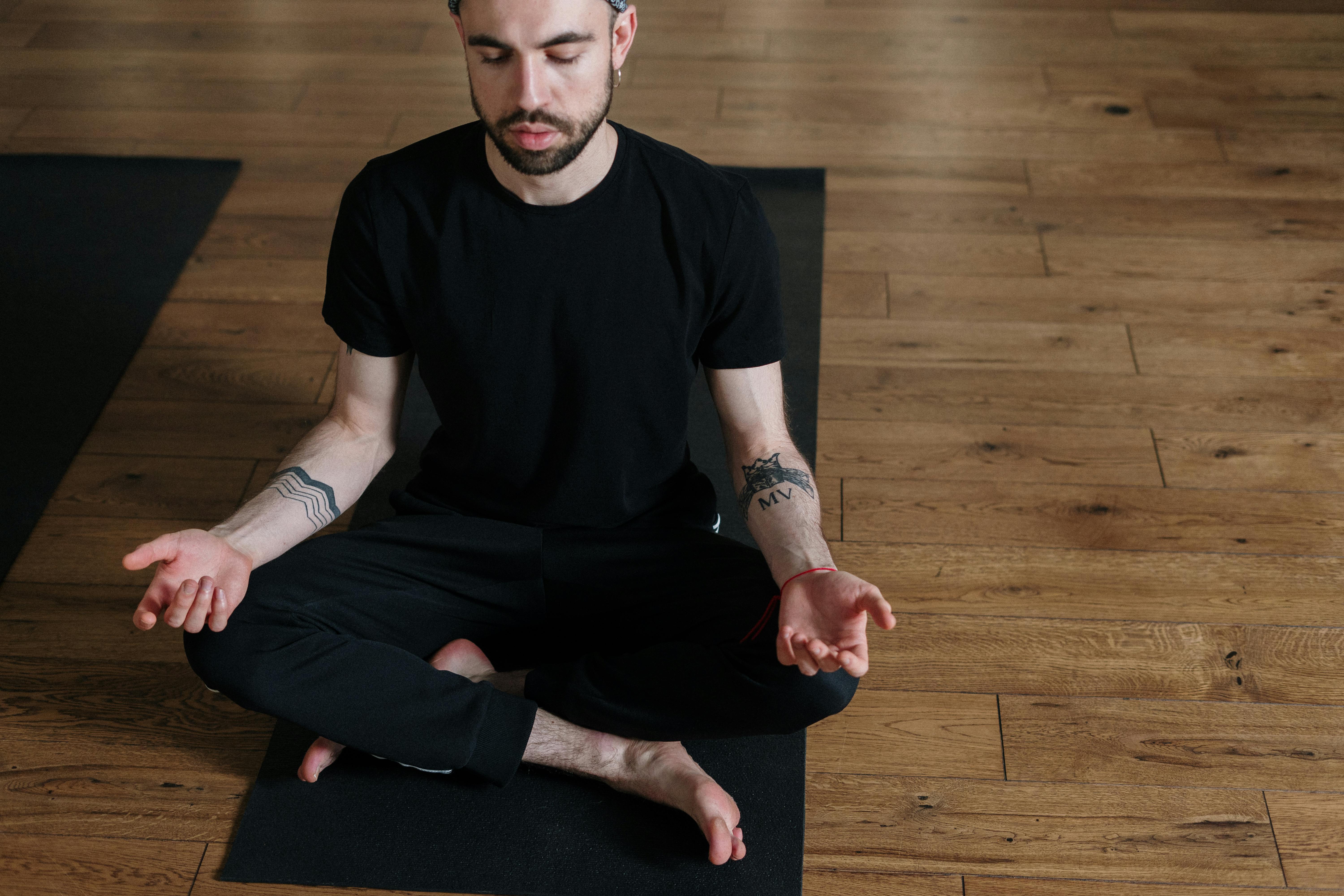
Forget the image of someone sitting cross-legged on a mountain. Meditation doesn’t require a pose. What matters more is whether the body feels safe enough to soften - and that looks different for everyone.
Try out a few options and see what the body prefers:
Whatever position you land on, try sticking with it for a few days at a time. Reducing decision fatigue makes it easier to drop in. And if something starts to feel off, change it - not because you’re doing it wrong, but because your body’s giving you new information. Listen to that. Always.
Daily meditation doesn’t always feel like a deep exhale. Some days, it’s more like sitting in a fog. Other days, the mind won’t stop spinning. That’s part of it - and honestly, it’s where the real practice begins.
It’s supposed to. That’s what minds do. The goal isn’t to stay laser-focused. It’s to notice when your attention drifts and gently bring it back. That moment of noticing? That is meditation. The rest is just weather passing through.
And that’s okay. Meditation doesn’t need to feel profound to be useful. It’s not always relaxing. Sometimes it’s just... quiet. Still. A few minutes where nothing is asked of you. That kind of space matters - even if it feels uneventful.
This one’s tricky. People often expect instant peace or clarity. But the benefits usually show up later - in how you respond to stress, or how you fall asleep faster, or how you’re just slightly less reactive in traffic. Trust that something’s shifting, even if you can’t name it yet.
Totally normal. "Am I doing this right?" “Why can’t I focus?” Those thoughts will come up. Let them. Treat them like background noise - you can notice them, but you don’t have to follow them.
One day you’ll realize you’re breathing deeper during a hard conversation. Or pausing before reacting. Or falling asleep without the loop of overthinking. Meditation doesn’t announce itself. It just starts showing up in moments that used to unravel you.
So no - it won’t always feel magical. But it doesn’t need to. The consistency is what makes it work, not the intensity.
Most of the time, discomfort during meditation just means the nervous system is learning something new. Restlessness, racing thoughts, even irritation - all pretty normal. But once in a while, the experience goes beyond that. If a session keeps leaving you more anxious, tight, or panicked - not just occasionally, but consistently - that’s something to pay attention to.
Meditation isn’t supposed to feel like a trap. If it starts amplifying difficult emotions in a way that doesn’t fade after the session, it’s okay to pause. There’s no shame in needing extra support. Talking to a therapist or counselor can be part of the process, not a failure of it. You’re allowed to adjust the approach or take a break altogether. The goal was never to push through - it was to feel safer in your own body. Some days, that means backing off. And that’s valid too.
You don’t need music, mantras, or a perfect setting to begin. Just a few minutes and a body that’s willing to pause. Here’s an easy way in - no overthinking required.
This might feel subtle, or even a little flat at first. That’s fine. You’re not aiming for transcendence - just a quiet check-in. Let it be simple. Let it be enough.
Most people don’t quit meditation because it’s too hard. They stop because it starts to feel like one more thing to get right. But the real shift happens when meditation becomes the opposite of that - a soft place to land, even for just a few minutes.
There’s no gold star for sitting longer. No need to aim for silence or stillness. The habit builds through repetition, not perfection. When the practice is designed to feel easy to return to - short, visual, forgiving - it starts to hold its own weight in the day. And that’s when it quietly becomes daily, without force.
I canceled my subscription with Headspace and I now pay for Mesmerize instead. I was hooked after the free trial! I love how customizable the sounds, meditations, and visuals are! Using this app has honestly become my favorite part of my day! ☺️ It helps me relax, meditate, visualize, sleep, and it does wonders for my anxiety/phobia/ocd tendencies. Thank you Mesmerize for giving us this amazing mental health tool! I told my therapist about this app and have been telling all my friends too. It’s just so helpful!
This is the second or third app in the mindfulness and meditation realm, and it’s the most scientific approach I have found. I have found these combinations of open monitoring, and focused attention meditation techniques are the most viable for those suffering from more severe forms of sleep, pain, and anxiety dysfunction one may be suffering from. Many of these approaches are used by professionals in a cognitive behavioral therapy setting. A truly complete approach in mindfulness and meditation.
I suffer from clinical depression and sometimes I get into a bad headspace but this app has really helped me whenever I’m in a bad mood I turn on the app listen to some person taking about breathing and look at cool figures on my phone and it makes me feel so much better I would highly recommend this app it’s worth the money
It didn’t take but five minutes of using this app to buy a yearly subscription. Worth it on so many levels. Easy to manipulate to what I like. Massive library of music, videos, etc.
Clear your mind and relax with a unique audio visual meditation experience.


.jpeg)
.webp)
.webp)


