
Discover the best guided meditation YouTube channels backed by science. Free sessions from 7-30 minutes for stress relief, sleep, and anxiety. Start today!
.webp)
Let's be honest—finding quality guided meditation on YouTube can feel like searching for a needle in a haystack. You've got everything from 10-hour ambient noise videos to someone whispering affirmations in their bedroom.
But here's the good news: there's genuinely excellent meditation content on YouTube that won't cost you a dime. And according to research published by the National Center for Complementary and Integrative Health, meditation programs can result in small to moderate reductions of multiple negative dimensions of psychological stress.
I've spent way too much time exploring meditation channels (for science, obviously), and I'm going to share what actually works. No fluff, no hour-long sessions you'll never finish, just practical recommendations that real people use.
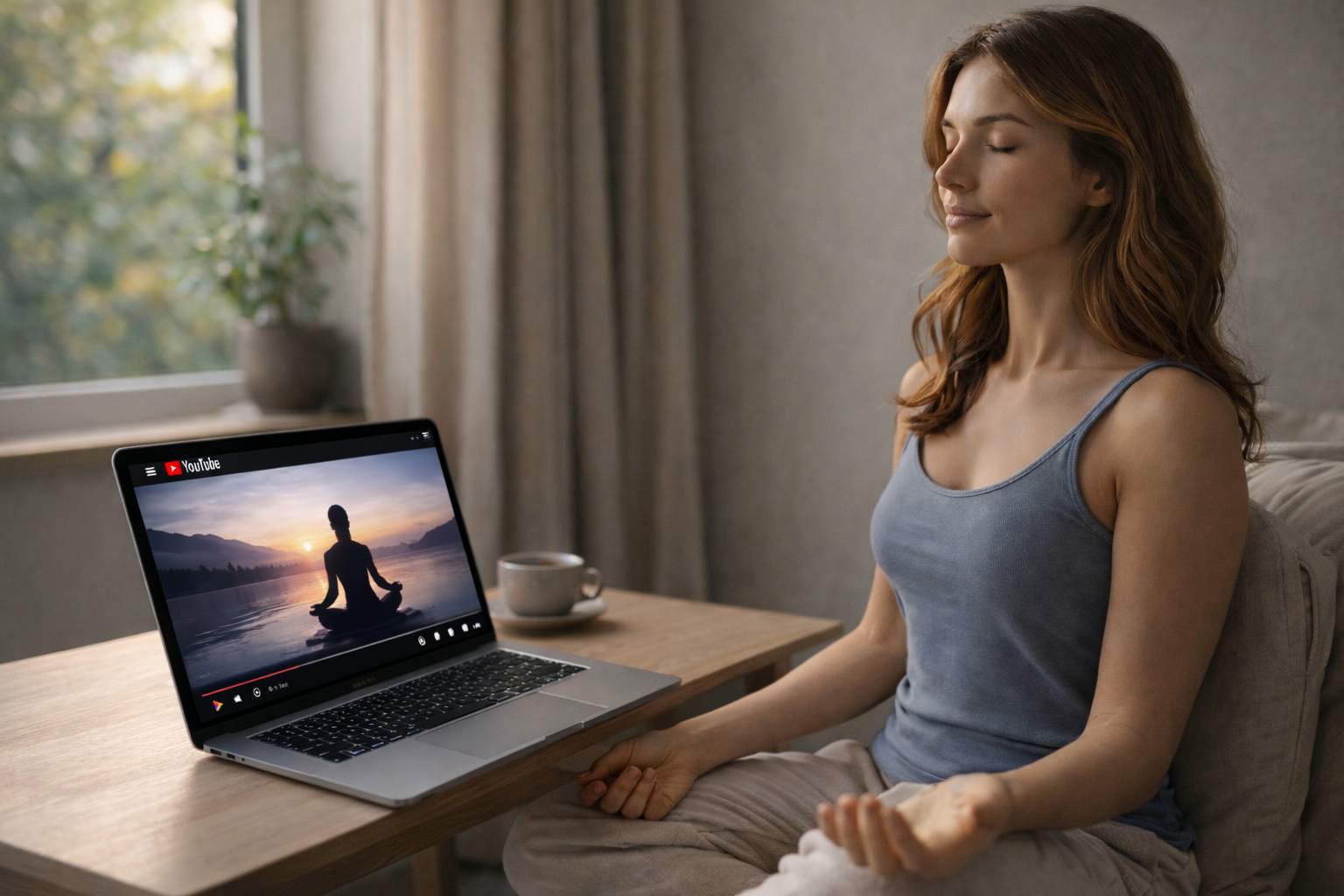
Look, I get it. There are fancy meditation apps that cost money. But YouTube offers something special: variety without commitment.
You can try a 7-minute anxiety-relief session one day and a 30-minute body scan the next. Don't like someone's voice? Move on. No subscription, no guilt.
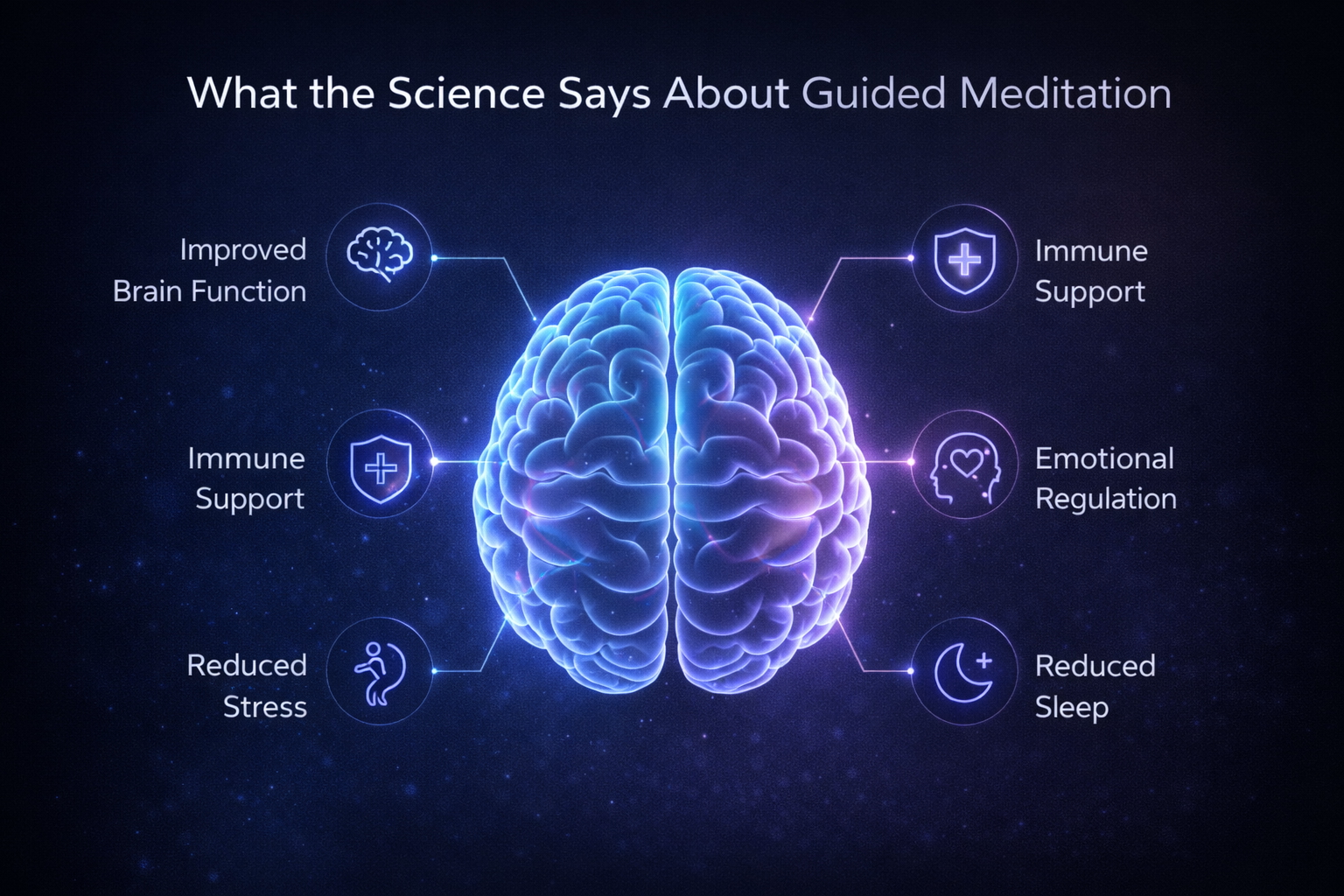
According to research from the NIH, meditation has shown positive brain changes through MRI imaging and improved several brain functions. The format doesn't matter as much as the consistency. Whether you're using a paid app or YouTube, the benefits are real.
Community discussions on Reddit consistently praise the accessibility of YouTube meditation. One user noted, "Surprised no-one has mentioned Insight Timer app. It's free and has 100s of guided meditations of every style and type." But YouTube's advantage? You don't even need to download an app.
This channel comes up repeatedly in community discussions, and for good reason. Their production quality is excellent, and they've mastered the art of not being too woo-woo.
What I like about The Honest Guys is their range. They've got everything from 5-minute quick resets to hour-long deep dives. The narration is calming without being sleep-inducing (unless that's what you're going for).
Real talk: their guided meditations work particularly well for beginners who find silence uncomfortable. The gentle guidance keeps your mind from wandering into tomorrow's to-do list.
If you're struggling with sleep or anxiety, Michael Sealey's channel is a goldmine. One Reddit user mentioned using his 30-minute body scan meditation regularly, though they noted getting "a little bored of it" after a week—which is actually a sign you might be ready to explore his other content.
His voice has this naturally calming quality that works especially well for sleep meditations. The channel features hypnotherapy-style sessions that blend traditional meditation with visualization techniques.
Sound familiar? That feeling when you're tired but your brain won't shut off? Yeah, that's exactly what his content addresses.
Here's where we get into the research-backed heavy hitters. As one Reddit user pointed out, "Jon Kabat-Zinn has great guided meditations. He's also the guy that has probably done the most research around meditation and stress-reduction."
Kabat-Zinn developed Mindfulness-Based Stress Reduction (MBSR), which has been studied extensively. His YouTube content isn't flashy, but it's authentic and grounded in decades of research and practice.
The meditations are longer and more traditional, which makes them perfect for people who want to deepen their practice beyond quick stress relief.
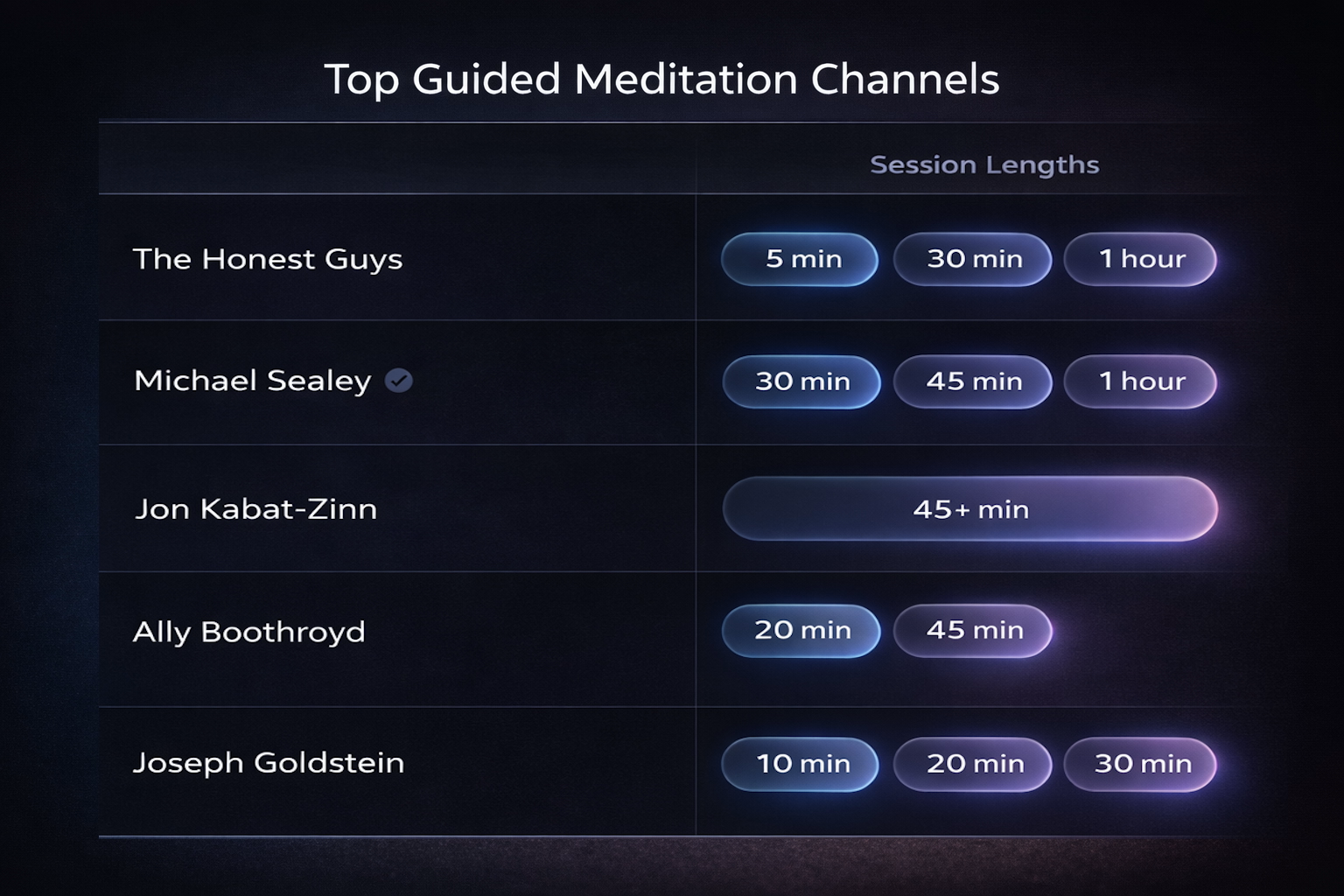
According to user experiences shared online, Ally Boothroyd's Yoga Nidra meditations are particularly effective. Yoga Nidra, sometimes called "yogic sleep," guides you into a state between waking and sleeping.
Her content is available on YouTube, Insight Timer, and her own platform. The meditation style works well for people who struggle with traditional seated meditation or need help with deep relaxation.
Community discussions highlight Joseph Goldstein as being "all over YouTube and podcasts with lots of free meditations." One user simply stated, "This guy is the best."
Goldstein brings decades of Buddhist meditation practice to his teaching, but presents it in an accessible, secular way. His meditations tend to be more instruction-focused, which helps if you're trying to build a self-guided practice.
Research from the National Center for Complementary and Integrative Health has examined meditation effectiveness. Studies on mindfulness meditation suggest that consistent practice matters more than duration.
But here's the thing—longer isn't always better. Especially when you're starting out.
I've found that starting with 7-10 minute sessions makes meditation feel doable rather than daunting. You can always extend as your practice develops.
Let's talk research for a minute, because this isn't just feel-good pseudoscience.
According to research published in Cureus, meditation and its mental and physical health benefits are well-documented. MRI studies have shown positive brain changes and improved brain function in regular meditators.
The National Institutes of Health notes that clinicians should be aware that meditation programs can result in small to moderate reductions of multiple negative dimensions of psychological stress. They recommend clinicians be prepared to discuss meditation as part of addressing psychological stress with patients.
Research on mindfulness meditation specifically has shown effects on:
Research on meditation practices has found positive health outcomes in healthcare workers, suggesting that consistent practice can impact well-being in high-stress professions.
This involves systematically focusing attention on different parts of your body. Michael Sealey's 30-minute body scan is popular in this category.
Body scans work well for releasing physical tension you didn't even know you were holding. That tightness in your shoulders? Yeah, that.
The most traditional form of meditation, focusing on breath awareness. One Reddit user mentioned "onthatpath" on YouTube, noting that the channel explains anapanasati (mindfulness of breathing) in a way that's particularly effective when done correctly.
These meditations teach you to notice when your mind wanders and gently bring attention back to your breath. It's simple, but not easy.
These guide you through imagining peaceful scenes or positive outcomes. They're especially helpful for anxiety and can be surprisingly powerful for people who respond well to imagery.
User experiences suggest that guided meditations on gratitude, compassion, and forgiveness are among the best on YouTube. These practices focus on cultivating positive emotions toward yourself and others.
Sound too soft? Research suggests these practices can help improve overall well-being.
This is basically guided meditation in a lying-down position that induces deep relaxation. Ally Boothroyd's Yoga Nidra sessions get consistent praise for their effectiveness.
Perfect for when you're too wound up to sit still but need to decompress.
Okay, so what about actually sticking with it? Research shows consistency matters more than duration.
Here's what works:
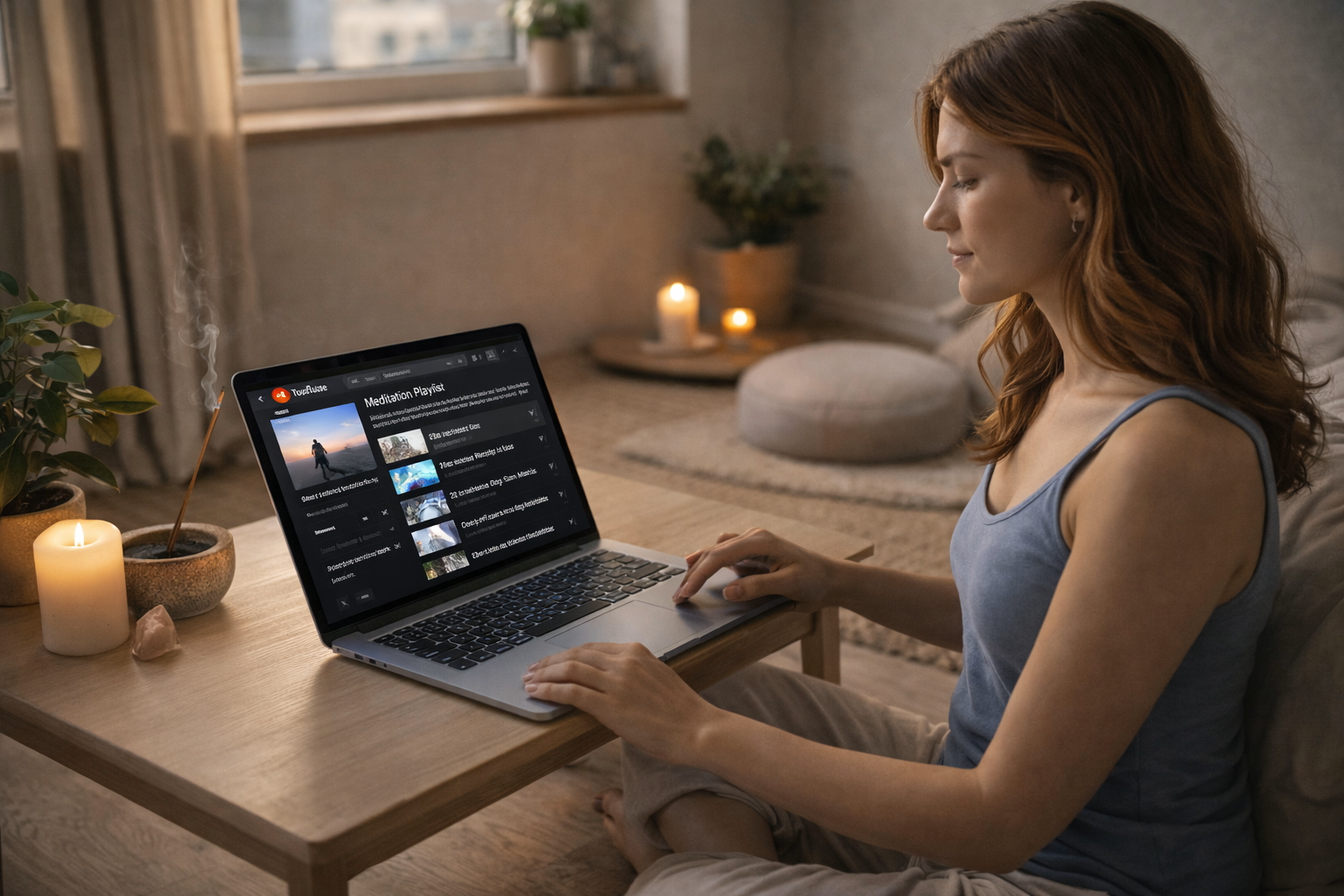
While YouTube is a fantastic starting point for exploring different styles, our team has found that some practitioners need a more immersive, sensory-rich environment to truly quiet the mind. We designed Mesmerize to bridge the gap between traditional audio guidance and modern technology, utilizing a science-backed approach that combines an infinite scroll of captivating visuals with relaxing narrations. Whether you are struggling with a "caffeinated squirrel" brain or chronic sleep issues, our app allows you to customize everything from breathing patterns to 3D voice effects, creating a personalized sanctuary that goes far beyond a standard video stream.
With over 2 million downloads and a focus on privacy, we’ve built a tool that respects your focus while deepening your relaxation. Our library includes everything from deep-sleep stories to focus music designed to beat distractions, all accessible offline for those moments when you need to unplug completely. If you’ve found that you’re "getting bored" with static meditation videos, our unique visual meditation experience offers a novel way to stay engaged and consistent with your mental well-being goals.
The biggest mistake? Thinking you're doing it wrong. If you're showing up and trying, you're doing it right.
But here are some practical pitfalls:
Real talk: it depends on what you need.
YouTube works brilliantly if you're self-motivated and enjoy variety. Paid apps win if you want structure, tracking, and courses that build progressively.
That said, one Reddit user noted that Insight Timer, which is free, "has 100s of guided meditations of every style and type." So the line between free and paid options is blurring.
That Reddit user who got bored of Michael Sealey's body scan? Totally normal. And actually a good sign.
When a meditation becomes too familiar, your mind can slip into autopilot. That's when you switch it up.
Try a different style. If you've been doing body scans, try breath-focused meditation. If you've been doing 10-minute sessions, try 20. Varying your practice can deepen its effects.
Or here's a thought—maybe you're ready to sit in silence without guidance. That's the eventual goal for many practitioners, though plenty of people use guided meditation forever. Both approaches work.
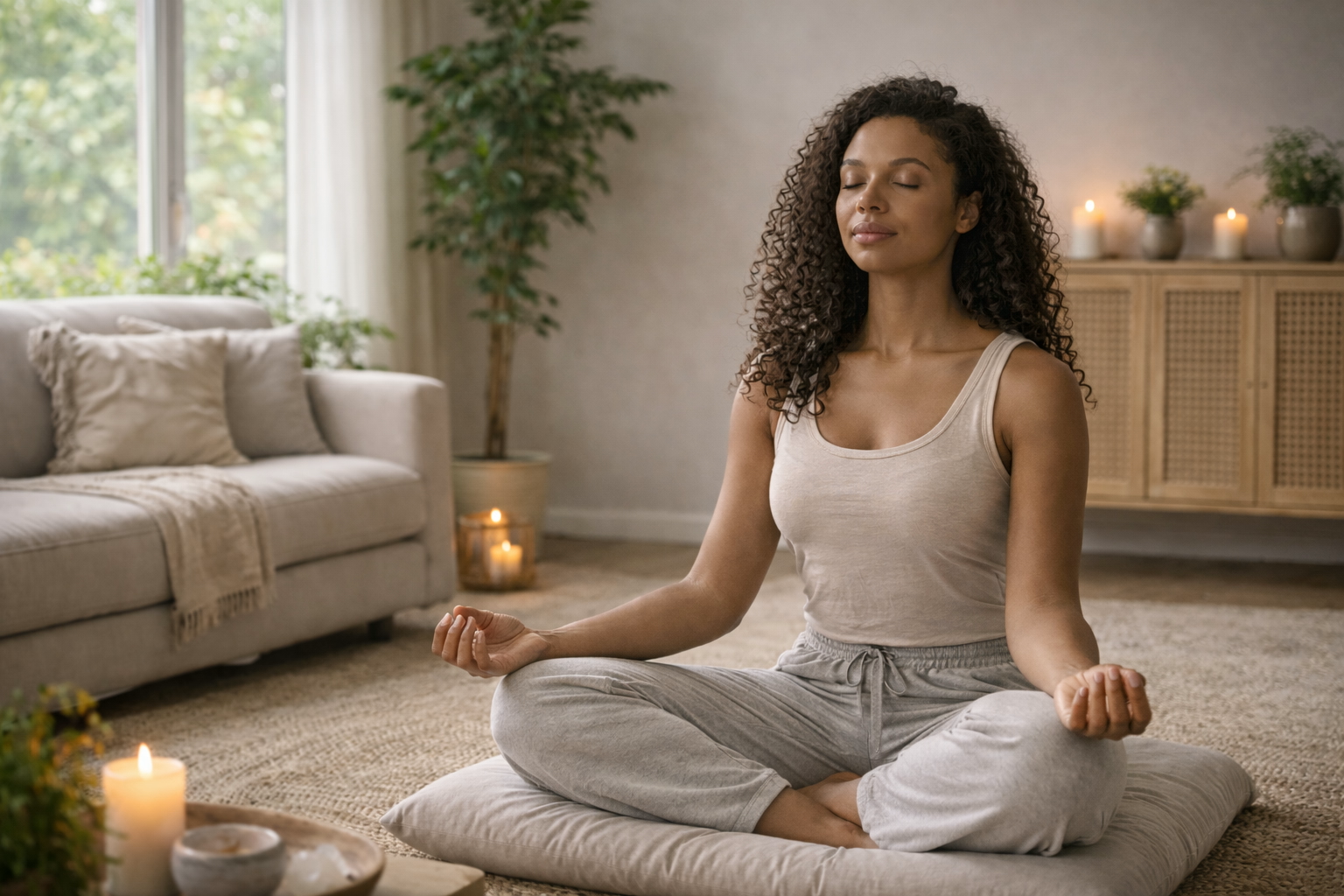
Look for 7-10 minute meditations focused on breath work and grounding. Research shows meditation can reduce anxiety symptoms when practiced regularly.
The Honest Guys have specific anxiety-focused sessions. Shorter is often better here—when you're anxious, committing to 30 minutes feels impossible.
Michael Sealey dominates this category. Look for longer sessions (30+ minutes) that use progressive muscle relaxation and sleep-inducing suggestions.
Research on sleep quality and meditation shows positive effects when meditation is practiced regularly, particularly in the evening.
Jon Kabat-Zinn and Joseph Goldstein excel here. Their meditations teach you to notice thoughts without getting caught up in them—a skill that translates directly to daily life.
Research on meditation practices found positive effects on stress reduction. Short 5-10 minute sessions work well for workplace stress.
Look for meditations you can do sitting in a chair. Some channels specifically design sessions for office environments.
Look, the best guided meditation on YouTube is the one you'll actually use. And the one you'll use is probably not the one that sounds most impressive or lasts the longest.
Start with The Honest Guys if you're brand new. Try Michael Sealey if you struggle with sleep. Explore Jon Kabat-Zinn if you want research-backed practices from a pioneer in the field.
According to research published by the National Institutes of Health, meditation produces real, measurable benefits for mental and physical health. It's not magic, but it's not placebo either. It's simply training your mind to work differently.
The beautiful thing about YouTube is you've got nothing to lose. No credit card required, no commitment, just press play. If you hate it, try another channel. If you love it, you've just found a free tool that can significantly improve your daily life.
So pick a 7-minute meditation from one of these channels and try it tomorrow morning. Just once. See how you feel.
That's it. That's the whole assignment.
Because here's what I've learned: the perfect meditation practice doesn't exist. But a consistent, imperfect practice? That can genuinely change your relationship with stress, anxiety, and your own thoughts.
And that's worth seven minutes of your morning.
I canceled my subscription with Headspace and I now pay for Mesmerize instead. I was hooked after the free trial! I love how customizable the sounds, meditations, and visuals are! Using this app has honestly become my favorite part of my day! ☺️ It helps me relax, meditate, visualize, sleep, and it does wonders for my anxiety/phobia/ocd tendencies. Thank you Mesmerize for giving us this amazing mental health tool! I told my therapist about this app and have been telling all my friends too. It’s just so helpful!
This is the second or third app in the mindfulness and meditation realm, and it’s the most scientific approach I have found. I have found these combinations of open monitoring, and focused attention meditation techniques are the most viable for those suffering from more severe forms of sleep, pain, and anxiety dysfunction one may be suffering from. Many of these approaches are used by professionals in a cognitive behavioral therapy setting. A truly complete approach in mindfulness and meditation.
I suffer from clinical depression and sometimes I get into a bad headspace but this app has really helped me whenever I’m in a bad mood I turn on the app listen to some person taking about breathing and look at cool figures on my phone and it makes me feel so much better I would highly recommend this app it’s worth the money
It didn’t take but five minutes of using this app to buy a yearly subscription. Worth it on so many levels. Easy to manipulate to what I like. Massive library of music, videos, etc.
Clear your mind and relax with a unique audio visual meditation experience.


.jpeg)
.webp)
.webp)


