Discover the best meditation devices of 2026. Compare EEG headbands, biofeedback tools, and stress-relief tech to enhance your mindfulness practice today.
.webp)
Meditation devices use technology like EEG headbands, biofeedback sensors, and guided audio-visual systems to enhance mindfulness practice. Top options include Muse S for brain tracking, Mendi for neurofeedback training, and Sensate for stress relief through vibration therapy. Prices typically range from $250 to $470 depending on features and sensor quality.
Meditation has evolved far beyond sitting cross-legged in silence. While traditional practices remain powerful, modern technology offers new ways to deepen mindfulness, track progress, and overcome common obstacles like wandering thoughts.
The meditation device market has exploded with options. Some track brain activity in real-time. Others use vibration, sound, or light to guide breathing. A few combine multiple approaches.
But here's the thing—not all meditation devices deliver on their promises. Some offer genuine value backed by research. Others are overpriced gadgets with limited functionality.
This guide breaks down the best meditation devices available, examining what actually works and who benefits most from each approach. From EEG headbands that monitor brain waves to simple breathing guides, the landscape covers diverse needs and budgets.
Meditation devices are tools designed to enhance, guide, or measure mindfulness practice. They range from simple gadgets to sophisticated neurotechnology systems.
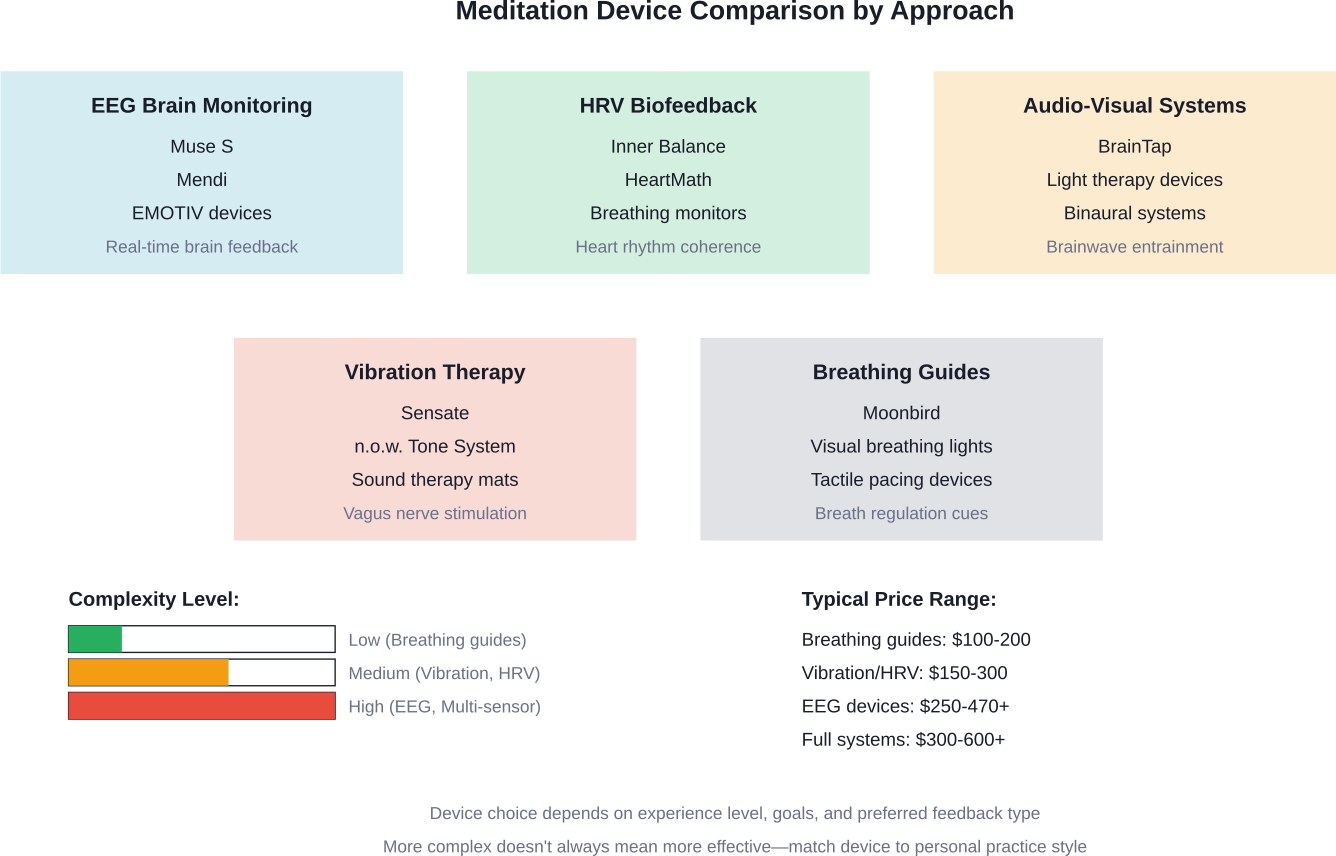
Most meditation devices fall into several categories. EEG headbands measure brain activity and provide real-time feedback about mental states. Biofeedback devices track physiological markers like heart rate variability to indicate stress levels. Audio-visual systems use sound and light to induce relaxation. Breathing guides offer tactile or visual cues to regulate breath patterns.
The underlying principle remains consistent across devices: external feedback helps develop internal awareness. Traditional meditation asks practitioners to notice mental states without assistance. Technology-assisted meditation provides objective data about those states.
According to the National Center for Complementary and Integrative Health, relaxation techniques bring about the body's 'relaxation response,' which is characterized by slower breathing, lower blood pressure, and a reduced heart rate—physiological changes that many meditation devices attempt to measure or induce.
Real-time feedback represents the core innovation of modern meditation devices. When practitioners receive immediate information about their mental or physical state, they can adjust their technique accordingly.
EEG devices detect electrical activity in the brain through sensors placed on the scalp. Different brainwave patterns correspond to different mental states. Alpha waves indicate relaxed alertness, while beta waves suggest active thinking. Theta waves appear during deep meditation or light sleep.
Biofeedback systems monitor autonomic nervous system activity. Heart rate variability—the variation in time between heartbeats—serves as a reliable indicator of stress and recovery. Higher variability generally indicates better stress resilience and parasympathetic nervous system activation.
The National Center for Complementary and Integrative Health notes that relaxation techniques may be helpful in managing stress-related health conditions, including anxiety associated with ongoing health problems. Technology that facilitates these techniques offers measurable benefits for specific populations.
The market offers several standout options, each with distinct approaches and target users. Here's what separates the best from the rest.
Mendi takes a unique approach by focusing on prefrontal cortex activity during meditation. This device uses near-infrared spectroscopy to measure blood flow in the frontal brain regions.
The system gamifies meditation through visual feedback. As prefrontal cortex activity increases, the app displays corresponding changes in real-time. This creates a training loop where practitioners learn to activate specific brain regions associated with focus and emotional regulation.
According to competitor source material, the Mendi headband costs $299 and comes with a lifetime app subscription with no additional fees. This pricing structure eliminates ongoing costs that plague some competitors.
The device targets cognitive enhancement alongside traditional meditation benefits. Anyone looking to boost cognitive abilities through mindful practices while gaining understanding of prefrontal cortex activity finds value here.
Strengths include the one-time payment model, focus on executive function brain regions, and user-friendly interface. Limitations involve the narrow focus on prefrontal cortex activity rather than whole-brain monitoring.
Muse S represents one of the most established EEG meditation devices. The headband tracks brain activity, heart rate, breathing, and body movement during meditation sessions.
Multi-sensor tracking provides comprehensive feedback. The accompanying app translates brain activity into weather sounds—calm mind produces peaceful weather, active mind generates storms. This auditory feedback helps practitioners recognize and adjust mental states without breaking focus.
The device doubles as a sleep aid, offering guided sessions designed for bedtime. Sleep tracking functionality extends its utility beyond meditation practice.
Muse benefits from years of development and a large user community. Community discussions highlight both strengths and limitations based on real-world use. The device suits beginners who need guidance and experienced meditators seeking objective progress metrics.
BrainTap combines light therapy, binaural beats, and guided visualization in a headset format. The approach differs fundamentally from EEG devices—instead of measuring brain states, BrainTap attempts to induce specific states through sensory input.
Light-emitting diodes pulse at specific frequencies corresponding to desired brainwave patterns. Synchronized audio delivers binaural beats and guided sessions. The combination aims to entrain brain activity toward relaxation, focus, or sleep.
The extensive content library includes hundreds of sessions targeting different goals. Stress relief, sleep improvement, energy enhancement, and cognitive performance each have dedicated programs.
This device appeals to those who prefer guided experiences over self-directed practice. The passive nature requires less effort than traditional meditation, though some practitioners question whether this delivers the same long-term benefits as active mindfulness development.
Inner Balance focuses exclusively on heart rate variability biofeedback. The compact sensor clips to an earlobe or plugs into a smartphone, measuring pulse patterns in real-time.
Heart-focused breathing techniques form the core methodology. The app displays heart rhythm patterns, showing when breathing achieves coherence—a state where heart rate variability follows smooth, sine-wave patterns.
Research on heart rate variability and stress management provides substantial backing for this approach. The National Center for Complementary and Integrative Health recognizes that relaxation techniques bring about physiological changes including reduced heart rate, making HRV a relevant measurement for meditation practice.
Simplicity defines Inner Balance. The focused approach lacks the feature bloat of multi-function devices. Anyone specifically interested in breath work and heart-centered meditation finds this streamlined tool sufficient.
Sensate uses vibration therapy rather than measurement or brain entrainment. The pebble-shaped device rests on the chest, delivering low-frequency vibrations synchronized with calming soundscapes.
The vibrations stimulate vagus nerve pathways, potentially activating the parasympathetic nervous system. This creates physiological relaxation without requiring active meditation technique.
Session duration runs 10-30 minutes. The passive nature makes Sensate accessible for people who struggle with traditional meditation or feel overwhelmed by feedback-heavy devices.
Limitations include the lack of measurable data. Unlike EEG or HRV devices, Sensate provides no feedback about progress or physiological changes. The experience remains subjective, which some find liberating and others find limiting.
The n.o.w. system delivers acoustic stimulation through bone conduction. Users lie down while the device transmits specific frequencies through the body via a mat or pillow.
Low-frequency sound waves create vibrotactile stimulation, similar to Sensate but full-body rather than localized. Sessions aim to induce deep relaxation states through physical resonance.
The approach appeals to those seeking passive relaxation experiences. However, the system's size and setup requirements make it less portable than other options. This works better as a home-based relaxation tool than a portable meditation device.
Moonbird takes minimalism to its logical conclusion. This handheld device expands and contracts in the palm, providing a physical guide for breathing rhythm.
No screens. No sensors. No feedback loops. Just a simple tactile cue that regulates breath pace.
The app offers breathing programs for different goals—stress relief, sleep preparation, energy. But the device functions independently once the rhythm is set.
This represents the opposite end of the spectrum from complex EEG systems. For practitioners who find technology distracting or prefer ultra-simple tools, Moonbird delivers focused functionality without overwhelming features.

Some people use dedicated meditation devices to help improve focus, track breathing, or guide relaxation sessions. These tools are designed to make meditation easier and more consistent.
Mesmerize offers a simple alternative with guided sessions, breathing visuals, and calming audio that help create a focused meditation environment on your phone.
Inside the app:
If you want a simple way to practice guided meditation anywhere, try Mesmerize - available on the App Store or Google Play.
EEG devices represent the most technologically sophisticated meditation tools. They deserve special attention due to their unique capabilities and limitations.
Electroencephalography measures electrical activity produced by brain cells. Sensors on the scalp detect voltage fluctuations resulting from ionic current within neurons.
Consumer EEG devices use fewer sensors than medical-grade equipment. Consumer headbands vary in sensor count, with some offering 2-channel EEG in discreet form factors.
Sensor count affects both price and data quality. Popular headband models can range from around $250 to over $470, with cost often related to the technology inside. Devices with more channels, higher-quality sensors, and more advanced software features sit at the higher end.
EEG meditation devices detect brainwave patterns and translate them into understandable feedback. As mental activity quiets during meditation, the ratio of wave types shifts. Less beta activity and more alpha or theta activity typically indicates successful relaxation.
Real-time feedback addresses one of meditation's biggest challenges: knowing whether the practice is working. Without external markers, beginners struggle to distinguish between effective meditation and simple mind-wandering.
EEG devices provide objective data. When the mind quiets, the device registers corresponding changes in brain activity. This creates a feedback loop that accelerates learning.
Progress tracking offers long-term motivation. Apps connected to EEG devices can store session data, revealing trends over weeks and months. Seeing measurable improvement reinforces commitment.
The technology helps identify personal patterns. Some people reach calm states more easily in the morning. Others find evening sessions more productive. Data reveals these patterns clearly.
EEG devices measure electrical activity, not meditation quality directly. A calm brainwave pattern doesn't automatically equal deeper awareness or spiritual insight.
The technology can become a crutch. Dependence on feedback may prevent development of internal awareness—the ultimate goal of meditation practice.
Environmental factors affect readings. Muscle tension, eye movement, and electrical interference create noise in the signal. Consumer devices lack the shielding and signal processing of medical equipment.
Setting realistic expectations matters. EEG headbands provide useful data about general mental states. They don't offer mind-reading precision or guarantee meditation mastery.
Not every meditation device suits every practitioner. Several factors determine which option delivers the best value.
Devices offer different feedback mechanisms. Audio feedback uses sound changes to indicate mental states. Visual feedback displays graphs or animations. Tactile feedback employs vibration.
Complexity varies dramatically. Simple breathing guides offer minimal feedback—just a pacing cue. Advanced EEG systems provide multi-metric dashboards with detailed analytics.
Beginners often benefit from simpler systems. Too much data overwhelms and distracts from the practice itself. Experienced meditators may want comprehensive metrics to refine technique.
Some devices require dedicated setup time and space. Full audio-visual systems with mats or headsets work best at home. Compact headbands travel easily and support practice anywhere.
Session duration matters too. Quick 5-minute breathing exercises fit into busy schedules. Longer 30-minute guided programs require time commitment.
Battery life affects portability. Devices requiring frequent charging create friction. Weekly charging proves more sustainable than daily recharging.
Hardware quality matters, but software determines user experience. Buggy apps frustrate users regardless of sensor quality.
Content libraries vary in size and quality. Some apps offer dozens of guided sessions. Others provide minimal guidance beyond raw data display.
Check platform compatibility. Not all devices support both iOS and Android. Some require specific operating system versions.
Initial purchase price tells only part of the story. Subscription fees for premium content add ongoing costs.
Some devices include lifetime app access. Mendi costs $299 with no additional fees, for instance. Others require monthly or annual subscriptions to access full functionality.
Calculate total cost over the expected usage period. A cheaper device with expensive subscriptions may cost more long-term than a pricier option with included features.
For measurement-based devices, sensor quality determines data reliability. Medical-grade sensors cost more but provide cleaner signals.
Electrode materials affect skin contact and conductivity. Dry sensors work without gel but may provide less consistent readings. They require careful positioning and good scalp contact.
Sampling rate impacts data quality in EEG devices. Higher sampling rates capture more detail but consume more battery power and generate larger data files.
Technology doesn't replace meditation—it augments it. Understanding this distinction prevents both over-reliance and dismissive skepticism.
Some practitioners use devices as training wheels. The feedback helps establish basic skills: recognizing mental states, achieving relaxation, maintaining focus.
Once these skills develop, traditional practice without devices often becomes more appealing. The goal shifts from achieving specific brainwave patterns to cultivating awareness itself.
Other practitioners integrate technology long-term. Data tracking provides ongoing motivation and reveals subtle progress invisible to subjective assessment alone.
Both approaches work. The key is intentionality—choosing how technology serves personal goals rather than letting the device define the practice.
Wandering thoughts plague beginning meditators. Real-time feedback helps recognize when attention drifts. This accelerates the learning curve for maintaining focus.
Inconsistent practice undermines progress. App reminders and streak tracking encourage regular sessions. Gamification elements motivate some practitioners, though others find them distracting.
Doubt about effectiveness creates frustration. Objective data demonstrates that practice produces measurable changes, even when subjective experience feels unremarkable.
Meditation devices work alongside established methods. Mindfulness meditation, loving-kindness practice, body scans, and breath awareness all function with or without technology.
Some sessions benefit from device guidance. Others work better unplugged. Experienced practitioners often alternate—technology sessions provide feedback and motivation, traditional sessions develop pure awareness.
The National Center for Complementary and Integrative Health notes that mind and body approaches including meditation may be useful for managing stress symptoms. Technology that facilitates consistent practice potentially enhances these benefits.
Certain practitioners gain more value from meditation technology than others. Honest assessment prevents wasted investment.
New meditators often struggle without guidance. Devices provide structure and clear objectives. The feedback answers the persistent question: "Am I doing this right?"
Guided content removes decision paralysis. Rather than wondering which technique to practice, beginners can follow programmed sessions.
Progress tracking maintains motivation through the challenging early phase when benefits feel elusive.
Some people trust numbers more than feelings. For analytically-minded individuals, subjective meditation experiences lack credibility.
Quantified data speaks their language. Seeing brainwave patterns shift or heart rate variability improve provides satisfying evidence of progress.
This group often sustains practice longer with devices than without. The objective feedback aligns with their cognitive preferences.
According to the National Center for Complementary and Integrative Health, relaxation techniques may be helpful in managing stress-related health conditions, including anxiety associated with ongoing health problems and in those undergoing medical procedures.
Devices that target specific physiological markers help practitioners address particular symptoms. HRV biofeedback suits anxiety management. Sleep-focused devices help insomnia. Vibration therapy offers quick stress relief during overwhelming moments.
Medical supervision remains important. Meditation devices complement professional treatment but don't replace it.
Long-term meditators sometimes plateau. Progress becomes subtle and hard to perceive.
Technology reveals changes invisible to direct experience. Small improvements in sustained attention or depth of relaxation show up in data even when subjective experience seems unchanged.
Devices also introduce new challenges. Achieving specific brainwave patterns or HRV coherence creates novel goals for advanced practitioners.
Meditation devices aren't universally beneficial. Several legitimate concerns deserve consideration.
Dependence on devices can undermine meditation's core purpose: developing internal awareness independent of external conditions.
Practitioners who never meditate without technology miss opportunities to strengthen self-reliance. The device becomes a necessary prop rather than a temporary aid.
This particularly affects beginners who might develop technique fundamentally dependent on feedback. Learning to meditate without guidance builds resilience that device-only practice doesn't cultivate.
Effective meditation requires nothing but time and attention. Devices introduce financial barriers that exclude many potential practitioners.
Traditional meditation remains freely accessible to everyone. The democratization of mindfulness shouldn't become a luxury product market.
Community discussions on platforms like Reddit frequently question whether devices justify their cost. Many experienced meditators report equivalent or better results from simple, free practice.
Devices that collect biometric data raise privacy questions. Brain activity patterns, heart rhythms, and breathing data reveal intimate physiological information.
Privacy policies vary by manufacturer. Some companies anonymize and aggregate data. Others sell detailed user information to third parties.
Reading terms of service before purchase protects personal information. Understanding what data gets collected, stored, and shared prevents unwanted exposure.
Ironically, technology meant to enhance focus can become a major distraction. Obsessing over metrics, chasing achievements, or troubleshooting technical issues pulls attention away from actual practice.
The interface itself creates cognitive load. Checking scores, reviewing graphs, and adjusting settings interrupts the meditative state.
Some practitioners find that simpler devices or device-free practice ultimately proves more effective despite lacking measurable feedback.
Scientific investigation into meditation technology remains ongoing. Some claims have solid backing, while others lack rigorous evidence.
According to the National Center for Complementary and Integrative Health, evidence suggests that relaxation techniques may be helpful in managing a variety of stress-related health conditions. Technology that facilitates these techniques potentially extends their accessibility.
A 2020 systematic review of 27 studies on yoga found that in studies assessing anxiety and depression, 58 percent showed reductions in both symptoms, while 25 percent showed reductions in anxiety. However, nonsignificant effects were found for stress, mood, and self-esteem in some studies.
The research landscape shows promise but requires careful interpretation. Many studies examine meditation itself rather than device-assisted practice specifically. Extrapolating findings from traditional meditation to technology-enhanced versions requires caution.
NCCIH has expressed commitment to rigorous investigation of mind and body interventions. Projects involving development and validation of devices to monitor or enhance mind-body interventions focus on applications for pain management, sleep disturbances, and behavior modification.
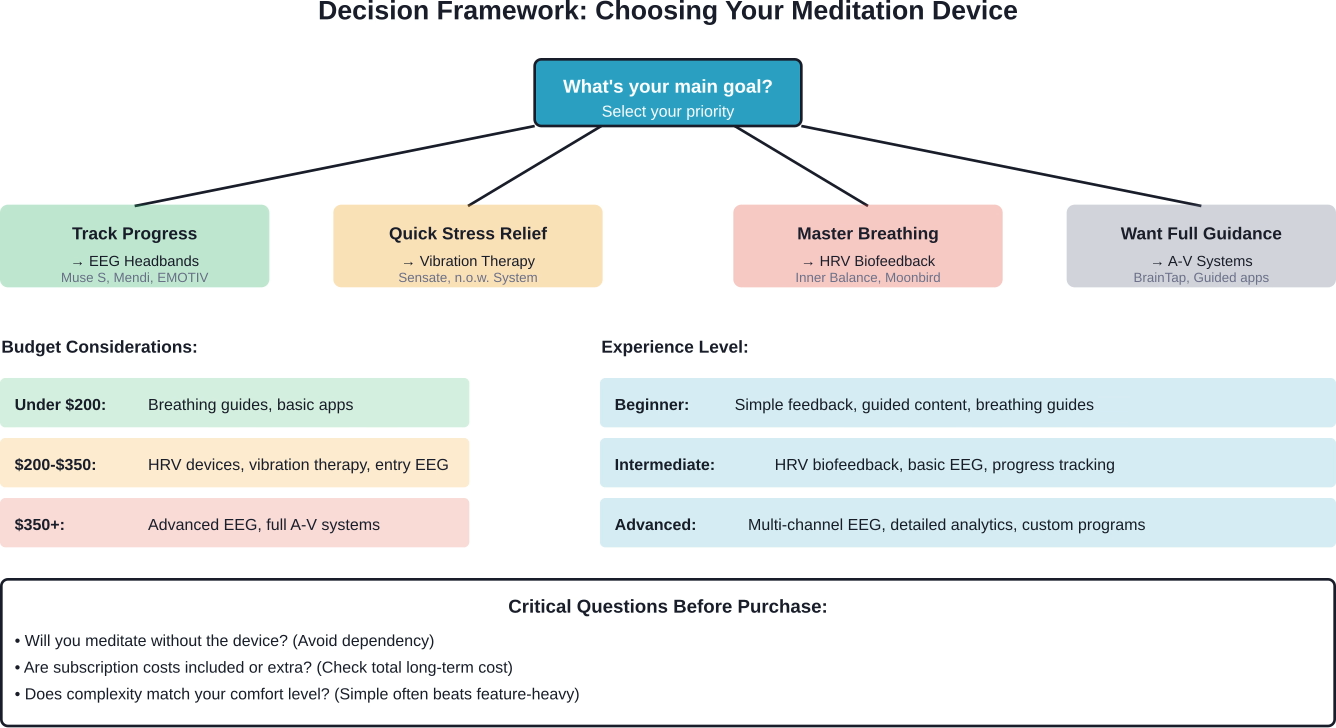
Choosing a meditation device requires honest assessment of personal needs, learning style, and commitment level.
Start by clarifying goals. Stress reduction, sleep improvement, focus enhancement, and cognitive training each favor different device types. Specific objectives guide appropriate selection better than vague wellness aspirations.
Consider experience level. Beginners benefit from simple feedback and guided content. Advanced practitioners often want detailed analytics and customization options.
Evaluate budget realistically. Initial cost represents only part of total investment. Subscription fees, replacement parts, and upgrade costs accumulate over time. Calculate multi-year ownership costs before purchase.
Read community experiences. Reddit discussions and user forums provide unfiltered perspectives that marketing materials omit. Look for patterns in feedback rather than individual opinions.
Try before buying when possible. Some retailers offer trial periods. Friends or meditation centers might allow device testing. Hands-on experience reveals whether a device feels helpful or distracting.
Remember that the best meditation device is the one that gets used consistently. Sophisticated technology sitting unused provides zero benefit. A simple tool used daily delivers far more value.
Meditation devices represent neither magic solutions nor pointless gimmicks. They're tools—useful for some practitioners, unnecessary for others, counterproductive when misused.
The market offers genuine innovation alongside obvious cash grabs. EEG headbands provide real data about brain activity. Quality biofeedback devices track meaningful physiological changes. Well-designed breathing guides simplify technique learning.
But technology alone doesn't create mindfulness. Commitment, consistency, and curiosity drive meaningful progress. Devices accelerate learning and provide motivation, yet they can't substitute for the work itself.
According to the National Center for Complementary and Integrative Health, mind and body approaches including meditation offer benefits for managing stress and anxiety. Technology that increases practice accessibility and consistency potentially extends these benefits to more people.
The best approach combines wisdom from traditional practice with advantages of modern tools. Use devices when they enhance awareness and motivation. Practice without them when self-reliance needs strengthening. Stay focused on cultivating mindfulness itself rather than collecting impressive metrics.
Whether choosing an advanced EEG system, a simple breathing guide, or no device at all, the path to deeper awareness remains the same: showing up consistently, paying attention, and meeting experience with curiosity rather than judgment.
Ready to deepen your practice? Start by identifying your primary goal—stress relief, focus improvement, sleep enhancement, or cognitive training. Match that goal to device categories discussed here. Research specific models, read user experiences, and consider your budget realistically. Most importantly, commit to consistent practice regardless of which tools you choose. The technology serves your practice; your practice doesn't serve the technology.
I canceled my subscription with Headspace and I now pay for Mesmerize instead. I was hooked after the free trial! I love how customizable the sounds, meditations, and visuals are! Using this app has honestly become my favorite part of my day! ☺️ It helps me relax, meditate, visualize, sleep, and it does wonders for my anxiety/phobia/ocd tendencies. Thank you Mesmerize for giving us this amazing mental health tool! I told my therapist about this app and have been telling all my friends too. It’s just so helpful!
This is the second or third app in the mindfulness and meditation realm, and it’s the most scientific approach I have found. I have found these combinations of open monitoring, and focused attention meditation techniques are the most viable for those suffering from more severe forms of sleep, pain, and anxiety dysfunction one may be suffering from. Many of these approaches are used by professionals in a cognitive behavioral therapy setting. A truly complete approach in mindfulness and meditation.
I suffer from clinical depression and sometimes I get into a bad headspace but this app has really helped me whenever I’m in a bad mood I turn on the app listen to some person taking about breathing and look at cool figures on my phone and it makes me feel so much better I would highly recommend this app it’s worth the money
It didn’t take but five minutes of using this app to buy a yearly subscription. Worth it on so many levels. Easy to manipulate to what I like. Massive library of music, videos, etc.
Clear your mind and relax with a unique audio visual meditation experience.


.jpeg)