
An honest look at how meditation supports mental health, what it helps with, and how to start without pressure or unrealistic expectations.
.webp)
Mental health rarely feels simple. Some days are manageable. Others feel heavy, noisy, or hard to explain. Meditation is often suggested as a solution, which can be frustrating when you’re already overwhelmed or skeptical.
Meditation for mental health isn’t about fixing yourself or forcing calm. It’s a way to spend a few minutes noticing what’s already happening, without trying to push it away. Over time, that small shift can make stress feel less consuming, emotions easier to sit with, and difficult days a little more workable. Not all at once. Not every time. But often enough to matter.
Mental health struggles are often framed as personal shortcomings. Not resilient enough. Not disciplined enough. Not positive enough. In reality, mental health is shaped by biology, experience, environment, and ongoing stress. Anxiety, depression, and emotional burnout are not failures of character. They are responses.
Stress activates the nervous system. When that activation becomes constant, the body stays on alert even when nothing urgent is happening. Thoughts loop. Emotions become harder to regulate. Sleep suffers. Over time, this can deepen anxiety and low mood.
Meditation does not stop stress from existing. Instead, it changes how the nervous system relates to stress. Rather than staying stuck in fight or flight, meditation encourages moments of regulation. These moments may be brief at first, but they add up.
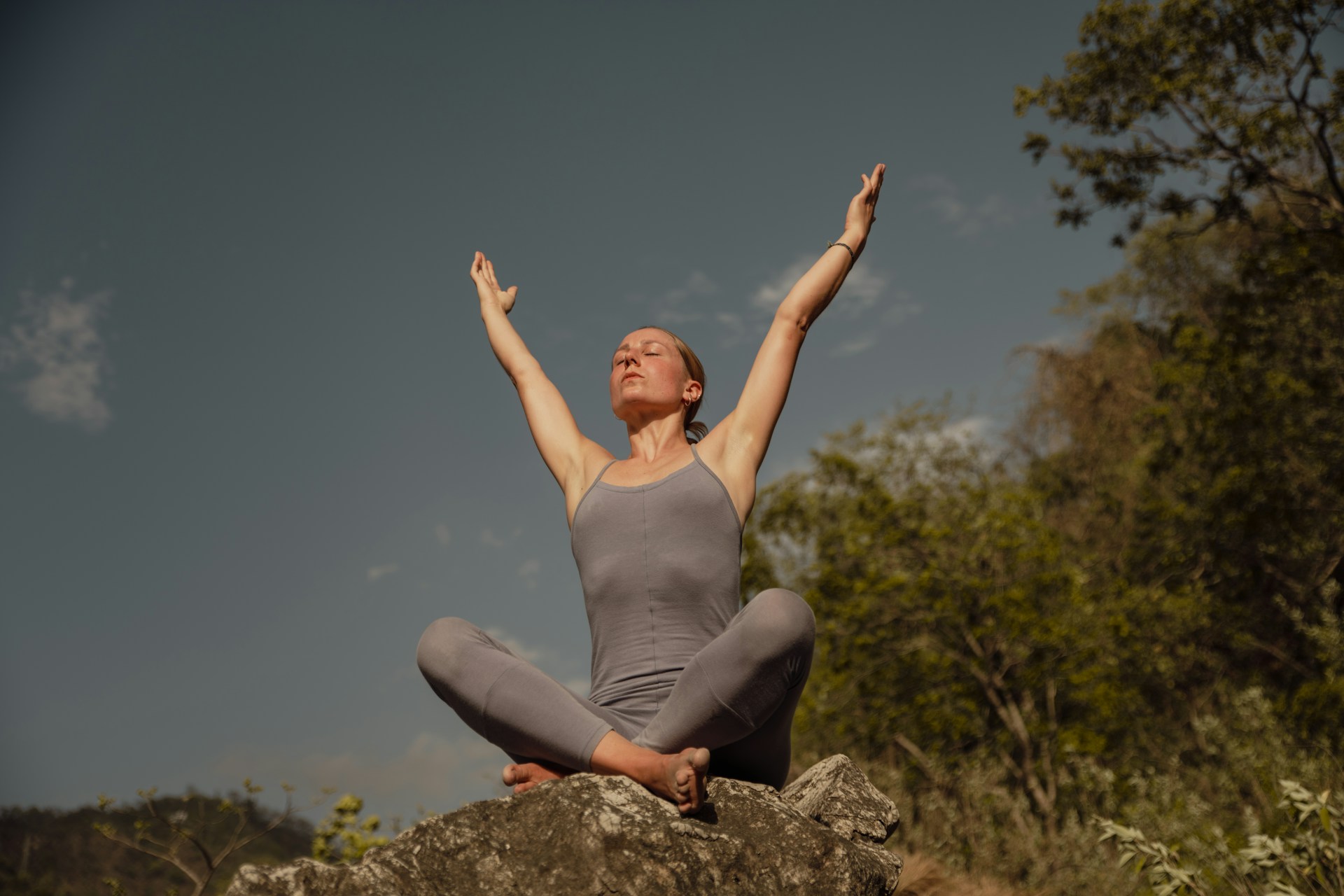
Meditation is a broad category, not a single technique. At its core, meditation involves placing attention on something simple and noticing when the mind moves away from it. That focus might be the breath, physical sensations, a sound, or a guided voice. The practice is not about controlling thoughts. Thoughts will appear. The practice is about how you respond when they do.
Meditation is not:
Meditation is:
This distinction matters. Many people quit meditation because they expect it to feel calming right away. When it does not, they assume they are doing it wrong. In reality, noticing restlessness or discomfort is often the first sign that awareness is increasing.
Modern research helps explain why meditation can support mental health. Brain imaging studies show that regular meditation influences areas involved in stress response, emotional regulation, and self-awareness.
Over time, meditation has been associated with reduced activity in brain regions linked to rumination and threat detection. At the same time, connections between areas responsible for attention and emotional regulation tend to strengthen. These shifts can make it easier to notice thoughts and feelings without being immediately pulled into them.
Meditation has also been linked to lower levels of stress hormones like cortisol, which may help explain why some people feel less reactive or tense with consistent practice. As awareness improves, many people become more attuned to bodily signals related to stress and emotion, such as tightness, shallow breathing, or restlessness.
These changes do not happen overnight. They develop gradually and unevenly with regular practice. Importantly, the effects are not limited to meditation sessions themselves. People often notice subtle differences in everyday life, such as brief pauses where reactions used to be automatic, or a slightly greater sense of steadiness during stressful moments.

At Mesmerize, we built the app around a simple idea. Meditation does not need to begin in silence. For many people, especially when mental health feels fragile, sitting alone with thoughts can be overwhelming. A visual focus can make it easier to settle in.
Mesmerize centers meditation around flowing visuals, immersive soundscapes, and calm, steady narration. Instead of forcing attention or trying to quiet the mind, the experience gives your focus somewhere gentle to rest. This often helps the nervous system slow down naturally, without effort.
Flexibility matters. Some days call for guided support. Other days, music and visuals are enough. Mesmerize lets you adjust voices, pacing, breathing patterns, and background sounds so the experience fits how you feel in the moment, not how meditation is supposed to look.
We keep things simple and grounded. The techniques inside the app are science-backed, explained clearly, and designed for real life. Visual breathing, sleep timers, offline access, and health integration are there to support consistency without adding pressure. Privacy comes first, with no ads, no marketing emails, and no unnecessary permissions.
Mesmerize it’s a calm place to begin, return to, or simply pause when you need it.

Meditation is often discussed as a general mental health tool, but anxiety and depression tend to show up in very different ways. Understanding those differences helps set more realistic expectations for how meditation can help.
Anxiety often pulls attention forward. The mind scans constantly for what might go wrong, replaying possibilities and preparing for threats that may never arrive. Meditation does not aim to stop anxious thoughts or make them disappear. Instead, it helps create a bit of space around them.
With regular practice, anxious thoughts are more likely to be noticed as mental events rather than facts that demand immediate action. This shift can soften the intensity of worry and make it easier to stay anchored in the present moment. Physical tension may ease gradually, and uncertainty can become slightly more tolerable.
Mindfulness-based practices are especially helpful for anxiety because they train attention to return to what is happening now, even when the mind wants to spiral ahead. Anxiety does not vanish, but it often becomes less consuming and easier to work with.
Depression tends to move differently. Instead of racing thoughts, there may be heaviness, emotional numbness, or a sense of disconnection from yourself and others. Meditation for depression is not about forcing positive emotions or trying to feel better on command. It is about developing awareness without judgment.
Research suggests that meditation can help reduce rumination, particularly the repetitive negative thinking that often deepens depressive states. Over time, increased awareness of emotional patterns can support better regulation, especially when meditation is used alongside therapy or medication. Consistent practice may also help reduce the likelihood of relapse.
Meditation is not a cure for depression, and it should not be treated as one. It works best as a complementary practice. For some people, it offers structure and grounding. For others, it gently loosens harsh self-judgment. Often, the benefit comes in small moments of relief that slowly add up.
Different meditation styles support mental health in different ways. There is no single approach that works for everyone or for every situation. What matters most is finding a practice that feels tolerable, accessible, and easy to return to. A technique that works during a stressful period may feel less helpful later, and that shift is normal.
Mindfulness meditation focuses on paying attention to the present moment without judging what you notice. The breath is often used as a steady anchor, but attention can also rest on sounds, physical sensations, or thoughts as they arise.
Rather than trying to control experience, mindfulness encourages observation. Thoughts are noticed, emotions are felt, and sensations are acknowledged without needing to fix or push them away. Over time, this practice can improve emotional awareness and reduce automatic reactions, which makes it especially helpful for anxiety, stress, and emotional overwhelm.
Breath awareness is one of the simplest and most direct meditation techniques. Attention rests on the natural rhythm of breathing, such as the sensation of air moving in and out or the rise and fall of the chest or abdomen.
Because breathing is closely tied to the nervous system, focusing on it can help the body settle more quickly. This makes breath awareness particularly useful during moments of acute stress, panic symptoms, or emotional escalation. Even short periods of breath-focused attention can provide grounding when things feel intense.
Body scan meditation involves moving attention slowly through the body and noticing physical sensations as they appear. Areas of tension, warmth, heaviness, or numbness are observed without trying to change them.
This practice helps reconnect attention to the body, which can be grounding during periods of stress or dissociation. It is often helpful for people who carry stress physically, such as tight shoulders, jaw tension, or shallow breathing. Over time, body scanning can increase awareness of how emotions show up physically and encourage a more relaxed relationship with bodily sensations.
Loving-kindness meditation centers on cultivating gentle, supportive intentions toward yourself and others. These intentions are often expressed silently through simple phrases, such as wishing for safety, ease, or well-being.
This practice can be especially supportive for people who struggle with self-criticism, shame, or emotional numbness. Rather than forcing positive feelings, loving-kindness invites a softer tone toward internal experience. With consistency, it can help balance harsh self-judgment and encourage a more compassionate inner dialogue.
Guided meditation provides structure through a calm, steady voice that leads attention throughout the practice. Guidance may include breathing cues, imagery, or gentle reminders to return attention when the mind wanders.
This format reduces the effort required to stay focused, which can be helpful for beginners or during moments of overwhelm. Guided sessions can also provide reassurance when meditation feels unfamiliar or emotionally challenging. For many people, guided meditation makes it easier to begin and maintain a regular practice.
Preferences often change over time. What feels supportive during high stress may feel unnecessary during calmer periods, and vice versa. Allowing flexibility makes meditation easier to sustain and more responsive to real life.

There is no ideal duration for meditation. Consistency matters far more than length, especially when mental health is the focus. For many people, starting with two to five minutes feels more realistic and sustainable than aiming for longer sessions right away.
Practicing daily can be helpful, but meditating several times a week can be just as supportive. What matters is choosing a rhythm that fits into your life without creating pressure. Attaching meditation to an existing routine, such as after waking up or before going to bed, often makes it easier to return to regularly.
Sessions do not need to be perfect to be effective. Some days will feel focused, others distracted. Both count. Missing a day does not undo progress. Returning when you can, without self-criticism, supports consistency far more than tracking streaks or forcing discipline.
Meditation is not a substitute for mental health treatment, and it should not be framed as one. It does not replace therapy, medication, or professional care when those supports are needed. If mental health symptoms are severe, long-lasting, or include thoughts of self-harm, reaching out to a qualified professional or crisis service is essential.
Meditation is best understood as a supportive practice rather than a solution on its own. It can help increase awareness, improve emotional regulation, and reduce stress, but it cannot address every aspect of mental health on its own. For many people, meditation works most effectively alongside other forms of care, such as therapy, medication, lifestyle adjustments, and meaningful social support.
Using meditation as part of a broader approach reduces pressure and makes the practice more sustainable. Instead of expecting meditation to fix everything, it can serve as one steady tool among many, helping support mental health in a balanced and realistic way.
Meditation for mental health is not about becoming calm all the time. It is about learning how to stay present with what is already happening. That skill can make anxiety less overwhelming, stress less consuming, and difficult emotions easier to hold.
Meditation does not require belief or perfection. It asks only for attention, offered again and again. Over time, that attention becomes a form of care. Quiet, imperfect, and often enough to help.
I canceled my subscription with Headspace and I now pay for Mesmerize instead. I was hooked after the free trial! I love how customizable the sounds, meditations, and visuals are! Using this app has honestly become my favorite part of my day! ☺️ It helps me relax, meditate, visualize, sleep, and it does wonders for my anxiety/phobia/ocd tendencies. Thank you Mesmerize for giving us this amazing mental health tool! I told my therapist about this app and have been telling all my friends too. It’s just so helpful!
This is the second or third app in the mindfulness and meditation realm, and it’s the most scientific approach I have found. I have found these combinations of open monitoring, and focused attention meditation techniques are the most viable for those suffering from more severe forms of sleep, pain, and anxiety dysfunction one may be suffering from. Many of these approaches are used by professionals in a cognitive behavioral therapy setting. A truly complete approach in mindfulness and meditation.
I suffer from clinical depression and sometimes I get into a bad headspace but this app has really helped me whenever I’m in a bad mood I turn on the app listen to some person taking about breathing and look at cool figures on my phone and it makes me feel so much better I would highly recommend this app it’s worth the money
It didn’t take but five minutes of using this app to buy a yearly subscription. Worth it on so many levels. Easy to manipulate to what I like. Massive library of music, videos, etc.
Clear your mind and relax with a unique audio visual meditation experience.


.jpeg)
.webp)
.webp)


