
Learn how mindfulness meditation can help ease anxiety, calm racing thoughts, and create space between you and stress, without pressure or hype.
.webp)
Anxiety has a way of pulling attention everywhere except where you are. One moment you’re replaying something that already happened. The next, you’re bracing for what might go wrong. Mindfulness meditation doesn’t try to shut those thoughts down or force calm. Instead, it helps you notice what’s happening without getting swept up in it.
This guide takes a practical look at mindfulness meditation for anxiety. What it actually does, why it can help, and how to start in a way that feels realistic. No big promises. No complicated routines. Just a steady approach to working with anxiety, rather than constantly fighting it.
Anxiety is often misunderstood as a personal flaw or a sign that something is wrong with you. In reality, anxiety is a built-in survival response. It exists to keep you alert to danger, prepare your body for action, and help you respond quickly when something matters.
The problem begins when that response stops switching off.
Modern anxiety is rarely about immediate physical threats. It is more often tied to uncertainty, pressure, social evaluation, health worries, or an ongoing sense of not being safe enough. The nervous system stays activated even when there is no clear danger to respond to. Over time, this constant alertness becomes exhausting.
Anxiety shows up in different ways. Racing thoughts, tightness in the chest, shallow breathing, digestive discomfort, restlessness, irritability, trouble sleeping. Some people experience panic attacks. Others experience constant low-level worry that never fully resolves.
Mindfulness meditation does not try to remove anxiety. It works at a different level. Instead of changing the content of thoughts or eliminating uncomfortable sensations, it changes how you relate to them.
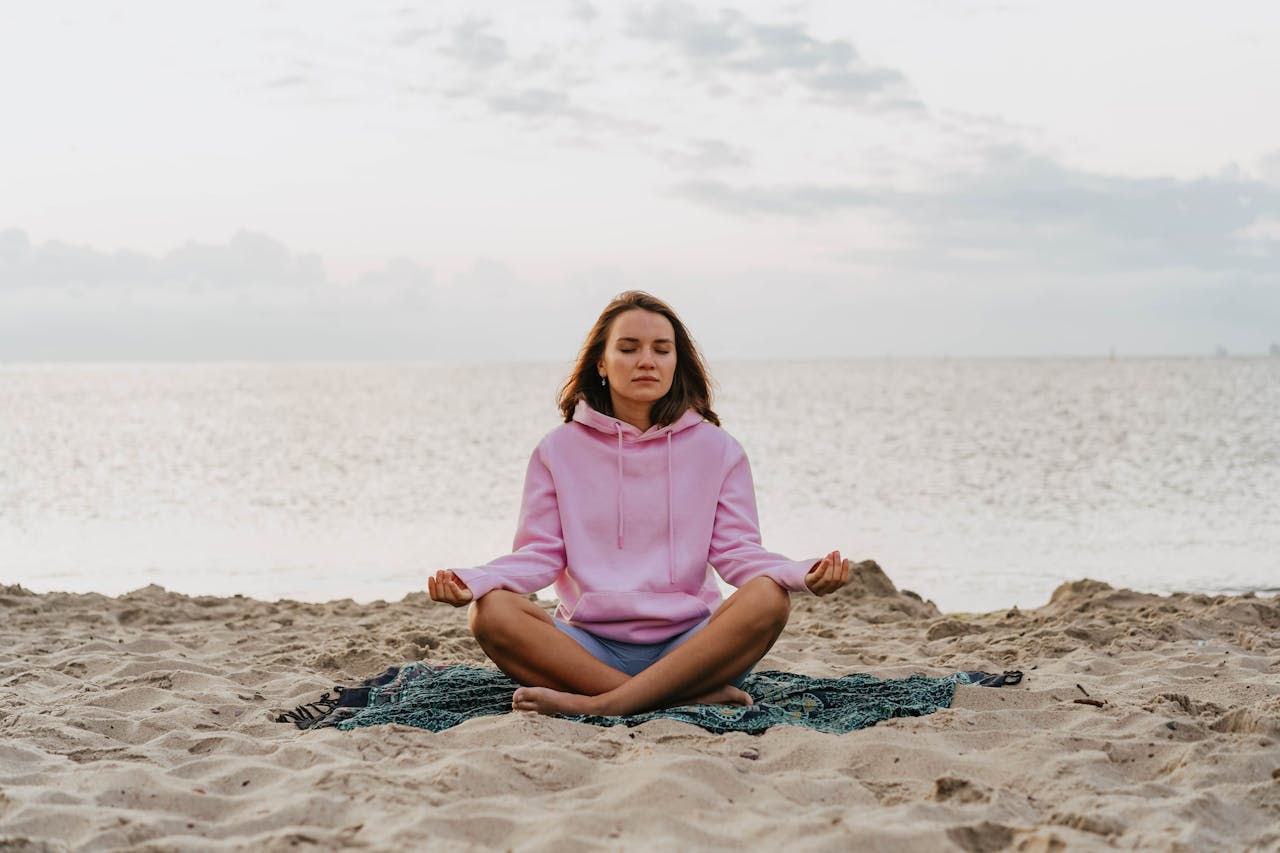
Mindfulness meditation is the practice of paying attention to present-moment experience with openness and without judgment. That sounds simple, but it is not easy, especially when anxiety is involved.
Mindfulness does not mean clearing the mind. It does not mean forcing relaxation. It does not mean staying positive or reframing thoughts. It means noticing what is happening as it is happening, including thoughts, emotions, and physical sensations, without immediately reacting to them.
When anxiety is present, the mind tends to do two things very quickly. It predicts future outcomes and it tries to control or escape discomfort. Mindfulness interrupts this pattern by creating a pause between experience and reaction.
That pause is small at first. Sometimes it lasts only a few seconds. But even a small pause can reduce the sense of being overwhelmed.

We created Mesmerize for moments when traditional mindfulness feels hard to access. When anxiety is active, sitting still with closed eyes can be frustrating or overwhelming. Our approach uses gentle visuals, sound, and guided support to make mindfulness feel more approachable from the start.
Visual meditation gives the mind something calm to rest on. Subtle motion, soft patterns, and immersive soundscapes help shift attention away from racing thoughts and back into the present. For many people dealing with anxiety or panic, this makes it easier to stay with the practice long enough for the body to begin settling on its own.
Everything in Mesmerize is built around choice. You can follow a narration or turn it off. Adjust breathing rhythms, visuals, voices, and pacing to match how you’re feeling that day. Some sessions are guided. Others are simply space to breathe and watch. Both support mindfulness, without pressure or rigid structure.
Mindfulness meditation helps anxiety in several interconnected ways. None of them are dramatic on their own, but together they can gradually shift the experience of anxiety.
Anxiety is strongly linked to time. It pulls attention toward what might happen next or what already went wrong. Mindfulness gently brings attention back to what is happening now.
This does not mean pretending the future does not exist. It means recognizing when the mind is racing ahead and choosing to reconnect with something immediate, like the breath, bodily sensations, or sounds in the room.
When attention stabilizes in the present, the nervous system often begins to settle as well.
Anxious thoughts often feel urgent and convincing. Mindfulness teaches you to notice thoughts as mental events rather than facts that require immediate action.
Instead of arguing with a thought or trying to replace it, mindfulness invites you to observe it. Over time, this reduces the grip thoughts have on your behavior and emotional state.
You may still have anxious thoughts, but they become less controlling.
One of the hardest parts of anxiety is the urge to make it stop. Mindfulness does not ask you to like anxiety. It asks you to stay with discomfort long enough to see that it changes.
By allowing sensations and emotions to be present without fighting them, you gradually learn that discomfort is not as dangerous as it feels. This can be especially helpful for panic symptoms, which often intensify when they are resisted.
Anxiety lives in the body as much as in the mind. Mindfulness meditation increases awareness of physical sensations, which can help you recognize early signs of stress before they escalate.
Practices like body scanning and mindful breathing reconnect you with bodily experience in a calmer, more curious way. This awareness can support regulation rather than overwhelm.
Research on mindfulness meditation has grown significantly over the past few decades. Early studies often made strong claims, but more recent research offers a more balanced picture.
Mindfulness-based programs have been shown to produce small to moderate reductions in anxiety symptoms for many people. These effects are comparable to other non-pharmacological approaches such as relaxation training or cognitive strategies.
Two structured programs are frequently studied.
Mindfulness-Based Stress Reduction, often called MBSR, is an eight-week program that combines meditation, gentle movement, and education about stress. It was originally developed to help people cope with chronic stress and illness.
Mindfulness-Based Cognitive Therapy, or MBCT, integrates mindfulness practices with elements of cognitive therapy. It was designed to prevent relapse in depression but has also shown benefits for anxiety.
Research suggests that mindfulness does not eliminate anxiety, but it can reduce symptom intensity, improve emotional regulation, and lower relapse risk for some conditions. It is not more effective than every other approach, and it does not work for everyone. That honesty matters.
Mindfulness meditation is sometimes presented as a universal solution. That framing creates unrealistic expectations and unnecessary pressure.
Meditation can support mental health, but it is not a substitute for therapy, medication, or professional care when those are needed. Some people find mindfulness extremely helpful. Others find it neutral or even challenging at certain stages.
For individuals with severe anxiety or trauma histories, mindfulness practices may need to be adapted or guided carefully. Paying attention inward can initially intensify symptoms if done without support.
A realistic view of mindfulness is this: it is a skill that can complement other forms of care. It works best when practiced gently, consistently, and without forcing outcomes.
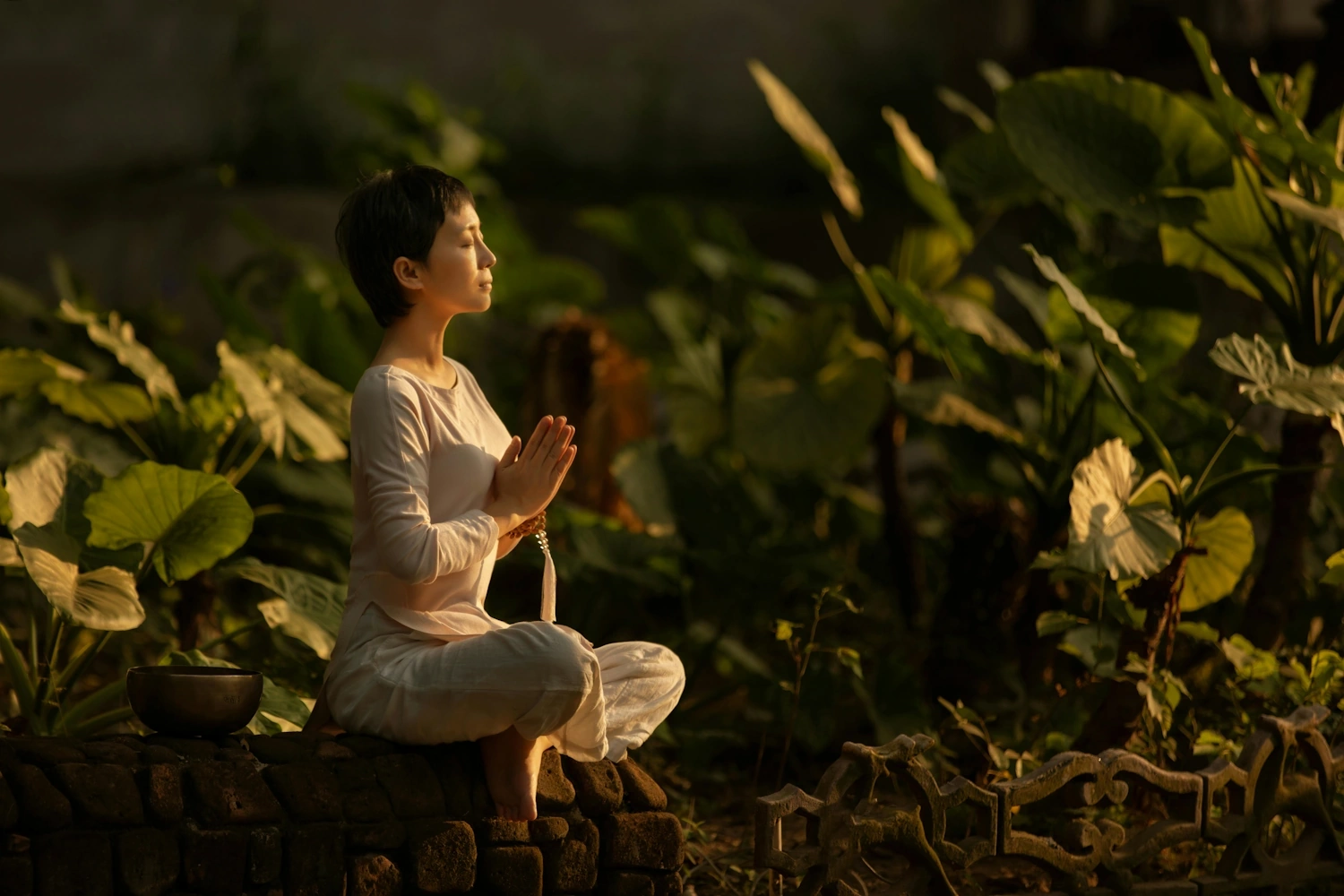
Mindfulness meditation influences the nervous system by encouraging a shift from constant threat monitoring to a more regulated state.
When attention rests on the breath or bodily sensations, the parasympathetic nervous system becomes more active. This supports slower breathing, reduced heart rate, and a sense of stability.
Over time, mindfulness may also influence brain areas involved in emotional regulation. Imaging studies suggest changes in regions associated with attention, self-awareness, and stress response.
These changes do not happen overnight. They develop gradually through repeated practice.
Mindfulness practices vary, but many follow a similar structure. Keeping things simple is often the best place to start.
Begin by noticing your experience as it is. Thoughts, emotions, physical sensations. No need to change anything.
This step sets the tone. You are not trying to achieve calm. You are observing what is present.
Choose an anchor, most commonly the breath. Focus on where you feel it most clearly. The belly, chest, or nostrils.
When attention wanders, gently return it. This is not failure. It is the practice.
After some time, widen attention to include the whole body or surrounding sounds. This broader awareness can reduce fixation on anxious sensations.
These steps can be practiced for a few minutes or longer, depending on your comfort.
Many people delay starting mindfulness because they think they need the perfect setup. They do not.
Five minutes is enough. Even two minutes can be meaningful. Longer sessions are not automatically better, especially at the beginning.
Sit in a chair, on a cushion, or lie down if needed. The goal is to be comfortable and alert, not rigid.
Silence is helpful, but it is not required. Mindfulness can be practiced at home, at work, or while waiting.
A wandering mind is normal. The practice is noticing and returning, not staying focused perfectly.
Regular short sessions build more stability than occasional long ones.
Breathing plays a central role in mindfulness because it connects the mind and body.
When anxious, breathing often becomes shallow and rapid. Mindful breathing gently encourages slower, deeper patterns without forcing them.
A simple approach is to place one hand on the belly and notice the rise and fall with each breath. There is no need to control the breath. Awareness alone often leads to regulation.
Mindful breathing can be practiced during meditation or used informally throughout the day when anxiety arises.
Panic symptoms can feel overwhelming. Mindfulness does not mean pushing through panic or ignoring safety needs.
When panic arises, it can help to first orient to the environment. Notice objects, sounds, or physical contact with the ground. This creates a sense of stability.
Once grounded, attention can gently turn toward sensations associated with panic, observing them without adding stories or predictions. If this feels too intense, it is appropriate to return attention outward.
Mindfulness emphasizes choice. You decide how close to get to difficult sensations and when to step back.
Several misunderstandings can make mindfulness harder than it needs to be, especially when anxiety is involved.
If you want, I can integrate this directly into the full article layout or refine the wording further to match a specific brand voice.
Mindfulness meditation does not promise to remove anxiety from your life. It offers something more realistic.
It offers a way to relate differently to anxious thoughts and sensations. A way to notice them without immediately reacting. A way to create small spaces of choice where there used to be none.
Those small spaces add up over time.
For many people, mindfulness becomes less about managing anxiety and more about understanding it. That understanding can soften anxiety’s impact and make room for a calmer, steadier relationship with experience.
Mindfulness meditation for anxiety is not about fixing yourself. It is about learning how to stay present with what is already happening.
The practice is simple, but not always easy. It requires patience, honesty, and a willingness to begin again. Progress is often subtle and uneven.
If you approach mindfulness with curiosity rather than expectation, it can become a supportive tool rather than another source of pressure.
Start small. Stay consistent. Let the practice meet you where you are.
I canceled my subscription with Headspace and I now pay for Mesmerize instead. I was hooked after the free trial! I love how customizable the sounds, meditations, and visuals are! Using this app has honestly become my favorite part of my day! ☺️ It helps me relax, meditate, visualize, sleep, and it does wonders for my anxiety/phobia/ocd tendencies. Thank you Mesmerize for giving us this amazing mental health tool! I told my therapist about this app and have been telling all my friends too. It’s just so helpful!
This is the second or third app in the mindfulness and meditation realm, and it’s the most scientific approach I have found. I have found these combinations of open monitoring, and focused attention meditation techniques are the most viable for those suffering from more severe forms of sleep, pain, and anxiety dysfunction one may be suffering from. Many of these approaches are used by professionals in a cognitive behavioral therapy setting. A truly complete approach in mindfulness and meditation.
I suffer from clinical depression and sometimes I get into a bad headspace but this app has really helped me whenever I’m in a bad mood I turn on the app listen to some person taking about breathing and look at cool figures on my phone and it makes me feel so much better I would highly recommend this app it’s worth the money
It didn’t take but five minutes of using this app to buy a yearly subscription. Worth it on so many levels. Easy to manipulate to what I like. Massive library of music, videos, etc.
Clear your mind and relax with a unique audio visual meditation experience.


.jpeg)
.webp)
.webp)


