A short, calming practice to reduce stress and sharpen focus - in less time than it takes to scroll your feed.
.webp)
Five minutes doesn’t sound like much - until it’s quiet. For many people, that’s all it takes to reset their head. Some add it to their mornings, others use it when things spiral. No incense. No complex rituals. Just a few minutes of stillness, a bit of breath awareness, and space to let the noise settle. It’s not about doing it perfectly. It’s about showing up, even briefly, and noticing the shift.
Five minutes is enough to interrupt the spiral, enough to shift from reaction to awareness. It’s not some productivity hack or mental detox trick. It’s simply space. A short, defined pause where nothing has to be solved, answered, or planned.
Sometimes that’s all it takes - a reset. Just enough to remind the body it’s safe again. There’s plenty of research behind it, but most folks don’t need the data. The change is something you can feel. The heart rate slows. Shoulders drop. The noise in the mind softens a little.
Some use it before meetings. Others wind down with it before bed. A few sneak in five minutes during a chaotic afternoon. It works because it’s small. No pressure to get it right. Just sit, breathe, listen. The shift isn’t dramatic, but it’s noticeable. And once that happens, coming back feels easy.

We built Mesmerize for people who want to slow down without overthinking how to do it. From the start, we focused on visuals - not as decoration, but as a way to gently guide attention. We combined animation, breathing, sound, and voice into one sensory flow that feels natural to follow, even on restless days.
We designed Mesmerize to work quickly, without setup fatigue. We kept the starting flow intentionally simple, so nothing stands between opening the app and settling in. We built flexible controls for voice, pacing, and sound, allowing each session to adjust without forcing a fixed structure. Instead of rigid paths, we focus on options that stay out of the way and let the experience unfold naturally.

Our app available on both iOS and Android, with full offline access. Everything is built to be quiet by default - so when the app opens, it feels like space to breathe, not another thing to manage.

Five minutes isn’t much on paper. But once things slow down, it starts to feel like a real pause. That’s the shift - not escaping the day, but stepping just far enough outside it to feel a little more present. Here’s how most people ease into it. No rituals, no rules. Just a soft rhythm to return to.
Trying to guess how long five minutes has passed creates more tension than it solves. A simple timer - one with a gentle sound - helps hold the space without having to think about it. Once the time is set, that’s it. No checking, no waiting.
It doesn’t have to be silent or beautiful. Just somewhere that doesn’t ask much from them. A corner near a window. The passenger seat of a parked car. A place where the body can let its guard down, even a little. Eyes can close, or just soften - no pressure either way.
The breath sets the pace. Taking two or three deeper inhales at the start helps signal to the body that it’s time to slow down.. No need to control it tightly - just following its natural rhythm is enough. Slower than usual. A little heavier. That’s all.
Most use the breath as a focus point. Others might listen to ambient sound or follow a soft visual. The goal isn’t to block thoughts - it’s to notice when attention wanders and bring it back. Gently. Again and again. That’s not a mistake. That is the meditation.
When the timer ends, it helps to stay still for a few extra seconds. Not jumping up or rushing to the next task. A quiet breath in, one out. Maybe a small stretch. Letting the system land gently before returning to the flow of the day.
Most don’t feel “good at it” on day one. That’s not the point. Meditation isn’t about doing it perfectly - it’s about showing up with some softness and curiosity. Even one intentional breath can shift something. Five minutes is just a container. What happens inside it is theirs to notice.
There’s no universal best time to meditate - just small windows that feel right. For some, that’s early morning, before the phone lights up and the day makes demands. Others pause after lunch, when attention drifts and five quiet minutes do more than caffeine ever could. Evenings work too, especially when the body starts to slow down but the mind keeps spinning.
It doesn’t need to be a fixed routine or a special setup. A parked car, a bench, the edge of the bed - anywhere that feels still enough. Sometimes the best moment isn’t found, it’s made. No pressure, no performance. Just a few minutes to let everything settle. That’s usually enough.
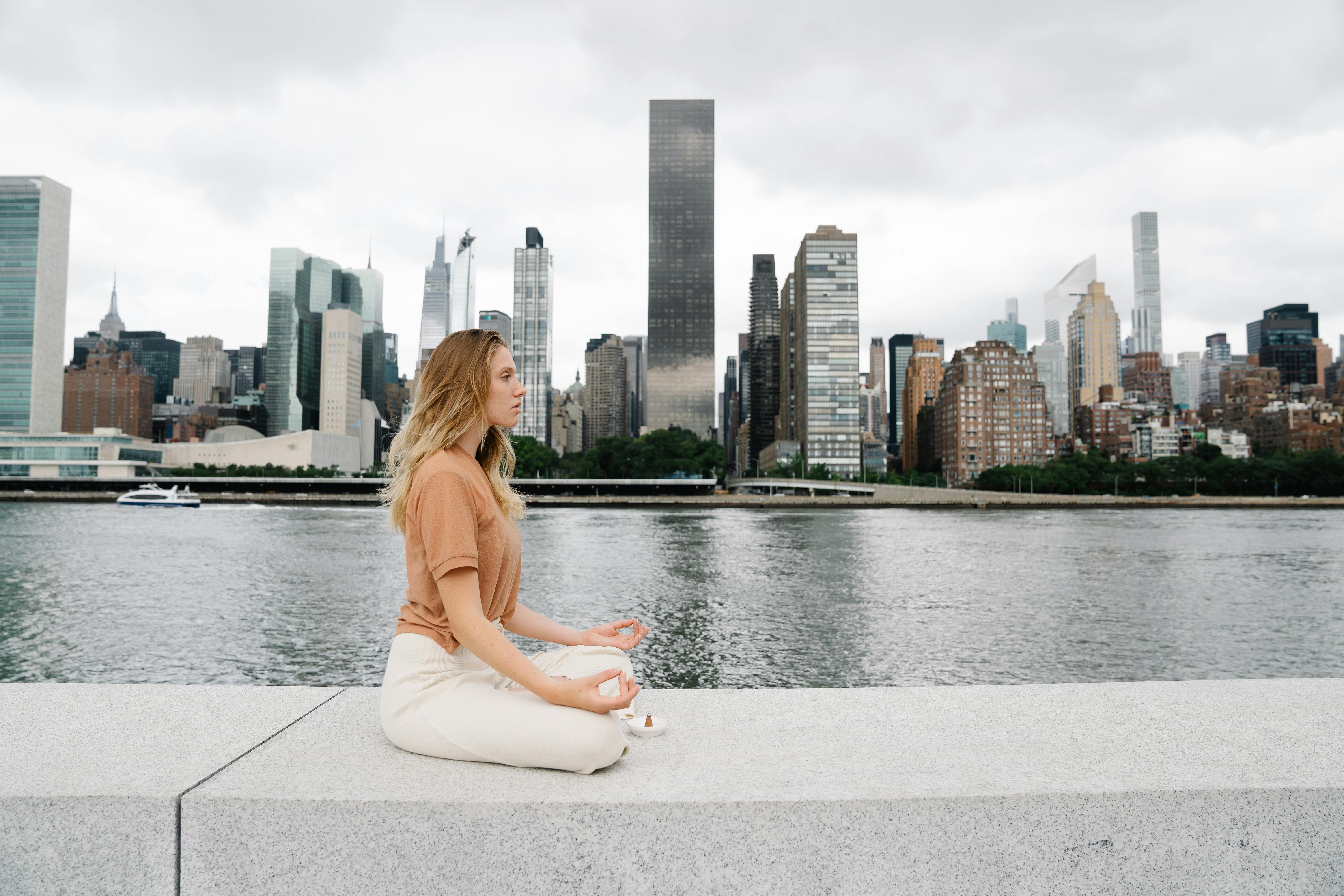
It doesn’t feel dramatic in the moment. But over time, those five quiet minutes start to leave a mark. Mood shifts. Thoughts get less tangled. Sleep feels deeper. And the body - somehow - stops bracing so much.
Most of it builds slowly. One session won’t flip everything. But give it a little space, and the system begins to adjust. Here’s what tends to show up:
It usually does. Sitting still for five minutes might sound easy until the moment actually arrives - then the brain kicks in, the body fidgets, and the silence feels weirdly loud. That’s not a mistake. That’s just what happens when things finally slow down. Most people expect instant calm, but what usually shows up first is restlessness, noise, or the feeling of “am I doing this right?” There’s nothing wrong with that.
Meditation doesn’t ask for perfection. It’s not about stopping thoughts or feeling peaceful on command. It’s about making a little space and staying with it, even when it feels clumsy or scattered. Some days it clicks. Some days it doesn’t. What matters is coming back anyway. The body learns. The mind softens. It gets easier - not by force, but by repetition. The quiet tends to arrive once the effort lets go.

Meditation tends to start with curiosity - and then bump into resistance. Some days it feels too quiet. Other days it gets forgotten entirely. That’s normal. What makes it stick isn’t motivation or discipline. It’s small patterns that don’t ask too much.
The harder it is to start, the less likely it’ll happen. That’s why people who keep going usually don’t aim for some perfect scene. No candles. No special chair. Just a cue - a certain time, a familiar sound, or a spot that gently signals the body to shift into slower rhythm.
If five minutes feels too long, two will do. The habit is what matters, not the number. A shorter session that actually happens will always do more than a longer one that gets skipped. Consistency isn’t built on effort. It’s built on repetition.
Not every session feels good. That doesn’t mean it didn’t work. Some feel scattered, some are flat, some are full of thoughts. The people who stick with it don’t try to chase calm - they just keep showing up, even when it’s messy. Over time, the mind catches on.
Some people need silence. Others need sound. One person might sit cross-legged with their eyes closed, while another feels more grounded lying down, watching soft visuals move across a screen. There’s no universal formula. What feels meditative for one person can feel uncomfortable or empty for someone else - and that’s okay. Meditation isn’t a posture or a playlist. It’s just a way of giving the mind a break.
The more personal it becomes, the easier it is to keep coming back. That could mean adjusting the speed of a voice, choosing different music, or skipping the narration entirely. Some days call for quiet. Other days, they might need a little movement to stay present. The form doesn’t matter as much as the feeling - that subtle shift where things loosen, even slightly. That’s the part worth protecting. And how they get there is entirely up to them.
Five minutes isn’t a fix-all. But it’s something. A pause, a pattern, a shift - even a small one - can ripple through the rest of the day in ways that are hard to measure but easy to feel. The value isn’t in doing it perfectly. It’s in noticing what changes when there’s room for nothing.
Some treat meditation like a habit. Others think of it as a place to return to. Either way, it works. What matters is that it feels possible - not lofty, not loaded, just doable. And five minutes makes it doable.
I canceled my subscription with Headspace and I now pay for Mesmerize instead. I was hooked after the free trial! I love how customizable the sounds, meditations, and visuals are! Using this app has honestly become my favorite part of my day! ☺️ It helps me relax, meditate, visualize, sleep, and it does wonders for my anxiety/phobia/ocd tendencies. Thank you Mesmerize for giving us this amazing mental health tool! I told my therapist about this app and have been telling all my friends too. It’s just so helpful!
This is the second or third app in the mindfulness and meditation realm, and it’s the most scientific approach I have found. I have found these combinations of open monitoring, and focused attention meditation techniques are the most viable for those suffering from more severe forms of sleep, pain, and anxiety dysfunction one may be suffering from. Many of these approaches are used by professionals in a cognitive behavioral therapy setting. A truly complete approach in mindfulness and meditation.
I suffer from clinical depression and sometimes I get into a bad headspace but this app has really helped me whenever I’m in a bad mood I turn on the app listen to some person taking about breathing and look at cool figures on my phone and it makes me feel so much better I would highly recommend this app it’s worth the money
It didn’t take but five minutes of using this app to buy a yearly subscription. Worth it on so many levels. Easy to manipulate to what I like. Massive library of music, videos, etc.
Clear your mind and relax with a unique audio visual meditation experience.


.jpeg)