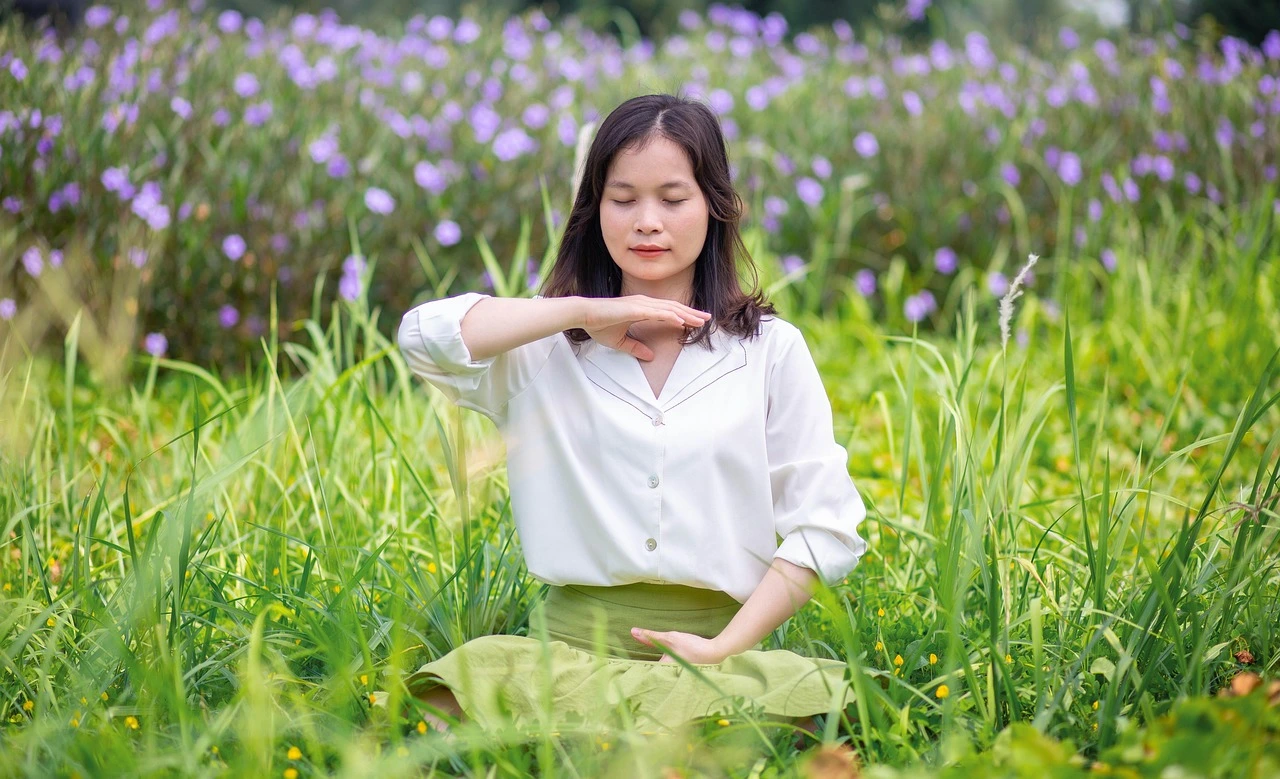
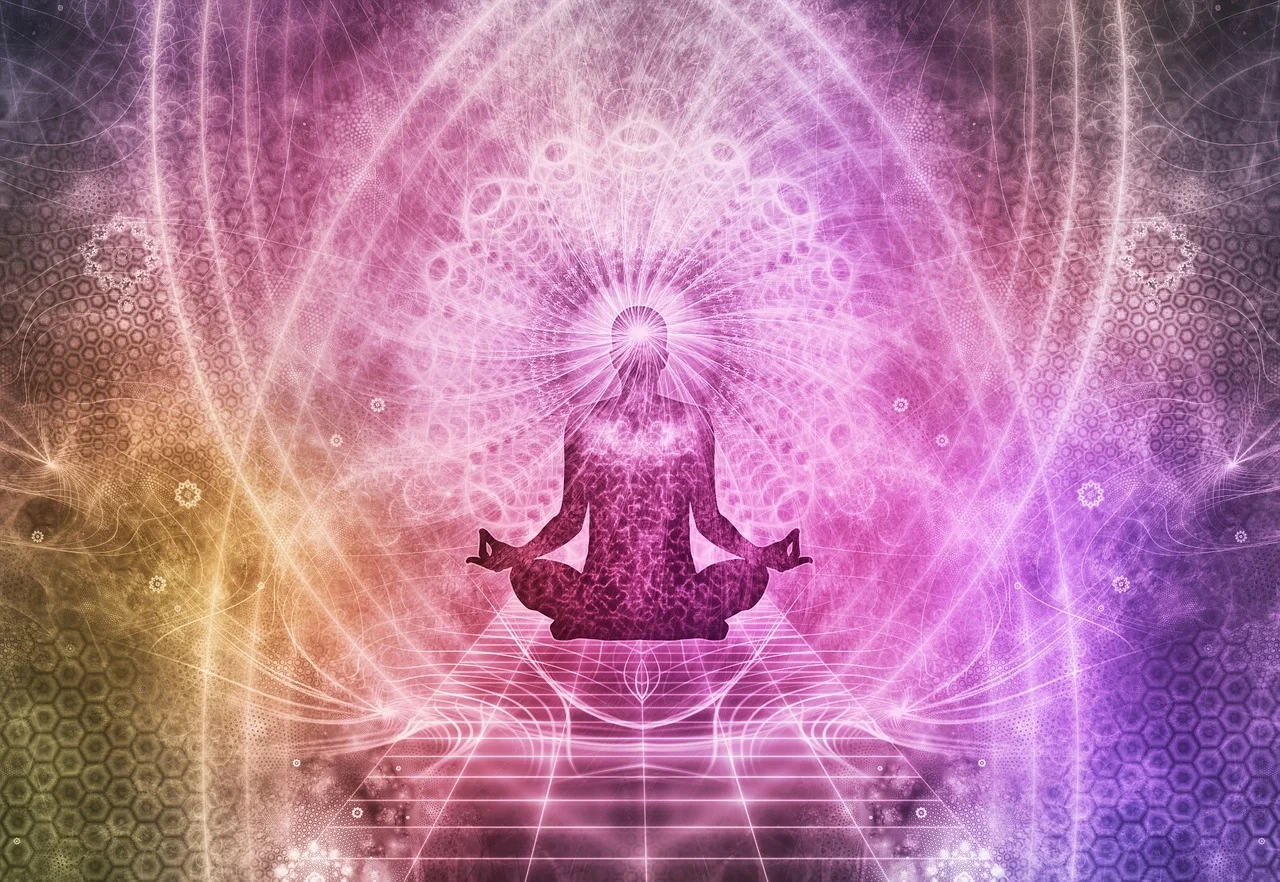
Aura meditation explained: what it is, how it works, and its benefits for stress and sleep. Try a guided session and feel the difference today.
.webp)
Quick Summary: Aura meditation is a visualization practice that focuses on the subtle energy field believed to surround the body, using breath, color, and intention to release tension and restore emotional balance. It doesn't require any special equipment or belief system to try, and most people can complete a full session in under fifteen minutes. Regular practice is often reported to ease stress and anxiety and support better sleep, though it works best paired with grounded breathing techniques rather than replacing them. Anyone curious about energy-based mindfulness can start with a short guided session and build from there.
Search "aura meditation" and you'll find everything from serious spiritual teachers to skeptical wellness bloggers arguing about whether an energy field even exists. Here's the thing though—you don't need to settle that debate to benefit from the practice. Aura meditation borrows the language of energy fields and uses it as a tool for focused attention, similar to how a candle flame or a mantra gives the mind something to rest on.
This guide breaks down what an aura actually refers to in meditation traditions, how the practice works step by step, and what the current evidence says about its effects on stress, anxiety, and sleep. No mysticism required to get something useful out of it.
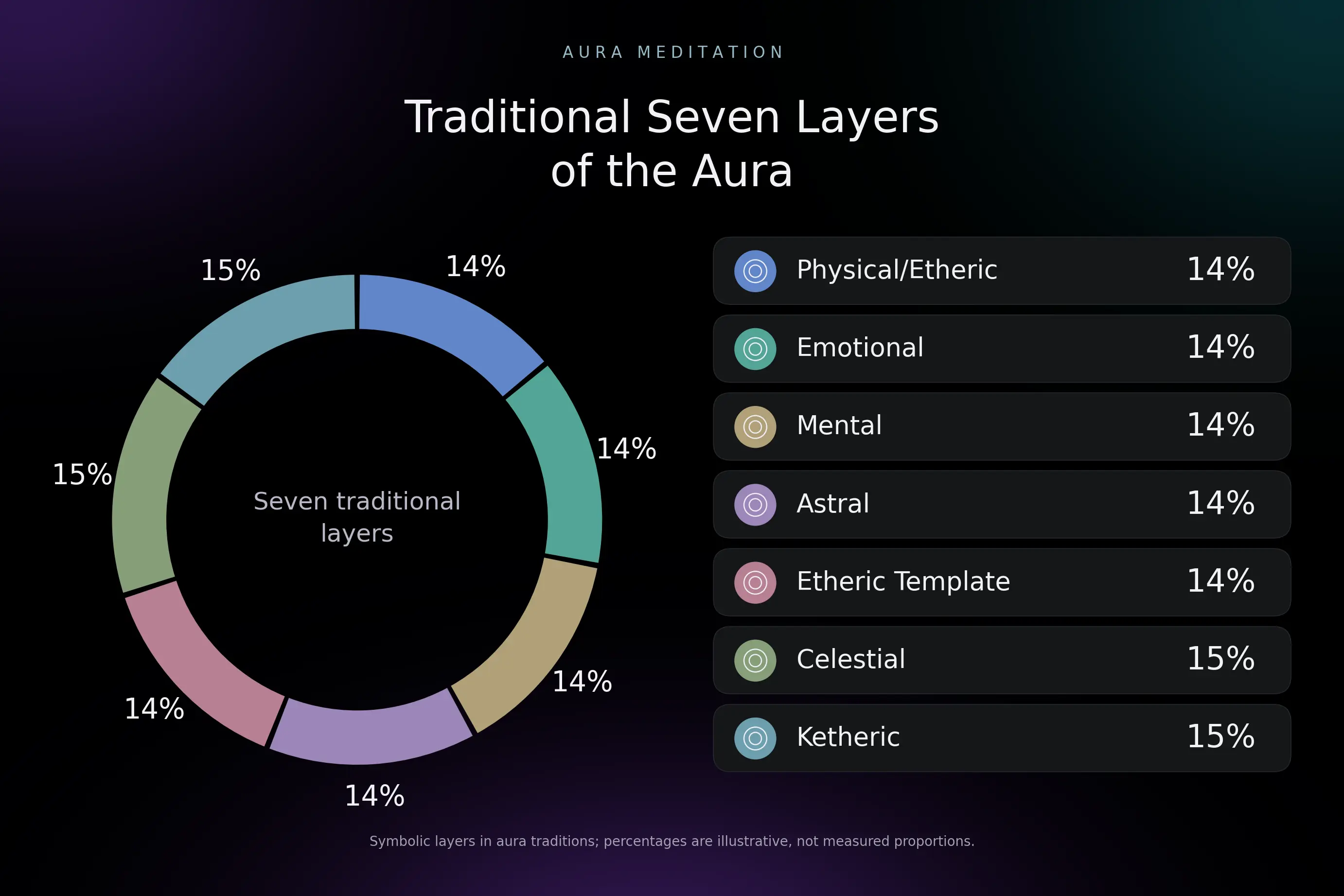
In most spiritual and energy-healing frameworks, an aura is described as a layered field of energy that surrounds the physical body, extending anywhere from a few inches to several feet outward. Practitioners often associate different layers with physical health, emotions, mental activity, and spiritual connection — a layered model popularized in Theosophical and later New Age writing (over a century old in its modern form), sometimes loosely mapped onto yogic ideas of subtle bodies.
Color is a big part of the vocabulary. A red-tinted aura might be linked to passion or anger, blue to calm communication, green to healing and growth. None of this has been measured by mainstream science, and that's worth being upfront about. What's measurable is the effect of the meditation practice itself — slower breathing, reduced heart rate, and a quieter nervous system tend to follow regardless of whether someone believes in literal energy fields.
Strip away the terminology and aura meditation follows a fairly simple structure: settle the body, slow the breath, and direct attention outward from the physical form into an imagined field of light or color surrounding it. That outward focus is what distinguishes it from a standard breath-awareness practice.
Most guided sessions move through four or five phases. Grounding comes first, followed by a body scan, then a visualization of the field expanding and brightening, and finally a closing phase that pulls attention back inward. The whole sequence rarely takes more than fifteen minutes, which makes it easy to slot into a lunch break or a bedtime routine.
Aura meditation often uses visualization and focused attention as part of the practice. At Mesmerize, we offer animated visuals alongside visual breathing, soundscapes, guided meditations, affirmations, and relaxing narrations that can complement visualization-based sessions.
With our app, you can:
Download our Mesmerize app on iOS or Android to explore our visual and audio tools for meditation.
Ask around and the answers cluster pretty consistently: less anxiety, better sleep, and a sense of emotional steadiness after a rough day. None of that is unique to aura-focused practice — it overlaps heavily with what's documented for general mindfulness and visualization meditation. But the specific imagery of a protective, glowing field does seem to give some practitioners an easier entry point than more abstract instructions like "just observe your thoughts."
For people who respond well to visual and sensory cues rather than pure breath-counting, this style of meditation can feel more immersive. That's part of why visual meditation formats — apps that pair guided imagery with ambient visuals rather than audio alone — have gained traction. A structured, screen-based session can make the "glowing field" concept feel less abstract and easier to sustain attention on.
So how does this compare to more familiar formats like breath-focused or body-scan meditation? The mechanics overlap quite a bit, but the mental imagery differs enough to matter for some practitioners.
None of these is objectively "better." It largely comes down to what keeps someone's attention anchored without frustration. Some practitioners rotate between styles depending on mood — a quick breath-based reset during a busy afternoon, a longer aura or visualization session at night.
No peer-reviewed research confirms the literal existence of a measurable aura in the way energy-healing traditions describe it. That's a fair and important caveat. What research does support is the broader category this practice belongs to: guided visualization and relaxation-based meditation, which has a substantial body of evidence linking it to reduced cortisol levels, lower self-reported anxiety, and improved sleep quality.
In other words, the "aura" framing might be more metaphor than measurable phenomenon, but the nervous-system benefits of slowing down, breathing deliberately, and engaging in structured visualization are well documented. For readers who want to dig into the underlying research on meditation's physiological effects, it's worth reviewing the science behind guided and visual meditation formats rather than relying on anecdote alone.
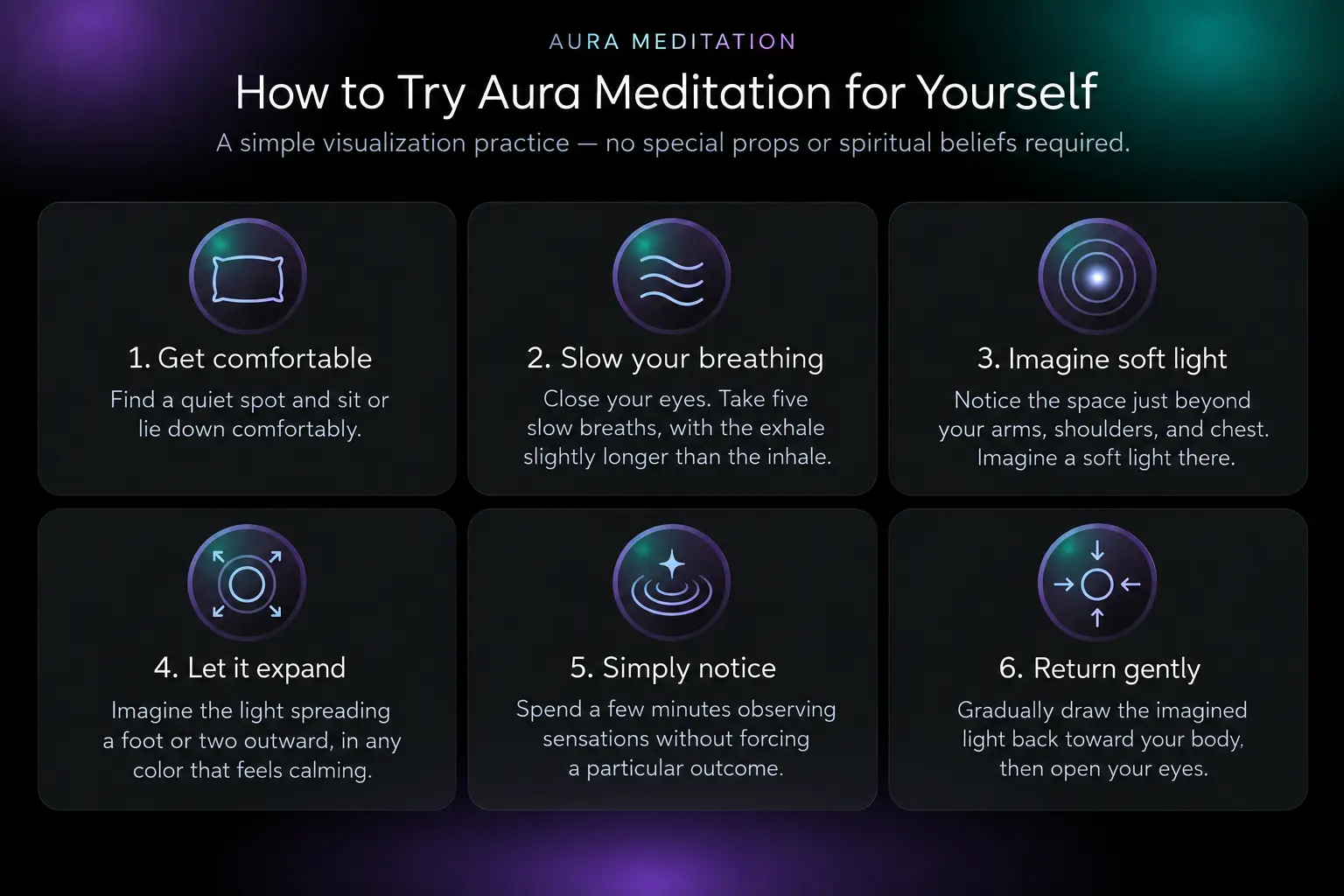
Getting started doesn't require candles, crystals, or any particular spiritual framework — though those props are fine if they help set the mood. A basic first session looks something like this:
Ten to fifteen minutes is plenty for a first attempt. Those pressed for time might prefer starting with a shorter format, like a five-minute meditation that still incorporates visualization before working up to longer aura-focused sessions.
A few habits tend to derail the practice before it has a chance to work:
Some people find it easier to sustain focus when the visualization is supported by actual imagery rather than imagination alone. That's the idea behind audio-visual meditation formats — soft, evolving visuals paired with guided narration can make the "expanding field of light" concept less of an abstract exercise. Anyone who struggles to hold a mental picture for more than a few seconds might get more out of a session that provides that visual anchor externally, then gradually builds the skill of internal visualization over time.
Aura meditation sits in an interesting spot between spiritual tradition and practical relaxation technique. Whether or not the energy field is literal, the underlying mechanics — slow breathing, visualization, sustained attention — line up with practices that genuinely help reduce stress and support better sleep. The best approach is to try it with curiosity rather than certainty, notice what actually shifts in the body, and adjust the technique from there.
For anyone who wants that visualization guided rather than self-directed, exploring a visual meditation app can make the process more approachable, especially in the early stages. Browsing a wider library of guided meditation content is also a solid way to find the specific style — aura-focused, breath-focused, or otherwise — that fits best.
I canceled my subscription with Headspace and I now pay for Mesmerize instead. I was hooked after the free trial! I love how customizable the sounds, meditations, and visuals are! Using this app has honestly become my favorite part of my day! ☺️ It helps me relax, meditate, visualize, sleep, and it does wonders for my anxiety/phobia/ocd tendencies. Thank you Mesmerize for giving us this amazing mental health tool! I told my therapist about this app and have been telling all my friends too. It’s just so helpful!
This is the second or third app in the mindfulness and meditation realm, and it’s the most scientific approach I have found. I have found these combinations of open monitoring, and focused attention meditation techniques are the most viable for those suffering from more severe forms of sleep, pain, and anxiety dysfunction one may be suffering from. Many of these approaches are used by professionals in a cognitive behavioral therapy setting. A truly complete approach in mindfulness and meditation.
I suffer from clinical depression and sometimes I get into a bad headspace but this app has really helped me whenever I’m in a bad mood I turn on the app listen to some person taking about breathing and look at cool figures on my phone and it makes me feel so much better I would highly recommend this app it’s worth the money
It didn’t take but five minutes of using this app to buy a yearly subscription. Worth it on so many levels. Easy to manipulate to what I like. Massive library of music, videos, etc.
Clear your mind and relax with a unique audio visual meditation experience.


.jpeg)