A gentle guide to guided meditation for kids. Learn how it works, when to start, and how to make it feel simple and natural at home.
.webp)
Kids feel a lot. Big emotions, busy days, noisy minds. And most of the time, they do not yet have the words or tools to explain what is happening inside. Guided meditation can help fill that gap, not by fixing or quieting kids, but by giving them a safe way to slow down and notice what they feel.
Unlike adult meditation, guided meditation for kids is rarely silent or still. It often looks like stories, breathing games, gentle imagery, or listening to a calm voice before bed. When it works, it feels less like a technique and more like a shared pause. Something that helps kids settle, reset, and feel a little more at ease in their own bodies.
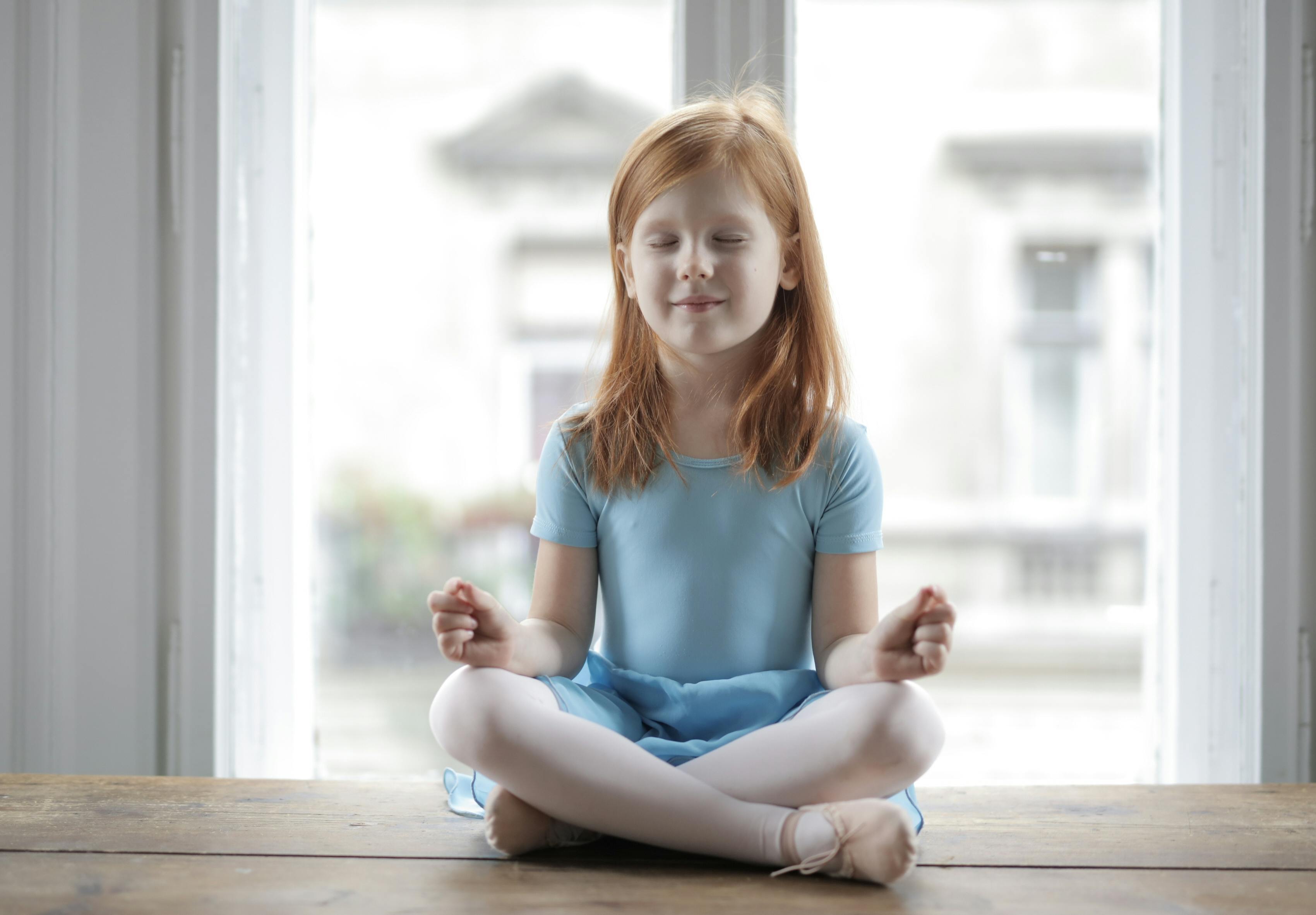
Guided meditation for kids is a form of mindfulness where a calm voice leads a child through an experience. That experience might include breathing, noticing the body, imagining a peaceful scene, or listening to sounds. Unlike adult meditation, it is rarely silent and rarely still for long.
For kids, meditation often looks like:
The goal is not to empty the mind or sit perfectly still. The goal is to help children feel safe enough to notice what is happening inside them, without being overwhelmed by it.
Guided meditation works because it gives structure. Children do not have to figure out what to do. They are gently led, moment by moment, in a way that matches their attention span and emotional development.
Most kids are not wired for silence, especially when they are already full of energy or emotion. Asking a child to sit quietly and focus on nothing often creates frustration instead of calm.
Guided meditation works because it meets kids where they are.
Children naturally respond to stories, voices, rhythm, and imagination. A guided approach gives their mind something soft to hold onto. It reduces the feeling of doing something wrong and replaces it with curiosity.
For younger kids, meditation may feel like play. For older kids, it may feel like a way to reset or take a break from mental noise. Either way, the guidance removes pressure and makes the experience accessible.

At Mesmerize, we design guided meditation to feel easy to step into, not something you have to prepare for or get right. Our focus is on reducing friction. No rigid structure. No pressure to sit still or clear your mind. Just a calm, immersive experience that helps the nervous system slow down.
The app uses a combination of flowing visuals, gentle narration, and rich soundscapes to guide attention in a soft, non-intrusive way. For many people, visual meditation makes it easier to stay present. The eyes have something steady to rest on. The mind has less space to spiral. Time fades into the background without effort.
Everything in Mesmerize is designed to be adjustable. You can choose narration or turn it off. Change the pace. Pair breathing visuals with music. Or simply let a soundscape and visuals play on their own. That flexibility makes guided meditation easier to return to, whether it is part of a bedtime routine, a short break during the day, or a way to unwind when things feel overstimulating.
Behind the experience is real research, with clear explanations for anyone who wants to understand how and why these techniques work. At the same time, we keep the experience clean and distraction-free. No ads. No noise. No unnecessary prompts. Just a calm space you can open whenever you need a moment to reset.
Guided meditation is often talked about in big terms, but its real value shows up in small, everyday ways.
Kids experience strong emotions, often without the skills to manage them. Guided meditation helps children recognize feelings as they arise. Over time, this builds the ability to pause instead of reacting immediately.
Regular meditation practice can strengthen attention skills. Children learn how to notice when their mind wanders and gently bring it back. This can support learning, listening, and following instructions without forcing concentration.
Many parents turn to guided meditation to support bedtime routines. Calming stories, breathing exercises, and gentle imagery can help children transition from stimulation to rest. For some kids, even a few minutes of guided relaxation can make falling asleep easier.
Meditation does not remove anxiety, but it can reduce how intense it feels. Guided practices help children slow their breathing, relax their body, and feel more grounded during stressful moments.
Meditation encourages kids to notice physical sensations like tension, warmth, or movement. This awareness helps children recognize when they are tired, overstimulated, or overwhelmed before emotions escalate.
There is no single right age. Some toddlers enjoy listening to calming stories. Others need more time before they can engage. In general, many children begin to respond well to guided meditation around ages three to five, when imagination and attention start to develop more clearly.
What matters more than age is readiness. Signs a child may be ready include:
Meditation should always be optional. If a child resists or loses interest, that is information, not failure. You can pause and try again later.
Adults often approach meditation with specific goals in mind. Relaxation. Productivity. Stress reduction. Kids experience meditation in a different way.
For children, shorter sessions tend to work better than longer ones. Movement is often part of the process rather than a distraction. Sounds, visuals, or stories help hold attention in a way silence usually does not. And results rarely show up all at once. Progress tends to be gradual and uneven, which is completely normal.
Meditation for kids is less about outcomes and more about exposure. The benefit comes from repeated moments of calm, not from perfect sessions or strict routines.
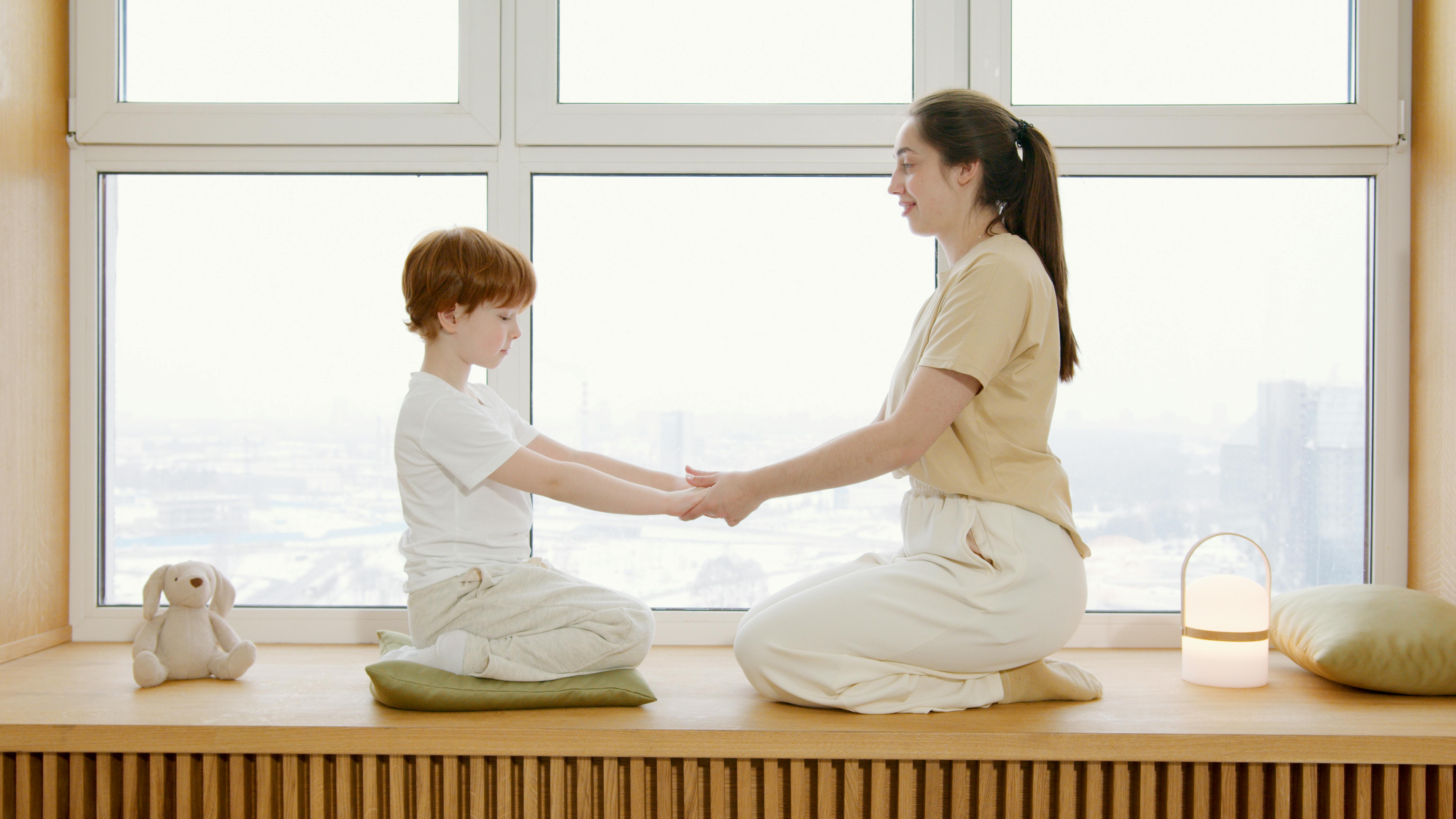
The way meditation is introduced matters just as much as the practice itself.
Children learn by watching. When adults use meditation or mindfulness openly, kids are more likely to see it as normal. You do not need to explain everything. Sometimes simply practicing nearby is enough.
One to five minutes can be plenty. Ending early is better than pushing through resistance. Stopping while the experience still feels positive helps build trust.
Bedtime, transitions after school, or quiet moments before homework are natural opportunities. Meditation does not need a special setup or schedule.
Offer options when possible. A story or breathing exercise. Sitting or lying down. Eyes open or closed. Choice increases engagement and reduces pressure.
If a child giggles, moves, or opens their eyes, that is fine. Meditation does not need to look a certain way to be effective.
Not every technique will resonate with every child, and that is completely normal. Some kids respond best to breathing. Others relax more easily through sound or imagination. Offering a variety of approaches makes it easier for children to find something that feels comfortable and familiar over time.
Breathing exercises are often the simplest place to start. Prompts like counting breaths, imagining air filling a balloon, or placing a hand on the belly to feel it rise and fall can help slow the nervous system. These exercises give kids something concrete to focus on, which can be especially helpful during moments of stress or restlessness.
Guided imagery uses storytelling to create a sense of calm. Children might imagine walking through a forest, floating on water, or resting in a favorite place. Familiar scenes and gentle narratives allow kids to relax while staying engaged. For many children, imagination makes meditation feel less like a task and more like a quiet adventure.
Body awareness scans invite kids to notice sensations in different parts of the body, such as warmth, heaviness, or relaxation. These scans are usually brief and simple, moving slowly from one area to another. Over time, this helps children recognize early signs of tension or overstimulation and understand what calm feels like physically.
Sound-based meditation focuses attention on calming audio, such as soft music, nature sounds, or steady rhythms. This approach works well for children who find silence uncomfortable or who struggle to sit still. Sound gives the mind something consistent to rest on, making it easier to stay present without effort.
Gratitude and kindness practices gently encourage children to notice positive moments, people, or feelings. This might involve thinking about something they enjoyed during the day or imagining sending kind thoughts to someone they care about. When kept simple, these practices support emotional awareness and empathy without feeling forced or overly sentimental.
Guided meditation tends to work best when it fits naturally into a child’s day rather than feeling like a separate task. Two of the most common and useful moments are at bedtime and during daytime transitions, when emotions and energy often run high.
Bedtime is one of the most natural times to introduce guided meditation. The intention is not to make sleep happen, but to help the body slow down and shift out of stimulation. A familiar voice or recording can become a comforting signal that the day is winding down. Lowering lights, reducing screen use, and keeping the language calm and predictable all help create the right atmosphere.
Some children fall asleep partway through a guided meditation. Others stay awake but visibly relax. Both responses are completely fine. Over time, the routine itself can become reassuring, even on nights when sleep takes longer to arrive.
Guided meditation can also be helpful outside of bedtime. Short practices during the day can support emotional regulation and help kids reset when things feel overwhelming. After school, before homework, following an emotional moment, or during periods of change are all times when a brief pause can make a difference.
These sessions do not need to be long. Even a minute or two of guided breathing, listening to calming sounds, or following a short visualization can help a child return to a steadier state. The goal is not deep relaxation, but creating a small break that allows the nervous system to settle before moving on.

It is helpful to be clear about what meditation cannot do.
Guided meditation:
What it can do is help children build awareness and coping skills gradually, in a way that feels safe and accessible.
There is no ideal schedule when it comes to guided meditation for kids. Some families find that a short daily practice fits naturally into their routine, while others use meditation only during stressful moments or before sleep. Both approaches are valid. What matters more than frequency is keeping the experience gentle and pressure-free, so it does not feel like another task to complete.
A helpful guideline is to weave meditation into moments that already exist, such as bedtime, quiet transitions, or emotional resets during the day. When guided meditation feels like a natural pause rather than an obligation, children are more likely to engage with it willingly and return to it on their own over time.
Guided meditation for kids is not about creating perfectly calm children. It is about giving them a tool they can return to when things feel loud, confusing, or overwhelming. The real value lies in repetition, trust, and gentle guidance over time.
When introduced with patience and curiosity, guided meditation can help children develop emotional awareness, resilience, and a sense of calm they can carry into adulthood. Not because someone told them to be calm, but because they learned how to find it for themselves.
I canceled my subscription with Headspace and I now pay for Mesmerize instead. I was hooked after the free trial! I love how customizable the sounds, meditations, and visuals are! Using this app has honestly become my favorite part of my day! ☺️ It helps me relax, meditate, visualize, sleep, and it does wonders for my anxiety/phobia/ocd tendencies. Thank you Mesmerize for giving us this amazing mental health tool! I told my therapist about this app and have been telling all my friends too. It’s just so helpful!
This is the second or third app in the mindfulness and meditation realm, and it’s the most scientific approach I have found. I have found these combinations of open monitoring, and focused attention meditation techniques are the most viable for those suffering from more severe forms of sleep, pain, and anxiety dysfunction one may be suffering from. Many of these approaches are used by professionals in a cognitive behavioral therapy setting. A truly complete approach in mindfulness and meditation.
I suffer from clinical depression and sometimes I get into a bad headspace but this app has really helped me whenever I’m in a bad mood I turn on the app listen to some person taking about breathing and look at cool figures on my phone and it makes me feel so much better I would highly recommend this app it’s worth the money
It didn’t take but five minutes of using this app to buy a yearly subscription. Worth it on so many levels. Easy to manipulate to what I like. Massive library of music, videos, etc.
Clear your mind and relax with a unique audio visual meditation experience.


.jpeg)