Learn how guided meditation for sleep works, what to expect, and why gentle guidance can make falling asleep feel easier and more natural.
.webp)
Falling asleep is one of those things that works best when you stop trying so hard. The more you push for rest, the more alert the mind can become. That’s where guided meditation for sleep often helps. Not by knocking you out, but by giving the mind something simple and steady to follow as the body starts to slow down.
Guided sleep meditation isn’t about emptying your thoughts or doing everything perfectly. It’s more like being gently led out of the noise of the day. A calm voice, a slow rhythm, and a few cues to breathe or notice the body can be enough to shift your nervous system toward rest. For many people, that guidance makes the space between wakefulness and sleep feel less tense and more natural.
In this article, we’ll look at what guided meditation for sleep actually is, how it works, and why it can feel easier than trying to fall asleep on your own in silence.
Sleep problems are rarely about a lack of desire to rest. Most people want sleep badly. The issue is usually timing and tension.
During the day, the mind stays occupied. Work, conversations, screens, noise, and responsibilities keep attention outward. At night, all of that stimulation suddenly drops away. What remains is the internal world, thoughts, worries, memories, and planning for tomorrow. The mind has space to speak up, and it often does so loudly.
Physiologically, stress plays a role too. When the nervous system is stuck in alert mode, the body stays prepared for action rather than rest. Heart rate remains elevated. Breathing stays shallow. Muscles do not fully relax. Even if you feel exhausted, your system may not be ready for sleep.
Guided meditation for sleep addresses both sides of this problem. It gives the mind a simple focus, and it encourages the body to move out of alertness and into rest.
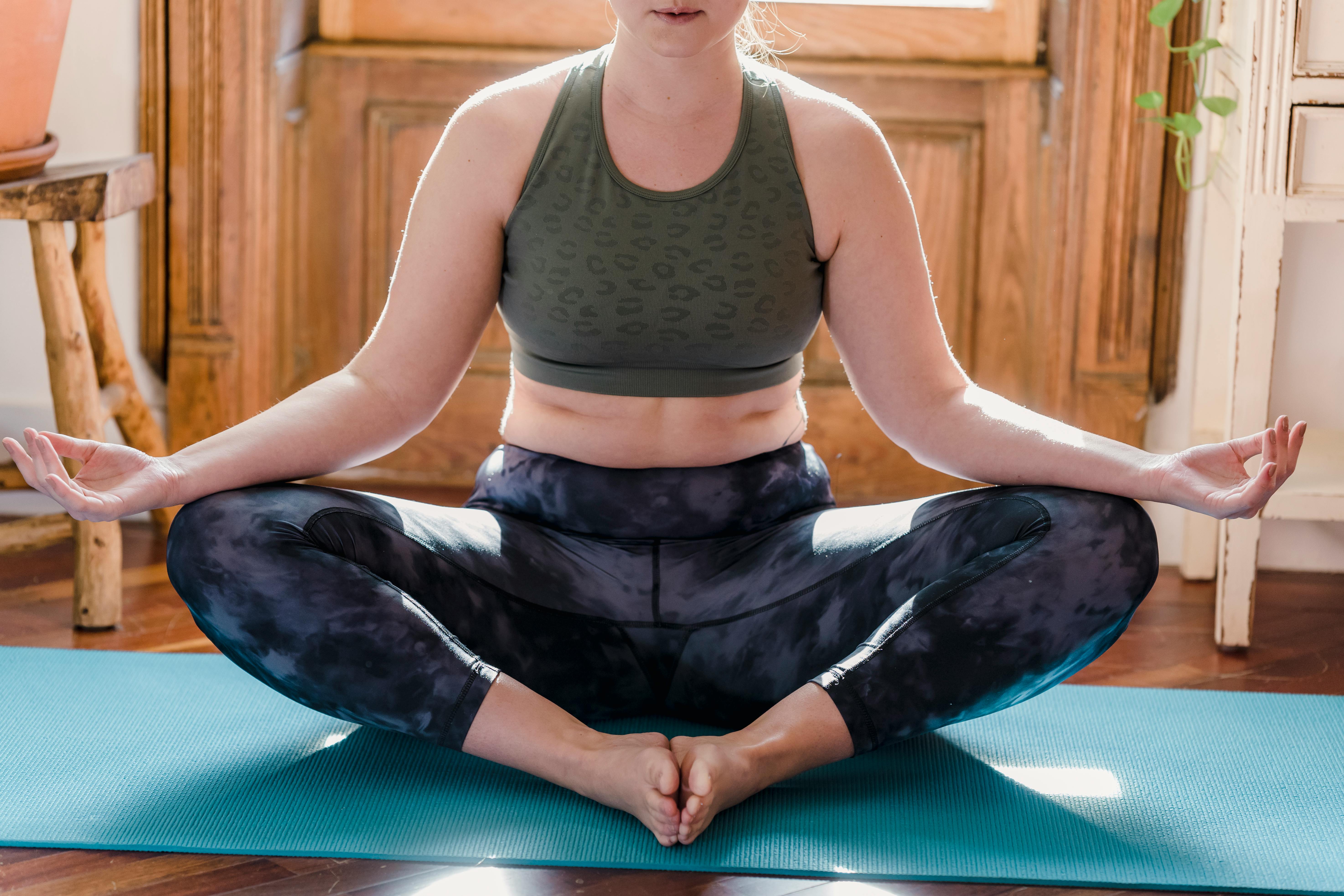
Guided meditation for sleep is a form of meditation where you listen to a calm voice that leads you through the process of winding down. That guidance might include breathing cues, body awareness, imagery, counting, or periods of quiet.
Unlike daytime meditation, the goal is not clarity, insight, or sustained attention. The goal is rest. If you fall asleep halfway through, that is not a failure. It is often the point.
The guidance acts as a bridge between wakefulness and sleep. Instead of lying in silence with your thoughts, you follow along with something external and steady. Over time, the body learns to associate that guidance with slowing down.
Sleep is closely tied to the balance between two parts of the nervous system. One is responsible for alertness and action. The other supports rest, digestion, and recovery.
Guided meditation helps shift activity toward the rest-oriented side. Slow breathing lowers heart rate. Gentle attention reduces mental stimulation. Body awareness releases muscle tension. Together, these signals tell the brain that it is safe to rest.
This shift does not usually happen instantly. It unfolds gradually, which is why guided meditation often feels like easing down a ramp rather than flipping a switch.

At Mesmerize, we built guided sleep meditation around one simple idea: the nervous system responds best when it is not being pushed. Instead of asking you to focus harder or empty your mind, we use gentle visual cues, sound, and narration to help the body recognize that it is safe to slow down. Sleep is not something we try to force. We create the conditions that make it easier to arrive on its own.
Our approach blends calm voice guidance with immersive visuals and soundscapes. For many people, especially those who struggle with racing thoughts at night, visuals give the mind a place to rest that feels more natural than silence alone. Watching slow, repeating patterns while listening to a steady voice can reduce mental effort and ease the transition out of alertness. Breathing visuals and adjustable pacing allow each session to match how you are feeling in the moment, whether you need something very gentle or a bit more structure to settle in.
We also designed Mesmerize to be flexible. Some nights you may want full narration. Other nights, just music, visuals, or white noise. You can customize voices, background sounds, and timing, then let the session fade out automatically once sleep takes over. Everything is built to support rest without distraction, from offline access to privacy-first design. Our goal is simple: to make guided meditation for sleep feel less like a technique and more like a natural part of winding down.
Guided sleep meditations use a variety of techniques, often combined in subtle ways. None of these techniques are meant to be mastered. They are simply tools to support relaxation.
Many guided meditations start with the breath. You may be invited to notice breathing without changing it, or to gently slow it down. Longer exhales help signal the body that it is time to rest.
Body-based guidance moves attention through different areas of the body, often from the feet upward. The aim is not analysis, but release. Noticing where the body touches the bed can increase a sense of physical safety and grounding.
Some meditations introduce simple imagery, such as floating, drifting, or resting in a quiet place. These images are not symbolic. They are meant to be soothing and undemanding.
Counting breaths or repeating simple phrases can occupy the mind just enough to interrupt worry. The repetition creates rhythm, which can feel calming.
Periods of silence are often built in. These pauses allow sleep to arrive naturally, without commentary.
The first few times you use guided meditation for sleep, your experience may vary. Some nights you might fall asleep quickly. Other nights you may stay awake through the entire session.
This does not mean it is not working. Even when sleep does not come right away, the body is still practicing rest. Over time, familiarity matters. The nervous system begins to associate the guidance with slowing down.
It is also normal for the mind to wander. Thoughts will come and go. The instruction is usually not to push them away, but to return gently to the voice or the breath when you notice them.
Guided meditation for sleep tends to be especially helpful in certain situations.
It can support people who struggle with racing thoughts at bedtime, anxiety-related sleep difficulty, or trouble transitioning from busy days into rest. It can also be useful during periods of change, such as travel, schedule shifts, or increased stress.
That said, guided meditation is not a cure-all. Sleep is influenced by many factors, including daily habits, stress levels, and physical health. Meditation works best as part of a broader approach to rest.
One of the less obvious benefits of guided meditation for sleep is how daytime practice can influence nighttime rest. Sleep does not begin at bedtime. It is shaped by how the mind moves through the day.
Short daytime meditations can help reduce overall nervous system load. They train the mind to step out of constant thinking and return to the present. This makes it easier to settle at night.
Some people find that practicing relaxation or mindfulness earlier in the day reduces pressure around sleep itself. When the mind is not carrying as much unprocessed tension, bedtime becomes less of a battleground.
The setting matters. Guided meditation works best when the environment supports rest rather than stimulation.
There is no single ideal length. Short sessions of five to ten minutes can be enough for some people. Others prefer longer sessions that allow more time to unwind.
What matters most is consistency. Regular use teaches the body what to expect. Even brief guidance can be effective when used consistently.
It is also okay to stop caring how long it takes to fall asleep. Once the pressure is gone, sleep often arrives more easily.
Guided meditation tends to work best when it becomes part of a larger bedtime rhythm rather than something you reach for only when sleep feels impossible. That rhythm helps signal to the body that the day is winding down and that it is safe to let go.
A simple routine might start an hour or so before bed. Dimming lights, stepping away from screens, and slowing the pace of activity all help reduce stimulation. Listening to the same guided meditation at roughly the same time each night can add another layer of consistency. Over time, these repeated cues begin to work together, gently preparing the nervous system for rest.
The routine does not need to be elaborate or perfectly followed. What matters most is familiarity. When the body recognizes the pattern, it spends less energy staying alert. A predictable wind-down routine can make bedtime feel calmer and less uncertain, even on nights when sleep takes longer to arrive.

While guided meditation can be helpful, persistent sleep problems sometimes require additional support. Chronic insomnia, severe anxiety, depression, or trauma-related sleep issues may need professional care.
Meditation can still be a useful complement, but it should not replace appropriate treatment. If sleep problems are ongoing and distressing, seeking guidance from a healthcare professional is important.
Guided meditation for sleep offers a practical, human way to rest without forcing the process. It meets the mind where it is, acknowledges that thoughts will arise, and gently redirects attention toward calm.
For many people, that is enough. Not because the meditation makes sleep happen, but because it removes the obstacles that were in the way.
If falling asleep has started to feel like a struggle, guided meditation can offer a different path. One that is quieter, slower, and far less demanding.
I canceled my subscription with Headspace and I now pay for Mesmerize instead. I was hooked after the free trial! I love how customizable the sounds, meditations, and visuals are! Using this app has honestly become my favorite part of my day! ☺️ It helps me relax, meditate, visualize, sleep, and it does wonders for my anxiety/phobia/ocd tendencies. Thank you Mesmerize for giving us this amazing mental health tool! I told my therapist about this app and have been telling all my friends too. It’s just so helpful!
This is the second or third app in the mindfulness and meditation realm, and it’s the most scientific approach I have found. I have found these combinations of open monitoring, and focused attention meditation techniques are the most viable for those suffering from more severe forms of sleep, pain, and anxiety dysfunction one may be suffering from. Many of these approaches are used by professionals in a cognitive behavioral therapy setting. A truly complete approach in mindfulness and meditation.
I suffer from clinical depression and sometimes I get into a bad headspace but this app has really helped me whenever I’m in a bad mood I turn on the app listen to some person taking about breathing and look at cool figures on my phone and it makes me feel so much better I would highly recommend this app it’s worth the money
It didn’t take but five minutes of using this app to buy a yearly subscription. Worth it on so many levels. Easy to manipulate to what I like. Massive library of music, videos, etc.
Clear your mind and relax with a unique audio visual meditation experience.


.jpeg)