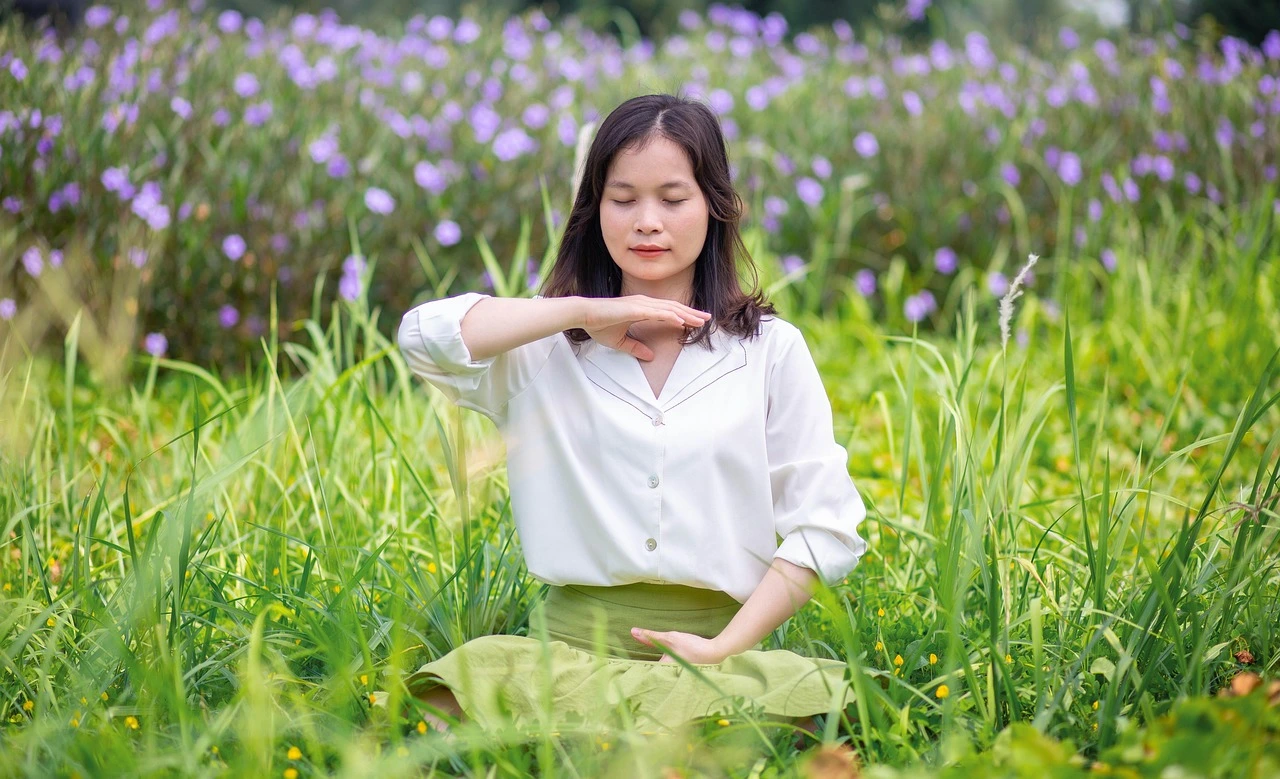
A grounded look at healing meditation, what it is, how it works, and how people use it to support emotional and physical well-being.
.webp)
Healing meditation often enters someone’s life quietly. Not as a solution, not as a promise, but as a pause. A moment where the body gets a chance to settle and the mind stops pushing so hard for answers.
At its core, healing meditation isn’t about fixing anything overnight. It’s about creating the conditions where recovery, regulation, and awareness can happen naturally. Some people use it during periods of stress or illness. Others turn to it after emotional exhaustion, burnout, or long stretches of anxiety. What they usually share is a desire to feel steadier, not transformed.
Healing meditation works less like a technique you perform and more like a space you return to. It invites attention inward without pressure. Breath, sensation, imagery, or sound become anchors, giving the nervous system something gentle to rest on. Over time, that steadiness can support both emotional balance and the body’s own capacity to recover.
This isn’t mystical, and it isn’t passive. Healing meditation is a practical practice, one that meets people where they are, especially on days when energy is low and effort feels expensive.
Healing meditation is not a single technique. It is a category of practices that share a common intention: to support regulation, recovery, and balance in the mind and body.
The word “healing” here does not mean fixing something that is broken. It refers to supporting the body’s natural ability to regulate and repair itself when given the right conditions. In that sense, healing meditation is less about doing and more about allowing.
Most healing meditation practices focus on one or more of the following:
This is why healing meditation often feels slower and gentler than other forms. There is no push to concentrate harder or reach a certain mental state. The practice meets the body where it is, even if that place feels messy, tired, or distracted.

One reason healing meditation is effective is that it works with the nervous system instead of against it.
When the body is under prolonged stress, whether emotional or physical, the nervous system tends to stay in a heightened state of alert. Heart rate increases. Muscles stay tense. Breathing becomes shallow. Over time, this state makes rest and recovery difficult, even when the original stressor is gone.
Healing meditation focuses on signals of safety. Slow breathing. Gentle attention. Predictable rhythm. These cues help shift the nervous system out of constant vigilance and into a state where repair processes can happen more easily.
This is not about positive thinking. It is about physiology. When the nervous system calms, digestion improves. Sleep deepens. Pain perception can soften. Emotional reactions become easier to manage. Healing meditation supports these shifts by reducing unnecessary stimulation and giving the system time to reset.
Healing meditation is often confused with simple relaxation. While relaxation can be part of it, the two are not the same.
Relaxation aims to feel good in the moment. Healing meditation aims to create long-term regulation. Sometimes that feels pleasant. Other times it feels neutral, or even mildly uncomfortable, especially if stored tension or emotion begins to surface.
A healing meditation session might include:
None of these mean the practice is failing. In fact, noticing what is present without immediately reacting is part of how healing meditation supports recovery. It teaches the nervous system that it is safe to experience sensation and emotion without needing to shut down or escalate.

At Mesmerize, we design healing meditation to feel supportive from the first moment. Many people come to meditation during periods of stress, anxiety, or low energy, when complex techniques feel out of reach. Our approach focuses on making it easier to slow down without effort. Through calming visuals, immersive soundscapes, and gentle narration, we create an environment where the nervous system can relax naturally and the body can begin to release tension.
Visual meditation plays a key role in this process. Instead of asking you to sit in silence or control your thoughts, we give your attention something steady to rest on. Watching slow, flowing patterns while listening to sound or guidance helps interrupt mental loops and supports deeper regulation. For many users, this makes healing meditation feel more accessible, especially during anxious moments or before sleep.
We also believe healing works best when the experience adapts to you. Mesmerize is built to be highly customizable, from visuals and music to narration and breathing pace. Some days call for guidance, others for quiet ambience. Our goal is to meet you where you are, not ask you to push past your limits.
Behind the experience is a clear, science-backed foundation and a strong respect for privacy. There are no ads, no marketing emails, and no unnecessary distractions. When you open Mesmerize, the space stays calm, focused, and supportive, allowing healing meditation to fit naturally into real life, whenever you need it.
There is no single correct way to practice healing meditation. Different approaches work for different people, and the best method is often the one that feels most accessible on difficult days.
Breath-focused practices are among the most common forms of healing meditation. Slow, steady breathing sends direct signals to the nervous system that it is safe to relax.
This type of meditation often involves:
The goal is not to control the breath but to allow it to settle naturally. Over time, this can reduce baseline anxiety and support emotional stability.
Body-based healing meditation focuses attention on physical sensations. This might include noticing areas of tension, warmth, heaviness, or movement without trying to change them.
A typical body scan moves slowly through the body, inviting awareness without judgment. For people who feel disconnected from their bodies due to stress or trauma, this approach can help rebuild trust and awareness gradually.
Some healing meditation practices use gentle imagery to support a sense of safety or comfort. This might involve imagining warmth in an area of pain or visualizing a place that feels calming.
The imagery is not meant to replace physical healing or ignore discomfort. It simply offers the nervous system another layer of reassurance.
Sound plays a powerful role in regulation. Soft music, nature sounds, or guided narration can help anchor attention when silence feels overwhelming.
Guided healing meditations are especially helpful for beginners or during periods of high stress. A steady voice provides structure without demanding effort, making it easier to stay present.
Many people turn to healing meditation for emotional reasons rather than physical ones. Grief, anxiety, burnout, and long-term stress often live in the body as much as in the mind.
Healing meditation creates space to experience emotion without trying to fix it immediately. This can be challenging at first, especially for people used to staying busy or distracted. But over time, the practice can reduce emotional reactivity and increase resilience.
Rather than suppressing difficult feelings, healing meditation encourages gentle acknowledgment. This approach helps emotions move through the system instead of getting stuck.

While healing meditation is not a medical treatment, it can support physical recovery in meaningful ways.
Stress has a measurable impact on inflammation, immune function, and pain perception. By calming the nervous system, healing meditation reduces some of the physiological load that interferes with healing.
People often use healing meditation alongside medical care to support:
The key is realistic expectation. Healing meditation supports the body’s processes. It does not replace professional care or guarantee outcomes.
Clearing up a few misconceptions helps set realistic expectations and prevents unnecessary frustration. Healing meditation is not a quick fix, and it is not meant to replace medical or psychological care. It also is not a test of discipline, focus, or spiritual ability. There is no level to reach and nothing to perform.
If the mind wanders, that is normal. If some days feel heavier or more restless than others, that is expected. Healing meditation does not work through effort or perfection. It works through consistency, patience, and a willingness to meet the experience as it is. The practice supports healing by being gentle, not by demanding results.
Consistency matters more than duration. Short, regular sessions are often more effective than long, infrequent ones.
Many people start with five to ten minutes a day. This is enough to create familiarity without becoming overwhelming. As the practice becomes more comfortable, sessions can naturally extend.
It also helps to tie healing meditation to an existing routine. Morning, before sleep, or during a break in the day are common choices. The goal is to make the practice supportive, not another obligation.
There are times when healing meditation feels uncomfortable or unhelpful. This does not mean it is wrong for you.
Discomfort can arise when the nervous system begins to slow down after long periods of tension. Sensations and emotions that were previously suppressed may surface. In these moments, shorter sessions or guided support can help.
If meditation consistently increases distress, it may be helpful to pause or seek guidance from a trained professional. Healing is not meant to feel overwhelming.

Healing meditation does not have to stay on the cushion. The same principles apply throughout the day.
Simple moments of awareness, such as noticing the breath while waiting or relaxing the shoulders during a pause, reinforce the practice. Over time, healing meditation becomes less about formal sessions and more about how you relate to stress, sensation, and emotion as they arise.
Healing meditation is not flashy. It does not rely on dramatic breakthroughs or rigid routines. Its strength lies in its simplicity and adaptability.
By offering the nervous system a steady signal of safety, healing meditation supports the mind and body in ways that feel sustainable. It respects limits. It allows for rest. And it meets people where they are, even on the days when energy is low and patience is thin.
For many, that quiet support is enough. Not because it promises transformation, but because it makes room for balance to return on its own.
Healing meditation is not about forcing calm or chasing a particular outcome. It is a way of creating space for the mind and body to settle on their own terms. By working with the nervous system rather than against it, the practice supports balance, regulation, and recovery in a gradual, realistic way. Some days the effects feel noticeable. Other days they are subtle. Both are part of the process.
What makes healing meditation sustainable is its flexibility. It can be quiet or guided, brief or extended, visual or body-focused. The practice adapts to changing needs rather than demanding consistency at any cost. Over time, this gentle approach can make stress easier to manage, emotions less overwhelming, and rest more accessible. Healing happens not through effort, but through allowing the system to feel safe enough to reset.
I canceled my subscription with Headspace and I now pay for Mesmerize instead. I was hooked after the free trial! I love how customizable the sounds, meditations, and visuals are! Using this app has honestly become my favorite part of my day! ☺️ It helps me relax, meditate, visualize, sleep, and it does wonders for my anxiety/phobia/ocd tendencies. Thank you Mesmerize for giving us this amazing mental health tool! I told my therapist about this app and have been telling all my friends too. It’s just so helpful!
This is the second or third app in the mindfulness and meditation realm, and it’s the most scientific approach I have found. I have found these combinations of open monitoring, and focused attention meditation techniques are the most viable for those suffering from more severe forms of sleep, pain, and anxiety dysfunction one may be suffering from. Many of these approaches are used by professionals in a cognitive behavioral therapy setting. A truly complete approach in mindfulness and meditation.
I suffer from clinical depression and sometimes I get into a bad headspace but this app has really helped me whenever I’m in a bad mood I turn on the app listen to some person taking about breathing and look at cool figures on my phone and it makes me feel so much better I would highly recommend this app it’s worth the money
It didn’t take but five minutes of using this app to buy a yearly subscription. Worth it on so many levels. Easy to manipulate to what I like. Massive library of music, videos, etc.
Clear your mind and relax with a unique audio visual meditation experience.


.jpeg)