Explore how meditation can help reduce anxiety, calm the body, and shift mental patterns. Gentle tools, real science, and no pressure to “do it right.”
.webp)
Anxiety doesn’t always come with a warning. Sometimes it’s a slow hum under the surface, other times it hits out of nowhere - racing heart, shallow breath, tension everywhere. You can know it’s irrational and still feel stuck inside it. Meditation won’t fix everything overnight. But it can give you a different way to meet anxiety when it shows up. A quieter way. Instead of fighting your mind or trying to force calm, it becomes about noticing, breathing, and giving your body something steady to follow. Let’s take a look at what that actually looks like - not in theory, but in practice.
Anxiety doesn’t always show up with a clear cause, but the body feels it anyway - tight breath, racing heart, tense shoulders, spinning thoughts. Even when there’s no danger, the nervous system acts like there is. It’s not just stress; it’s the sense that something’s wrong, even if nothing is. That’s what makes it hard to shake.
People try to reason with it, but the body doesn’t listen to reason. It listens to rhythm, to breath, to patterns it can follow. And when those patterns are shallow or erratic, anxiety sticks around. Some carry it as background static, others feel it spike in waves. Either way, the signs are real:
On the outside, everything might seem fine. But internally, the system’s on high alert. That’s why managing anxiety isn’t just about calming thoughts - it’s about helping the body find its way back to a different pace.

At Mesmerize, we designed the app based on how the nervous system actually reacts under stress. We focused on sensory cues - motion, sound, and breath - because they give the body something to follow without effort. Instead of forcing calm, we built tools that help it happen naturally.
We designed the experience to feel immediate and low-effort. From the first tap, Mesmerize offers visual breathing, soundscapes, and optional narration that can be adjusted to match different states of anxiety. We paid close attention to pacing, tone, and simplicity, so nothing feels overwhelming when the mind is already overloaded. The goal is not control, but regulation.

Mesmerize is available for both iOS and Android. We made sure it runs smoothly offline and doesn’t ask for anything it doesn’t need - no ads, no pop-ups, no intrusive permissions. The idea was to create something that respects attention, not competes for it. Just a quiet, focused space that’s always ready when it’s needed.
There’s no single right way to meditate with anxiety. Some people need quiet. Others need something to focus on - a sound, a breath, a visual cue that keeps the mind from drifting too far. What helps one person sit still might make someone else feel restless. That’s okay.
The goal isn’t to get it perfect. It’s to find what helps the body soften and the mind stop chasing itself in circles. Here are some of the most grounded, flexible techniques that people often return to when anxiety makes everything feel too fast or too much.
For those who can’t quite drop into stillness with their eyes closed, visual breathing is often the reset point. A slow-moving shape expands and contracts in sync with the breath - in, hold, out, pause. The rhythm gives the body something to mirror, without overthinking it. Mesmerize leans into this with animated visuals designed to feel calming, not distracting. It works especially well when the breath feels stuck or shallow.
Sometimes the mind is too loud to go after directly. In those moments, shifting attention into the body helps. A body scan gently guides awareness from one part of the body to the next - from the crown of the head down to the soles of the feet. No need to change anything. Just notice. This is how a lot of people first recognize where they’re holding tension - in the jaw, the stomach, the shoulders - and let it start to loosen.
When the thoughts won’t stop looping, a simple phrase can become the anchor. It might be something like “I am safe” or “Let it pass.” Spoken softly or just repeated mentally, a mantra pulls focus away from scattered thinking. The repetition helps reset internal pacing - kind of like matching steps to a steady beat when everything inside feels disorganized.
This one surprises people. It’s not always the first technique someone reaches for with anxiety, but it can be one of the most soothing. Instead of pushing away fear or frustration, loving-kindness invites a different tone - one of warmth and soft attention. First toward yourself, then gradually toward others. Especially helpful when anxiety is tangled up with self-criticism.
Not every meditation has to start in silence. Sometimes sound is the thing that brings people back. Ocean waves, soft rain, white noise, layered ambient tones - these can act like scaffolding for the mind when it doesn’t want to sit still. That’s why Mesmerize includes immersive audio environments. They’re not just filler. They become part of the focus.
This is less about the mind, more about muscle memory. It starts with tensing one area of the body - say, the hands - holding it briefly, then releasing. Then the next. And the next. It gives anxious energy a way out, slowly and deliberately. A full-body version can be a good transition into sleep or rest when anxiety makes it hard to settle.
None of these techniques are about mastering stillness. They’re about offering the nervous system something different - something steady, simple, and safe to follow. And that shift, even for a minute or two, can be enough to change the entire feel of a moment.
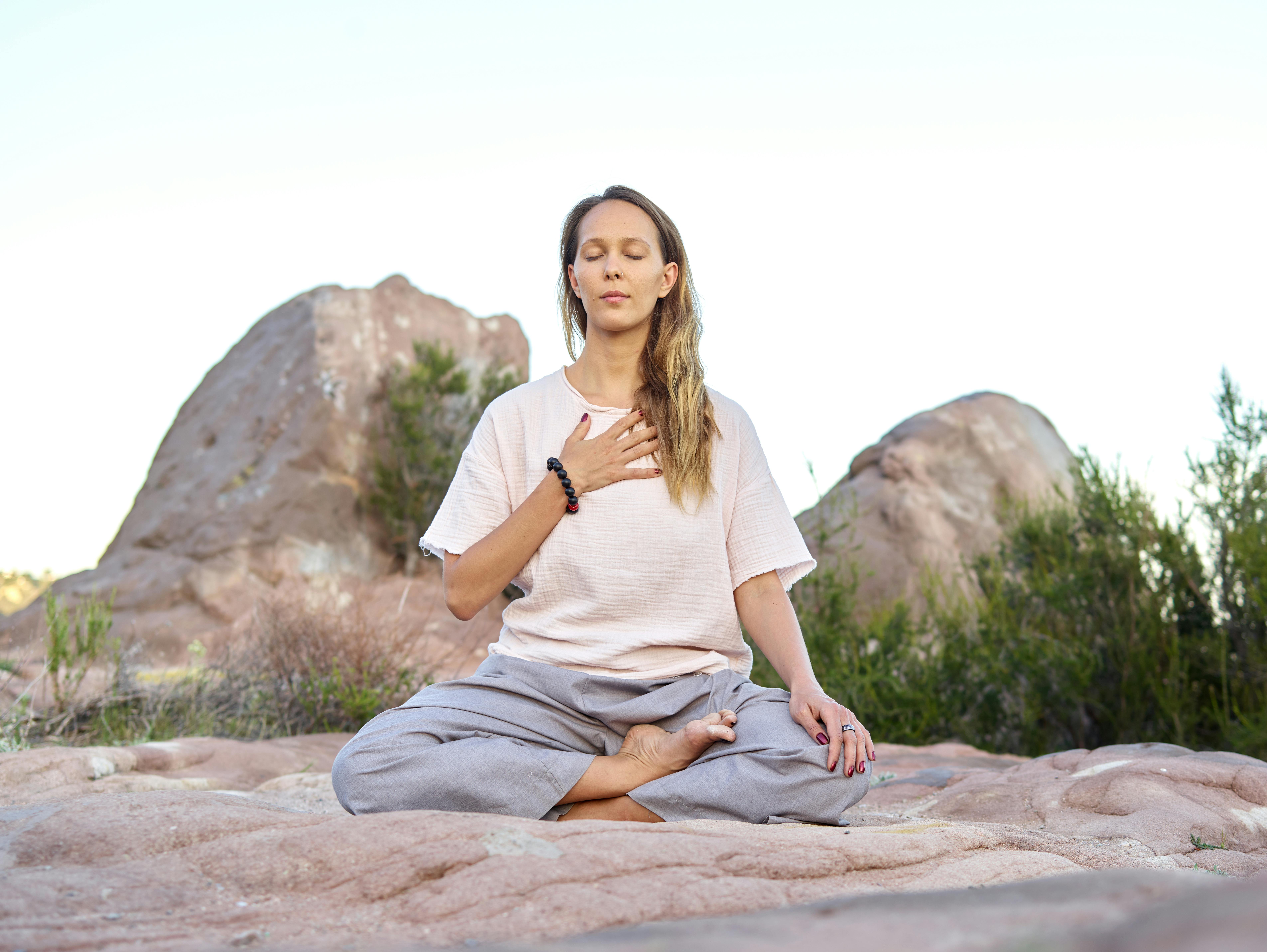
Meditation sounds easy until anxiety gets involved. Sitting still can feel uncomfortable, even overwhelming. The mind races, the body resists, and instead of calm, there’s pressure. That’s normal. A lot of people run into the same friction when they try to meditate with anxious energy in the mix. Here's what tends to come up:
The goal isn’t to force calm - it’s to create space for it. Even if that starts with just a few minutes and a breath that actually lands.
For anxious minds, stillness can feel anything but safe. The idea of “just relax and breathe” might sound simple, but in practice, it can be overwhelming. That’s why how meditation feels matters - not just what it promises.
Eyes-closed silence doesn’t work for everyone. A gentle visual loop - something that rises, fades, and repeats - gives the nervous system something to follow without effort. It’s less about “doing it right” and more about offering the body a new rhythm. That’s why Mesmerize starts with motion. It feels grounding, not empty.
Silence isn’t always peaceful. For a busy or anxious mind, it can actually make the tension louder. That’s why sound matters. A gentle voice, low ambient tones, or steady rain sounds can help the body settle without needing to force stillness. The sound becomes a kind of support - something the breath can move with, something the mind can rest against. It doesn’t pull focus. It anchors it.
A lot of people go into meditation hoping to feel instantly better. And when that doesn’t happen, they think they’ve failed. But meditation isn’t about achieving a state - it’s about creating space. Sometimes the breath evens out. Sometimes the thoughts keep looping. That’s okay. What matters is showing up without needing the moment to change right away. That’s what teaches the nervous system it’s safe to stop trying so hard.
Long sessions might sound impressive, but they’re not always realistic - especially during anxious moments. What helps most is finding something that feels doable. Even two or three minutes with a soft visual or soundscape can shift how the body holds tension. No big ritual. No pressure to “go deep.” Just a simple, familiar rhythm that the system starts to recognize. That’s what builds consistency - and consistency is what slowly rewires the response.
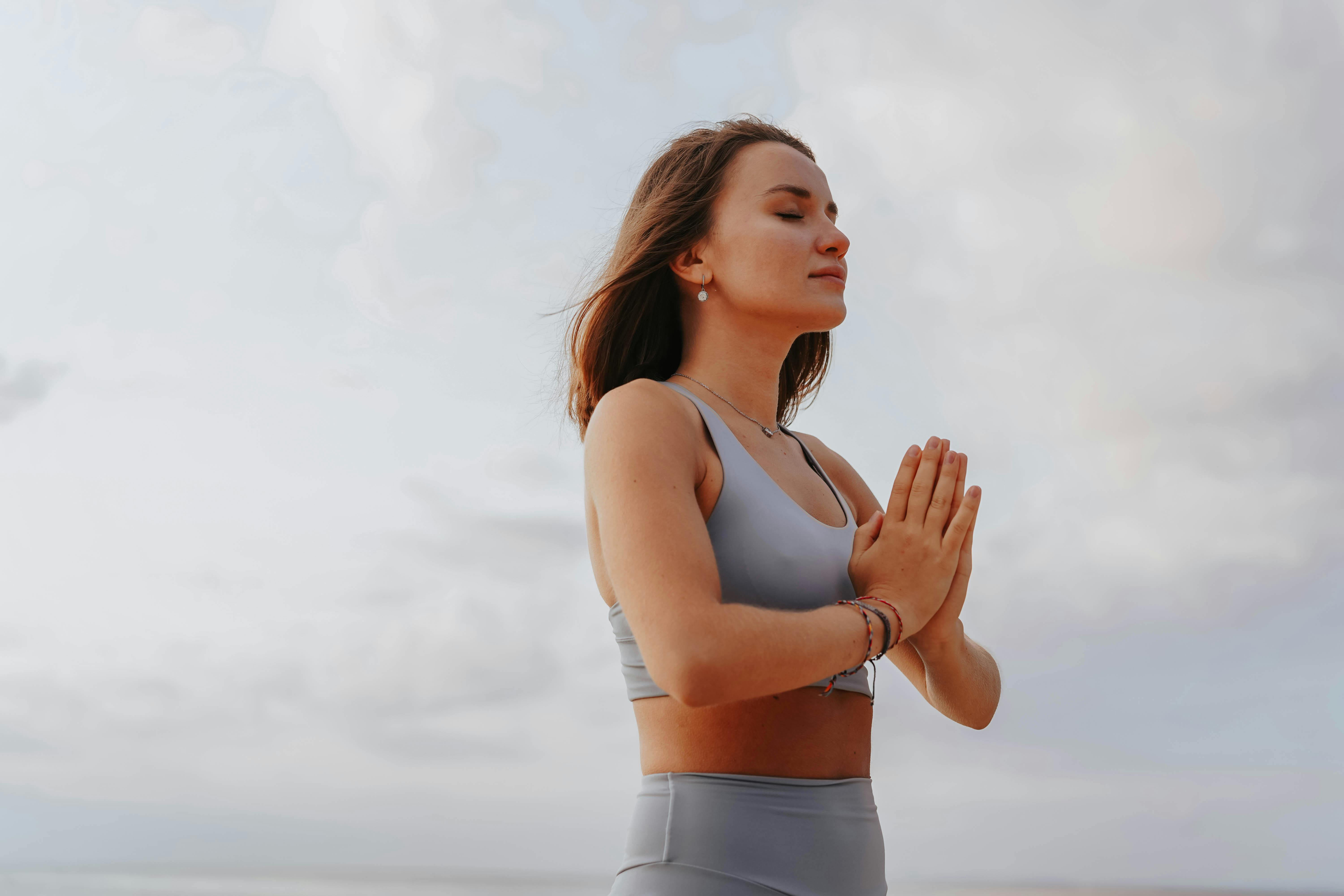
Some people feel a shift the first time they try it - the breath slows, the shoulders drop, the moment softens. For others, nothing happens right away. The mind keeps spinning. The body stays tense. That’s not a sign to stop - it’s just how rewiring the nervous system actually works. It’s not instant. It’s gradual.
Most research points to consistent practice over a few weeks before deeper changes begin to stick. Think in terms of days, not minutes. A short session every evening can do more than one long session once a month. Over time, the body starts to recognize the signals - a certain sound, a breathing pattern, a visual loop - and responds faster.
But the real answer to “how long does it take” is: it depends. On sleep. On stress. On how someone’s day started. On what their anxiety feels like. Meditation isn’t a fix - it’s a pattern. A gentle one. And when it becomes part of the rhythm of a day, even in tiny doses, that’s when the changes tend to hold.
Meditation can be a powerful tool - but it’s not meant to carry the whole weight. Some days, sitting quietly with your breath isn’t enough. Not because you’re doing it wrong, but because anxiety can be complex. Sometimes it’s tangled up with trauma, burnout, or deep patterns that don’t shift just because someone closes their eyes and breathes.
For those dealing with panic attacks, chronic anxiety, or emotional overwhelm that feels impossible to manage alone, it’s okay to reach for more support. That might look like working with a therapist, exploring medication, or finding a structured treatment plan. None of that cancels out meditation - they can work together.
What matters most is knowing that using meditation doesn’t mean ignoring what hurts. It’s not about pretending everything’s fine or sitting through something that feels unbearable. It’s about offering the body and mind another way in - but sometimes, that path also needs company. And that’s not failure. That’s care.
There’s no perfect way to meditate with anxiety - just ways that feel a little more doable, a little less pressured. For some, it’s a deep breath and a quiet room. For others, it’s a looping visual and soft ambient sound that helps the body finally exhale. What matters isn’t how it looks. It’s whether it helps the nervous system stop bracing.
Meditation isn’t a fix. It’s a tool. And when it’s used gently - without chasing a result, without judging the process - it can offer a kind of steadiness that’s hard to find elsewhere. Some days it works better than others. That’s fine. What matters most is that it’s there when needed. Calm doesn’t have to be forced. It just needs a little space.
I canceled my subscription with Headspace and I now pay for Mesmerize instead. I was hooked after the free trial! I love how customizable the sounds, meditations, and visuals are! Using this app has honestly become my favorite part of my day! ☺️ It helps me relax, meditate, visualize, sleep, and it does wonders for my anxiety/phobia/ocd tendencies. Thank you Mesmerize for giving us this amazing mental health tool! I told my therapist about this app and have been telling all my friends too. It’s just so helpful!
This is the second or third app in the mindfulness and meditation realm, and it’s the most scientific approach I have found. I have found these combinations of open monitoring, and focused attention meditation techniques are the most viable for those suffering from more severe forms of sleep, pain, and anxiety dysfunction one may be suffering from. Many of these approaches are used by professionals in a cognitive behavioral therapy setting. A truly complete approach in mindfulness and meditation.
I suffer from clinical depression and sometimes I get into a bad headspace but this app has really helped me whenever I’m in a bad mood I turn on the app listen to some person taking about breathing and look at cool figures on my phone and it makes me feel so much better I would highly recommend this app it’s worth the money
It didn’t take but five minutes of using this app to buy a yearly subscription. Worth it on so many levels. Easy to manipulate to what I like. Massive library of music, videos, etc.
Clear your mind and relax with a unique audio visual meditation experience.


.jpeg)