What Metta meditation is, how it works, and why even short daily practice can help ease anxiety, self-criticism, and emotional tension.
.webp)
Most people are already familiar with the idea of mindfulness, but Metta takes things in a different direction. It’s not about awareness or focus - it’s about warmth. This practice leans into something that doesn’t always come naturally: self-compassion. By repeating a few simple phrases, people learn to soften the mental noise, let go of the internal blame cycle, and start relating to themselves and others in a more generous way. And no, it doesn’t take hours in silence or a deep belief system to feel it working.
Metta meditation is a kind of emotional reset. Instead of trying to clear the mind or focus on the breath, this practice centers on something simpler - wishing well. Not in a vague, feel-good kind of way, but through a series of repeated phrases like “May I be safe” or “May you be well.” It’s rooted in ancient Buddhist tradition but shows up in modern life in a way that feels surprisingly current. Especially when everything feels rushed or reactive, this practice is like sitting down with the nervous system and saying, “Let’s try again.”
At its core, Metta isn’t about pretending to love everyone or bypassing real frustrations. It’s about shifting how people relate to themselves, first. Then slowly widening that circle - offering the same warmth to friends, strangers, or even people they’d rather avoid. There’s something quietly powerful about doing that. It doesn't fix everything, but it changes the atmosphere inside just enough to make it easier to breathe.

Metta might sound emotional or abstract, but under the surface, it’s doing real work. There’s actual brain chemistry involved. People often describe feeling calmer or lighter after a session - not because they’ve forced themselves to relax, but because something in the body let go. This isn’t magic. It’s pattern interruption. The kind the brain recognizes. Here’s what starts happening, even after a few minutes of practice:
The beauty is, this works even if the mind wanders or the phrases feel flat. The nervous system hears the signal anyway. That’s the part that matters.

At Mesmerize, we design tools for moments when the mind feels overloaded and silence isn’t easy to reach. Metta meditation fits naturally into that space. Instead of pushing for focus or emotional effort, we focus on creating a sensory environment that softens the system first - through slow visuals, immersive soundscapes, and optional narration that never overwhelms.
We built the app to be deeply customizable, so users can practice Metta in a way that fits their rhythm. Some prefer visual breathing without voice. Others choose a calm narrator with ambient music in the background. Everything from pace to tone to background audio can be adjusted - because emotional regulation isn’t one-size-fits-all.

Mesmerize is available on iOS and Android, with full offline support once content is downloaded. Our role is to hold the space, quietly and reliably, so practices like Metta can unfold without pressure. Nothing needs to be forced. Just open the app, breathe, and let the kindness build.
This isn’t about sitting cross-legged in perfect silence or chasing enlightenment. Metta meditation is more like emotional hygiene - simple, repeatable, and surprisingly grounding when done regularly. Whether someone has five minutes or fifteen, the structure stays flexible. What matters most is the intention behind it: offering kindness, even if it starts out feeling awkward or mechanical.
Find a quiet space or just throw on headphones. Eyes open or closed, seated or lying down - it doesn’t need to look any particular way. If you’re using an app, syncing visual breathing with ambient sound can help the mind slow down faster.
Begin by repeating a few simple phrases inwardly. Even if they don’t feel true right away, saying them with care helps shift the emotional tone over time. Sample phrases:
If that feels too much, it’s okay to imagine a version of yourself - like a younger you or someone you care about - receiving the words instead.
Next, bring to mind someone who brings warmth just by thinking of them. A friend, mentor, pet - anyone who feels easy to care for. Try:
There’s no need to force big emotions. Just sit with the image and the phrases.
Now picture someone you don’t know well. The barista, a neighbor, someone seen often but never spoken to. It’s a way to build connection without needing a story.
This part often surprises people - it can feel unexpectedly humanizing.
This step is optional, especially on tough days. Choose someone who causes mild friction - not the person who’s caused deep harm. The idea isn’t to fake forgiveness but to soften a bit of the tension held in the body.
If it feels impossible, go back to yourself. That’s where the compassion belongs most when things get hard.
End by imagining the phrases radiating outward - to people across cities, countries, across every kind of life.
Let it be abstract if needed. What matters is the practice of widening - not perfect wording.
No need to “wrap it up” formally. Just pause for a moment, breathe, and notice if the mental air feels a little clearer. That’s enough.
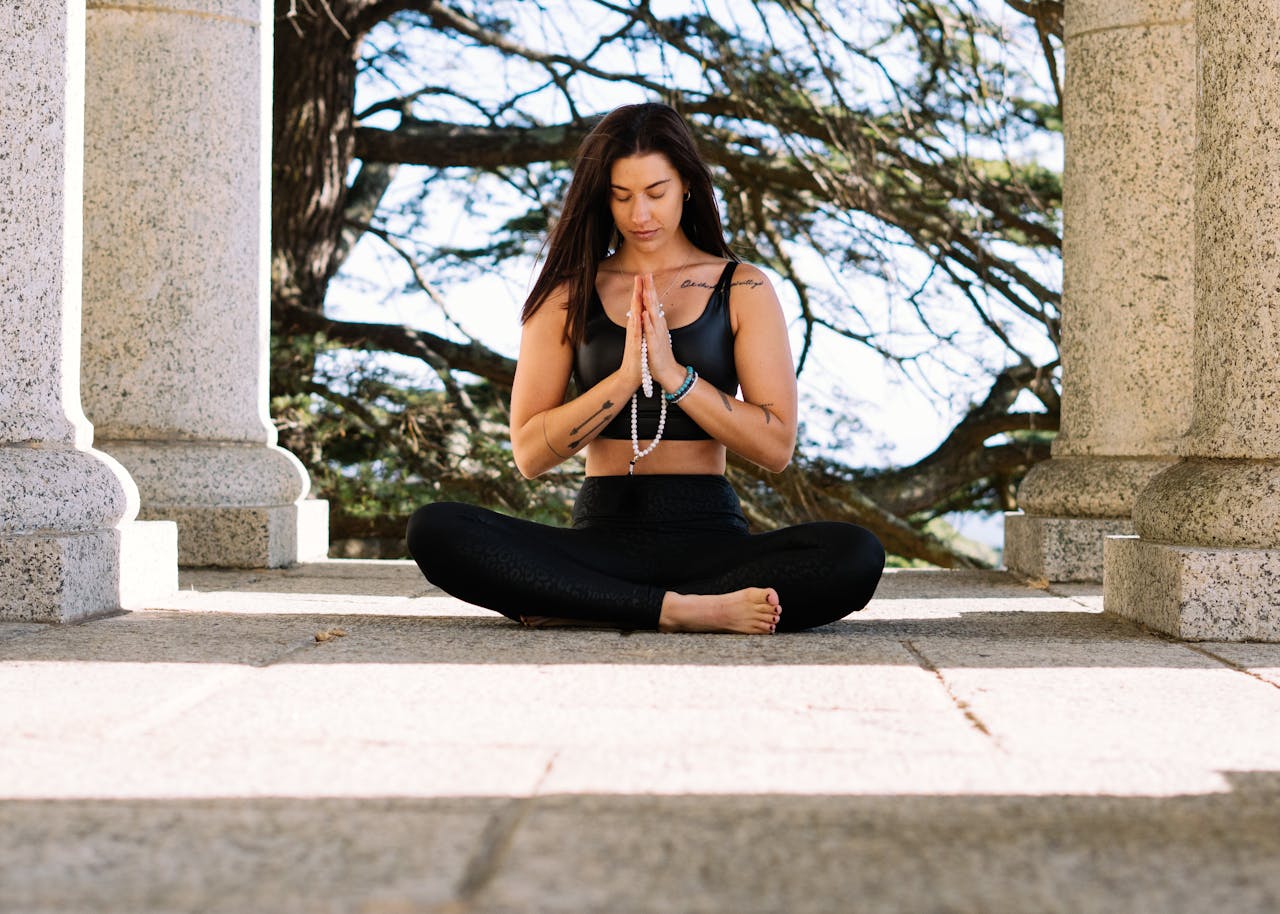
Even something as gentle as Metta can bring up resistance. It’s not always smooth or soothing. Some days the phrases don’t land. Some days it’s hard to care at all. That doesn’t mean the practice is broken - it just means the nervous system is having a moment. Below are a few common friction points people run into, along with small ways to move through them without pushing too hard.
There are moments when the phrases sound flat, like reading lines off a screen. Nothing stirs. That doesn’t mean the practice isn’t doing anything. Metta often works below the surface first, easing tension before emotions catch up.
Wishing yourself well can feel strange, especially if the inner voice is usually critical. That discomfort is a sign of habit, not failure. Kindness takes time to feel familiar.
Bringing difficult people to mind can tighten the chest or spark irritation. Metta isn’t asking for forgiveness or approval. It’s about loosening the grip those reactions have on the body.
Thoughts wander. Plans interrupt. Memories pop in. None of that breaks the practice. Each gentle return to the phrases is part of the work.
Some days feel heavy, and the practice can seem pointless. On those days, even a single phrase or a few breaths is enough. Staying present, without forcing a mood shift, still counts.
It’s not just personal stress people are carrying anymore. It’s everything - overstimulation, fractured attention, constant comparison, quiet dread in the background. Most folks don’t need another push to be productive. They need somewhere to exhale. That’s where Metta fits. It’s not about optimizing or fixing - it’s about softening. It gives the mind a break from survival mode and opens space for something warmer to take root, even if just for a few minutes.
There’s something radical about practicing kindness when the default setting is disconnection. Not performative kindness, but the quiet, inner kind that rewires how someone talks to themselves and shows up around others. In a culture wired for speed and reaction, Metta builds a small pause. And sometimes that pause is exactly what changes the tone of the whole day.
You don’t need a perfect setup to try Metta. Just pause - wherever you are - and give yourself a little space to breathe. The practice is quiet, internal, and low-effort, which is exactly why it works. A few phrases repeated gently can shift the tone of your nervous system, even if the rest of your day stays chaotic.
Start with yourself. Then think of someone who feels easy to care about. Say the phrases like a whisper in your head: May you be safe. May you be well. May you feel at ease. Don’t push for emotion. Let it be flat, if that’s how it shows up. What matters is showing up at all. Even two minutes of Metta can create a soft edge where things used to feel sharp.

Metta isn’t just something people do sitting still with their eyes closed. The practice spills out - on purpose or not - into little moments that don’t look spiritual at all. It softens how someone reacts, how they speak, how they walk through stress. Below are a few ways it tends to show up when it’s had time to settle into the nervous system.
That pause before snapping back? That’s Metta doing its thing. Even a few seconds of internal kindness makes it easier to not take the bait - or to not become it. The tone shifts. People start noticing they can speak honestly without hard edges.
Mistakes happen. Old patterns flare up. But instead of spiraling, Metta-trained minds tend to catch the moment and offer a softer response: “Okay, that happened. Let’s start again.” It’s not passive. It’s just… less punishing.
Someone cuts in line, or a car doesn’t stop, and the first instinct isn’t always rage. It might still be irritation - but it’s followed by a little space, maybe even curiosity. Not because the other person “deserves” it, but because carrying less hostility just feels better.
When everything slows down, the stories get loud: what didn’t get done, what went wrong, who’s disappointed. Metta doesn’t erase the noise, but it adds another voice in the mix. One that says, “You did your best. Rest now.”
Metta shows up in ordinary moments. Not in big, dramatic gestures - but in the small rewrites happening between reaction and response. That’s where the real shift begins.
Metta isn’t about becoming a softer person overnight. It’s about shifting the internal tone, just a little, one phrase at a time. Some days it feels effortless. Other days it barely registers. That’s still the practice. And over time, those quiet repetitions start to change the way people speak to themselves, how they pause, how they recover.
Whether someone’s practicing Metta in silence or layering it with visuals and sound through a meditation tool, the goal stays the same: to offer kindness where there used to be tension. Not because it’s easy, but because it works. Slowly. Gently. And in ways that last.
I canceled my subscription with Headspace and I now pay for Mesmerize instead. I was hooked after the free trial! I love how customizable the sounds, meditations, and visuals are! Using this app has honestly become my favorite part of my day! ☺️ It helps me relax, meditate, visualize, sleep, and it does wonders for my anxiety/phobia/ocd tendencies. Thank you Mesmerize for giving us this amazing mental health tool! I told my therapist about this app and have been telling all my friends too. It’s just so helpful!
This is the second or third app in the mindfulness and meditation realm, and it’s the most scientific approach I have found. I have found these combinations of open monitoring, and focused attention meditation techniques are the most viable for those suffering from more severe forms of sleep, pain, and anxiety dysfunction one may be suffering from. Many of these approaches are used by professionals in a cognitive behavioral therapy setting. A truly complete approach in mindfulness and meditation.
I suffer from clinical depression and sometimes I get into a bad headspace but this app has really helped me whenever I’m in a bad mood I turn on the app listen to some person taking about breathing and look at cool figures on my phone and it makes me feel so much better I would highly recommend this app it’s worth the money
It didn’t take but five minutes of using this app to buy a yearly subscription. Worth it on so many levels. Easy to manipulate to what I like. Massive library of music, videos, etc.
Clear your mind and relax with a unique audio visual meditation experience.


.jpeg)