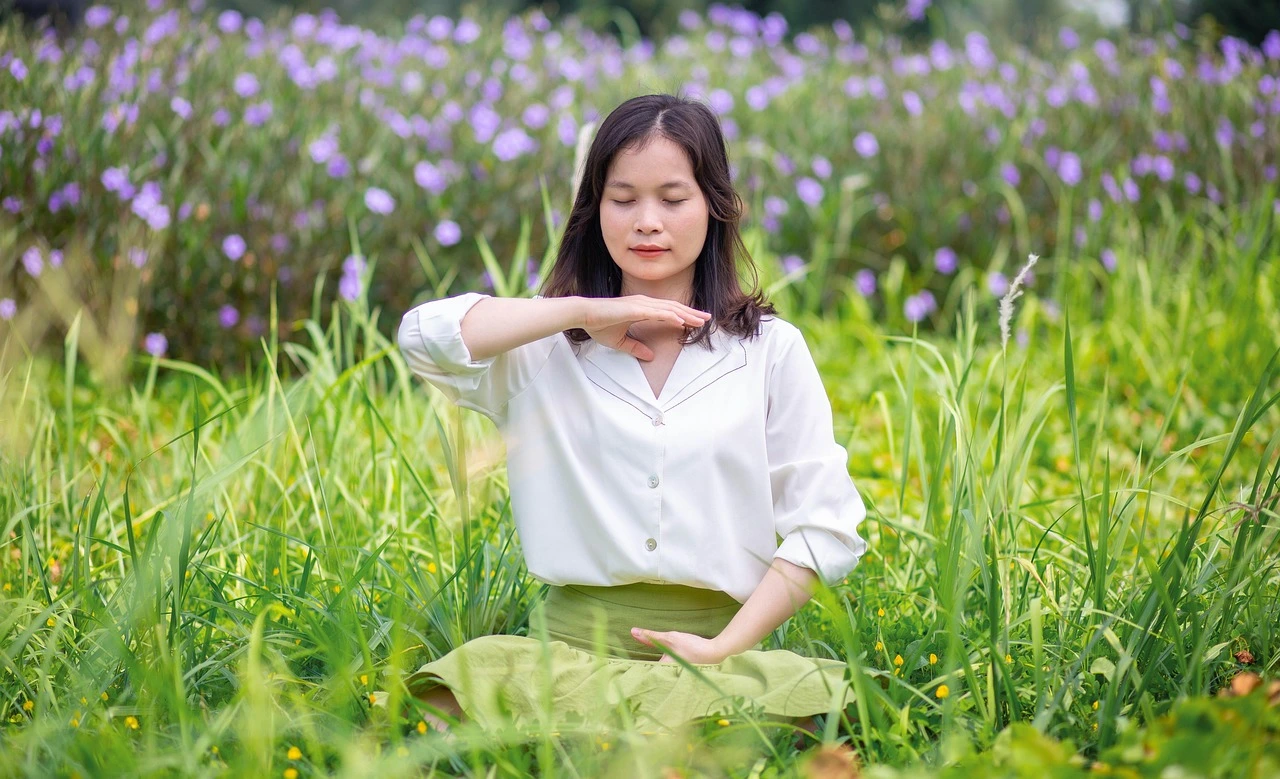
Discover what mindfulness meditation really is, how it helps with stress, and how to start practicing it - even if you’ve never tried it before.
.webp)
Most of us spend our days running on autopilot - scrolling, switching tabs, thinking five steps ahead while missing what’s right in front of us. Mindfulness meditation offers something different: a pause. Not a dramatic life overhaul, but a small shift in attention. You don’t need incense, silence, or even a cushion. Just a few minutes of your day and a willingness to notice what’s happening, right now. That’s where it starts.
You don’t need to sit in a cave or chant in perfect stillness to be mindful. You’re human - your mind races, your phone pings, and your to-do list grows faster than you can tick it off. Mindfulness meditation isn’t about escaping that. It’s about noticing it. And softening your grip on it, even for a moment.
Maybe you’ve tried meditating before and felt like you were doing it wrong. Or maybe the idea of “clearing your mind” just sounds like one more thing you’re failing at. That’s not what this is. Think of mindfulness more like tuning in. You don’t have to fix anything. Just watch it move. Breathe. Watch again.
Turns out, there’s a kind of quiet hidden inside all the noise - and the more often you pause to notice it, the easier it gets to find.
Something shifts when you stop moving on autopilot. Not always in a big way. But enough to notice. You start catching the tension in your jaw before it locks in. You feel your breath before it disappears into shallow panic. You stop snapping at people just because your inbox won’t shut up.
That’s what mindfulness meditation opens up - a bit of breathing room between you and the chaos. It doesn’t erase stress, but it gives you a chance to respond instead of react. Over time, that space grows wider. You sleep a little deeper. You stop spiraling over every tiny thing. Your body gets the message that it can stop bracing.
And here’s the thing: you don’t have to be “good” at meditating for it to work. Showing up counts. Letting yourself feel the moment counts. Even if it’s messy. Especially if it’s messy.

At Mesmerize, mindfulness isn’t about forcing stillness or chasing silence. It’s about offering something gentle for the mind to settle into. Instead of asking users to clear their thoughts, we guide their focus through visuals - slow, soft patterns and quiet motion designed to support presence without pressure.
We often pair these visuals with sound. That might mean calm narration, ambient audio, or instrumental music that holds focus without overwhelming it. For moments of overload, we’ve built in visual breathing sessions - spaces where the rhythm of the animation helps guide the breath naturally. That motion-to-breath connection can be especially grounding when the mind feels overstimulated.
Mesmerize runs on both iOS and Android, and nearly every element is customizable - voice, music, pacing, duration. Whether it’s used for a midday reset or a slow wind-down at night, the experience doesn’t require effort. The interface stays quiet, the transitions are simple, and everything’s built to support ease. Open the app, choose a mode, and let the focus shift gently inward.
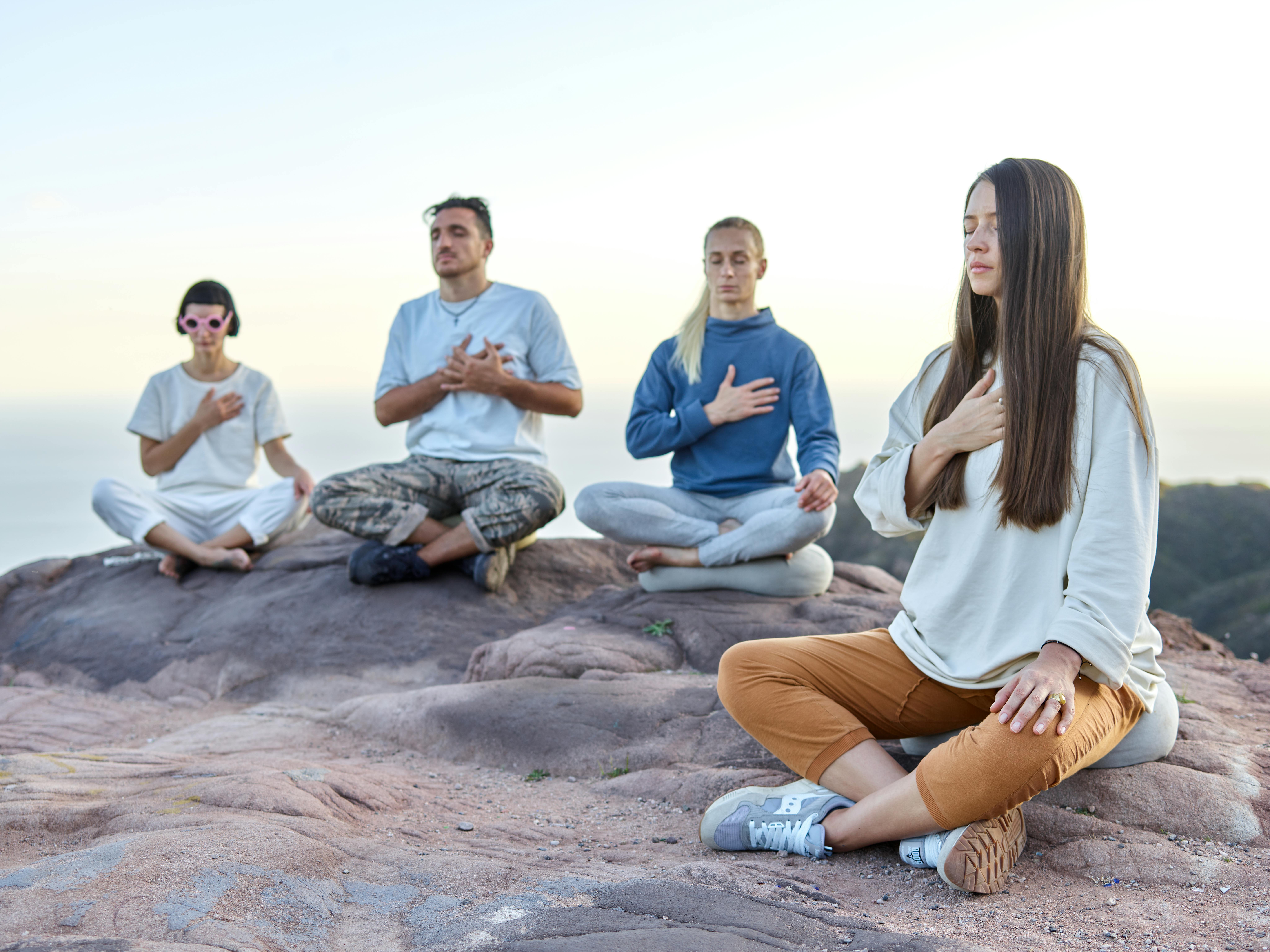
Mindfulness doesn’t follow a single form. Some sit in silence. Others move, listen, or focus visually. The practice isn’t about perfection - it’s about noticing what’s happening while it’s happening. Below are a few ways mindfulness shows up in daily life, in formats that actually tend to stick.
The familiar starting point. Sit. Breathe. Observe. The breath becomes a soft anchor - either passively noticed or gently guided through paced breathing. On days when thoughts run loud, a guided session or breathing visual often helps hold the focus.
Rather than quieting the mind directly, this practice turns attention inward - moving through the body from head to toe. Each area is noticed without judgment. Sensation, stillness, or tightness - just observed.
For those who find stillness hard to access, walking becomes the practice. Slower steps. Eyes open. Ground beneath the feet. Attention shifts to rhythm, contact, breath, and ambient sound. Movement becomes the anchor.
This one blends into daily life without needing extra time. The focus shifts to flavor, texture, and how the body responds while eating. It’s not about control - it’s about noticing fullness, satisfaction, and the act of nourishing.
This is where Mesmerize centers its work. Instead of closing the eyes, attention follows gentle on-screen motion. Visuals are designed to slow the system down, steady the breath, and ease overstimulation. Especially useful for visual thinkers or busy minds.
No playlist, routine, or perfect time of day is required. Often, it just starts with a few open minutes and a small willingness to notice - not to fix, but simply to be with whatever’s already unfolding.
The beginning can be quiet and low-pressure. Sitting down, lying back, or even standing - whatever feels available in the moment. Attention rests on one thing: the rise of breath in the chest, the weight of hands in the lap, the feel of contact with the floor. Everything else can move to the background, even just for a breath or two. That’s enough.
When stillness feels too sharp, guidance can help. A voice, a soft soundscape, or slow-moving visuals. Tools like Mesmerize aren’t there to complicate the practice - they’re there to make it reachable, especially when the nervous system is already full. The point isn’t silence. It’s presence. And once even a glimpse of that is felt, the return becomes easier.
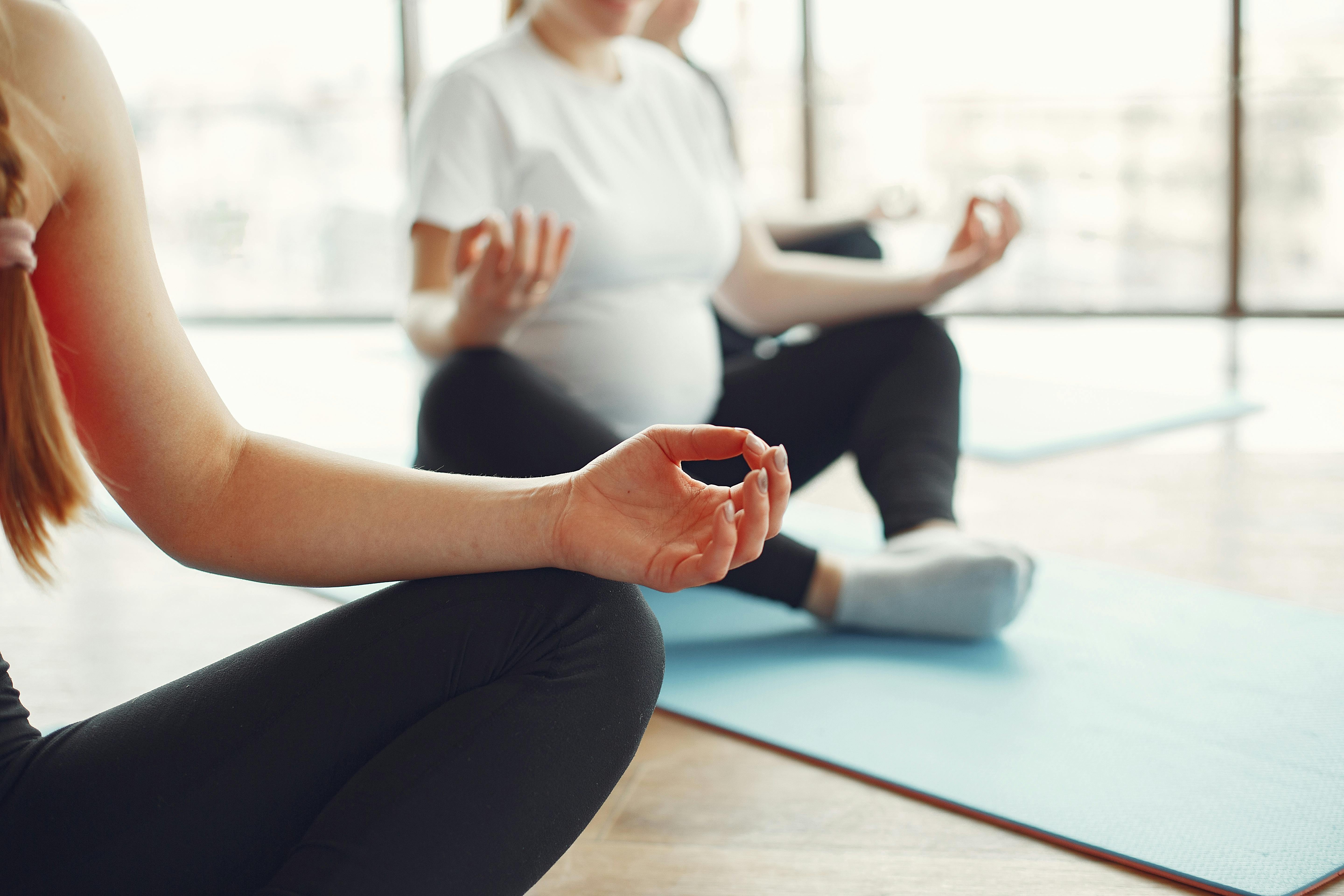
Consistency doesn’t require early mornings or perfect discipline. It doesn’t depend on streaks, metrics, or pressure. What makes it last is whether the practice still feels doable - especially on the harder days.
One way in is to link mindfulness to something that already exists in the day. A quiet moment before unlocking the phone. The wait while tea steeps. A pause between tasks. It doesn’t need to be long. It doesn’t need to be formal. It just needs to be real.
Some days will feel flat. Others will feel steady. Both count. The nervous system still registers the pause. And over time, that quiet space becomes easier to find - not because it’s being forced, but because the body begins to remember how it feels not to be stretched thin. Eventually, that stillness is something the system starts to ask for. Like sunlight after too many hours indoors.
Mindfulness can seem simple - until it isn’t. These are some of the places where people often get stuck, second-guess themselves, or assume they’re doing it wrong. They’re not.
The idea that mindfulness means a blank mind is a common blocker. Thoughts will show up. That’s how the brain functions. The practice isn’t to stop thinking, but to notice when thinking takes over - and gently return to the moment.
Attention will wander. That’s not failure; that’s the cue. Each time awareness returns to breath, sound, or sensation, the habit deepens. It’s more repetition than mastery.
There’s no correct way to sit. Some lie on the floor, some walk, some sit upright in a chair. What matters is comfort and awareness - not form. Stillness doesn’t have a shape.
Even one quiet minute can be enough. Five focused breaths. A pause between tasks. Mindfulness grows through consistency, not length. Small windows of attention add up.
Stillness can surface whatever’s been sitting underneath. If the mind feels loud or the body feels tight, that’s not a problem - it’s information. Over time, things soften. The noticing comes first.

Mindfulness doesn’t need a playlist, a mat, or a dedicated time slot. Some of the most grounding moments happen mid-routine - no app open, no timer running. Just regular life, noticed more fully.
These aren’t techniques. They’re gentle pauses. Subtle ways to return to the body, the breath, and the present moment.
No effort to impress. No need to “get it right.” Just a moment met with full attention. That’s the practice.
If mindfulness teaches anything, it’s that presence doesn’t need to be dramatic to matter. There’s no requirement for a playlist, a perfect space, or a long uninterrupted stretch. Sometimes, just a few honest minutes of awareness - wherever they land - are enough.
Some days, the practice feels steady. Other days, scattered. Both count. Each return, even for a single breath, adds something. A bit more space. A bit more calm. A bit more awareness.
And if visuals, sound, or guidance help settle things? Those are valid tools. There’s no wrong entry point into presence - only the one that’s open when it’s needed.
I canceled my subscription with Headspace and I now pay for Mesmerize instead. I was hooked after the free trial! I love how customizable the sounds, meditations, and visuals are! Using this app has honestly become my favorite part of my day! ☺️ It helps me relax, meditate, visualize, sleep, and it does wonders for my anxiety/phobia/ocd tendencies. Thank you Mesmerize for giving us this amazing mental health tool! I told my therapist about this app and have been telling all my friends too. It’s just so helpful!
This is the second or third app in the mindfulness and meditation realm, and it’s the most scientific approach I have found. I have found these combinations of open monitoring, and focused attention meditation techniques are the most viable for those suffering from more severe forms of sleep, pain, and anxiety dysfunction one may be suffering from. Many of these approaches are used by professionals in a cognitive behavioral therapy setting. A truly complete approach in mindfulness and meditation.
I suffer from clinical depression and sometimes I get into a bad headspace but this app has really helped me whenever I’m in a bad mood I turn on the app listen to some person taking about breathing and look at cool figures on my phone and it makes me feel so much better I would highly recommend this app it’s worth the money
It didn’t take but five minutes of using this app to buy a yearly subscription. Worth it on so many levels. Easy to manipulate to what I like. Massive library of music, videos, etc.
Clear your mind and relax with a unique audio visual meditation experience.


.jpeg)