
Learn how self-compassion meditation reduces self-criticism and anxiety. Try this step-by-step guide and start practicing kindness toward yourself today.
.webp)
Quick Summary: Self-compassion meditation trains the mind to respond to pain and failure with warmth instead of criticism, using techniques like loving-kindness phrases, soothing touch, and guided breathwork. Research links regular practice to lower anxiety, better emotional regulation, and greater resilience under stress. Most people notice a shift after just a few weeks of short daily sessions.
Most people would never talk to a friend the way they talk to themselves after a mistake. That inner voice can be brutal, relentless, and oddly convincing—as if being harsh is the only way to stay disciplined. Self-compassion meditation exists to interrupt that pattern. It's not about lowering standards or making excuses. It's about treating yourself with the same steadiness you'd offer someone you love when things go sideways.
This guide covers what self-compassion meditation actually is, the research behind it, how to practice it step by step, and how it compares to other mindfulness approaches. There's also a FAQ section at the end for quick answers.
Self-compassion meditation is a mindfulness-based practice that combines present-moment awareness with deliberate kindness directed inward. It typically draws on three components identified by researcher Kristin Neff: mindfulness (noticing pain without exaggerating it), common humanity (recognizing that suffering is part of being human, not a personal flaw), and self-kindness (offering comfort rather than judgment).
Unlike generic relaxation exercises, this practice specifically targets the inner critic. Sessions often include soft phrases repeated silently—things like "may I be kind to myself" or "this is a moment of difficulty"—paired with a hand placed on the chest or a slow, deliberate breath. The physical gesture matters more than people expect; touch activates the body's soothing system in a way that thought alone often can't.
There's a common myth that self-criticism keeps people sharp and productive. In practice, it tends to do the opposite. Harsh inner dialogue keeps the nervous system in a low-grade threat state, which drains the mental resources needed for problem-solving and creativity. Self-compassion, by contrast, engages the body's care system—the same physiological network activated when someone comforts a crying child.
Studies on self-compassion consistently associate it with lower rates of anxiety and depression, better stress recovery, and higher motivation to improve after setbacks—not lower motivation, as critics sometimes assume. People who practice self-compassion are often more accountable, not less, because they're not spending energy managing shame.
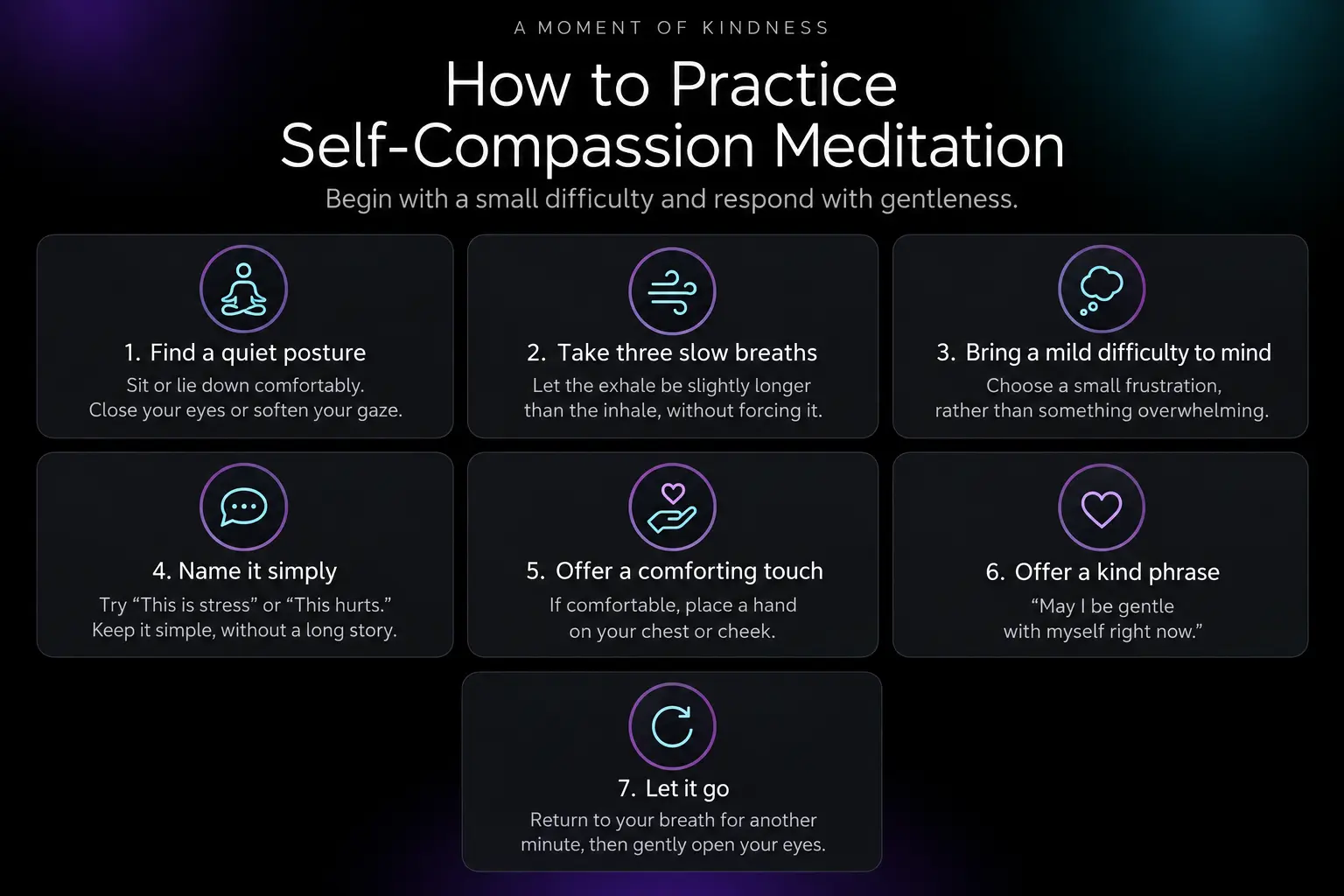
The structure below works for beginners and can be adapted for longer sessions once the pattern feels familiar:
A full session can run anywhere from five to twenty minutes. Shorter sessions, done consistently, tend to build the habit faster than occasional long ones. For anyone new to structured meditation in general, starting with a short guided format—like a 5-minute meditation—can make the self-compassion version feel less intimidating.

Self-compassion meditation creates time to notice difficult thoughts and respond to yourself with greater kindness. Mesmerize can support those quieter moments with guided meditations, affirmations, relaxing narrations, immersive visuals, soundscapes, and breathing experiences.
For a more personal routine, try:
Download Mesmerize on iOS or Android to make guided reflection and relaxation easier to include in your routine.
Self-compassion meditation overlaps with loving-kindness meditation but isn't identical. Loving-kindness traditionally starts with wishing others well and gradually extends that goodwill toward the self. Self-compassion meditation flips the order and often stays focused inward, particularly around moments of failure, embarrassment, or physical pain.
None of these are mutually exclusive. Many people rotate between them depending on what the day calls for—self-compassion after a hard conversation, breathwork before a stressful meeting, a body scan before bed.
This practice tends to show up as especially useful in a few recurring situations: after making a visible mistake at work, during recovery from illness or injury, in the middle of a breakup or loss, and during periods of chronic self-doubt that don't seem tied to any single event. It's also frequently recommended alongside anxiety-focused techniques, since much of anxiety's intensity comes from the secondary layer of self-judgment ("why am I like this?") stacked on top of the original worry. A guided session built specifically for anxious moments, such as a 10-minute meditation for anxiety relief, can pair well with self-compassion techniques for exactly this reason.
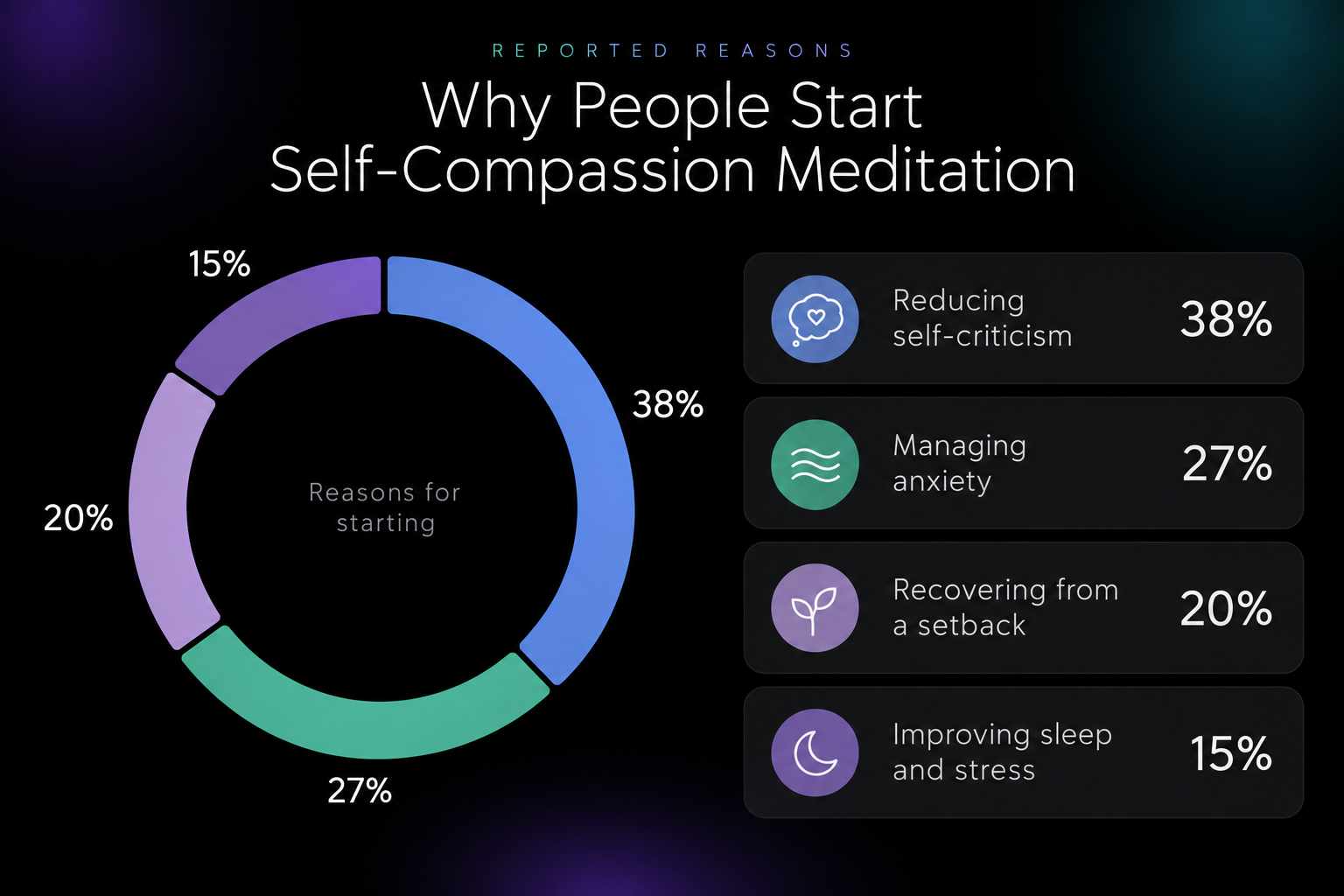
Consistency matters more than duration. A three-minute session every morning tends to outperform a single thirty-minute session once a week, mostly because the brain builds new response patterns through repetition, not intensity. Anchoring the practice to an existing habit—right after brushing teeth, or right before checking email—removes the need for willpower each day.
Guided audio can help here too, particularly for people who find their mind wandering into planning or worry the moment it goes quiet. Visual and audio cues give the attention something gentle to hold onto. Apps built around structured, visual meditation sessions—Mesmerize's visual meditation experience, for instance—can make it easier to stay with the practice instead of drifting into a mental to-do list. For those curious about the underlying research on why guided formats work, it's worth reading through the science behind meditation's effects before committing to a routine.
The most common obstacle isn't time—it's resistance to the idea itself. Some people find the phrases awkward or feel like they're "faking" kindness toward themselves. That reaction is normal, especially for anyone raised on the belief that self-criticism equals discipline. The awkwardness usually fades with repetition; it's less about believing the words instantly and more about giving the nervous system a new signal to respond to.
Another obstacle is picking a moment that's too intense to start with. Beginning with a major trauma or an active crisis often backfires. It's better to practice on small, everyday frustrations first, building the skill before applying it to heavier material. Daily practice—something like the structure used in an aca daily meditation routine—can help normalize the habit before it's needed for something harder.
Self-compassion meditation isn't a cure-all, and it won't erase difficult circumstances. What it does is change the relationship with those circumstances—softening the second layer of suffering that comes from judging yourself for struggling in the first place. Start small: one honest phrase, one hand on the chest, one quiet minute after something goes wrong. That's enough to begin.
For anyone ready to build this into a daily rhythm, browsing a library of guided sessions can shortcut a lot of trial and error. Explore the full range of practices on the Mesmerize blog, or check current plans and pricing if a structured, visual approach to meditation sounds like the right fit.
I canceled my subscription with Headspace and I now pay for Mesmerize instead. I was hooked after the free trial! I love how customizable the sounds, meditations, and visuals are! Using this app has honestly become my favorite part of my day! ☺️ It helps me relax, meditate, visualize, sleep, and it does wonders for my anxiety/phobia/ocd tendencies. Thank you Mesmerize for giving us this amazing mental health tool! I told my therapist about this app and have been telling all my friends too. It’s just so helpful!
This is the second or third app in the mindfulness and meditation realm, and it’s the most scientific approach I have found. I have found these combinations of open monitoring, and focused attention meditation techniques are the most viable for those suffering from more severe forms of sleep, pain, and anxiety dysfunction one may be suffering from. Many of these approaches are used by professionals in a cognitive behavioral therapy setting. A truly complete approach in mindfulness and meditation.
I suffer from clinical depression and sometimes I get into a bad headspace but this app has really helped me whenever I’m in a bad mood I turn on the app listen to some person taking about breathing and look at cool figures on my phone and it makes me feel so much better I would highly recommend this app it’s worth the money
It didn’t take but five minutes of using this app to buy a yearly subscription. Worth it on so many levels. Easy to manipulate to what I like. Massive library of music, videos, etc.
Clear your mind and relax with a unique audio visual meditation experience.


.jpeg)


%20(1).webp)


