Sleep meditation helps kids relax, settle busy minds, and fall asleep more easily. A simple, parent-friendly guide to how it works.
.webp)
Bedtime can be the quietest part of the day, yet for many kids, it’s when thoughts get louder. The lights go out, the house slows down, and suddenly there’s a lot to process. Sleep meditation gives children a gentle way to ease into rest, without pressure or rules that feel too grown-up.
Rather than asking kids to be still or silent, sleep meditation meets them where they are. It often sounds like a calm voice, a simple story, or an easy breathing rhythm that helps the body relax before sleep. When it works, it doesn’t feel like a technique. It feels like a soft landing at the end of the day.
Many children move through their days at full speed. They learn, play, listen, negotiate friendships, and follow rules, often without much downtime. Bedtime is usually the first quiet moment where there is nothing else demanding their attention.
When everything slows down, the mind fills the space.
For some kids, that means replaying moments from the day. For others, it shows up as worry, restlessness, or physical tension. Younger children may not have the words to explain what they are feeling, but the resistance to sleep is real.
Sleep meditation helps by offering the mind something simple and steady to focus on. A calm voice. A gentle story. A slow breathing pattern. Instead of asking kids to stop thinking, it gives their attention a soft place to land.
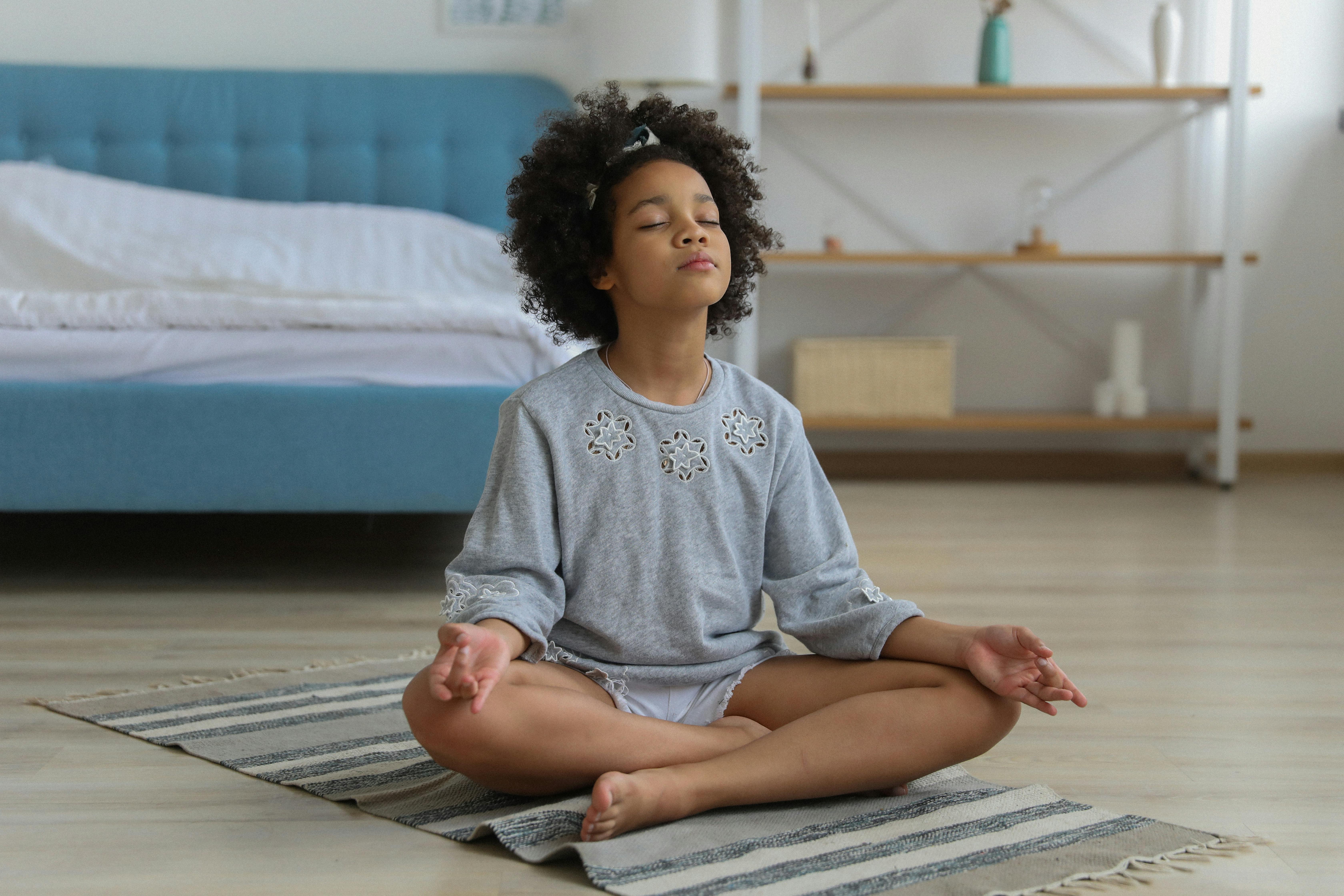
Sleep meditation for children is a guided practice designed to help the body relax and the mind slow down before sleep. It usually involves one or more of the following:
Unlike adult meditation, children’s sleep meditation is rarely silent. Silence can feel confusing or even unsettling for kids, especially at night. A voice or story helps them feel accompanied rather than alone.
The goal is not to keep children awake and focused. It is to help them drift naturally into sleep, often without realizing exactly when it happens.

At Mesmerize, we design sleep meditation to feel inviting rather than instructional, especially for kids with busy minds. Instead of asking children to focus harder or sit still, we use gentle visuals, calming soundscapes, and reassuring narrations that help their attention soften on its own. The goal is simple: make it easier for the body to relax so sleep can happen naturally.
Our visual-first approach gives kids something peaceful to look at while their breathing slows and their thoughts settle. Parents can adjust voices, music, pacing, and even breathing patterns, so the experience fits each child rather than forcing a one-size routine. With science-backed techniques, no ads, and a strong focus on privacy, we aim to make bedtime feel less like a struggle and more like a quiet transition into rest.
Children’s nervous systems are still developing. They switch more quickly between excitement and overwhelm, and they often need help transitioning from activity to rest.
Sleep meditation supports this transition by activating the body’s relaxation response. Slow breathing and calming imagery signal that it is safe to rest. Muscles soften. Heart rate slows. The mind shifts out of alert mode.
This is not about controlling thoughts. It is about creating a rhythm that the body recognizes as restful. Over time, kids begin to associate these cues with sleep, making bedtime feel more predictable and less stressful.
Sleep meditation is not a cure-all, but many families notice meaningful changes when it becomes part of a bedtime routine.
Some common benefits include:
For younger children, meditation often supports emotional reassurance. For older kids, it can help them learn how to calm themselves without external distractions.
The key is consistency and fit. When the meditation style matches the child’s age and personality, the benefits tend to come more naturally.
This is one of the most common questions parents ask, and the short answer is yes, but not in the way adults usually imagine meditation.
Children do not need to sit still, clear their minds, or follow complex instructions. In fact, expecting that often backfires.
Kids meditate best when the practice feels like listening, imagining, or gently breathing along. Stories, animals, familiar settings, and playful imagery work far better than abstract concepts.
Meditation for kids looks more like guided relaxation than formal practice. That difference matters.
There is no single right approach. Different kids respond to different styles, and preferences may change over time. Below are the most common and effective types used for sleep.
This is one of the most popular formats for kids. A narrator leads the child through a calm story, often involving nature, animals, or magical places.
The story provides structure, while the slow pace and reassuring language help the body relax. Many children fall asleep before the story ends, which is completely fine.
Some sleep meditations focus more directly on breathing. These usually involve simple counting, slow inhales and exhales, or imagining the breath moving through the body.
For kids, breathing instructions must stay simple. Too much detail can become distracting rather than calming.
Mindfulness for kids is not about constant awareness. It is usually framed as noticing one thing at a time, such as the feeling of breathing or the weight of the body on the bed.
This approach works well for older children who enjoy understanding what is happening in their bodies.
Some meditations use short phrases repeated quietly or spoken aloud. These phrases are usually reassuring and positive, such as reminders of safety or calm.
Mantras should feel natural and age-appropriate. Forced repetition rarely works.

Not every meditation suits every child. Paying attention to your child’s response matters more than following a specific method.
When choosing a sleep meditation, consider:
If a child resists a meditation, it does not mean meditation is not working. It often means the format or tone is not a good fit yet.
Allow experimentation. What works one month may not work the next.
Shorter is usually better, especially when kids are just getting used to sleep meditation. Younger children often do well with sessions around five minutes, while older kids may feel comfortable with ten. Longer meditations are not automatically more effective, and for some children they can actually feel tiring or overwhelming rather than calming.
The goal is not to reach the end of the meditation or follow every instruction. It is simply to create enough calm for sleep to take over on its own. If your child falls asleep partway through, that is not a problem or an interruption. It means the meditation has done exactly what it was meant to do.
Sleep meditation works best when it is part of a broader bedtime rhythm, not a sudden switch from a busy day to lights out. The environment leading up to meditation matters just as much as the meditation itself. Small changes can signal to your child’s body that it is safe to slow down.
Before starting meditation, try to:
These cues work together. When bedtime follows a similar pattern each night, children begin to relax before meditation even starts. Their bodies learn what comes next.
Meditation should not compete with noise, screens, or last-minute excitement. It works best as a bridge between activity and sleep, giving the mind something gentle to focus on while the rest of the world fades into the background.
Children pick up quickly on pressure, even when it is unintentional. If meditation starts to feel like another task to complete, it loses much of its calming effect. The goal is to make it feel optional and supportive, not like a rule that has to be followed perfectly.
It helps to offer meditation as an invitation rather than a requirement. There is no need to correct posture, breathing, or behavior. Some kids will listen closely, others will drift in and out, and both responses are completely fine. Staying nearby can be reassuring for some children, especially in the early stages, while others may prefer having the space to listen on their own. Paying attention to what makes your child feel most comfortable matters more than doing it “right.”
Resistance is common, especially if meditation is introduced during a stressful bedtime phase or when everyone is already feeling tired. A negative reaction does not mean meditation will never work. It often just means the timing or format needs adjusting.
Shortening the session can make a big difference. Switching to a different voice, story style, or type of meditation may also help. Some families find it works better to use meditation only on certain nights rather than every evening. Letting children help choose what they listen to gives them a sense of control and often reduces pushback.
Sometimes it also helps to listen together during the day, when there is no pressure to fall asleep. That familiarity can make nighttime meditation feel less unfamiliar and easier to accept.
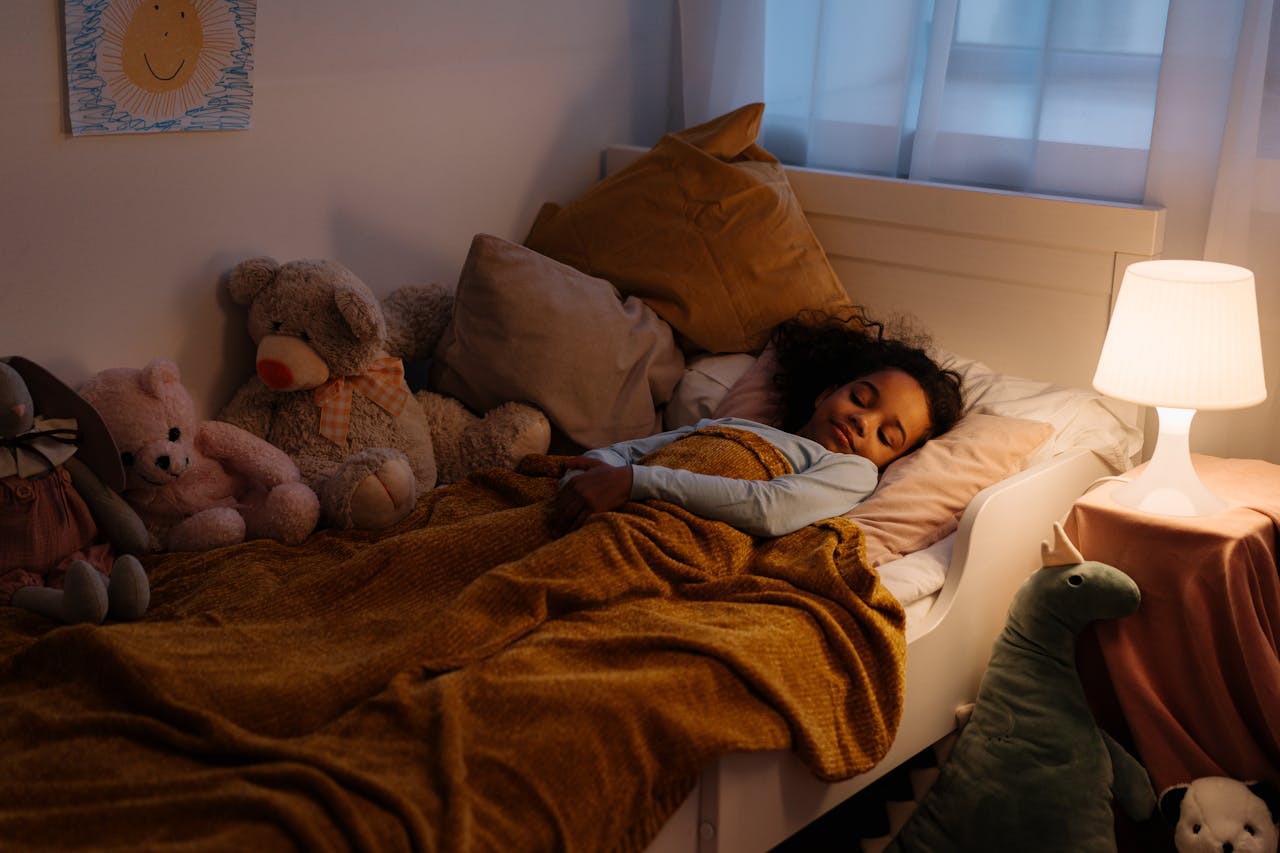
Simple stories, gentle repetition, and very short sessions work best. Focus on safety and comfort rather than technique.
Kids at this stage enjoy imaginative stories and breathing games. Meditations can be slightly longer but should remain playful.
Older kids may appreciate understanding why meditation helps. Breathing-focused or mindfulness-style meditations often resonate more here.
If a child experiences ongoing sleep difficulties, frequent nightmares, or intense nighttime anxiety, meditation alone may not address the root cause.
In those cases, meditation can still be supportive, but it works best alongside professional guidance or broader routine changes.
Meditation is not meant to replace care. It is meant to complement it.
Children do not need to be taught how to sleep. Their bodies already know how. What they often need is help letting go of the day.
Sleep meditation offers a quiet way to do that. It does not demand focus or effort. It invites slowing down, one breath or story at a time.
When used with patience and curiosity, it can turn bedtime into something softer. Not perfect. Just calmer.
I canceled my subscription with Headspace and I now pay for Mesmerize instead. I was hooked after the free trial! I love how customizable the sounds, meditations, and visuals are! Using this app has honestly become my favorite part of my day! ☺️ It helps me relax, meditate, visualize, sleep, and it does wonders for my anxiety/phobia/ocd tendencies. Thank you Mesmerize for giving us this amazing mental health tool! I told my therapist about this app and have been telling all my friends too. It’s just so helpful!
This is the second or third app in the mindfulness and meditation realm, and it’s the most scientific approach I have found. I have found these combinations of open monitoring, and focused attention meditation techniques are the most viable for those suffering from more severe forms of sleep, pain, and anxiety dysfunction one may be suffering from. Many of these approaches are used by professionals in a cognitive behavioral therapy setting. A truly complete approach in mindfulness and meditation.
I suffer from clinical depression and sometimes I get into a bad headspace but this app has really helped me whenever I’m in a bad mood I turn on the app listen to some person taking about breathing and look at cool figures on my phone and it makes me feel so much better I would highly recommend this app it’s worth the money
It didn’t take but five minutes of using this app to buy a yearly subscription. Worth it on so many levels. Easy to manipulate to what I like. Massive library of music, videos, etc.
Clear your mind and relax with a unique audio visual meditation experience.


.jpeg)