A clear, grounded look at visualization meditation, how it works, and why mental imagery can help the mind settle without forcing calm.
.webp)
Visualization meditation doesn’t ask you to empty your mind or picture anything perfectly. It works with something the brain already does well: responding to images. When attention rests on a simple mental scene, shape, or movement, the nervous system often softens on its own.
For many people, focusing on breath alone can feel abstract or effortful. Visualization offers another entry point. Instead of watching thoughts come and go, the mind has something gentle to land on. A place, a light, a color, or even a slow sense of motion.
This kind of meditation isn’t about imagination for imagination’s sake. It’s about using imagery as an anchor. Something steady enough to return to when attention drifts, and quiet enough that it doesn’t turn into mental noise. Over time, that simple return can create more ease than trying to control the mind ever does.
Visualization meditation is a form of meditation that uses mental imagery as the primary anchor for attention. Instead of focusing on breath, sound, or bodily sensations alone, the practitioner brings attention to an image or imagined experience.
That image does not need to be detailed. It does not need to be beautiful. It does not even need to be visual in the traditional sense. For some people, visualization shows up more as a feeling, a sense of space, or a memory of movement rather than a picture.
The key element is intention. Unlike daydreaming, visualization meditation is done deliberately and gently. You choose an image or theme, rest attention there, and return to it when the mind wanders.
This makes visualization meditation different from positive thinking or fantasy. The goal is not to convince yourself of anything or rehearse success. The goal is to stabilize attention in a way that allows the nervous system to downshift.
It is easy to confuse visualization meditation with imagination or daydreaming, but the experience is quite different.
Daydreaming tends to be passive and uncontrolled. The mind jumps from one image to another, often driven by emotion, memory, or worry. Visualization meditation, by contrast, is structured and intentional. Even when the image changes slightly, there is a sense of returning rather than drifting.
Imagination often has a narrative quality. Visualization meditation does not need a story. In fact, the simpler the image, the easier it is to work with. A steady flame, a slow wave, or a feeling of warmth spreading through the body is often more effective than a complex scene.
This difference matters because the nervous system responds not just to what the mind imagines, but to how attention is held. Calm attention creates calm responses.
Visualization meditation is not the best fit for everyone, but many people find it especially useful in certain situations.
It often helps people who struggle with silent, breath-focused meditation. If focusing on the breath makes you anxious, bored, or frustrated, adding imagery can make the practice feel more approachable.
It can also be helpful for people with busy minds. When thoughts move quickly, having a clear mental anchor can reduce the feeling of mental overload.
Visual learners and creative thinkers often connect easily with visualization practices. That said, you do not need to be artistic or imaginative for this meditation to work. You only need to notice something internally and return to it.
Visualization meditation is also commonly used by people managing stress, anxiety, sleep issues, or emotional fatigue. In these cases, the goal is not insight or self-improvement. It is regulation.

At Mesmerize, visualization meditation is not treated as an abstract idea or a skill you have to master. We design it as an experience that meets the mind where it already is. Visual, responsive, and often overstimulated.
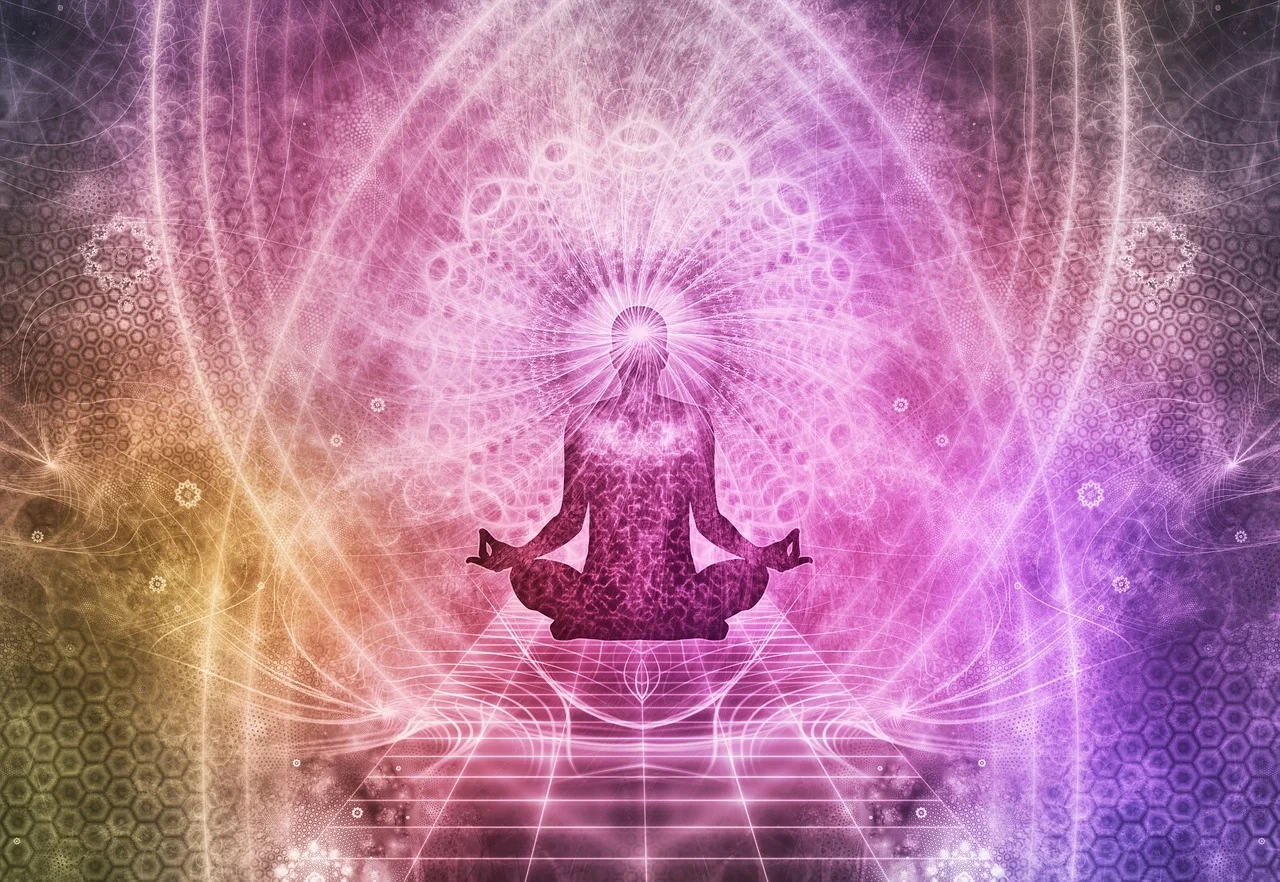
We focus on visual anchors because for many people, images settle attention faster than silence or breath alone. Instead of asking you to imagine something vividly, we give your mind something to rest on. Flowing patterns, slow movement, and visuals that evolve gently over time. The image becomes the anchor, not something you have to create or control.
Our approach is built around flexibility. Some days you may want guided narration. Other days, just visuals and sound. You can adjust breathing patterns, pacing, audio layers, or turn guidance off entirely. Visualization meditation works best when it adapts to how you feel in the moment, not when you try to fit yourself into a rigid structure.
We also care deeply about ease. You can open the app, choose a preset, and begin within seconds. No setup, no pressure to do it “right.” Whether you are trying to calm anxiety, wind down before sleep, or simply give your nervous system a break, the goal stays the same: less effort, more settling.
Visualization meditation does not need to be symbolic or spiritual to be effective. For us, it is about using light, motion, and sound to help the mind slow down naturally. When attention has somewhere gentle to land, calm tends to follow without force.
Visualization meditation takes many forms. Below are some of the most common approaches, each with a slightly different focus.
This involves imagining a place that feels safe, calm, or familiar. It might be a real location or an imagined one. Attention rests on sensory details like light, temperature, sound, or texture.
This type of visualization is often used for relaxation and stress relief. It can be especially useful before sleep or during periods of emotional overwhelm.
In this approach, the image is more abstract. You might imagine a soft light moving through the body, or warmth spreading slowly from one area to another.
This form works well for people who do not naturally see detailed images. Sensation and movement take precedence over visuals.
Here, visualization supports emotional states rather than physical relaxation. You may imagine sending kindness toward yourself or others, often using symbolic imagery like light or openness.
This type of practice can support emotional balance, empathy, and self-compassion over time.
This approach involves imagining yourself completing a task or reaching a goal. When used in meditation, the emphasis is on experiencing the feeling of completion rather than planning or pressure.
It is most effective when the visualization remains calm and grounded, not emotionally charged or competitive.
One of the most practical benefits of visualization meditation is its effect on emotional regulation.
When emotions feel intense, the mind often searches for solutions or explanations. Visualization meditation takes a different route. Instead of engaging the problem directly, it shifts attention toward a steady internal experience.
This does not suppress emotion. It creates space around it. That space allows emotions to move without overwhelming the system.
Over time, regular visualization practice can make it easier to return to a regulated state after stress. This does not mean stress disappears. It means recovery happens more smoothly.
Visualization meditation is commonly used as a sleep aid, and for good reason.
When the body prepares for sleep, the nervous system needs clear signals of safety and rest. Mental imagery can provide those signals when physical conditions are not ideal.
Imagining slow movement, soft light, or a familiar nighttime setting can help shift attention away from racing thoughts. Unlike problem-solving or reflection, visualization gives the mind something to stay with without effort.
For people who struggle with insomnia, this approach can feel less frustrating than trying to control thoughts directly. The mind stays engaged, but gently.

Some people worry that they are doing visualization meditation wrong because they cannot see images clearly. Others become frustrated when images fade or change.
These concerns are common, and usually unnecessary.
Visualization meditation does not require vivid imagery. A sense of knowing, feeling, or imagining is enough. If you know you are imagining a beach, even without seeing it clearly, the practice is working.
It is also normal for images to shift. Attention is not static. Each time you notice distraction and return to the image, the practice is happening.
If imagery feels inaccessible, try focusing on movement, warmth, or rhythm instead. Visualization is broader than pictures.
You do not need a long session or special setup to practice visualization meditation. A few minutes is enough. What matters most is how gently you approach it.
Consistency matters more than duration. Short, regular practice tends to be more effective than occasional long sessions.
While visualization meditation is generally gentle, it is not appropriate for everyone in every situation.
For some people with trauma histories, imagery can trigger distressing memories. In these cases, it may be safer to work with external anchors like sound or guided support.
If visualization consistently increases anxiety or discomfort, it is worth adjusting the approach or consulting a mental health professional.
Meditation should support well-being, not override it.

Visualization meditation is not a quick fix. Like any meditation practice, its effects build over time.
What changes is not just how calm you feel during practice, but how quickly you recover from stress outside of it. Attention becomes more flexible. Emotional responses become less rigid.
The images themselves may change or fall away. What remains is the ability to return to a steady internal reference point.
That ability is the real benefit.
Visualization meditation works because it aligns with how the mind already functions. It does not fight thought. It gives thought somewhere to rest.
Whether you are new to meditation or returning after frustration, visualization can offer a practical and humane entry point. There is no performance, no ideal outcome, and no requirement to imagine anything perfectly.
Just attention, gently placed, and gently returned.
Over time, that is often enough to find calm.
I canceled my subscription with Headspace and I now pay for Mesmerize instead. I was hooked after the free trial! I love how customizable the sounds, meditations, and visuals are! Using this app has honestly become my favorite part of my day! ☺️ It helps me relax, meditate, visualize, sleep, and it does wonders for my anxiety/phobia/ocd tendencies. Thank you Mesmerize for giving us this amazing mental health tool! I told my therapist about this app and have been telling all my friends too. It’s just so helpful!
This is the second or third app in the mindfulness and meditation realm, and it’s the most scientific approach I have found. I have found these combinations of open monitoring, and focused attention meditation techniques are the most viable for those suffering from more severe forms of sleep, pain, and anxiety dysfunction one may be suffering from. Many of these approaches are used by professionals in a cognitive behavioral therapy setting. A truly complete approach in mindfulness and meditation.
I suffer from clinical depression and sometimes I get into a bad headspace but this app has really helped me whenever I’m in a bad mood I turn on the app listen to some person taking about breathing and look at cool figures on my phone and it makes me feel so much better I would highly recommend this app it’s worth the money
It didn’t take but five minutes of using this app to buy a yearly subscription. Worth it on so many levels. Easy to manipulate to what I like. Massive library of music, videos, etc.
Clear your mind and relax with a unique audio visual meditation experience.


.jpeg)