
A simple 10 minute meditation for anxiety that calms your mind fast. Easy steps you can use anywhere, even on your busiest days.
.webp)
Anxiety has a way of sneaking into ordinary moments. It shows up before a meeting. In traffic. At 2 a.m. when you just want to sleep. And when it hits, the last thing you want is a complicated routine or a 45-minute practice you don’t have time for.
The good news is this: ten minutes is enough.
You don’t need perfect silence. You don’t need to “clear your mind.” You just need a small pocket of space and a willingness to pause. A short meditation won’t erase anxiety from your life. But it can soften the edge. It can slow your breathing. It can give your nervous system a signal that you’re safe.
And sometimes, that’s all you need to reset.
When anxiety kicks in, your body switches into stress mode. Your heart beats faster, your breathing becomes shallow, and your muscles tighten without you even noticing. Stress hormones move through your system. That reaction is useful if you are in real danger, but it is exhausting when you are simply answering emails.
A short meditation practice can interrupt this cycle. It activates the parasympathetic nervous system, the part responsible for recovery and balance. When you slow your breathing and bring your attention to the present moment, your body receives a different message. You are not under immediate threat. You can ease the tension.
Research suggests that even brief daily meditation can lower perceived stress, improve focus and concentration, ease anxiety symptoms, reduce mind wandering, and strengthen emotional regulation. The key factor is consistency. Ten minutes once in a while will not change much, but ten minutes on most days can lead to noticeable shifts within a few weeks.
There is a common misunderstanding about meditation that is worth clearing up.
It is not about stopping your thoughts. If that were the objective, almost no one would manage it. The mind thinks. That is simply what it does.
A 10 minute meditation for anxiety means noticing your thoughts without automatically following them. It means placing your attention on something steady, such as your breath or physical sensations. It involves creating a small pause between what happens and how you react, and allowing feelings to pass without intensifying them.
The goal is not to reach perfect calm in ten minutes. The goal is to help your nervous system settle more easily.
Your mind will wander. That is normal. The practice is in gently guiding it back each time.

At Mesmerize, we built the app for moments when anxiety feels loud and you need something that works right away. Not everyone connects with traditional meditation. For some, silence makes thoughts even louder. That is why visual meditation is at the core of Mesmerize. Moving patterns, guided breathing cues, immersive soundscapes, and narration work together to draw your attention away from spiraling thoughts and toward something steady and engaging.
Our goal is straightforward - we want to make it easier to calm your nervous system in real time. You can choose a quick preset for stress, follow a guided session, or sync your breath to calming visuals. The experience stays simple, flexible, and effective. Use it as part of your 10 minute anxiety reset, before sleep, or whenever your body needs a clear signal to slow down. Over time, these short sessions do more than ease the moment. They help you build a steadier baseline, one practice at a time.
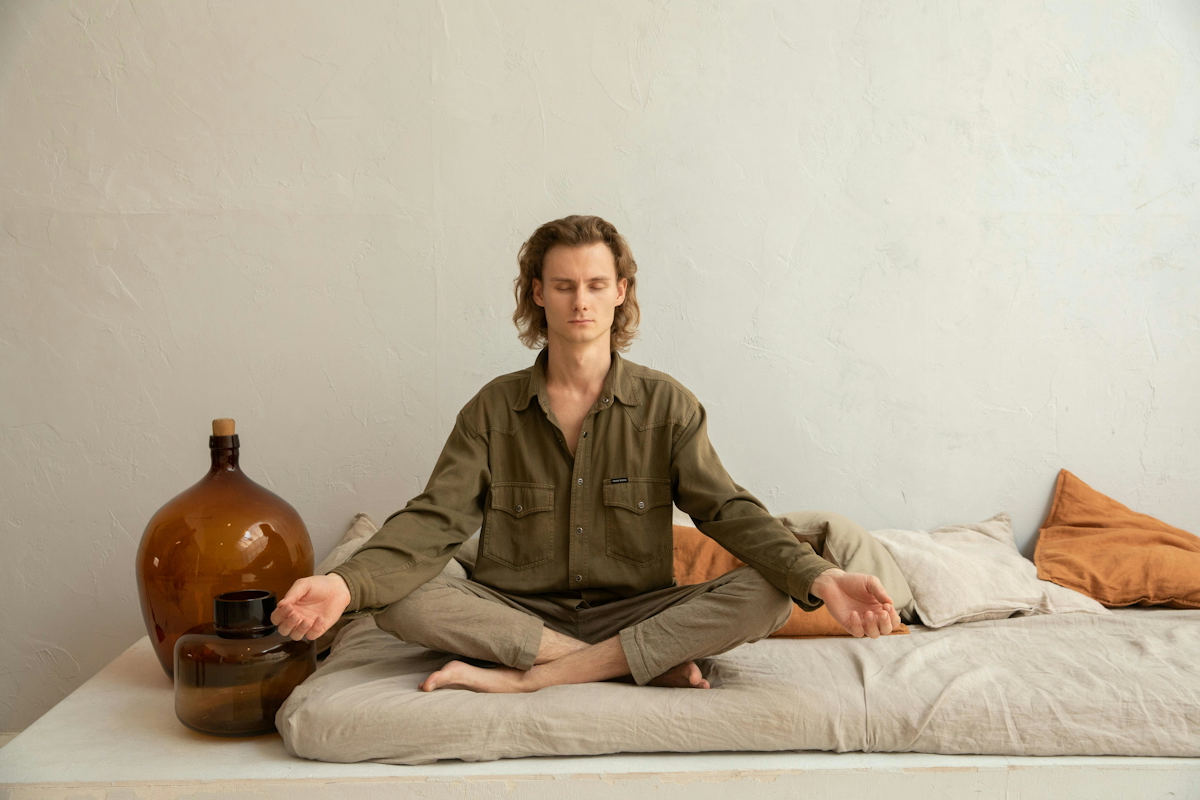
You can do this anywhere. On a chair. On your bed. In your parked car. You do not need perfect silence. You just need ten uninterrupted minutes.
Sit comfortably. Rest your hands on your thighs. Let your shoulders drop slightly.
Close your eyes if that feels safe. If not, keep them softly focused on a spot in front of you.
Take one slow breath in through your nose. Exhale through your mouth. Do that twice more.
You are not trying to force relaxation. You are just arriving.
Now breathe in through your nose for four counts. Hold for one. Exhale slowly for six counts.
If counting feels stressful, skip it. Just focus on slightly longer exhales. A longer exhale signals your nervous system to slow down.
Keep your attention on the physical sensation of breathing. The cool air entering your nose. The slight rise in your chest. The release on the exhale.
If your mind drifts, gently label it "thinking" and come back to the breath. No judgment.
Shift your attention to your body.
Scan from the top of your head down to your feet. Notice where anxiety is sitting. It might be in your jaw. Your stomach. Your shoulders.
Instead of trying to push the sensation away, try this: breathe into that area. On the exhale, imagine softening it by five percent. Not completely. Just a little.
Anxiety often feels overwhelming because we resist it. When you allow it to exist without fighting it, it tends to ease on its own.
In the last minute, choose a simple phrase that feels steady and realistic, such as “I can handle this moment,” “This feeling will pass,” or “I am safe right now.”
Repeat it quietly to yourself with each exhale. Then open your eyes slowly. Take a moment before moving. Notice any change, even if it is small.
Some days you do not have ten uninterrupted minutes. That is real life. Here are a few shorter practices that still work.
It takes less than a minute and can interrupt an anxiety spike.
Physical release often calms mental agitation.
Identify:
This pulls your attention out of future-focused worry and into the present.
These are not replacements for a full 10 minute meditation, but they are excellent supports.
Meditation fails for most people because they treat it like a big project. It does not need to be.
Here is what actually works.
Habit stacking is powerful.
For example:
Your brain links the two actions. It becomes automatic over time.
If ten minutes feels intimidating, start with five. Or even three.
Consistency matters more than duration. You can build up gradually.
You do not need perfect posture. You do not need silence. You do not need to feel calm at the end.
You just need to show up.
The less pressure you attach to it, the more likely you are to continue.
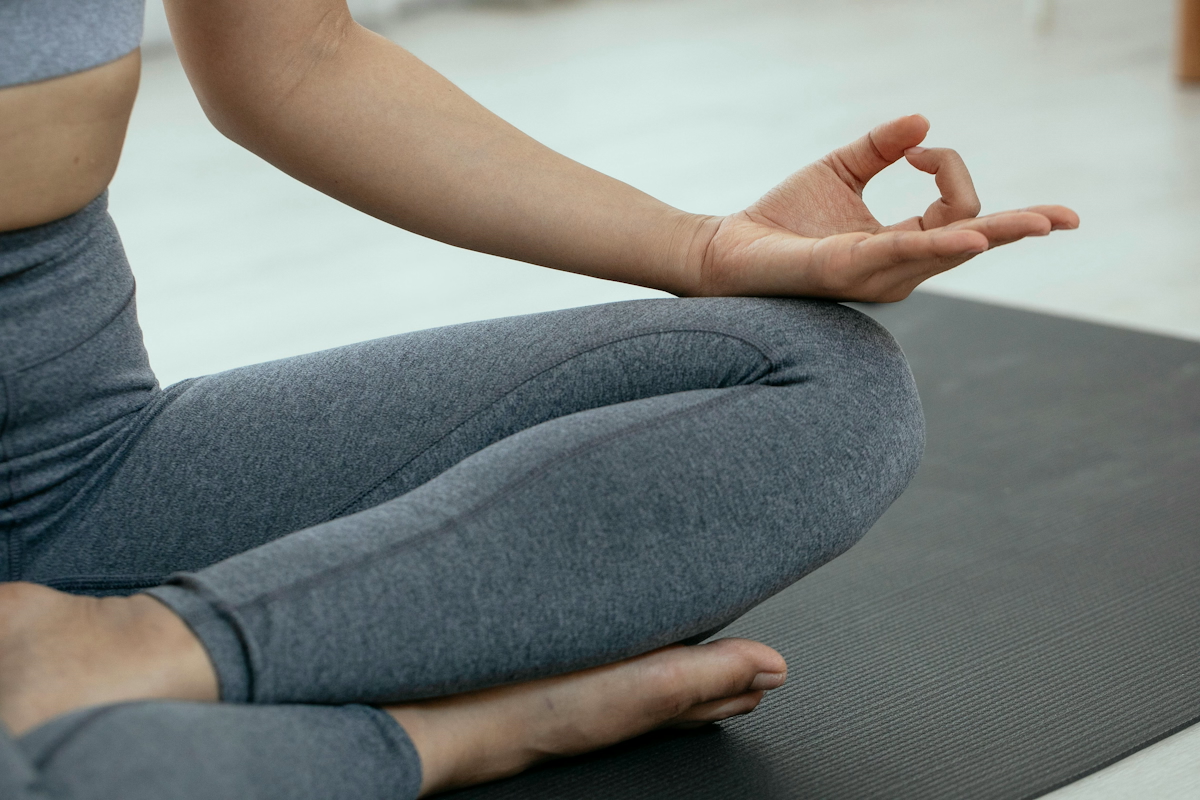
The beginning may feel different than you expect. Instead of immediate calm, you may find yourself feeling restless, more aware of anxious thoughts, impatient, or unsure whether the practice is doing anything at all. This is completely normal. You are not creating new problems, you are simply noticing what was already present.
After a couple of weeks, the changes tend to be subtle but practical. You may recover more quickly after stress, find it a little easier to concentrate, react with less intensity, and fall asleep with less mental resistance. The progress is gradual, and it builds through repetition rather than dramatic breakthroughs.
Guided meditation can help if you prefer structure or feel easily distracted. A steady voice gives you something to follow.
Silent meditation works well once you feel comfortable directing your own attention.
You can alternate between both. The right choice is the one you will actually stick with.
A short meditation practice can help, but it can also become another source of pressure.
In daily life, a 10 minute meditation can fit into many natural moments. It can help before a presentation, after a tense conversation, during an afternoon slump, at night when your thoughts are racing, or in the morning before the day gathers speed. At first, you may use it to manage specific stress spikes. Over time, it becomes part of your routine. Instead of reacting only when anxiety appears, you build a steadier baseline.
Ten minutes a day may seem small, but over months it becomes meaningful mental training. With regular practice, many people notice stronger emotional balance, clearer awareness of their internal patterns, better concentration, and a more even stress response. Chronic tension often softens. Anxiety does not disappear entirely, but it feels less overwhelming. You recognize it sooner and respond more deliberately instead of getting pulled under.
Anxiety rarely leaves because we argue with it. It settles when we change how we meet it. A 10 minute meditation for anxiety is not a miracle cure and it is not meant to be. It is a small interruption in the stress cycle. A reset. A way to remind your body that not every thought is an emergency.
Ten minutes is doable. That is what makes it powerful. You are not redesigning your life. You are carving out a short pause and repeating it often enough that your system starts to learn from it. Over time, you react less quickly. You recover more smoothly. You notice anxiety sooner and it feels less overwhelming.
You do not need to feel perfectly calm at the end of every session. You just need to keep showing up. The shift happens in the background, quietly, through repetition.
If you are unsure, try it today. Set a timer. Sit down. Breathe. Let ten minutes be enough.
I canceled my subscription with Headspace and I now pay for Mesmerize instead. I was hooked after the free trial! I love how customizable the sounds, meditations, and visuals are! Using this app has honestly become my favorite part of my day! ☺️ It helps me relax, meditate, visualize, sleep, and it does wonders for my anxiety/phobia/ocd tendencies. Thank you Mesmerize for giving us this amazing mental health tool! I told my therapist about this app and have been telling all my friends too. It’s just so helpful!
This is the second or third app in the mindfulness and meditation realm, and it’s the most scientific approach I have found. I have found these combinations of open monitoring, and focused attention meditation techniques are the most viable for those suffering from more severe forms of sleep, pain, and anxiety dysfunction one may be suffering from. Many of these approaches are used by professionals in a cognitive behavioral therapy setting. A truly complete approach in mindfulness and meditation.
I suffer from clinical depression and sometimes I get into a bad headspace but this app has really helped me whenever I’m in a bad mood I turn on the app listen to some person taking about breathing and look at cool figures on my phone and it makes me feel so much better I would highly recommend this app it’s worth the money
It didn’t take but five minutes of using this app to buy a yearly subscription. Worth it on so many levels. Easy to manipulate to what I like. Massive library of music, videos, etc.
Clear your mind and relax with a unique audio visual meditation experience.


.jpeg)
.webp)
.webp)


