Discover which brain waves enhance meditation. Research shows theta and alpha waves boost relaxation, focus, and mental clarity. Learn the science.
.webp)
Research shows that alpha and theta brain waves are the most beneficial for meditation, with theta waves (4-8 Hz) associated with deep relaxation and creativity, and alpha waves (8-12 Hz) linked to calm focus. According to studies from medical research institutions, experienced meditators show increased theta activity and inversely related alpha oscillations during progressive meditation depth, while binaural beats may help entrain these beneficial frequencies.
Brain waves aren't just abstract concepts from neuroscience labs. They're measurable electrical patterns that reveal exactly what happens inside the brain during meditation.
When neurons communicate, they create electrical impulses that occur at different frequencies. These frequencies change depending on mental state—whether actively problem-solving, deeply relaxed, or somewhere in between.
Understanding which brainwave patterns correspond with effective meditation can transform practice from guesswork into science-backed technique.
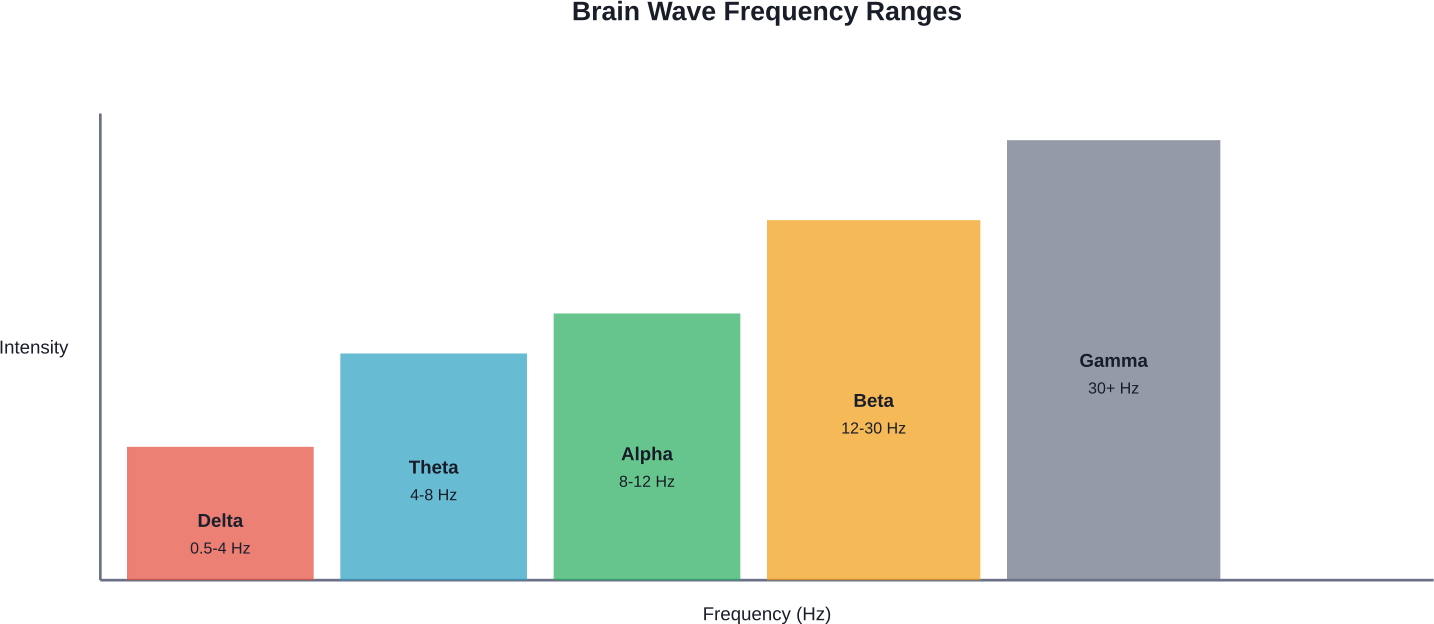
The brain generates five primary frequency bands, each associated with distinct mental states. These aren't isolated—multiple wave types coexist at any moment, with dominance shifting based on activity.
Delta waves operate at the slowest frequency, ranging from 0.5 to 4 Hz. These dominate during deep, dreamless sleep and promote physical healing and restoration.
While not typically targeted during wakeful meditation, some advanced practitioners access delta states during profound meditative experiences. Most meditation practices don't aim for this frequency range.
Theta waves oscillate between 4 and 8 Hz. This frequency range appears consistently in meditation research as the optimal zone for deep relaxation and internal focus.
According to medical research published in PMC databases, theta activity increases during meditation and correlates with the depth of meditative states. Research investigating theta binaural beat efficacy in primary insomniacs has examined theta activity patterns.
Theta states feel dreamy and creative. They're associated with vivid mental imagery, emotional processing, and the twilight zone between wakefulness and sleep.
Alpha waves range from 8 to 12 Hz and represent relaxed yet alert awareness. This is the frequency band where the mind remains engaged but without tension or effort.
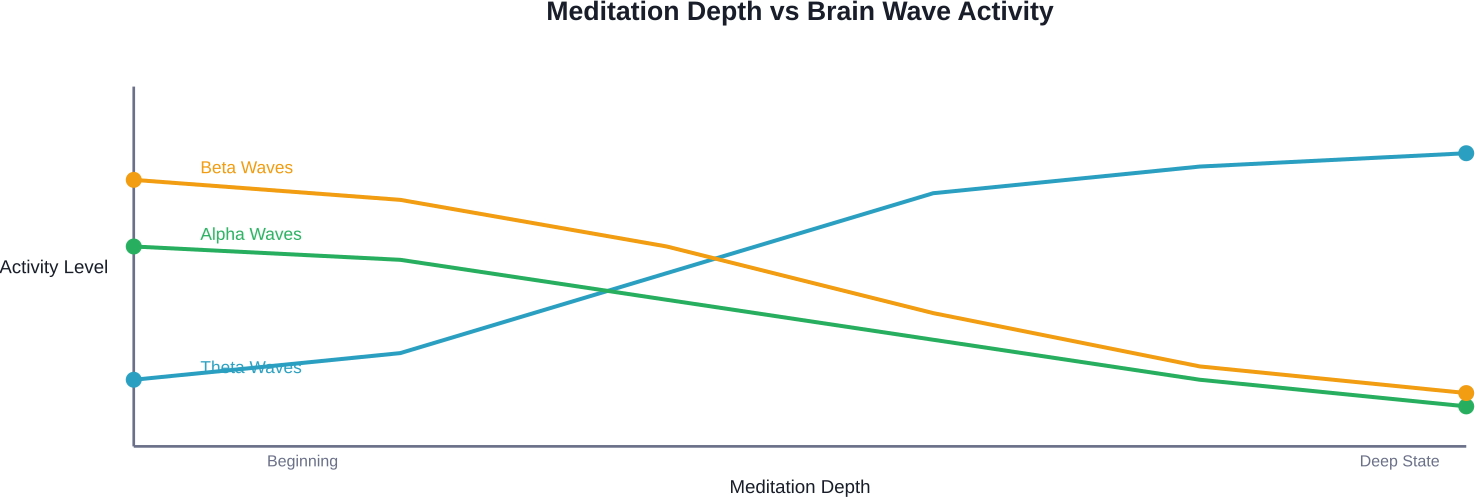
Research published in Neuroscience of Consciousness shows that alpha and theta oscillations are inversely related to progressive levels of meditation depth. As meditation deepens, alpha may decrease while theta increases—though both contribute to the overall meditative experience.
Alpha states feel calm and centered. The mental chatter quiets down without losing consciousness or awareness.
Beta waves operate between 12 and 30 Hz. This is the frequency of active thinking, conversation, and focused attention on external tasks.
During meditation, beta activity typically decreases as practitioners shift from analytical thinking to receptive awareness. However, some beta presence remains—complete elimination isn't the goal.
Gamma waves exceed 30 Hz and can reach beyond 100 Hz. Research associates these fast frequencies with peak cognitive function, heightened perception, and moments of insight.
Some advanced meditators show increased gamma activity during practice. Research examining Zen meditation in monastic settings has investigated bioelectric brain activity, comparing experienced practitioners with non-meditating controls.
Here's where it gets interesting. Different meditation styles produce different brainwave patterns.
Research suggests that focused attention practices and open monitoring meditation may produce different brainwave patterns, with theta activity associated with deep meditative states.
Research published in peer-reviewed sources has explored cortical flexibility changes during mindfulness practice.
Medical research provides concrete evidence about meditation's neurological effects. Studies using EEG technology measure electrical brain activity during practice sessions.
Medical research has examined the effectiveness of meditation for stress reduction. The neurological basis for this benefit involves specific brainwave changes.
Research published in PLoS ONE examined spontaneous eye movements during focused-attention mindfulness meditation in expert practitioners. The study found that eye movement measurements could serve as markers of meditation performance, with more experienced meditators showing different oculomotor patterns than less experienced practitioners.
Brainwave patterns differ between novice and experienced meditators. Beginners typically show smaller shifts in wave patterns, while long-term practitioners demonstrate more pronounced changes.
Research examining meditation styles in Thai adolescents found that Buddha image visualization was a significant predictor of mental health outcomes including self-esteem, resilience, and stress reduction.
That said, even short meditation sessions produce measurable brain activity changes. A 2025 study published in Annals of Neuroscience evaluated brain activity in response to short meditation stimuli using R-score, EEG readings, and artificial neural networks, emphasizing the significance of EEG readings during meditation.
Binaural beats present two slightly different frequencies to each ear, creating the perception of a third tone oscillating at the difference frequency between them.
The theory suggests this auditory phenomenon can "entrain" brain waves to match the perceived frequency. Play a 200 Hz tone in one ear and 208 Hz in the other, and the brain perceives an 8 Hz beat—right in the alpha range.
But does that actually work?
A systematic review published in PMC examined binaural beat effects on brain oscillatory activity. The review analyzed studies implementing various frequencies, including one study implemented a frequency of 57.3 Hz in the upper gamma band. Continuous presentation of binaural beats was used in 13 studies, ranging from one to 30 minutes of continuous stimulation.
The evidence remains mixed. Some studies show modest effects on targeted brainwave frequencies, while others find minimal impact. Binaural beats aren't a magic solution, but they may serve as supplementary tools for some practitioners.
Understanding brainwave science translates into practical meditation improvements. Here's how to work with these frequencies rather than against them.
When stress reduction is the priority, techniques that increase theta activity work best. This includes guided meditation, body scans, and breathing-focused practices.
Theta states emerge naturally when attention turns inward and analytical thinking quiets down. Don't force it—create conditions that allow theta to arise.
Alpha waves support concentrated awareness without tension. Mindfulness practices that maintain gentle attention on a single object (breath, mantra, visual point) tend to boost alpha activity.
This explains why alpha-dominant meditation feels simultaneously relaxed and clear.
Gamma bursts often accompany sudden realizations or moments of expanded awareness. These can't be forced, but certain practices create favorable conditions.
Open awareness meditation, where attention rests without fixation on any particular object, sometimes precedes gamma increases.

Different brain wave states are often associated with relaxation, focus, and deep meditation. Many meditation techniques aim to help the mind slow down and enter calmer mental states.
Mesmerize helps guide relaxation through slow visual patterns, breathing cues, and calming audio designed to support meditation and mental focus.
You can explore:
If you want to explore meditation in a more guided and immersive way, try Mesmerize - download it from the App Store or Google Play.
Consumer EEG devices now make brainwave monitoring accessible outside research labs. These headbands measure electrical activity and provide real-time feedback.
The technology isn't perfect—consumer devices lack the precision of medical-grade equipment. But they offer useful approximations for personal practice.
Real-time feedback helps practitioners recognize what different mental states feel like, accelerating the learning curve. Over time, external monitoring becomes less necessary as internal awareness develops.
Several myths circulate in meditation communities about brain waves. Time to clear those up.
Measurable brainwave changes can occur within a single meditation session. But consistent patterns develop over weeks and months of regular practice.
Research shows practice frequency matters more than session length. Daily 10-minute sessions produce better results than weekly hour-long marathons.
According to research examining meditation practice, daily meditation is associated with optimal outcomes across mental health measures. Consistency builds the neural pathways that support easier access to beneficial brainwave states.
The best brain waves for meditation aren't one-size-fits-all. Theta waves excel for deep relaxation and stress reduction. Alpha waves support focused awareness and calm concentration. Even gamma has its place during insight practices.
What matters most? Understanding that different meditation techniques naturally produce different brainwave patterns. Match the practice to the desired outcome.
Medical research confirms meditation changes brain activity in measurable, beneficial ways. Whether targeting theta for profound relaxation or cultivating alpha for sustained focus, the neurological effects are real and reproducible.
Start with basic awareness practices and pay attention to how different techniques feel. Over time, that subjective experience correlates with specific brainwave patterns. The external measurement confirms what internal awareness eventually recognizes.
Ready to optimize meditation practice? Focus on consistency over perfection. Daily practice—even brief sessions—builds the neural pathways that make beneficial brainwave states more accessible over time.
I canceled my subscription with Headspace and I now pay for Mesmerize instead. I was hooked after the free trial! I love how customizable the sounds, meditations, and visuals are! Using this app has honestly become my favorite part of my day! ☺️ It helps me relax, meditate, visualize, sleep, and it does wonders for my anxiety/phobia/ocd tendencies. Thank you Mesmerize for giving us this amazing mental health tool! I told my therapist about this app and have been telling all my friends too. It’s just so helpful!
This is the second or third app in the mindfulness and meditation realm, and it’s the most scientific approach I have found. I have found these combinations of open monitoring, and focused attention meditation techniques are the most viable for those suffering from more severe forms of sleep, pain, and anxiety dysfunction one may be suffering from. Many of these approaches are used by professionals in a cognitive behavioral therapy setting. A truly complete approach in mindfulness and meditation.
I suffer from clinical depression and sometimes I get into a bad headspace but this app has really helped me whenever I’m in a bad mood I turn on the app listen to some person taking about breathing and look at cool figures on my phone and it makes me feel so much better I would highly recommend this app it’s worth the money
It didn’t take but five minutes of using this app to buy a yearly subscription. Worth it on so many levels. Easy to manipulate to what I like. Massive library of music, videos, etc.
Clear your mind and relax with a unique audio visual meditation experience.


.jpeg)