Discover the best meditation crystals for deeper focus and calm. Learn which stones work best for mindfulness, how to use them, and what beginners need to know.
.webp)
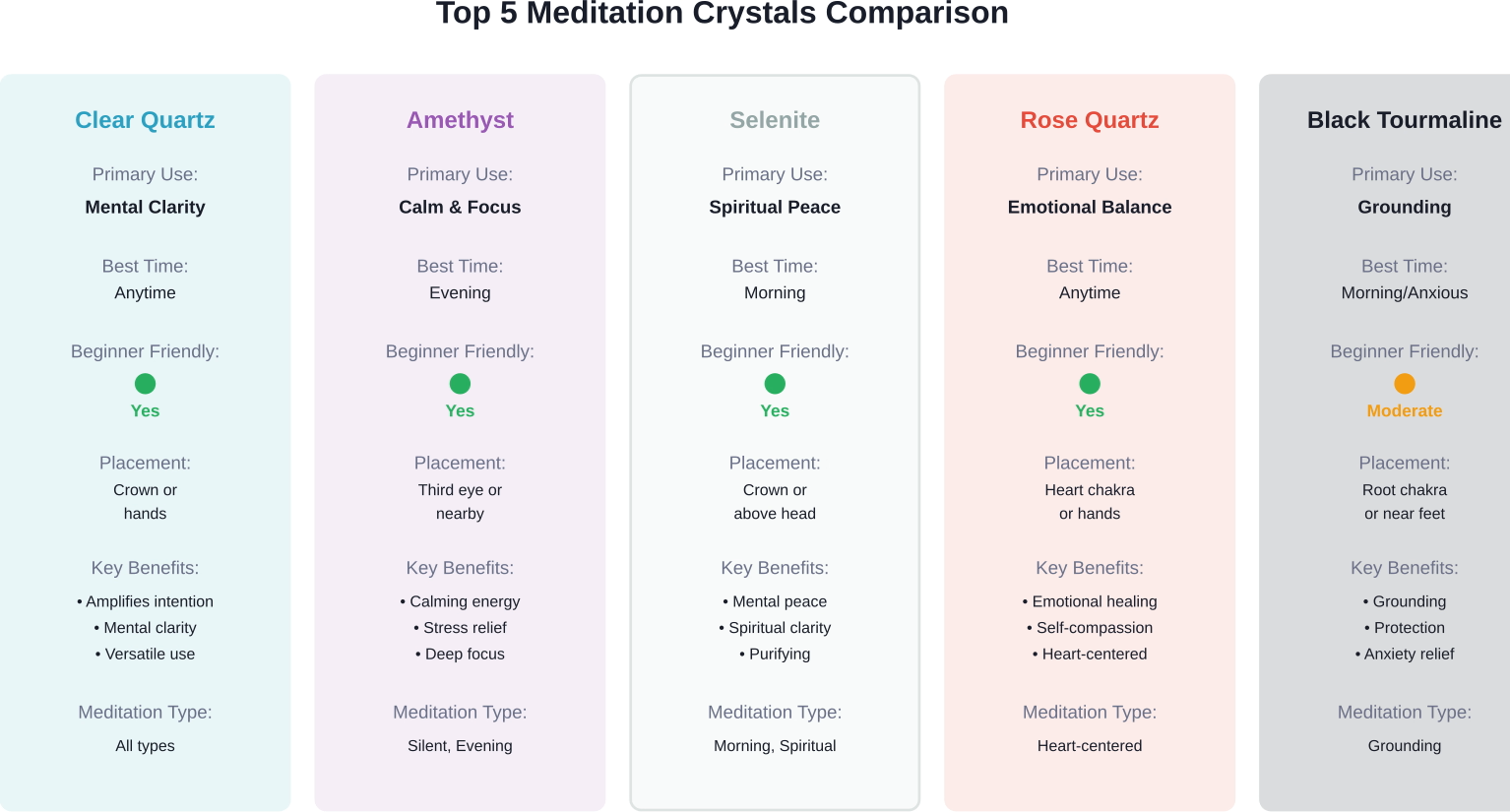
The best meditation crystals include Clear Quartz for mental clarity, Amethyst for calming the mind, Selenite for spiritual connection, Rose Quartz for emotional balance, and Black Tourmaline for grounding. These crystals are valued in meditation practices for their alleged ability to enhance focus, deepen relaxation, and support mindfulness, though scientific evidence for healing properties remains limited.
Meditation has become a cornerstone practice for millions worldwide seeking mental clarity, stress reduction, and emotional balance. To enhance the experience, many practitioners turn to meditation crystals—natural stones believed to amplify focus, deepen concentration, and help clear distracting energy during practice.
While crystals have been used in traditional practices for thousands of years, it's important to understand their role in modern meditation. Natural minerals have been used in traditional healing practices for thousands of years. However, no conclusive scientific evidence currently proves crystals possess inherent healing properties.
That said, the meditation community widely reports positive experiences incorporating crystals into their practice. Whether through placebo effect, mindful intention-setting, or the simple beauty these stones bring to sacred spaces, crystals have earned a place in many meditation routines.
This guide explores the most popular meditation crystals, how to use them effectively, and what beginners should know before starting.
Crystals are dense mineral formations that develop over thousands or millions of years deep within the Earth. Their color, composition, and geological origin vary widely—from the purple hues of Amethyst formed in volcanic rocks to the transparent clarity of Quartz crystals.
In meditation contexts, these stones serve several purposes. Many practitioners use them as focal points during practice, helping anchor attention and prevent mental wandering. Others hold crystals during sessions, place them on chakra points, or arrange them around meditation spaces.
The practice connects to ancient traditions spanning multiple cultures. But here's the thing—while historical use is well-documented, modern scientific validation remains limited.
According to meditationspaces.org, crystals are generally very dense and said to hold energy collected over time from the space around them. The organization notes that while it hasn't been scientifically proven that crystals have healing properties, there has been an enormous amount of anecdotal evidence from practitioners who believe in their benefits.
Real talk: the effectiveness of meditation crystals likely stems more from intention and mindful practice than from any measurable energy field. And that's perfectly fine—if incorporating beautiful stones into meditation deepens focus and enhances the practice, the mechanism matters less than the result.
Based on widespread use across meditation communities and traditional applications, these five crystals consistently rank as the most valuable for meditation practice.
Clear Quartz tops nearly every list of meditation crystals, and for good reason. This transparent stone is valued for its alleged ability to elevate consciousness and amplify intention during meditation.
Practitioners often describe Clear Quartz as bringing mental clarity and helping clear mental fog. Its transparency makes it an excellent focal point—gazing at the crystal's internal structures can help settle a wandering mind.
Many meditators place Clear Quartz at the crown of the head or hold it in their dominant hand during sessions focused on spiritual connection or mental clarity.
Amethyst ranks second among meditation crystals for its purported calming properties. This purple variety of Quartz is traditionally associated with deep focus, stress reduction, and peaceful meditation.
The stone's violet coloring ranges from pale lavender to deep purple, formed by iron impurities and natural irradiation within Quartz crystal structures. Its beauty alone makes it popular in meditation spaces.
Community discussions frequently mention Amethyst for evening meditation sessions, particularly those focused on releasing daily stress or preparing for restful sleep. The stone is often recommended for beginners establishing a meditation routine.
Selenite, a crystallized form of gypsum, appears frequently in meditation practices focused on spiritual awareness and mental peace. The stone's translucent white appearance and fibrous crystal structure create distinctive visual appeal.
According to collected meditation practices, Selenite is particularly valued for morning meditation sessions aimed at purifying mental systems and establishing calm before the day begins.
The stone is relatively soft compared to Quartz varieties, making it easy to shape into wands, palm stones, or flat pieces suitable for various meditation positions.
Rose Quartz brings gentle pink coloring to meditation spaces and is traditionally associated with emotional balance and heart-centered practices. This Quartz variety gets its color from trace amounts of titanium, iron, or manganese.
Practitioners often use Rose Quartz during loving-kindness meditation or when working through emotional challenges. The stone is commonly placed on the heart chakra during body scan meditations.
Many find Rose Quartz particularly helpful when meditation practice focuses on self-compassion, forgiveness, or processing difficult emotions.
Black Tourmaline rounds out the top five with its reputation for grounding energy and providing protection during meditation. This dark, opaque crystal offers stark visual contrast to lighter stones.
The mineral is valued for helping anchor awareness in the present moment, particularly useful for practitioners whose minds tend to wander excessively. Many meditators place Black Tourmaline near their feet or at the base of the spine during grounding exercises.
User experiences suggest Black Tourmaline works well for meditation sessions focused on releasing anxiety or establishing feelings of safety and security.
Beyond the top five, several other crystals earn recognition for specific meditation applications.
Smoky Quartz combines the qualities of Clear Quartz with grounding properties similar to Black Tourmaline. The stone's smoky brown to gray coloring comes from natural irradiation of silicon dioxide crystals containing aluminum.
This crystal appears frequently in calm mind crystal combinations, often paired with Selenite and Amethyst for mental stillness practices. Many find Smoky Quartz helpful when meditation aims to quiet internal chatter.
Fluorite stands out for its stunning rainbow of possible colors—purple, green, blue, yellow, or clear. The mineral calcium fluoride forms cubic crystals that often display color banding.
According to compiled gemstone meditation guides, Fluorite aids focus and concentration during practice. The stone works well for students or professionals incorporating brief meditation sessions into busy workdays.
Tiger's Eye brings golden-brown chatoyancy—a cat's-eye optical effect—to meditation practice. This stone is traditionally associated with security, confidence, and personal power.
Practitioners often choose Tiger's Eye when preparing for challenging situations or when meditation focuses on building self-confidence and inner strength.
Kyanite's distinctive blade-like crystal formations and blue coloring make it immediately recognizable. The aluminum silicate mineral typically doesn't require cleansing, according to crystal practitioners.
Many value Kyanite specifically as a meditation aid rather than for general use, finding it particularly effective for establishing and maintaining meditative states.
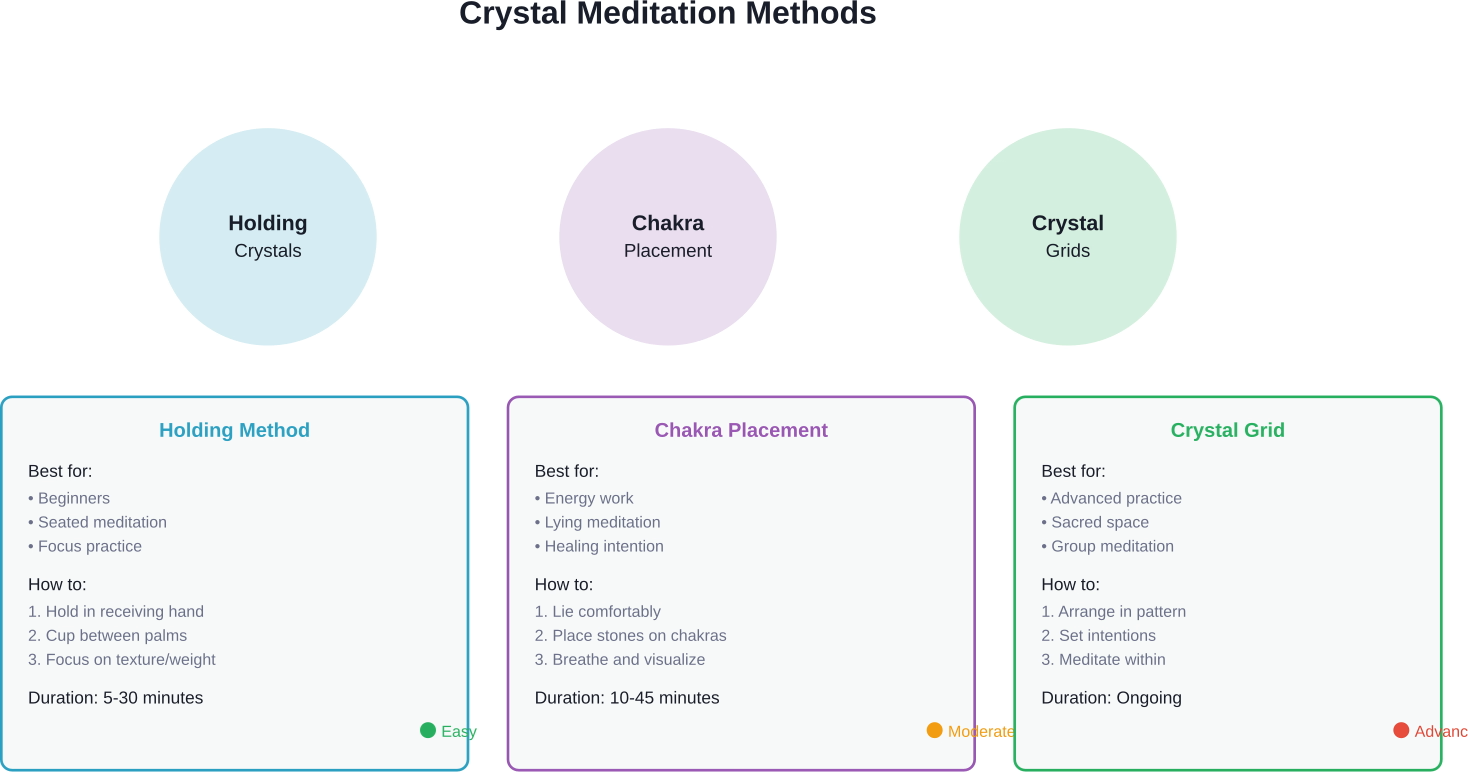
The method for incorporating crystals into meditation practice varies based on personal preference and meditation style. Several approaches work effectively.
The simplest method involves holding a crystal in one or both hands during meditation. Most practitioners place the stone in their receiving hand (typically the non-dominant hand) or cup it gently between both palms.
This direct contact allows focus on the crystal's physical properties—temperature, texture, weight—which can serve as an anchor point when attention wanders.
Many meditation traditions work with chakras—energy centers aligned along the body's midline. Practitioners place specific crystals on corresponding chakra points during meditation:
This method works best during lying-down meditation when crystals can rest on the body without sliding.
Some meditators arrange multiple crystals in geometric patterns around their meditation space. These crystal grids might encircle the meditation cushion or occupy a nearby altar.
The practice combines the visual beauty of arranged stones with the intention of creating an energetically supportive environment for practice.
Crystal jewelry offers a portable way to keep stones close during meditation. Bracelets, necklaces, and rings allow constant contact without requiring hand-holding.
This method works particularly well for walking meditation or movement-based practices where holding stones isn't practical.
Sometimes crystals serve best as beautiful additions to meditation spaces without direct interaction. Placing attractive crystal clusters on meditation altars or nearby surfaces creates visual focal points and enhances the sacred quality of practice spaces.
New practitioners often feel overwhelmed by crystal options. Here's how to narrow choices effectively.
These two crystals top every beginner recommendation list for good reason. They're widely available, relatively affordable, and versatile enough for any meditation style.
Clear Quartz works universally across meditation types. Amethyst particularly suits those struggling with racing thoughts or evening meditation routines.
Match crystal selection to specific meditation intentions:
Many experienced practitioners recommend choosing crystals based on visual or intuitive attraction. If a particular stone's color, shape, or energy draws attention, that connection often matters more than traditional associations.
Crystals come in various forms—raw chunks, polished tumbled stones, points, clusters, and carved shapes. For meditation purposes, consider:
Size matters less than comfort. A stone should feel right when held—not too heavy, not uncomfortably small.
Proper care maintains crystals in good condition for meditation use.
Dust and oils accumulate on frequently handled stones. Clean crystals periodically with:
Research specific crystal hardness before water cleaning—some minerals degrade when wet.
Many practitioners believe crystals absorb energy and require periodic cleansing. Common methods include:
While scientific evidence doesn't support energetic cleansing needs, the ritual adds mindful intention to crystal care.
Store meditation crystals in dedicated spaces—small boxes, pouches, or altar surfaces. This prevents physical damage and maintains their special status as meditation tools rather than ordinary objects.
Honesty about scientific evidence remains important when discussing meditation crystals.
Currently, no peer-reviewed scientific studies demonstrate that crystals emit measurable energy fields or possess inherent healing properties. Research on minerals in biology indicates that at least 18 elements are essential for mammalian life, though this refers to minerals consumed or used medically rather than crystals used externally for energy work.
But wait. That doesn't invalidate crystal meditation practice.
The benefits likely stem from several proven mechanisms:
Meditation itself delivers well-documented benefits for stress reduction, focus improvement, and emotional regulation. If crystals enhance practice consistency or depth, they serve valuable purposes regardless of their mineral composition.
Integrating crystals effectively requires thoughtful approach rather than random application.
Begin with one crystal and one method. Attempting elaborate crystal grids or working with multiple stones simultaneously often creates distraction rather than depth.
Practice holding a single Clear Quartz or Amethyst during regular meditation sessions for at least two weeks before adding complexity.
Before each meditation session, take a moment to hold the crystal and mentally state the practice intention. This could be "I seek mental clarity" or "I'm cultivating calm" or "I'm connecting with inner wisdom."
Intention-setting bridges mundane and meaningful, transforming a stone into a meditation tool.
The meditation practice itself matters more than any tool used during practice. Maintain regular meditation schedules whether using crystals or not.
Crystals should enhance existing practice, not become a requirement without which meditation feels incomplete.
Try different crystals, placements, and methods. Notice what genuinely deepens practice versus what creates busywork or distraction.
Some meditators discover crystals profoundly enhance their practice. Others find them unnecessary. Both experiences are valid.
Crystal meditation works well alongside other practices:
Some people enjoy using meditation crystals as part of their mindfulness or relaxation routines. These objects can help create a calming ritual and remind you to slow down and focus.
Mesmerize adds guided meditation sessions, visual breathing exercises, and relaxing soundscapes that help create a peaceful meditation environment.
Inside the app:
If you want to expand your meditation routine with guided visual sessions, try Mesmerize - available on the App Store or Google Play.
Several pitfalls trap beginning crystal meditators.
Analysis paralysis prevents actual practice. Choosing the "perfect" crystal matters far less than beginning meditation with any reasonable stone.
Clear Quartz works for virtually any purpose. Start there if overwhelmed by options.
Beautiful crystals tempt collectors, but accumulating dozens of stones without regular meditation use defeats the purpose. Three crystals used daily serve better than thirty gathering dust.
Meditation develops through consistent practice over weeks and months. Crystals don't create shortcuts to enlightenment or instant mental peace.
Set realistic expectations about meditation progress regardless of tools used.
Crystals are accessories, not substitutes for proper meditation instruction. Learn basic meditation techniques—breath awareness, body scanning, focused attention—before worrying about which stones to use.
This bears repeating: crystals are meditation tools, not medical treatments. The FDA has issued warnings about products making unproven health claims, including substances marketed with promises to improve brain function or treat medical conditions.
Never use crystals as substitutes for professional medical or mental health treatment. Meditation complements healthcare but doesn't replace it.
The relationship between meditation and crystals is deeply personal. What resonates for one practitioner may feel irrelevant to another.
Some meditators find crystals transform their practice, adding depth, focus, and meaning to sessions. Others discover minimal impact and prefer unadorned meditation. Both paths are completely valid.
The key is approaching crystal meditation with curiosity rather than dogma. Experiment genuinely. Notice actual effects rather than expected effects. Let personal experience guide the practice.
If crystals enhance meditation—wonderful. Use them consistently and mindfully.
If they create distraction or feel like empty ritual—set them aside. Meditation itself remains the practice. Crystals are optional tools, not requirements.
What matters most is showing up regularly to practice. Whether with Clear Quartz in hand, Amethyst on the third eye, or no crystals at all, consistent meditation cultivates the mental clarity, emotional balance, and inner peace practitioners seek.
Ready to begin crystal meditation? Start simple:
Remember that meditation itself delivers proven benefits for focus, stress reduction, and mental well-being. Crystals enhance the journey for many practitioners, but the destination—greater presence, clarity, and peace—remains accessible through simple, consistent practice.
Whether you build an extensive crystal collection or meditate with a single beloved stone for years, you're already on the right path. The fact that you're exploring ways to deepen meditation practice shows commitment to inner growth.
Now it's time to stop reading and start practicing. Find a quiet space, pick up that crystal, and discover what meditation has to offer.
I canceled my subscription with Headspace and I now pay for Mesmerize instead. I was hooked after the free trial! I love how customizable the sounds, meditations, and visuals are! Using this app has honestly become my favorite part of my day! ☺️ It helps me relax, meditate, visualize, sleep, and it does wonders for my anxiety/phobia/ocd tendencies. Thank you Mesmerize for giving us this amazing mental health tool! I told my therapist about this app and have been telling all my friends too. It’s just so helpful!
This is the second or third app in the mindfulness and meditation realm, and it’s the most scientific approach I have found. I have found these combinations of open monitoring, and focused attention meditation techniques are the most viable for those suffering from more severe forms of sleep, pain, and anxiety dysfunction one may be suffering from. Many of these approaches are used by professionals in a cognitive behavioral therapy setting. A truly complete approach in mindfulness and meditation.
I suffer from clinical depression and sometimes I get into a bad headspace but this app has really helped me whenever I’m in a bad mood I turn on the app listen to some person taking about breathing and look at cool figures on my phone and it makes me feel so much better I would highly recommend this app it’s worth the money
It didn’t take but five minutes of using this app to buy a yearly subscription. Worth it on so many levels. Easy to manipulate to what I like. Massive library of music, videos, etc.
Clear your mind and relax with a unique audio visual meditation experience.


.jpeg)