Find the best meditation cushion for your practice. Compare zafus, crescent cushions, and benches to support posture and reduce back pain during seated meditation.
.webp)
Meditation cushions elevate the hips to support proper spinal alignment during seated practice, reducing discomfort in the knees, ankles, and lower back. The best cushion depends on your preferred posture, session length, and body type—zafus work well for cross-legged sitting, while crescent cushions support kneeling positions.
Most spines need support to sit comfortably on the floor for extended periods. Without proper elevation, practitioners often experience pins-and-needles in the feet or an achy back—clear signs the body isn't getting the support it needs.
According to the National Center for Complementary and Integrative Health, about 80 percent of adults have low-back pain at some point in their lives. While meditation offers documented benefits for managing chronic low-back pain through practices like mindfulness-based stress reduction, sitting improperly can actually aggravate discomfort rather than relieve it.
That's where meditation cushions come in. These specialized props aren't just about comfort—they're functional tools that change the geometry of seated postures.
The primary function of a meditation cushion is to elevate the pelvis above the knees. This tilt allows the spine to maintain its natural curve without muscular effort.
When sitting flat on the floor, most people's hips fall below or level with their knees. This position rounds the lower back and collapses the chest, making it difficult to breathe fully and nearly impossible to maintain for sessions longer than 10-15 minutes.
Elevating the hips just a few inches changes everything. The pelvis can tilt forward naturally, the spine stacks properly, and the body can remain upright with minimal strain.
But here's the thing—not all cushions work for all bodies or all postures. The best meditation cushion depends on flexibility, preferred sitting position, and how long sessions typically last.
Six main cushion types dominate the market, each designed for specific postures and body types.
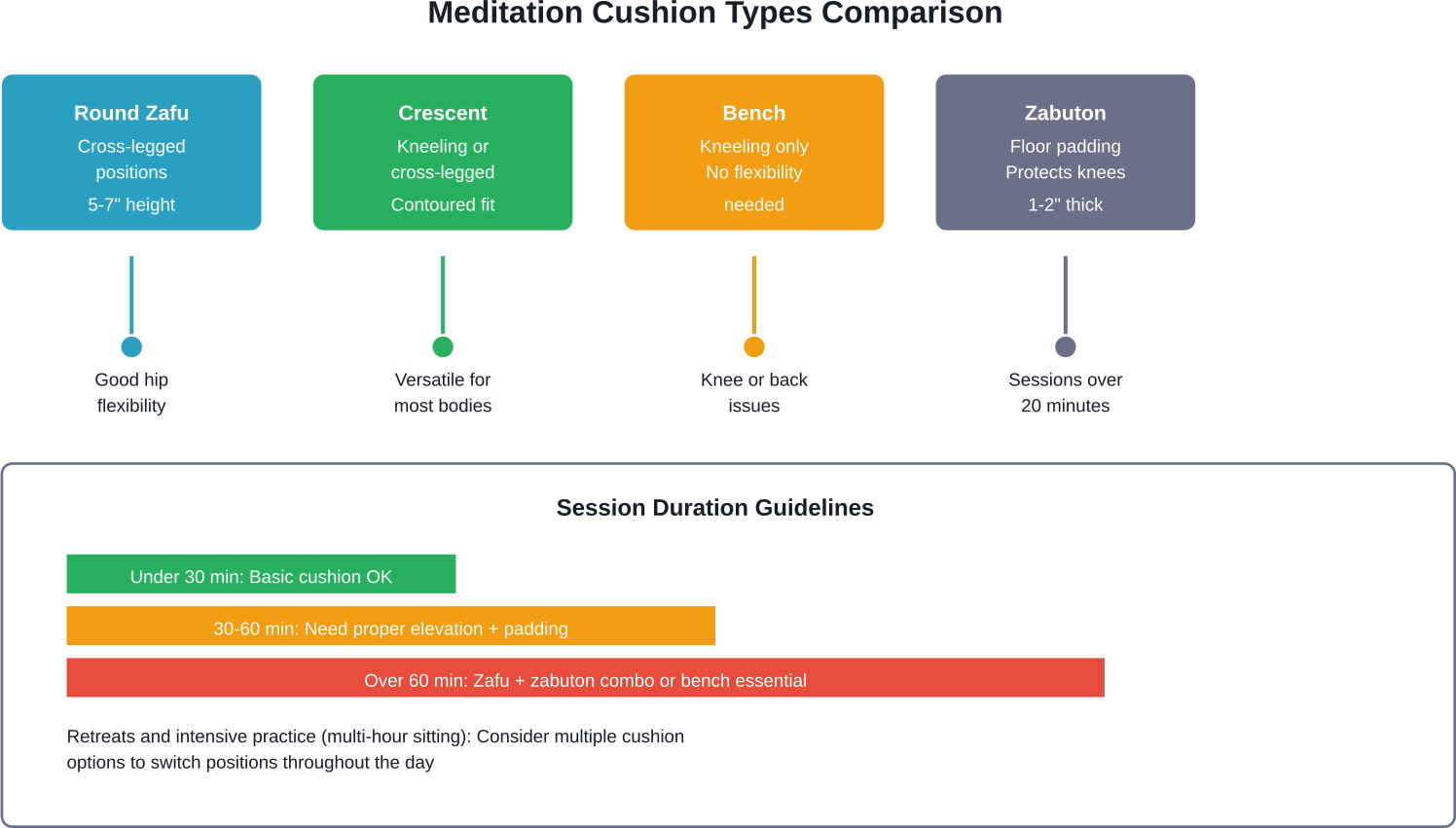
The traditional zafu is a round, pleated cushion typically filled with buckwheat hulls or kapok fiber. It stands about 5-7 inches tall and provides firm, stable support for cross-legged positions.
Zafus work particularly well for practitioners with good hip flexibility who sit in full lotus, half lotus, or Burmese positions. The round shape supports the sitting bones and leaves space for the legs.
Many zafus use organic cotton covers and buckwheat hulls grown in the USA. The filling can be adjusted to customize height and firmness—helpful for finding the exact support level needed.
Crescent or half-moon cushions feature a curved cutout that wraps around the body. This design supports kneeling positions (seiza) particularly well, as the cutout accommodates the legs.
The shape also works for cross-legged sitting, and some practitioners find the contoured support more comfortable than a traditional zafu. Crescents tend to be slightly wider than round cushions, providing a broader base.
Meditation benches aren't cushions in the traditional sense, but they serve the same function. These small wooden or bamboo benches elevate the pelvis while the practitioner kneels, with legs tucked beneath the bench.
Benches work exceptionally well for people with knee issues or limited hip flexibility. They create the necessary pelvic tilt without requiring cross-legged positioning.
A zabuton is a large, flat rectangular cushion that goes underneath a zafu, bench, or other prop. It provides padding for the knees, ankles, and feet—the parts of the body in contact with the hard floor.
While zabutons don't elevate the pelvis themselves, they're essential for longer sessions. Without knee padding, even a well-aligned spine won't prevent discomfort after 20-30 minutes of sitting.
V-shaped cushions and cylindrical bolsters offer alternative support options. V-shaped designs elevate both the pelvis and thighs, providing graduated support that some practitioners find more comfortable than a single-height prop.
Bolsters work well for restorative poses and can be positioned various ways depending on the practice style.
Three primary factors determine which cushion will work best.
Practitioners with open hips and good flexibility can sit comfortably in low positions. A standard zafu provides enough elevation.
Those with tighter hips or knee issues need more height or alternative positioning. Adding extra filling to a zafu, stacking cushions, or switching to a bench accommodates limited flexibility without forcing the body into uncomfortable positions.
The most common meditation postures are full lotus (both feet on opposite thighs), half lotus (one foot on opposite thigh), Burmese (both feet on the floor in front), and seiza (kneeling with hips on heels or a prop).
Cross-legged positions work best with zafus or crescents. Kneeling positions pair well with crescents or benches.
For sessions under 30 minutes, many practitioners can manage with minimal support—even a folded blanket or basic cushion.
Once sessions extend beyond 30 minutes regularly, proper support becomes essential. The body simply can't maintain alignment under strain for extended periods without developing compensatory tension.
For sessions over an hour, a zafu-plus-zabuton combination or a bench with padding becomes nearly mandatory.

A good meditation cushion can make longer meditation sessions much more comfortable by supporting posture and helping you sit still without strain. Many people find that the right setup makes it easier to focus and stay present.
Mesmerize can complement your meditation routine with guided sessions, breathing visuals, and calming soundscapes that help you settle into a relaxed state.
Inside the app you will find:
To add guided visual meditation to your routine, try Mesmerize by downloading it from the App Store or Google Play.
The two most common fill materials are buckwheat hulls and kapok fiber.
Buckwheat hulls offer firm, adjustable support. The hulls shift to conform to body shape while maintaining height. They're heavier and make a subtle rustling sound when moving.
Kapok is a natural fiber that provides softer, quieter support. It compresses more than buckwheat over time and can't be adjusted as easily, but some practitioners prefer the cushioned feel.
Cover material matters for durability and maintenance. Organic cotton covers are breathable and washable. Look for removable covers that can be laundered separately from the fill.
Not necessarily, especially for beginners with short sessions.
Community discussions often mention starting with folded blankets, yoga blocks, or even firm bed pillows to test whether elevation helps before investing in specialized equipment.
But here's what tends to happen: practitioners who meditate daily for sessions longer than 10-15 minutes eventually invest in proper support. The difference in comfort and sustainability is significant enough that the cushion pays for itself in reduced discomfort and more consistent practice.
For practitioners just starting out, beginning with 5-10 minute sessions allows the body to gradually adjust to seated postures. As sessions lengthen and the practice deepens, the need for proper support becomes more apparent.
Several household items can substitute for meditation cushions temporarily:
The limitation of substitutes is durability and shape retention. They work for testing positions and heights, but they don't maintain their form through regular use the way purpose-built cushions do.
The best meditation cushion is the one that supports the body's natural alignment without requiring effort to maintain posture. For most practitioners, that means a zafu or crescent cushion paired with a zabuton for knee protection during sessions longer than 20 minutes.
Start by identifying the most comfortable sitting position, then choose a cushion designed for that posture. Adjust height as needed—more elevation for tight hips, standard height for open hips.
Testing positions with makeshift props before purchasing helps clarify what kind of support works best. But once the practice becomes regular, investing in purpose-built equipment makes a measurable difference in comfort and sustainability.
I canceled my subscription with Headspace and I now pay for Mesmerize instead. I was hooked after the free trial! I love how customizable the sounds, meditations, and visuals are! Using this app has honestly become my favorite part of my day! ☺️ It helps me relax, meditate, visualize, sleep, and it does wonders for my anxiety/phobia/ocd tendencies. Thank you Mesmerize for giving us this amazing mental health tool! I told my therapist about this app and have been telling all my friends too. It’s just so helpful!
This is the second or third app in the mindfulness and meditation realm, and it’s the most scientific approach I have found. I have found these combinations of open monitoring, and focused attention meditation techniques are the most viable for those suffering from more severe forms of sleep, pain, and anxiety dysfunction one may be suffering from. Many of these approaches are used by professionals in a cognitive behavioral therapy setting. A truly complete approach in mindfulness and meditation.
I suffer from clinical depression and sometimes I get into a bad headspace but this app has really helped me whenever I’m in a bad mood I turn on the app listen to some person taking about breathing and look at cool figures on my phone and it makes me feel so much better I would highly recommend this app it’s worth the money
It didn’t take but five minutes of using this app to buy a yearly subscription. Worth it on so many levels. Easy to manipulate to what I like. Massive library of music, videos, etc.
Clear your mind and relax with a unique audio visual meditation experience.


.jpeg)