Discover the best meditation mats with natural materials, proper support, and non-toxic certifications. Compare cork, rubber, and organic options here.
.webp)
Quick Summary: A meditation mat provides cushioning, stability, and comfort for seated meditation practice. The best options combine natural materials like organic cotton, natural rubber, and cork, avoiding toxic PVC and synthetic fillers. Look for mats with proper thickness (4-6mm), non-slip surfaces, and certifications like OEKO-TEX or REACH to ensure safety and support for extended sitting sessions.
Finding the right meditation mat matters more than most people realize. Sitting on a hard floor for extended periods without proper support can lead to discomfort, pins-and-needles, and an achy back—exactly what meditation is supposed to help you avoid.
But here's the thing: not all meditation mats are created equal. Many popular options contain toxic materials that off-gas chemicals while practitioners sit breathing deeply. Others lack the proper thickness or grip to provide real support.
This guide cuts through the marketing claims to identify what actually makes a meditation mat safe, supportive, and worth the investment.
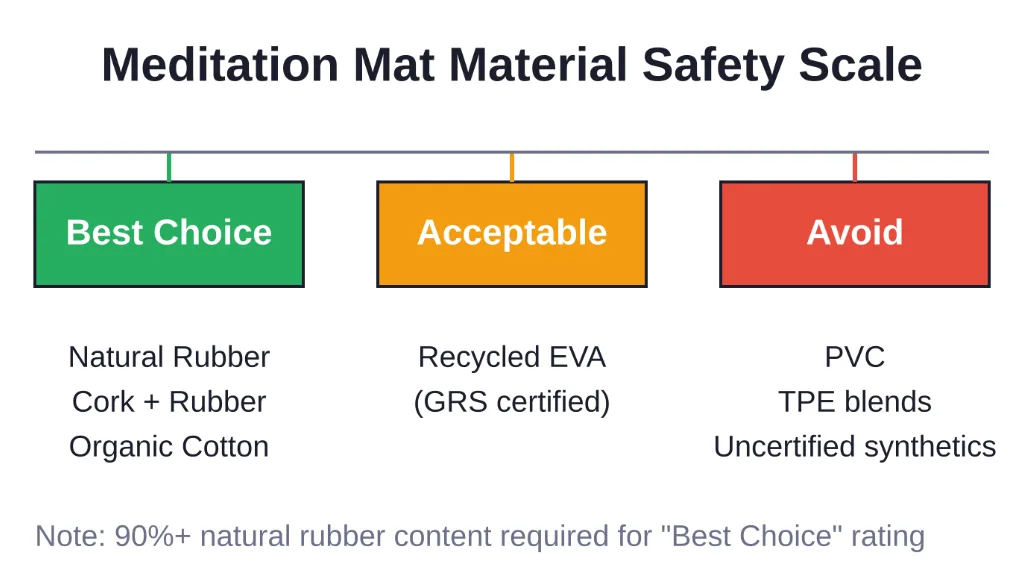
The materials used in meditation mats directly affect both health and performance. Many conventional mats use PVC (polyvinyl chloride), which can release volatile organic compounds during use. Testing shows that these mats often contain phthalates and heavy metals that off-gas over time.
PVC mats may require extended off-gassing periods in ventilated areas before use, though safety timelines vary by product. Even then, questions remain about long-term exposure during repeated use.
Natural rubber can offer grip, cushioning, and durability, though some natural rubber products contain minor synthetic components. But there's a catch: many mats marketed as "natural rubber" actually contain mostly synthetic fillers.
Some so-called natural rubber mats out there have only 30% in actual rubber and 70% synthetic fillers inside. Look for a mat where there is 90% or more rubber.
The Manduka eKO, for example, uses natural rubber with small amounts of cotton and polyester plus non-azo dyes—a composition that balances performance with safety.
Cork surfaces provide natural antimicrobial properties and excellent texture for grip. When combined with natural rubber backing, cork mats offer stability without chemical treatments.
One important care note: cork mats should be rolled with the cork facing outward rather than folded to prevent cracking.
Organic cotton fills provide breathable, chemical-free cushioning. Look for GOTS certification to ensure the cotton was grown and processed without harmful pesticides or dyes.
EVA (ethylene-vinyl acetate) isn't perfect, but it's significantly better than PVC for those on a budget. The Gaiam recycled EVA mat contains 90% EVA recycled content with GRS certification, which ensures recycled materials still meet healthier standards.
EVA mats provide decent cushioning and grip while avoiding the worst chemical concerns of PVC.

Mesmerize combines visual meditation, soundscapes, guided narrations, sleep stories, affirmations, hypnosis, and customizable breathing patterns. It gives users a simple way to settle into a session without building a complicated routine.
For people using a meditation mat, Mesmerize can support seated practice, stretching, breathwork, or quiet relaxation with visuals and audio that help keep attention steady.
Mesmerize can help with:
👉 Download Mesmerize for iPhone or for Android to try visual meditation for free.
Greenwashing runs rampant in the meditation and yoga equipment industry. Brands slap nature imagery and vague claims on products that testing reveals contain problematic chemicals.
Real talk: certifications from independent third parties matter more than marketing language.
This certification tests textiles for harmful substances including phthalates, formaldehyde, and heavy metals. Products that pass can be used directly on skin without health concerns.
For cotton-filled cushions and covers, GOTS certification ensures organic farming practices and prohibits toxic dyes and finishes. This goes beyond just the raw cotton to cover the entire manufacturing process.
When considering recycled materials, GRS certification matters. It verifies that recycled content meets health and environmental standards—critical because recycled materials can sometimes carry contamination from previous uses.
The European Union's REACH regulations restrict thousands of hazardous chemicals. Mats that comply with REACH standards have been independently tested to ensure they don't contain substances of very high concern.
Too thin, and knees and ankles suffer on hard floors. Too thick, and stability disappears, making it difficult to maintain proper posture.
Most practitioners find 4-6mm thickness provides the sweet spot for floor meditation. This cushions contact points without creating an unstable surface.
Traditional Zen practice uses a zabuton (flat mat) under a zafu (round cushion). The zabuton cushions knees and ankles, while the zafu elevates the pelvis to support spinal alignment.
This two-layer system can address different anatomical needs. The zabuton spreads pressure across a larger surface area, while the zafu creates the hip angle that allows the spine to stack naturally.
The best meditation mat depends on practice style, body requirements, and budget. Here's what actually performs well based on material composition and design.
Mats combining natural rubber with organic cotton or cork tops deliver the best performance across metrics. They provide grip, cushioning, and durability without chemical concerns.
Look for products that specify 90% or higher natural rubber content and list all materials transparently. Vague terms like "eco-friendly" or "natural blend" often hide synthetic fillers.
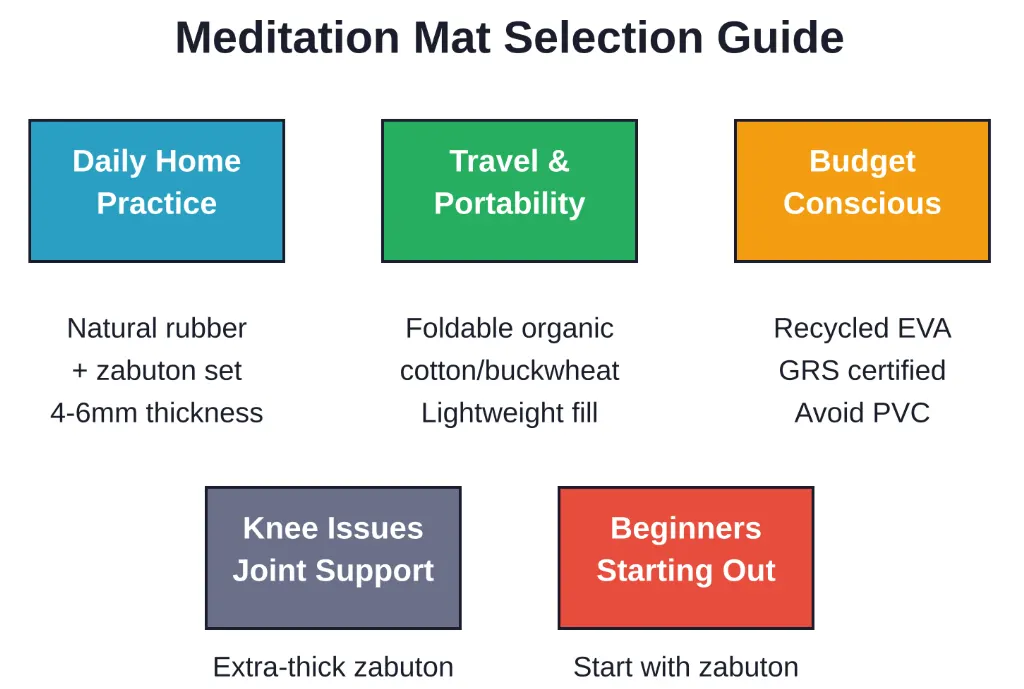
Organic buckwheat or kapok-filled meditation mats can be folded for transport. These work well for practitioners who meditate in different locations or have limited storage space.
Quality organic meditation cushion options with materials including organic buckwheat, organic kapok, and organic cotton hemp blends are available, with renoo brand options starting at $65.
For those prioritizing affordability while still avoiding PVC, recycled EVA mats with GRS certification provide acceptable performance. They won't match natural rubber for longevity, but they're significantly safer than conventional synthetic options.
Practitioners with knee issues need more cushioning than standard mats provide. Extra-thick zabuton mats (2-3 inches) with organic cotton or wool fill distribute pressure more effectively.
These work best when paired with a zafu to maintain proper pelvic elevation while protecting knee joints.
Even experienced practitioners make these errors when selecting meditation support.
Focusing solely on appearance or brand name while ignoring what the mat is actually made from leads to toxic exposure. Always check the full material list and look for third-party certifications.
Travel yoga mats (1-2mm) don't provide adequate cushioning for meditation. The reduced sensation during practice might seem minor, but over weeks and months, insufficient padding causes chronic knee and ankle discomfort.
Body proportions vary significantly. What works for someone with long legs and flexible hips won't necessarily work for someone with different anatomy. If possible, test different heights and firmness levels before committing to a purchase.
For online purchases, start with short meditation sessions (5-10 minutes) to let the body adjust gradually to new support.
Some materials require specific care. Cork shouldn't be folded. Natural rubber degrades in direct sunlight. Organic cotton fills may need spot cleaning rather than washing.
Understanding care requirements before purchase prevents damage and extends product life.
The mat itself is only part of effective meditation support. Proper setup amplifies its benefits.
Hard floors (wood, tile, concrete) require more cushioning than carpet. On hard surfaces, the zabuton-plus-zafu combination becomes essential rather than optional.
Carpeted floors provide some natural cushioning, but dense synthetic carpet can create instability. A thin mat on carpet often works better than no mat at all.
The meditation mat should allow the pelvis to tilt slightly forward, creating the natural lumbar curve. When the pelvis tilts back, the spine rounds and breathing becomes restricted.
If the back rounds even with support, the cushion or mat needs more height. If the knees don't comfortably reach the floor, additional support under the knees helps.
Natural materials benefit from air circulation between uses. Rolling rather than folding preserves material integrity.
New mats—especially natural rubber—often have an initial smell from the materials themselves (not toxic off-gassing like PVC). Airing them in a ventilated space for a day or two before first use helps.
Meditation mat pricing varies widely based on materials, manufacturing, and certification costs.
The $65-$120 range typically offers the best balance of material safety, support quality, and longevity for regular meditation practice.
Natural materials need an adjustment period—both for the mat and the practitioner.
Start with shorter sessions when first using a new mat. Even high-quality support requires the body to adapt to new positioning. Beginning with 5-10 minute sessions and gradually increasing allows muscles and joints to adjust without strain.
Natural rubber and cork surfaces may feel firmer initially than they will after a few weeks of use. The materials compress slightly with repeated use, conforming to body contours.
Organic fill materials like buckwheat also settle over the first few uses. This is normal—the fill is finding its natural arrangement. Fluffing the cushion between uses helps maintain even distribution.
Quality meditation mats last years with proper care, but they don't last forever.
Signs that replacement is needed include: compressed areas that no longer spring back, visible cracking or tearing, persistent odors that don't air out, or loss of grip on the floor.
For natural rubber mats, expect 3-5 years of regular use. Organic cotton fills may need refreshing or replacement after 2-4 years as the fibers compress. Cork surfaces typically last 4-6 years with proper care.
Synthetic materials generally have shorter lifespans, with EVA mats typically needing replacement after 1-3 years of regular use.
The best meditation mat combines material safety with functional support. Natural rubber bases with organic cotton or cork surfaces provide the most reliable performance without chemical exposure concerns.
Look for 90% or higher natural rubber content, legitimate third-party certifications like OEKO-TEX or GOTS, and 4-6mm thickness for proper floor cushioning. The zabuton-plus-zafu combination addresses both pressure point cushioning and spinal alignment needs that most practitioners require.
While quality options require more upfront investment than synthetic alternatives, their superior durability and health benefits deliver better long-term value. Materials matter—especially for a practice centered on breath and presence.
Ready to upgrade your meditation support? Prioritize natural materials with verified certifications over marketing claims. Check official manufacturer sites for current specifications and pricing on the options that match your practice needs.
I canceled my subscription with Headspace and I now pay for Mesmerize instead. I was hooked after the free trial! I love how customizable the sounds, meditations, and visuals are! Using this app has honestly become my favorite part of my day! ☺️ It helps me relax, meditate, visualize, sleep, and it does wonders for my anxiety/phobia/ocd tendencies. Thank you Mesmerize for giving us this amazing mental health tool! I told my therapist about this app and have been telling all my friends too. It’s just so helpful!
This is the second or third app in the mindfulness and meditation realm, and it’s the most scientific approach I have found. I have found these combinations of open monitoring, and focused attention meditation techniques are the most viable for those suffering from more severe forms of sleep, pain, and anxiety dysfunction one may be suffering from. Many of these approaches are used by professionals in a cognitive behavioral therapy setting. A truly complete approach in mindfulness and meditation.
I suffer from clinical depression and sometimes I get into a bad headspace but this app has really helped me whenever I’m in a bad mood I turn on the app listen to some person taking about breathing and look at cool figures on my phone and it makes me feel so much better I would highly recommend this app it’s worth the money
It didn’t take but five minutes of using this app to buy a yearly subscription. Worth it on so many levels. Easy to manipulate to what I like. Massive library of music, videos, etc.
Clear your mind and relax with a unique audio visual meditation experience.


.jpeg)