Learn violet flame meditation step by step—its history, benefits, and a simple technique to transmute negative energy. Start practicing today.

Quick Summary: Violet flame meditation is a visualization practice rooted in esoteric and theosophical traditions, where practitioners imagine a violet-colored fire burning away negative thoughts, emotions, and energetic blocks. It combines breathwork, color visualization, and intention-setting, and most people use it for stress relief, emotional release, and a sense of spiritual reset. There's no scientific research on the "transmuting" claims specifically, but the underlying tools—visualization, breath control, focused attention—are well supported by meditation research generally.
Somewhere between a prayer and a breathing exercise sits the violet flame meditation. It's one of those practices that sounds almost too mystical to take seriously, until someone actually tries it during a rough week and notices they feel lighter afterward. That's usually how people find it—not through a guru, but through a late-night search for something to quiet a spinning mind.
This guide covers where the practice comes from, what's actually happening when someone does it, and a clear technique anyone can use tonight. No chanting required, no prior experience needed.
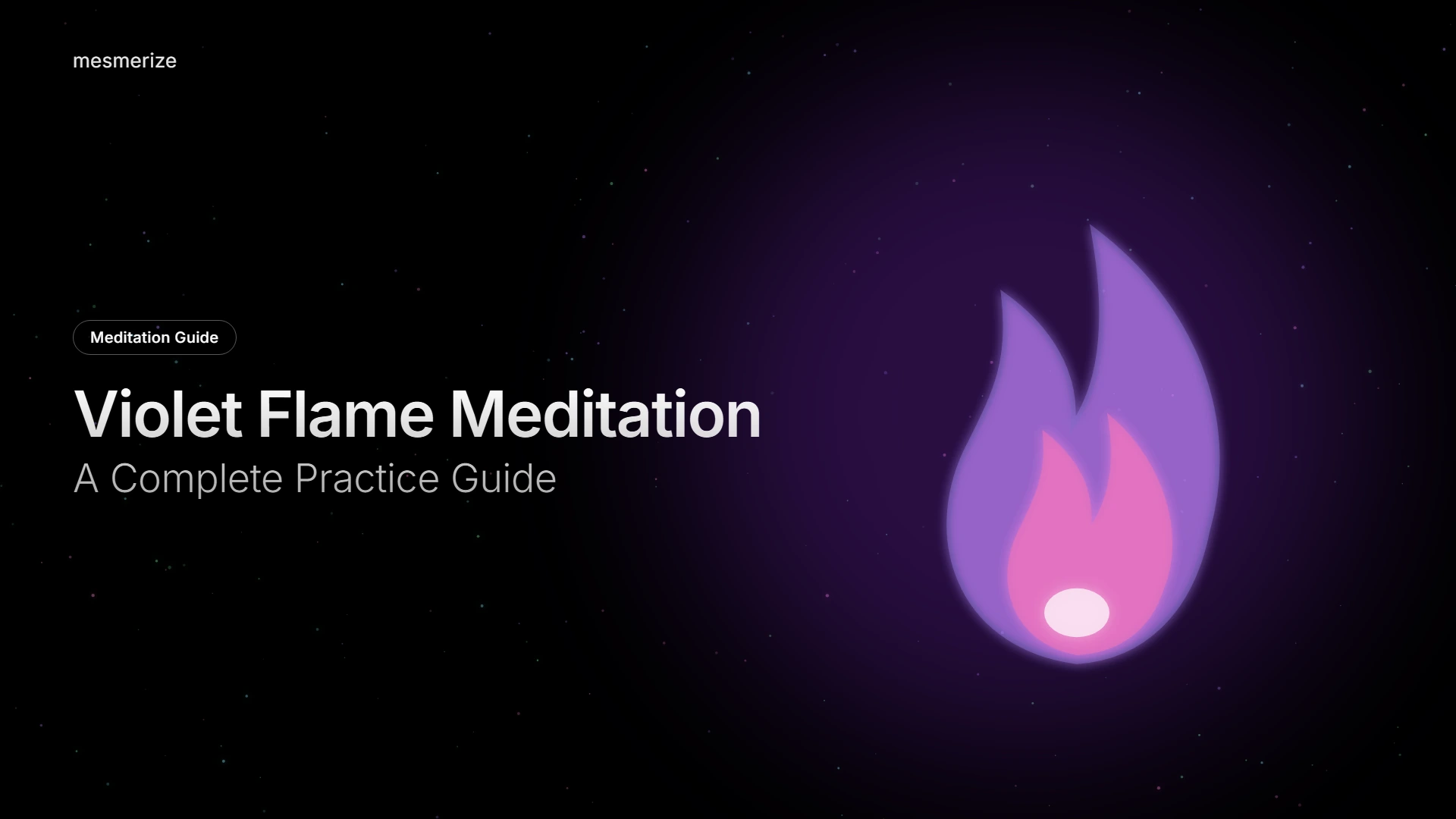
The violet flame is described, in various esoteric traditions, as a spiritual energy or "fire" of transmutation—something that converts dense, negative, or stuck energy into something lighter and more usable. It's not a flame in the literal sense. It's a visualized color and sensation, used the way other traditions use a mantra or a breath count: as an anchor for the mind.
The idea traces back largely to Theosophical and Ascended Master teachings from the early-to-mid 20th century, where it was associated with a being often called Saint Germain. Later New Age and metaphysical communities adopted and adapted it, which is why descriptions of the violet flame vary quite a bit depending on which book or teacher someone encounters first. Some frame it as angelic. Others frame it as a universal energy field anyone can access regardless of belief system.
Strip away the mythology, though, and the mechanics look familiar to anyone who's done color visualization or body-scan meditation: picture a color, pair it with breath, direct it toward a specific intention. The violet flame tradition just wraps that mechanic in a specific story.
Violet sits at the end of the visible light spectrum, and in many color-symbolism systems it's linked to the crown chakra—associated with higher awareness, intuition, and spiritual connection. Practitioners often describe it as a "high vibration" color, one step past blue and indigo. Whether or not that framing holds up scientifically, violet does tend to read as calming and slightly otherworldly, which may be part of why it was chosen as the visual centerpiece of this particular practice.
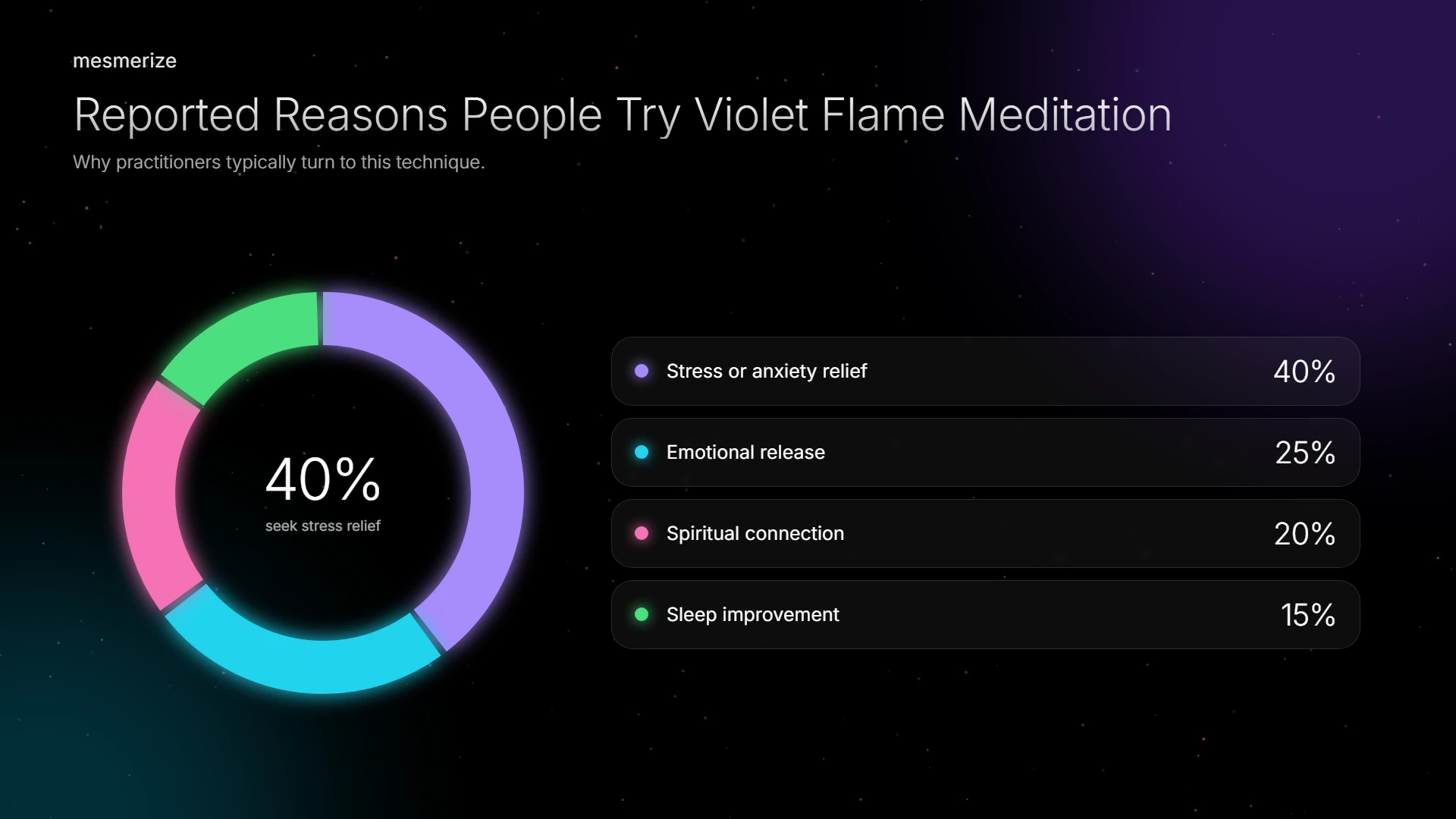
People come to this practice for a fairly consistent set of reasons. Most aren't trying to become metaphysical scholars—they want relief from something specific.
Here's the thing though—none of those outcomes require belief in literal transmutation. The visualization itself, paired with slow breathing, does a lot of the heavy lifting. That's not a knock on the tradition; it's just useful context for anyone wondering whether this is "real."
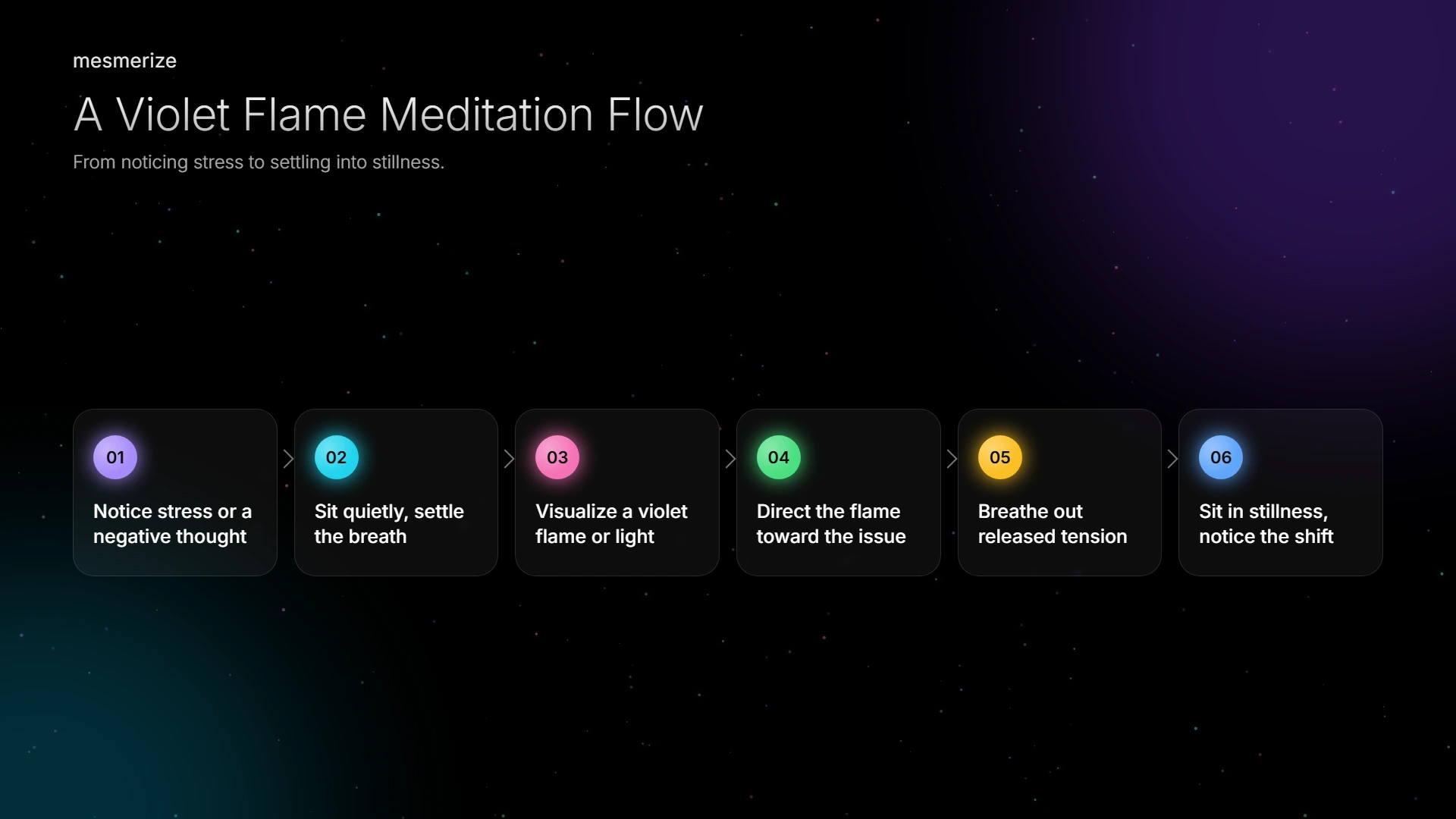
There's no single "correct" method—different teachers sequence it slightly differently—but most versions share the same core steps. Fifteen minutes is enough for a first attempt; some people extend it to twenty or thirty once it feels familiar.
Sit somewhere quiet, spine reasonably upright, hands resting on the knees or in the lap. Dim lighting helps, and so does silence—though some people prefer a slow instrumental track in the background. A consistent spot, used only for practice, tends to make the ritual easier to drop into over time.
Close the eyes. Take five to ten slow breaths, inhaling for a count of four, holding briefly, exhaling for a count of six. The goal here isn't the flame yet—it's just calming the nervous system enough that visualization feels natural rather than forced.
Picture a violet-colored fire, somewhere between magenta and deep purple, starting at the crown of the head or just in front of the body. It doesn't need to look like a literal fire—some people see it more as a glow, a mist, or a pulsing light. Let it build gradually rather than forcing a vivid image immediately.
Bring to mind the specific thing being released—a worry, an old resentment, a tense situation at work. Imagine the violet flame surrounding that thought or feeling, and picture it dissolving, loosening, or burning down to nothing. Some practitioners repeat a simple phrase here, such as "I release this now," though the words matter far less than the intention behind them.
Expand the visualization so the violet light moves through the whole body, head to feet, clearing out anything left over. This stage tends to feel the most physically relaxing—shoulders drop, jaw unclenches, breathing slows further on its own.
Let the image fade naturally rather than snapping out of it. Sit for another minute or two in plain stillness before opening your eyes. Journaling a sentence or two afterward—what came up, what shifted—helps a lot of people track whether the practice is actually doing anything over time.
For those who find pure visualization difficult to sustain alone, pairing the technique with a visual meditation experience can help hold attention steady; an app like Mesmerize uses moving light and color patterns that work well alongside this kind of color-based practice.
Violet flame meditation uses the image of a violet flame as a symbol of spiritual transformation and renewal. If you enjoy visualization-based practices, we offer another way to work with visual focus at Mesmerize. Our app combines moving patterns, guided audio, and calming music to support personal reflection. You can use these tools alongside your personal violet flame practice, while following its specific visualization techniques separately.
You can explore:
Download our Mesmerize app on iOS or Android and discover new ways to combine visual focus, affirmations, and relaxation.
It helps to see how this sits next to more familiar styles, especially for anyone new to meditation generally and unsure where to start.
None of these are mutually exclusive. A lot of practitioners blend violet flame visualization with a standard mindfulness sit, or use a short 5-minute meditation as a warm-up before going deeper into the flame work.
It's worth being direct here: there's no peer-reviewed research specifically testing "violet flame transmutation." That claim sits in the spiritual and metaphysical domain, not the clinical one, and it's best treated as such.
What does have research behind it is the underlying toolkit the practice borrows from—visualization, slow diaphragmatic breathing, and sustained focused attention. These are well-studied components of general meditation practice and are consistently linked to lower perceived stress and improved emotional regulation. For readers who want the broader evidence base on meditation and visual techniques specifically, the research behind visual meditation is a useful place to look.
So the honest framing is this: whether or not someone believes in a literal spiritual flame, the practice uses mechanisms known to calm the body and mind. Both things can be true at once.
A few things tend to trip up beginners, and most of them are easy to fix once named.
Consistency matters more than duration. A short daily session tends to outperform an occasional long one, especially in the first few weeks of building the habit. Morning practice tends to set a calmer tone for the day; evening practice tends to help process whatever built up during it.
For anyone managing high stress or racing thoughts at bedtime, pairing a short flame visualization with a dedicated sleep meditation session can smooth the transition into rest. And for daytime anxiety spikes, a brief 10-minute anxiety meditation can serve a similar grounding function without needing the full ritual.
Violet flame meditation isn't going to suit everyone, and that's fine. But for people drawn to visualization-based practice, it offers a simple, repeatable structure: breathe, visualize, release, repeat. The mythology is optional. The mechanics—color, breath, intention—are what actually do the work, and those hold up regardless of belief system.
Anyone wanting a more structured, guided entry point into visualization-based practice can explore Mesmerize's meditation plans or try a focus-oriented session through the focus and concentration library before working up to longer, self-directed sessions like this one.
I canceled my subscription with Headspace and I now pay for Mesmerize instead. I was hooked after the free trial! I love how customizable the sounds, meditations, and visuals are! Using this app has honestly become my favorite part of my day! ☺️ It helps me relax, meditate, visualize, sleep, and it does wonders for my anxiety/phobia/ocd tendencies. Thank you Mesmerize for giving us this amazing mental health tool! I told my therapist about this app and have been telling all my friends too. It’s just so helpful!
This is the second or third app in the mindfulness and meditation realm, and it’s the most scientific approach I have found. I have found these combinations of open monitoring, and focused attention meditation techniques are the most viable for those suffering from more severe forms of sleep, pain, and anxiety dysfunction one may be suffering from. Many of these approaches are used by professionals in a cognitive behavioral therapy setting. A truly complete approach in mindfulness and meditation.
I suffer from clinical depression and sometimes I get into a bad headspace but this app has really helped me whenever I’m in a bad mood I turn on the app listen to some person taking about breathing and look at cool figures on my phone and it makes me feel so much better I would highly recommend this app it’s worth the money
It didn’t take but five minutes of using this app to buy a yearly subscription. Worth it on so many levels. Easy to manipulate to what I like. Massive library of music, videos, etc.
Clear your mind and relax with a unique audio visual meditation experience.