Discover the best meditation music backed by neuroscience research. From binaural beats to nature sounds—find what actually works for deeper practice.
.webp)
The best meditation music includes binaural beats, nature sounds, ambient instrumentals, and specific frequencies like 528 Hz. Research from NIH shows music-based interventions help reduce anxiety and improve cognitive function, with effectiveness varying by personal preference and meditation style.
Finding the right meditation music can transform a wandering mind into a focused, calm state. But with endless playlists claiming to be "the best," which sounds actually support deeper meditation?
The science is clear. Music activates specific brain regions tied to emotion and cognition. According to research published by the National Institutes of Health, meditation combined with music improves memory and cognitive function in adults experiencing cognitive decline.
Sound doesn't just enter through the ears. It creates vibrations the body perceives physically, influencing both neural pathways and cardiac mechanisms.
NIH research shows music-based interventions help relieve pain and reduce anxiety across various health conditions. Cortical auditory representation in musicians is 25% greater for piano tones compared to non-musicians, demonstrating how regular exposure strengthens brain responses.
Here's the thing though—not all meditation music works the same way. The type matters.
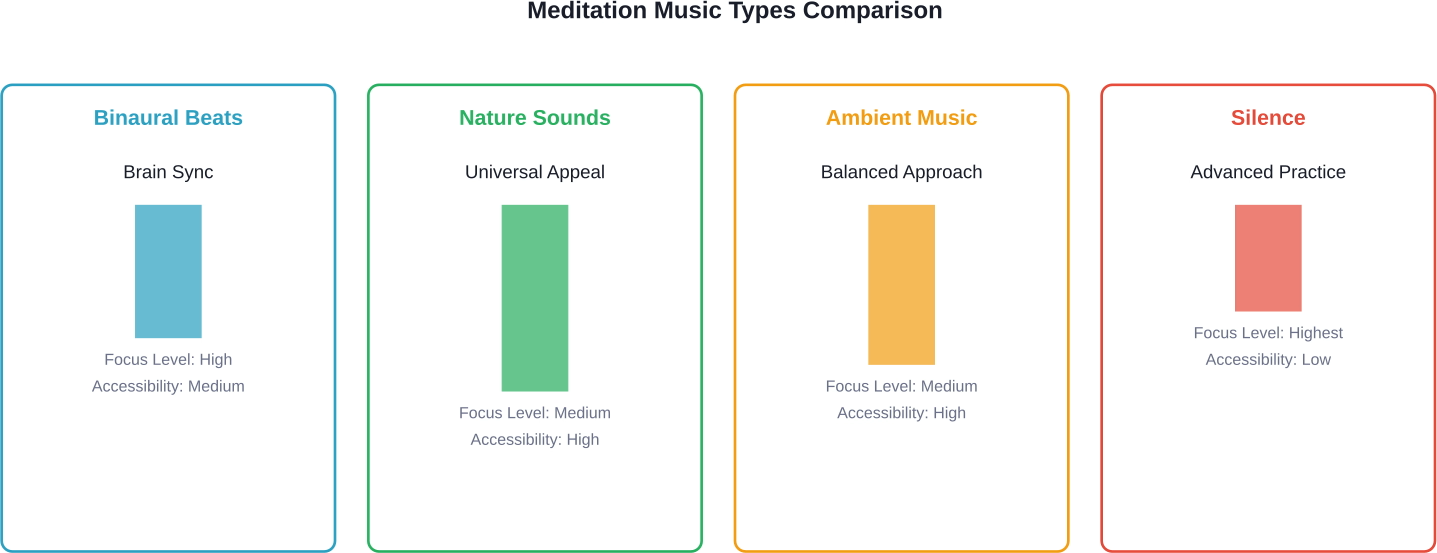
These use slightly different frequencies in each ear to create a perceived third tone. The brain synchronizes to this frequency, potentially inducing relaxation states. Individual responses to binaural beats vary—some practitioners report benefits while others find them distracting.
Ocean waves, rainfall, forest ambience. These natural soundscapes mask intrusive thoughts without demanding attention. They're predictable enough to fade into background awareness.
Slow-tempo compositions using piano, flute, or singing bowls create sonic environments without rhythmic complexity. The absence of lyrics prevents linguistic processing that can interrupt meditation.
Music tuned to 528 Hz appears frequently in meditation playlists. While scientific evidence for specific healing frequencies remains limited, some individuals report subjective benefits from music tuned to particular frequencies.
Research from the National Center for Complementary and Integrative Health confirms music-based interventions reduce anxiety and depressive symptoms. But personal preference matters significantly.
Research indicates that music effectiveness for stress reduction varies based on individual preference rather than objective musical qualities. What relaxes one person may distract another.
The key? Experimentation. Track how different sounds affect meditation depth over several sessions.
YouTube hosts extensive free collections, though quality varies wildly. Channels like "Meditation Relax Music" offer hours of curated tracks. Spotify provides structured playlists like "Best Meditation Music Collection" for convenient access.
Real talk: many practitioners eventually graduate to silence. Music serves as training wheels—helpful initially, but optional once focus strengthens.

Meditation music is often used to create a calm atmosphere and help the mind slow down. Soft ambient sounds and gentle rhythms can make meditation sessions more relaxing and easier to maintain.
Mesmerize combines calming music with visual meditation patterns and guided breathing exercises that support relaxation and mindfulness.
The app offers:
If you want to experience meditation music together with visual guidance, try Mesmerize by downloading it from the App Store or Google Play.
Don't pick music with sudden volume changes or unpredictable elements. The brain stays alert monitoring for changes, defeating the purpose.
Avoid tracks with lyrics in languages spoken fluently. Linguistic processing activates brain regions incompatible with deep meditation states.
Skip overly complex compositions. Meditation music should create space, not demand attention.
The best meditation music is ultimately personal. What neuroscience reveals is that music activates powerful brain mechanisms—but individual response determines effectiveness.
Start with nature sounds or simple ambient tracks. Notice which sounds support deeper states versus creating distraction. Adjust accordingly.
And remember: the goal isn't finding perfect music. The goal is cultivating attention. Music is just one tool among many.
I canceled my subscription with Headspace and I now pay for Mesmerize instead. I was hooked after the free trial! I love how customizable the sounds, meditations, and visuals are! Using this app has honestly become my favorite part of my day! ☺️ It helps me relax, meditate, visualize, sleep, and it does wonders for my anxiety/phobia/ocd tendencies. Thank you Mesmerize for giving us this amazing mental health tool! I told my therapist about this app and have been telling all my friends too. It’s just so helpful!
This is the second or third app in the mindfulness and meditation realm, and it’s the most scientific approach I have found. I have found these combinations of open monitoring, and focused attention meditation techniques are the most viable for those suffering from more severe forms of sleep, pain, and anxiety dysfunction one may be suffering from. Many of these approaches are used by professionals in a cognitive behavioral therapy setting. A truly complete approach in mindfulness and meditation.
I suffer from clinical depression and sometimes I get into a bad headspace but this app has really helped me whenever I’m in a bad mood I turn on the app listen to some person taking about breathing and look at cool figures on my phone and it makes me feel so much better I would highly recommend this app it’s worth the money
It didn’t take but five minutes of using this app to buy a yearly subscription. Worth it on so many levels. Easy to manipulate to what I like. Massive library of music, videos, etc.
Clear your mind and relax with a unique audio visual meditation experience.


.jpeg)