Discover the best meditation podcasts for beginners and experts. Science-backed picks for sleep, anxiety, mindfulness, and daily practice in 2026.
.webp)
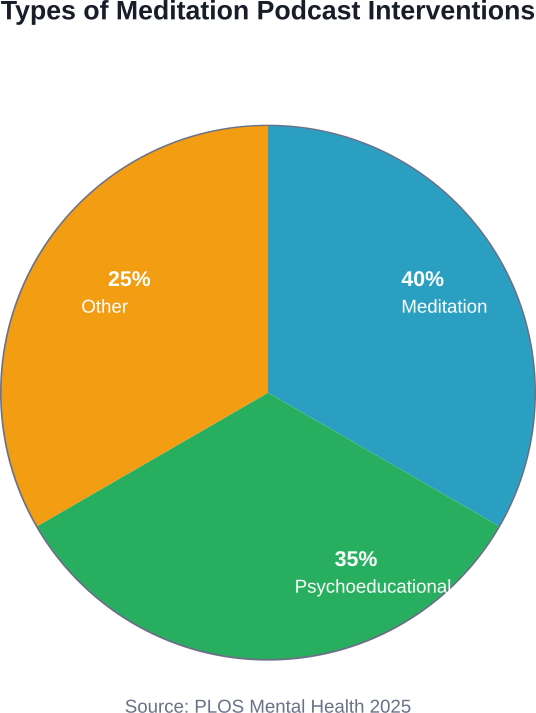
The best meditation podcasts include The Daily Meditation Podcast for guided sessions, Ten Percent Happier for secular mindfulness, and Meditation Minis for quick stress relief. According to a PLOS Mental Health scoping review examining 20 studies, meditation and mindfulness exercises represented 40% of the included podcast-based mental health interventions, demonstrating their effectiveness for reducing anxiety and improving sleep.
Podcasts have become one of the most accessible ways to build a meditation practice. Whether commuting, winding down before bed, or taking a midday break, meditation podcasts offer guided sessions that fit seamlessly into daily routines.
But here's the thing—not all meditation podcasts deliver the same experience. Some focus on quick stress relief. Others dive deep into mindfulness philosophy. And finding the right match makes all the difference in whether the practice sticks.
Research published in Digital Health (2024) shows that podcast engagement studies (n=7) reported participation rates between 62% and 83%, with an average weekly listening duration of 103–124 minutes. That's significantly higher than typical meditation app engagement, where fewer than 20% of users continue beyond seven days.

Meditation podcasts are a popular way to learn new techniques and listen to guided sessions during the day. They can help beginners build a regular practice and discover different meditation styles.
Mesmerize offers guided meditation sessions supported by slow visual animations and calming sounds that help you stay focused during practice.
The app includes:
If you want a more interactive meditation experience, try Mesmerize by downloading it from the App Store or Google Play.
These podcasts consistently deliver high-quality guided meditations across various styles and lengths. They've earned their spots through community recommendations and sustained listener engagement.
This podcast publishes new guided meditations every day, making it ideal for building a consistent practice. Episodes average 12 minutes—short enough to fit into any schedule but long enough to create genuine relaxation.
The content focuses on practical stress reduction rather than spiritual philosophy. No chanting. No incense references. Just straightforward mindfulness techniques that work in office chairs and living rooms alike.
When time is the limiting factor, Meditation Minis delivers. Episodes run around 10 minutes, targeting specific situations like anxiety before meetings, trouble falling asleep, or midday energy crashes.
The host uses a conversational tone that feels more like a friend guiding a breathing exercise than a formal instructor. Community discussions frequently mention this podcast as the gateway that made meditation feel accessible.
For listeners who prefer evidence-based approaches without religious or mystical elements, Ten Percent Happier hits the mark. The podcast features interviews with meditation teachers, neuroscientists, and practitioners who explain mindfulness through a secular lens.
Episodes vary in length from short guided sessions to hour-long conversations. That variety means finding episodes that match current needs rather than forcing a one-size-fits-all approach.
Sleep-focused meditation podcasts use specific techniques designed to quiet racing thoughts and trigger the body's natural sleep response. The pacing, voice tone, and background sounds differ significantly from daytime meditation content.
Episodes feature extended guided meditations specifically structured to help listeners fall asleep. The host's voice gradually slows throughout each session, mirroring the natural descent into sleep.
Many episodes include nature sounds or ambient music designed to mask environmental noise without becoming distracting. Average episode length runs 30-45 minutes—long enough to outlast the time most people need to fall asleep.
This podcast combines meditation techniques with bedtime stories for adults. Think guided relaxation followed by calming narratives about peaceful scenarios—walks through lavender fields, rainy cabin evenings, quiet bookshops.
The format works because it gives the mind something gentle to focus on rather than cycling through the day's stressors or tomorrow's to-do list.
According to a PLOS Mental Health scoping review examining 20 studies, meditation and mindfulness exercises represented 40% of the included podcast-based mental health interventions. That concentration reflects both demand and effectiveness.
Anxiety-specific podcasts teach techniques for managing worry, reducing physiological stress responses, and building emotional resilience. The approaches vary from cognitive behavioral strategies to body-focused awareness practices.
While not exclusively meditation-focused, this podcast integrates guided relaxation exercises with education about anxiety mechanisms. Understanding why anxiety happens often reduces its power.
Episodes explain concepts like the fight-or-flight response, catastrophic thinking patterns, and the role of breathing in nervous system regulation. Then they offer practical meditation techniques targeting those specific issues.
This straightforward podcast delivers exactly what the title promises. Short guided meditations specifically designed to interrupt anxiety spirals and restore calm.
Episodes average 15 minutes and focus on grounding techniques, progressive muscle relaxation, and mindful breathing. The content works for both acute anxiety attacks and general stress management.
Starting a meditation practice can feel intimidating. These podcasts remove barriers by explaining basic concepts, offering shorter sessions, and setting realistic expectations.
This podcast assumes zero prior knowledge. Early episodes explain what meditation actually is, why it matters, and how to sit comfortably. Later episodes introduce different techniques gradually.
The pacing matters here. Instead of throwing listeners into 30-minute silent sits, sessions start at five minutes and build from there. That progression prevents the overwhelm that causes most beginners to quit.
Each episode tackles one specific aspect of mindfulness practice. Breathing awareness. Body scans. Noting thoughts without judgment. The focused approach helps build skills systematically rather than randomly.
The host addresses common struggles explicitly—mind wandering, physical discomfort, frustration with "not doing it right." Hearing that everyone faces these challenges normalizes the experience.
For listeners who want to understand the research behind meditation, these podcasts explore neuroscience, psychology studies, and clinical applications.
Episodes feature interviews with researchers studying meditation's effects on the brain, immune system, and mental health. Topics range from neuroplasticity to telomere length to emotional regulation.
The content balances accessibility with rigor. Researchers explain their work in plain language, but the discussions don't shy away from methodology, limitations, and nuanced findings.
This podcast reviews recent studies published in peer-reviewed journals. Each episode covers 2-3 papers, explaining the research questions, methods, results, and practical implications.
The format works well for people who want evidence-based information but don't have time to read journal articles themselves. The host translates academic language into actionable insights.
Sometimes learning from other practitioners' experiences provides as much value as guided meditations. These podcasts feature conversations with meditation teachers, mindfulness researchers, and long-term practitioners.
While not exclusively about meditation, this podcast frequently explores mindfulness, contemplative practice, and spiritual inquiry. Guests include meditation teachers like Tara Brach, neuroscientists, poets, and philosophers.
The conversations go deeper than typical interviews. Episodes run 50-60 minutes, allowing complex ideas to develop fully rather than reducing everything to soundbites.
Focused specifically on mindfulness applications, this podcast interviews people using meditation in healthcare, education, business, and personal life. The variety of contexts demonstrates how widely applicable these practices are.
Episodes often include practical takeaways—specific techniques guests use, common mistakes they've learned to avoid, and adaptations for different situations.
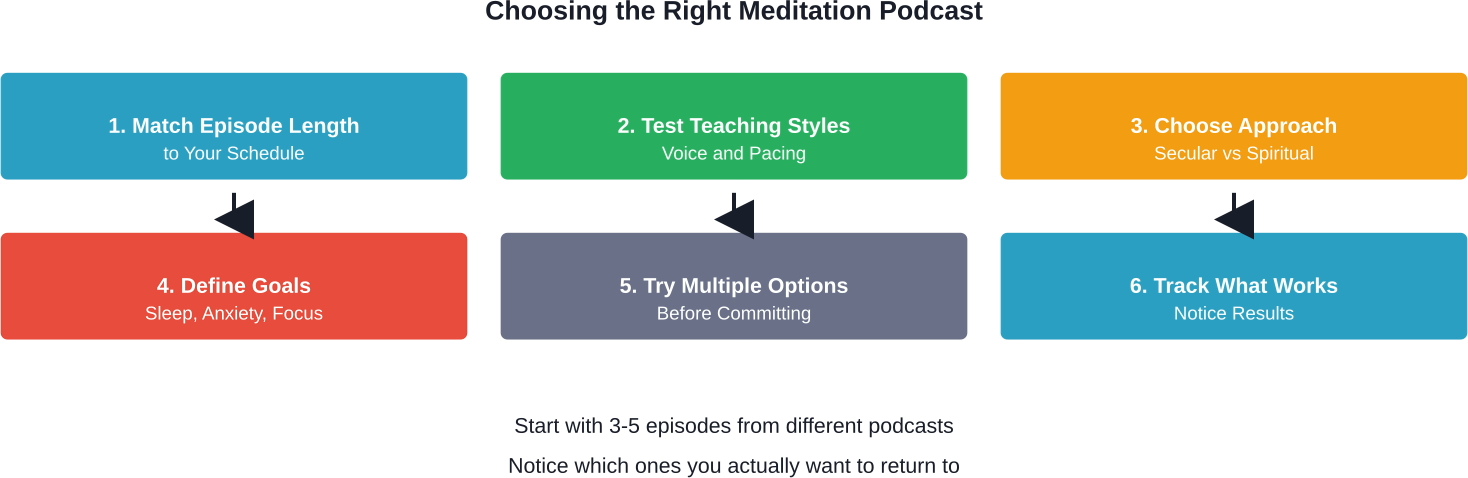
The "best" meditation podcast depends entirely on individual goals, schedule constraints, and personal preferences. Here's how to narrow down options effectively.
Consistency matters more than duration. A 10-minute daily practice beats sporadic 45-minute sessions. Look for podcasts with episode lengths that fit realistically into existing routines.
Morning commutes? Lunch breaks? Before bed? Identify the actual windows available, then find podcasts that match those time slots.
Some teachers speak slowly and softly. Others use a more energetic, conversational tone. Background music ranges from ambient sounds to complete silence.
Listen to sample episodes from several podcasts. The voice and pacing need to feel comfortable, not grating. Compatibility matters more than objective quality ratings.
Many meditation traditions have religious roots. Some podcasts embrace that heritage explicitly. Others strip away spiritual language entirely, focusing on clinical benefits.
Neither approach is inherently better. But the wrong match can create friction that undermines practice. Secular practitioners often bounce off dharma talks about karma and rebirth. Some spiritually-oriented listeners may prefer podcasts with spiritual framing over purely clinical language.
Even with excellent podcast content, certain approaches undermine results. These mistakes show up repeatedly in community discussions.
Trying different podcasts makes sense initially. But constantly switching prevents the benefits that come from consistent practice with familiar guidance.
Meditation skills develop through repetition. Jumping to a new podcast every week means constantly starting over with unfamiliar techniques and teaching styles.
Boredom during meditation isn't a bug—it's often where the real work happens. The urge to skip an episode because it seems boring or slow usually indicates hitting something worth exploring.
That said, genuine incompatibility differs from temporary discomfort. If a podcast consistently creates agitation or confusion after multiple sessions, try a different one.
Meditation requires attention. Playing a podcast while scrolling social media or doing dishes defeats the purpose entirely.
The practice works by training attention. Treating meditation audio as background soundtrack means missing the entire point while technically "doing" meditation.
Most meditation podcasts available through standard platforms like Spotify and Apple Podcasts are completely free. The ad-supported model provides creators with revenue while keeping content accessible.
Some podcasters offer premium tiers with bonus content, ad-free listening, or extended meditations. But the free versions typically include everything needed for an effective practice.
Free meditation podcasts have expanded access compared to historical models that typically required paid retreats or formal teacher relationships.
Meditation podcasts remove the traditional barriers that prevented many people from developing a practice. No expensive apps. No studio memberships. No pressure to sit on a cushion for an hour.
The research backs up what community discussions reveal: podcast-based meditation interventions achieve engagement rates far exceeding meditation apps, with listeners averaging nearly two hours of weekly practice. That consistency drives the benefits—reduced anxiety, improved sleep, better emotional regulation.
But effectiveness depends on matching podcast style to individual needs. The Daily Meditation Podcast works brilliantly for people who want structured daily guidance. Ten Percent Happier serves listeners seeking secular, science-based approaches. Meditation Minis delivers quick relief for busy schedules.
Start by sampling 3-5 podcasts across different categories. Notice which voices feel comfortable, which teaching styles resonate, which episode lengths fit realistically into daily life. Then commit to one podcast for at least a month.
Consistency beats perfection. A 10-minute daily practice with a podcast that feels accessible will produce better results than sporadic 45-minute sessions with "the best" podcast that never quite fits into the schedule.
The best meditation podcast isn't the one with the most downloads or the fanciest production. It's the one that gets played regularly, that creates a practice sustainable enough to become part of daily life rather than another abandoned self-improvement project.
Pick one. Press play. Notice what happens when meditation becomes as routine as the morning news podcast.
I canceled my subscription with Headspace and I now pay for Mesmerize instead. I was hooked after the free trial! I love how customizable the sounds, meditations, and visuals are! Using this app has honestly become my favorite part of my day! ☺️ It helps me relax, meditate, visualize, sleep, and it does wonders for my anxiety/phobia/ocd tendencies. Thank you Mesmerize for giving us this amazing mental health tool! I told my therapist about this app and have been telling all my friends too. It’s just so helpful!
This is the second or third app in the mindfulness and meditation realm, and it’s the most scientific approach I have found. I have found these combinations of open monitoring, and focused attention meditation techniques are the most viable for those suffering from more severe forms of sleep, pain, and anxiety dysfunction one may be suffering from. Many of these approaches are used by professionals in a cognitive behavioral therapy setting. A truly complete approach in mindfulness and meditation.
I suffer from clinical depression and sometimes I get into a bad headspace but this app has really helped me whenever I’m in a bad mood I turn on the app listen to some person taking about breathing and look at cool figures on my phone and it makes me feel so much better I would highly recommend this app it’s worth the money
It didn’t take but five minutes of using this app to buy a yearly subscription. Worth it on so many levels. Easy to manipulate to what I like. Massive library of music, videos, etc.
Clear your mind and relax with a unique audio visual meditation experience.


.jpeg)