Discover the best meditation positions for your practice. From chair sitting to lotus pose, find the posture that keeps you comfortable and focused.
.webp)
The best meditation position is one that keeps the spine aligned, supports stable breathing, and remains comfortable for the duration of practice. Common positions include sitting in a chair, cross-legged on the floor, kneeling with a bench, lying down, or even standing and walking—each offering unique benefits for different body types and meditation goals.
The search for the perfect meditation position causes more anxiety than it solves. Beginners especially worry they're doing it wrong if they can't sit cross-legged without their legs screaming in protest.
Here's the truth: there's no single "correct" way to position yourself for meditation.
According to the National Center for Complementary and Integrative Health (NCCIH), yoga as practiced in the United States typically emphasizes physical postures (asanas), breathing techniques (pranayama), and meditation (dyana). What matters isn't achieving some Instagram-worthy pose—it's maintaining a posture that supports alertness without creating physical distraction.
This guide covers seven meditation positions that work for different bodies, flexibility levels, and practice styles. Some require nothing but a wall. Others benefit from props like cushions or benches. All of them support the core requirements: spinal alignment, stable breathing, and sustainable comfort.
The meditation position serves one primary function: keeping practitioners alert while minimizing physical discomfort that pulls attention away from the practice itself.
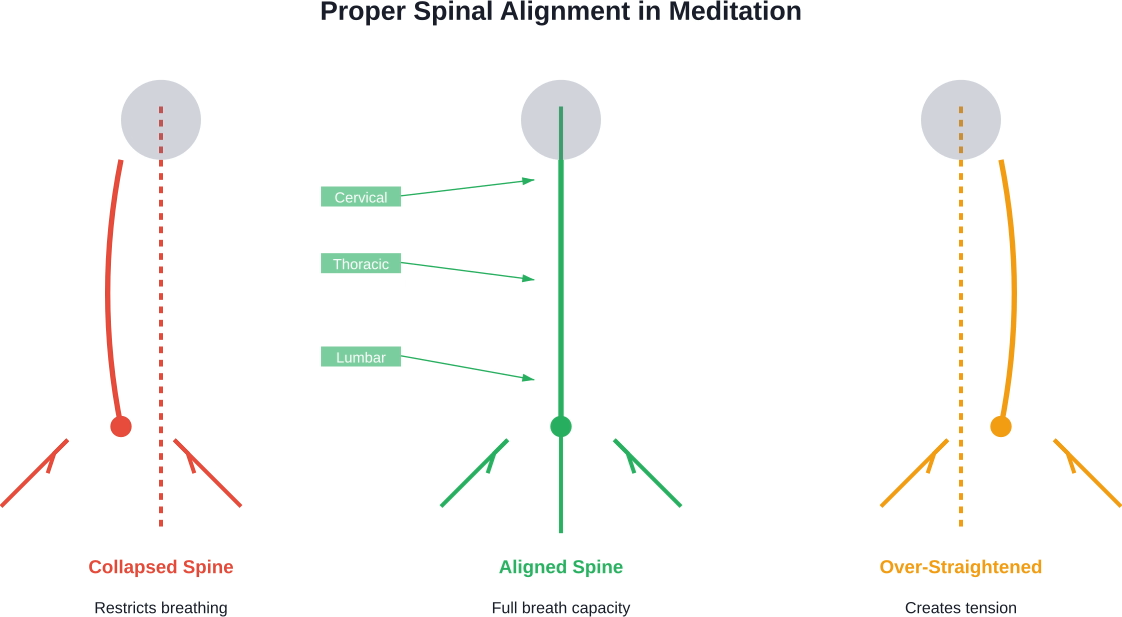
Traditional texts emphasize posture because a collapsed spine restricts breathing. Shallow breathing triggers stress responses that counteract meditation's calming effects. But rigid, forced positioning creates tension that's equally distracting.
The sweet spot? A posture that feels both stable and relaxed.
Harvard Health notes that most yoga classes range from 60 to 90 minutes long, though practicing for just 10 to 20 minutes several times weekly still provides benefits. For meditation specifically, starting with 5 to 10 minutes and gradually increasing duration allows the body to adapt to holding position.
Community discussions reveal common struggles: discomfort from insufficient cushioning, spinal misalignment causing breathing difficulties, and numbness in legs during longer sessions. These issues aren't signs of weakness—they're feedback that the current position needs adjustment.
Each position offers distinct advantages. The goal isn't mastering all seven but finding one or two that work for individual body mechanics and meditation style.
Chair meditation removes flexibility barriers entirely. It's accessible, stable, and perfectly valid for serious practice.
Sit toward the front edge of a sturdy chair with feet flat on the floor, hip-width apart. The spine stays upright without pressing against the backrest—though using back support is fine for those who need it.
Hands rest on thighs or in the lap. Shoulders relax downward, away from ears.
This position works exceptionally well for longer sessions, older practitioners, or anyone with knee, hip, or ankle limitations. There's zero shame in chair meditation. It's simply smart adaptation.
This simple cross-legged position represents the entry point for floor-based meditation. Each shin crosses in front of the other, with knees falling outward and feet tucked beneath the opposite thigh.
A cushion or folded blanket under the sit bones elevates the hips above the knees, reducing strain on the lower back and allowing the spine to maintain natural alignment. Without elevation, the pelvis tilts backward, causing the spine to round.
Hands rest on knees or in the lap. The position should feel stable enough to hold for several minutes without shifting.
For those new to floor sitting, this pose builds hip flexibility gradually without forcing range of motion the body hasn't developed yet.
These variations add stability by placing one or both feet onto the opposite thigh rather than tucking them underneath.
Quarter lotus: One foot rests on the opposite calf or ankle while the other foot tucks under the opposite thigh.
Half lotus: One foot rests on top of the opposite thigh while the other foot tucks underneath. This creates a more secure base than easy pose but requires moderate hip and ankle flexibility.
Both positions benefit from cushion elevation. They're intermediate steps toward full lotus but work perfectly well as permanent meditation positions.
Full lotus places both feet on top of opposite thighs, creating an extremely stable triangular base. The position has become iconic in meditation imagery, but it demands significant hip flexibility and open ankles.
Forcing full lotus without adequate flexibility damages knees. The rotation must come from the hips—not the knee joints.
Most practitioners don't need full lotus. It offers no meditation advantage beyond physical stability, which other positions provide through different mechanics. Community experiences consistently show that forcing this position leads to injury and frustration.
Skip it unless the body moves into it naturally through gradual flexibility development.
This position offers stability similar to lotus variations without requiring extreme flexibility. Both feet rest flat on the floor in front of the body, one in front of the other, with knees falling outward.
The lower legs don't cross or stack—they simply rest parallel to each other. A cushion elevates the hips, allowing knees to drop toward or touch the floor without strain.
The Burmese position distributes weight evenly across both sit bones and provides excellent stability for extended sitting. It's particularly useful for those with knee sensitivity who find crossed-leg positions uncomfortable.
Kneeling upright with shins folded beneath the body and buttocks resting on heels creates strong spinal alignment naturally. The challenge? Sustained pressure on ankles and knees.
A meditation bench solves this. The bench slides over the lower legs, elevating the sit bones and transferring weight away from ankle joints. Some practitioners place cushions between buttocks and heels for similar effect.
This position works well for those who find cross-legged sitting uncomfortable but want an alternative to chairs. The upright shin position naturally encourages tall spinal posture.
Lying flat on the back with legs extended and arms resting alongside the body seems easiest—and it is, physically. The challenge is staying alert rather than drifting into sleep.
This position works for body scan meditations, yoga nidra, or practices specifically designed for deep relaxation. For concentration-based meditation requiring sustained attention, lying down often proves counterproductive.
A compromise: bend the knees with feet flat on the floor. This reduces the sleep association while maintaining the accessibility of a reclined position.
Not all meditation happens seated. Movement-based practices integrate mindfulness into physical activity.
Standing meditation involves planting feet shoulder-width apart, knees slightly bent, and arms hanging relaxed or held in specific positions. The practice emphasizes body awareness and grounding. According to Mayo Clinic research on mindful breathing practices, holding the position for 2 to 3 minutes initially, gradually building toward 10 to 15 minutes, develops both physical stability and mental focus.
Walking meditation coordinates slow, deliberate steps with breath awareness. Each footfall becomes an anchor for attention—the sensation of heel touching ground, weight shifting forward, toes pushing off.
These positions work well for practitioners who find stillness agitating rather than calming. They're also practical for integrating mindfulness into daily activities like waiting in line or walking between meetings.

Finding the best meditation position can make a big difference in how long and how comfortably you can meditate. Proper posture helps maintain focus and reduces physical tension during longer sessions.
Mesmerize supports meditation practice with guided sessions, breathing visuals, and calming sound environments that help you relax and stay present.
The app includes:
If you want to support your meditation practice with guided visual sessions, try Mesmerize - download it from the App Store or Google Play.
Regardless of which position works best, certain alignment principles apply across all sitting meditation postures.
The spine maintains its natural curves without forcing exaggerated straightness or allowing collapse. Think of stacking vertebrae like building blocks—one atop another with minimal effort.
Shoulders drop away from ears. Many practitioners unconsciously tense shoulders upward, creating neck strain during longer sessions.
The chin tucks slightly, lengthening the back of the neck. This small adjustment prevents the head from jutting forward, which compresses cervical vertebrae.
Hands rest in a natural position that doesn't require active holding. Common options include palms down on thighs, palms up in the lap, or one hand resting in the other with thumbs lightly touching.
Eyes can remain open with a soft downward gaze, closed gently, or half-closed. The choice depends on meditation style and personal preference—neither option is inherently superior.
Even with proper setup, certain issues arise repeatedly. Most have straightforward solutions.
Nerve compression from crossed legs cuts off circulation, causing that pins-and-needles sensation. The fix isn't toughing it out—it's adjusting position before numbness starts.
Elevate hips higher with additional cushions. This reduces acute angles at hip and knee joints, easing pressure on nerves and blood vessels. Switching which leg crosses on top halfway through also redistributes pressure.
If numbness persists, transition to a kneeling position with a bench or choose chair sitting.
Rounded spine posture from insufficient hip elevation creates lumbar strain. The pelvis needs to tilt slightly forward, allowing the spine to maintain its natural curve.
Add height beneath sit bones until knees drop below hip level. Some practitioners need 4 to 6 inches of cushion elevation to achieve proper pelvic tilt.
Alternatively, sit against a wall for back support while maintaining upright posture.
Sharp knee pain signals joint stress—never push through it. Knees should never bear the structural load in seated positions.
Remove all pressure by switching to chair meditation immediately. Then, work on hip flexibility gradually through gentle stretching outside meditation practice. Forcing positions damages joints permanently.
Physical restlessness often indicates the position itself demands too much attention. An uncomfortable posture fragments focus.
Experiment with different positions until finding one that disappears into the background. The body should feel settled enough that attention can shift away from physical sensation toward the meditation object.
The right prop transforms an uncomfortable position into a sustainable one.
Meditation cushions (zafus): Round cushions designed specifically for floor sitting provide firm elevation that doesn't compress flat under body weight. Height typically ranges from 5 to 8 inches.
Meditation benches: These small angled benches support kneeling positions by creating space for lower legs while providing a stable seat. They're particularly useful for those with tight hips who find cross-legged sitting painful.
Yoga blocks: Firmer than cushions, blocks provide stable elevation and can be positioned at different heights depending on need.
Folded blankets: The budget option. Stacking folded blankets creates adjustable height, though they compress more than purpose-built props.
Chairs: Any sturdy chair with a flat seat works. Avoid soft, deep chairs that encourage slouching.
Props aren't training wheels to discard eventually. They're tools that make sustainable practice possible.
Starting meditation practice doesn't mean immediately sitting for 45-minute sessions. The body needs time to adapt.
Begin with 5 to 10 minutes. When that duration feels comfortable—not easy, but sustainable without significant pain—add 2 to 3 minutes weekly.
Some discomfort is normal. Muscles holding posture tire. The distinction is between productive effort and counterproductive pain.
Productive effort: mild muscle fatigue, slight restlessness, general awareness of body position.
Counterproductive pain: sharp sensations, numbness, joint discomfort, breathing restriction.
The former builds capacity. The latter signals needed adjustment.
Research on qigong practice—which shares meditation's emphasis on breath and posture—found that people with fibromyalgia who did diligent qigong practice for 30 to 40 minutes daily for 6 to 8 weeks experienced consistent benefits in pain, sleep, and physical and mental function. Diligent regular practice mattered more than occasional longer sessions.
Maintaining a single position throughout meditation isn't mandatory. Mindfully adjusting position is different from fidgeting unconsciously.
When discomfort becomes overwhelming and pulls attention completely away from practice, make an intentional adjustment. Notice the decision to move, move deliberately, then resettle.
This approach maintains continuity while acknowledging physical reality. It's meditation adapted to a real body, not forced conformity to an idealized image of what meditation should look like.
Meditation instruction often presents one "correct" way to sit, usually involving impressive flexibility and unfamiliar positions. This creates unnecessary barriers.
The position that allows sustained practice without constant physical distraction is the right position. That might be chair sitting. It might change over time as flexibility develops or physical conditions evolve. It might vary depending on meditation length or style.
Traditional postures emerged from specific cultural contexts and body types. They weren't handed down from meditation authorities who discovered the single universal truth about human anatomy.
Modern practitioners benefit from understanding alignment principles—spine upright, breath unrestricted, position stable—then applying them within individual physical reality.
Start with chair sitting or easy cross-legged position. Experiment with props. Pay attention to what creates productive focus versus counterproductive distraction. Adjust accordingly.
The goal isn't achieving a picture-perfect meditation pose. It's developing a sustainable practice that fits into real life, works with an actual body, and supports the mental training meditation cultivates.
That happens through positions that disappear into the background, allowing attention to settle where it belongs—not on crossed legs or straight spines, but on breath, awareness, and the gradual development of mental clarity.
Choose the position that serves that purpose. Everything else is aesthetic preference.
I canceled my subscription with Headspace and I now pay for Mesmerize instead. I was hooked after the free trial! I love how customizable the sounds, meditations, and visuals are! Using this app has honestly become my favorite part of my day! ☺️ It helps me relax, meditate, visualize, sleep, and it does wonders for my anxiety/phobia/ocd tendencies. Thank you Mesmerize for giving us this amazing mental health tool! I told my therapist about this app and have been telling all my friends too. It’s just so helpful!
This is the second or third app in the mindfulness and meditation realm, and it’s the most scientific approach I have found. I have found these combinations of open monitoring, and focused attention meditation techniques are the most viable for those suffering from more severe forms of sleep, pain, and anxiety dysfunction one may be suffering from. Many of these approaches are used by professionals in a cognitive behavioral therapy setting. A truly complete approach in mindfulness and meditation.
I suffer from clinical depression and sometimes I get into a bad headspace but this app has really helped me whenever I’m in a bad mood I turn on the app listen to some person taking about breathing and look at cool figures on my phone and it makes me feel so much better I would highly recommend this app it’s worth the money
It didn’t take but five minutes of using this app to buy a yearly subscription. Worth it on so many levels. Easy to manipulate to what I like. Massive library of music, videos, etc.
Clear your mind and relax with a unique audio visual meditation experience.


.jpeg)