Discover the best meditation retreats in the US and worldwide. Compare top centers, silent retreats, and wellness programs. Find your perfect mindful getaway.
.webp)
The best meditation retreats offer immersive environments for deepening practice, reducing stress, and improving well-being. Research shows meditation retreats produce longer-lasting benefits than regular vacations, with participants experiencing increased mindfulness, reduced fatigue, and improved immune function. Top options include Spirit Rock in California for silent residential retreats, Holy Wisdom Monastery in Wisconsin for guided experiences, and centers like Kripalu and the Himalayan Institute offering comprehensive programs.
Finding the right meditation retreat can transform your practice and health in ways a regular vacation simply can't match.
But here's the thing—not all retreats deliver the same experience or results. Some focus on silent contemplation lasting weeks, while others blend mindfulness with yoga and wellness activities over long weekends. The setting matters too, from California's serene Spirit Rock to Wisconsin's guided retreat centers.
According to research published in Brain, Behavior, and Immunity, the National Center for Complementary and Integrative Health found that mindfulness training may improve immune function in older adults, particularly those experiencing loneliness. That's a concrete health benefit beyond the mental clarity most people seek.
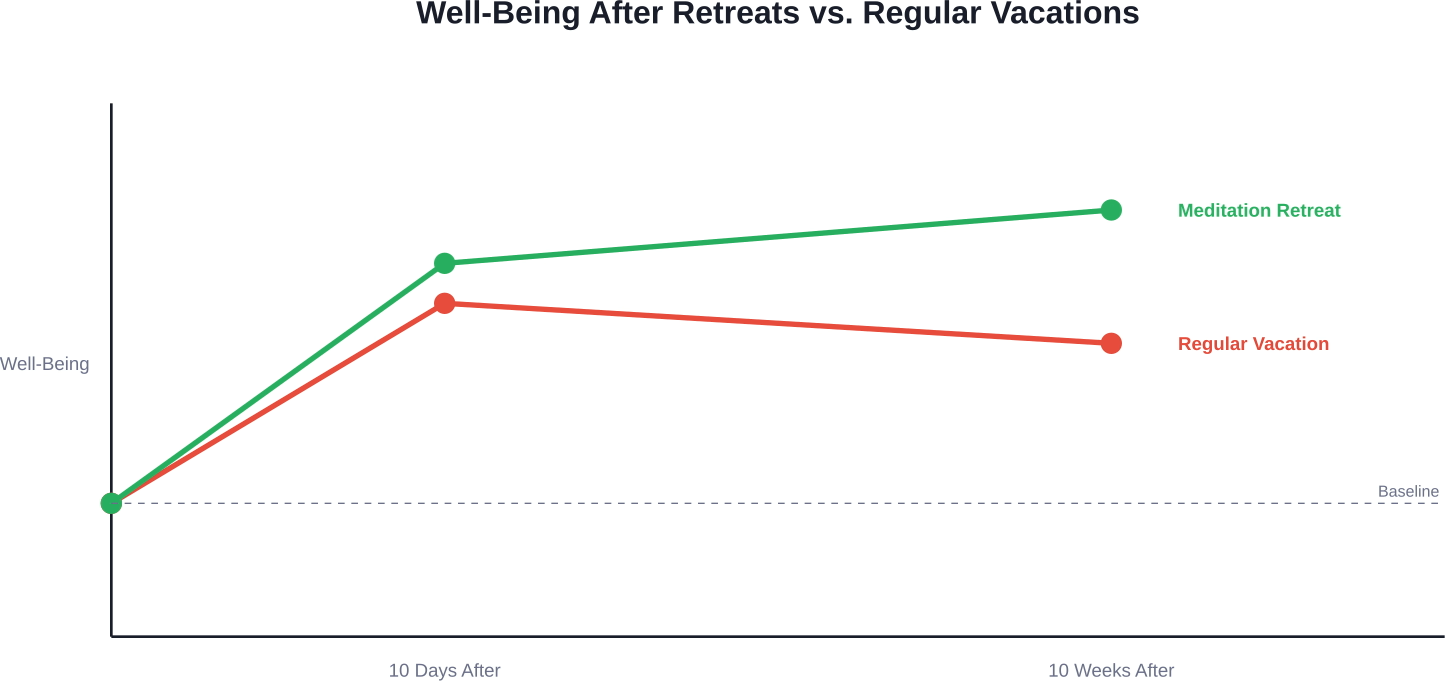
And it gets better. A study comparing meditation retreats with regular vacations discovered something fascinating: while normal holidays provide short-term well-being boosts that fade quickly, meditation retreats produce benefits lasting at least ten weeks. Participants showed greater increases in mindfulness, lower fatigue levels, and higher overall well-being compared to those taking ordinary vacations.
So what makes a meditation retreat truly exceptional? Let's break down the top options, what to expect, and how to choose the right experience for your needs.
Regular leisure vacations improve well-being temporarily. Everyone knows that post-vacation glow. But it fades fast—usually within a week or two of returning to normal life.
Meditation retreats work differently. The research comparing retreats with standard vacations tracked 120 individuals who were accustomed to meditation practices, out of 452 total participants who initially enrolled, measuring fatigue, well-being, and mindfulness levels ten days before, ten days after, and ten weeks after their stays.
The findings? Ten days after the experience, there weren't major differences between vacation types except for increased mindfulness among those practicing meditation. But ten weeks later, the gap widened dramatically. Meditation retreats and vacations including meditation practice showed sustained improvements that regular vacations couldn't match.
The National Center for Complementary and Integrative Health notes that stress triggers physical reactions—elevated heart rate, increased breathing rate, higher blood pressure, muscle tension, and more sweating. While occasional stress serves as a normal coping mechanism, chronic stress contributes to digestive disorders and other health problems.
Meditation retreats address this at the root level, training the mind to regulate stress responses more effectively long after the retreat ends.
The landscape of meditation centers varies widely in approach, duration, and philosophy. Here are the standout options based on expert panels and community feedback.
Native Americans once used this land for spiritual rites, and the environment still radiates that sacred quality. Even the wild deer and turkeys remain calm around humans.
Spirit Rock specializes in multi-day silent meditation retreats running throughout the year, with some programs extending up to two months. The residential format creates deep immersion—no distractions, no casual conversations, just land holding participants in sustained practice.
Throughout Buddhist tradition, retreat has been a cornerstone of contemplative practice. Spirit Rock continues that tradition with programs designed to step practitioners out of daily life and reconnect them with their heart through silence, reflection, and dharma teachings.
Located in Madison, Wisconsin, Holy Wisdom Monastery offers guided retreats in a welcoming environment. The center appears frequently in searches for meditation retreats in the Midwest, providing accessible options for those seeking structured guidance rather than extended silent practice.
Wisconsin retreat centers generally cater to practitioners looking for shorter experiences—three to five days rather than multi-week commitments. Reviews consistently highlight the personal attention and spiritual formation aspects these centers provide.
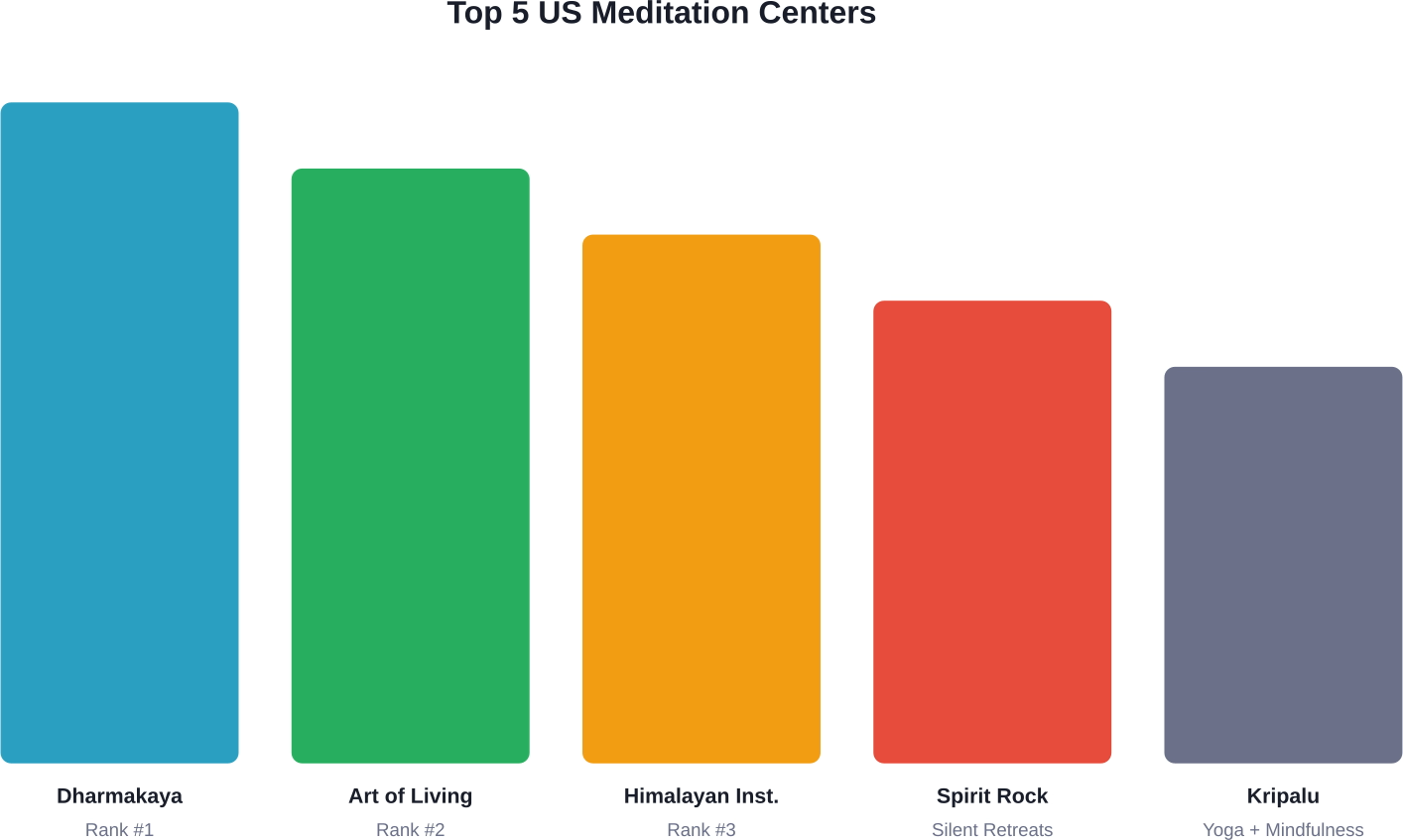
Ranked as the number one meditation center by expert panels, Dharmakaya combines meditation practice with comprehensive wellbeing programs. The center attracts both beginners building foundational skills and experienced practitioners deepening their understanding.
Coming in at number two on expert rankings, the Art of Living Retreat Center integrates breathwork techniques with traditional meditation practices. This approach appeals to those seeking varied contemplative methods beyond sitting meditation alone.
The Himalayan Institute takes the third spot, offering programs rooted in yogic philosophy and meditation traditions. The center provides teacher training alongside personal retreat experiences, creating a community of serious practitioners.
The format matters as much as the location. Silent retreats and guided programs serve different purposes and suit different experience levels.
Silent retreats strip away conversation and external input. Participants spend days—sometimes weeks—in complete silence, following a structured meditation schedule with minimal instruction.
Spirit Rock describes this as letting the land hold participants while silence guides them and the dharma transforms them. It's an intense experience that amplifies internal awareness without the usual social buffers.
These retreats typically run from three days to two months. The extended silence allows practitioners to move past surface-level mental chatter into deeper states of observation and insight.
But here's the reality: silent retreats challenge even experienced meditators. Beginners often find shorter durations more manageable—three to five days rather than multi-week commitments.
Guided retreats incorporate teaching sessions, group discussions, and structured activities alongside meditation practice. Centers in Wisconsin frequently offer this format, blending personal reflection with community support.
These programs work well for building foundational skills. Instructors provide feedback, answer questions, and help participants understand what's happening in their practice. The social component also eases the intensity for those new to extended meditation.
Many guided retreats integrate additional practices like yoga, walking meditation, or contemplative dialogue. This variety prevents the restlessness that can arise during pure sitting practice, especially for active individuals.
Some centers offer unique approaches. Contemplative dyads, for instance, pair participants for structured self-inquiry exercises lasting 40 minutes or more. Instead of meditating alone, practitioners sit across from a partner, facilitating self-awareness through interpersonal reflection.
Other specialty formats include mindfulness-based cognitive therapy retreats, which integrate meditation with cognitive tools for addressing chronic depression, and engaged Buddhism retreats that explore meditation's social and ecological implications.

Meditation retreats are known for providing a quiet space to slow down, disconnect from distractions, and focus fully on mindfulness practice. While retreats can be powerful experiences, many people look for ways to maintain that calm feeling in everyday life.
Mesmerize helps recreate a focused meditation environment with guided sessions, breathing visuals, and relaxing soundscapes designed for daily practice.
Inside the app you will find:
If you want to support your daily meditation practice between retreats, try Mesmerize - available to download on the App Store or Google Play.
The science backing meditation retreats goes beyond anecdotal reports. Controlled studies reveal measurable changes in immune function, stress response, and psychological well-being.
The University of Pittsburgh and Carnegie Mellon University study on mindfulness training in lonely older adults found improved immune system responsivity. This matters because loneliness functions as a powerful psychosocial stressor with real physical consequences.
Mindfulness-based stress reduction training specifically improved a measure of immune function in participants with high loneliness scores. The intervention didn't just make people feel better—it produced biological changes indicating improved health.
Research on attention and emotional regulation shows that contemplative practices refine both capacities. Psychology and neuroscience have developed robust frameworks for understanding these processes, and meditation retreats provide the intensive training environment needed to produce lasting changes.
The comparison study between meditation retreats and regular vacations quantified this difference. At the ten-week follow-up, participants who'd attended meditation retreats or vacations incorporating meditation practice showed:
These findings suggest that including meditation practice during time off addresses the fundamental problem with regular vacations: rapid decline of positive effects once normal life resumes.
Choosing the right retreat requires matching program characteristics to personal goals and experience level. Start by considering these factors.
Complete beginners benefit most from shorter guided retreats with teaching components. Jumping into a ten-day silent retreat without established practice often leads to frustration rather than insight.
Starting with shorter guided retreats (three to five days) allows beginners to settle into practice without overwhelming their initial experience.
Intermediate practitioners with established daily practice can handle longer silent formats. If sitting for 30-45 minutes daily feels comfortable, a week-long silent retreat becomes manageable.
Advanced practitioners often seek intensive experiences—month-long or longer retreats that allow deep investigation of subtle mental states.
The physical setting influences the quality of practice. Some practitioners prefer remote natural environments like Spirit Rock's California landscape. The isolation and natural beauty support inward focus.
Others value accessibility. Wisconsin centers near Madison or Milwaukee allow easier travel for Midwest residents without long flights or drives.
Climate matters too. A winter retreat in a cold location requires different preparation than a spring program in moderate temperatures.
Retreat pricing varies significantly. Retreat options in Wisconsin show varied pricing based on duration and accommodations.
Many Buddhist centers operate on a dana (donation) model where participants pay what they can afford. This makes retreats accessible regardless of financial circumstances, though suggested donations help cover operating costs.
Check each center's official website for current pricing, as costs change and may include early registration discounts or sliding scale options.
Work and family commitments limit available time for most people. Weekend retreats fit busy schedules while still providing meaningful practice time.
But longer retreats offer qualitatively different experiences. It takes several days just to settle down from everyday mental agitation. Week-long or longer programs allow participants to move past that settling period into deeper states.
Consider scheduling retreats during natural transition periods—between jobs, after major projects, or during planned sabbaticals when the mind already has space for reflection.
While the United States offers excellent retreat centers, some international options provide unique environments and traditions.
Founded by Thich Nhat Hanh—the Vietnamese monk Martin Luther King Jr. nominated for the Nobel Peace Prize—Plum Village cultivates mindfulness in a monastic community setting. The center welcomes both monastics and lay practitioners for retreats throughout the year.
The approach emphasizes engaged Buddhism, integrating meditation with everyday activities and community living. Walking meditation through French countryside vineyards creates a different atmosphere than isolated mountain retreats.
Travel costs and time increase significantly for international programs. Factor in jet lag recovery when planning retreat duration—arriving exhausted defeats the purpose.
Language barriers can affect guided retreats where teaching happens in the local language. Many international centers offer programs in English, but confirm before booking.
Cultural differences in retreat structure and expectations also matter. Some traditions emphasize formal rituals that may feel unfamiliar to Western practitioners.
Booking a retreat is just the beginning. Preparation and post-retreat integration determine how much benefit actually sticks.
Before arriving, establish realistic expectations. Retreats often bring up difficult emotions or physical discomfort. That's part of the process, not a problem to avoid.
During the retreat, follow the schedule even when resistance arises. The urge to skip sessions or leave early often signals exactly when staying matters most.
After returning home, maintain some version of the retreat schedule. Even 20 minutes of daily practice preserves the momentum built during intensive practice periods.
The research on sustained benefits happened because participants already maintained meditation practices. The retreat deepened existing habits rather than creating temporary states that vanished upon return to normal life.
Meditation retreats offer something regular vacations can't—lasting transformation of how the mind relates to experience. The science backs this up with measurable improvements in immune function, stress resilience, and sustained well-being.
Start by exploring centers that match your experience level and available time. Spirit Rock for serious silent practice. Wisconsin centers for accessible guided experiences. Specialty programs if specific approaches call to you.
The retreat that transforms your practice might be closer than expected. Centers across the United States provide high-quality programs without international travel. But the key lies in actually committing—reading about retreats produces zero benefits compared to three days of actual practice.
Check availability at centers that resonate with you. Many quality retreats fill months in advance, especially popular dates and teachers. Starting that search now means securing a spot that fits your schedule rather than settling for whatever's available last minute.
Your mind will thank you. And according to the research, those benefits will still be present ten weeks later.
I canceled my subscription with Headspace and I now pay for Mesmerize instead. I was hooked after the free trial! I love how customizable the sounds, meditations, and visuals are! Using this app has honestly become my favorite part of my day! ☺️ It helps me relax, meditate, visualize, sleep, and it does wonders for my anxiety/phobia/ocd tendencies. Thank you Mesmerize for giving us this amazing mental health tool! I told my therapist about this app and have been telling all my friends too. It’s just so helpful!
This is the second or third app in the mindfulness and meditation realm, and it’s the most scientific approach I have found. I have found these combinations of open monitoring, and focused attention meditation techniques are the most viable for those suffering from more severe forms of sleep, pain, and anxiety dysfunction one may be suffering from. Many of these approaches are used by professionals in a cognitive behavioral therapy setting. A truly complete approach in mindfulness and meditation.
I suffer from clinical depression and sometimes I get into a bad headspace but this app has really helped me whenever I’m in a bad mood I turn on the app listen to some person taking about breathing and look at cool figures on my phone and it makes me feel so much better I would highly recommend this app it’s worth the money
It didn’t take but five minutes of using this app to buy a yearly subscription. Worth it on so many levels. Easy to manipulate to what I like. Massive library of music, videos, etc.
Clear your mind and relax with a unique audio visual meditation experience.


.jpeg)