Discover the best meditation YouTube channels for stress relief, better sleep, and mindfulness. Free guided meditations from top creators reviewed and compared.
.webp)
The best meditation YouTube channels offer free guided sessions for stress relief, sleep, mindfulness, and personal growth. Top channels include Great Meditation for deep relaxation, The Mindful Movement for trauma healing, Yoga With Adriene for beginners, Headspace for structured programs, and Goodful for quick daily practices.
Finding quality meditation guidance shouldn't cost a fortune. YouTube has become a treasure trove of free meditation content, with channels offering everything from 5-minute breathing exercises to hour-long deep relaxation sessions.
But here's the challenge: there are thousands of meditation channels out there. Some are genuinely transformative. Others feel more like background noise with new-age music.
According to the National Center for Complementary and Integrative Health, meditation practices have been shown to help manage various health conditions including high blood pressure, anxiety, depression, and pain. Research published in Biological Psychiatry demonstrates that mindfulness meditation reduces pain through different neural patterns than placebo effects, proving it's not just mental distraction—it's actual physiological change.
The right guided meditation can make all the difference between a scattered mind and genuine calm. This guide breaks down the best meditation YouTube channels based on content quality, instructor expertise, session variety, and real user experiences from community discussions.
YouTube meditation channels offer something traditional apps can't: unlimited free content with no subscription walls. But does free mean effective?
The Mayo Clinic notes that meditation involves focused attention, a comfortable position, and openness without judgment. They recommend starting with 10 to 15 minutes at first. YouTube channels excel at providing this structured approach without financial barriers.
Research from Stanford shows that even brief meditation interventions work. A Stanford study found that just a few slow, deep breaths significantly reduce children's physiological arousal in everyday settings. For adults, the benefits compound with consistent practice.
Here's what makes YouTube meditation channels particularly effective:
According to NCCIH data, about 8 percent of meditation participants experience negative effects—similar to other wellness practices. YouTube's variety helps individuals find approaches that work for their specific needs rather than forcing a one-size-fits-all method.
The following channels consistently receive praise in community discussions and offer distinct approaches to meditation practice.
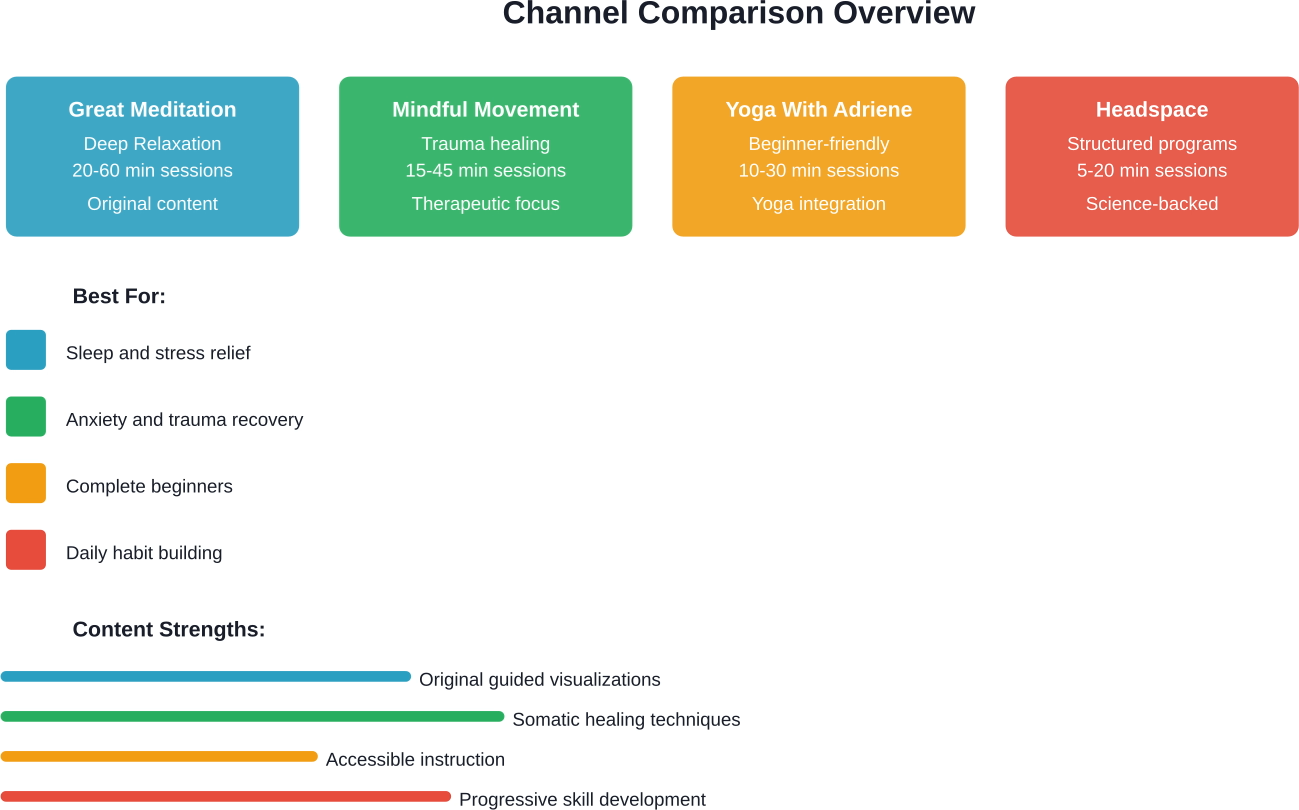
Great Meditation produces original guided meditations created by a collaborative group of meditation practitioners. The channel specializes in deep relaxation sessions ranging from 20 to 60 minutes.
What sets this channel apart is the production quality and intentional pacing. Sessions transition listeners through progressive relaxation stages rather than rushing to a state of calm. Community discussions frequently mention this channel as genuinely effective for sleep and stress relief.
The channel offers sessions focused on letting go, positive energy, spiritual growth, and making the best of current circumstances. For those who haven't meditated in months, the gentle re-entry approach proves particularly helpful.
The Mindful Movement takes a therapeutic approach to meditation, incorporating trauma-informed practices and somatic healing techniques. Sessions typically run 15 to 45 minutes with a focus on emotional regulation and anxiety reduction.
According to a systematic review published by the American Psychological Association, Mindfulness-Based Stress Reduction (MBSR) shows significant effects on reducing stress, anxiety, and depression while improving cognitive flexibility. The Mindful Movement applies these evidence-based principles in accessible video format.
The channel's strength lies in addressing specific emotional challenges—grief, self-criticism, overwhelm—with targeted meditation practices rather than generic relaxation.
Yoga With Adriene has built a massive following by making meditation and yoga approachable for absolute beginners. While primarily known for yoga content, Adriene offers substantial meditation-focused sessions that integrate breathwork and gentle movement.
The sessions typically run 10 to 30 minutes, perfect for those building a daily practice. Adriene's conversational teaching style removes the intimidation factor that keeps many people from starting meditation.
This channel works particularly well for individuals who struggle with sitting meditation. The integration of gentle movement provides a bridge into stillness.
Headspace's YouTube channel offers a taste of their premium app content with free guided meditations and animation-based mindfulness education. Sessions run 5 to 20 minutes with a structured, progressive approach.
The channel excels at habit formation. Research on mindfulness meditation habits, including a study finding that fewer than 1% of surveyed practitioners had developed a meditation habit despite 65% having practiced mindfulness, shows that sustained practice requires strategic habit-building approaches. Headspace's short, daily-oriented sessions align with behavior change principles.
The animated explainer videos demystify meditation science, making the practice feel less esoteric and more accessible to skeptics.
Calm's YouTube presence provides celebrity-voiced sleep stories, music for meditation, and guided sessions. The production values are exceptionally high, with professional voice talent and sound design.
For individuals who need auditory variety to maintain engagement, Calm offers extensive options. The sleep stories in particular address a common meditation challenge: racing thoughts at bedtime.
Goodful creates short meditation content designed for busy schedules. Sessions rarely exceed 10 minutes, focusing on quick stress resets and energy shifts.
Stanford research on breathing techniques confirms that brief interventions can produce measurable physiological changes. Goodful capitalizes on this by offering science-backed quick practices for real-world application.
Should meditation practice involve following one channel consistently or sampling individual videos across multiple sources?
Research shows that 65% of participants reported having practiced mindfulness, though developing a sustained meditation habit requires ongoing support. Consistency in approach matters when building meditation habits.
Here's the practical breakdown:
Community discussions reveal that most successful practitioners start with one channel to build consistency, then gradually incorporate others as their practice matures.
Not all meditation content delivers results. Certain qualities separate effective channels from glorified background noise.
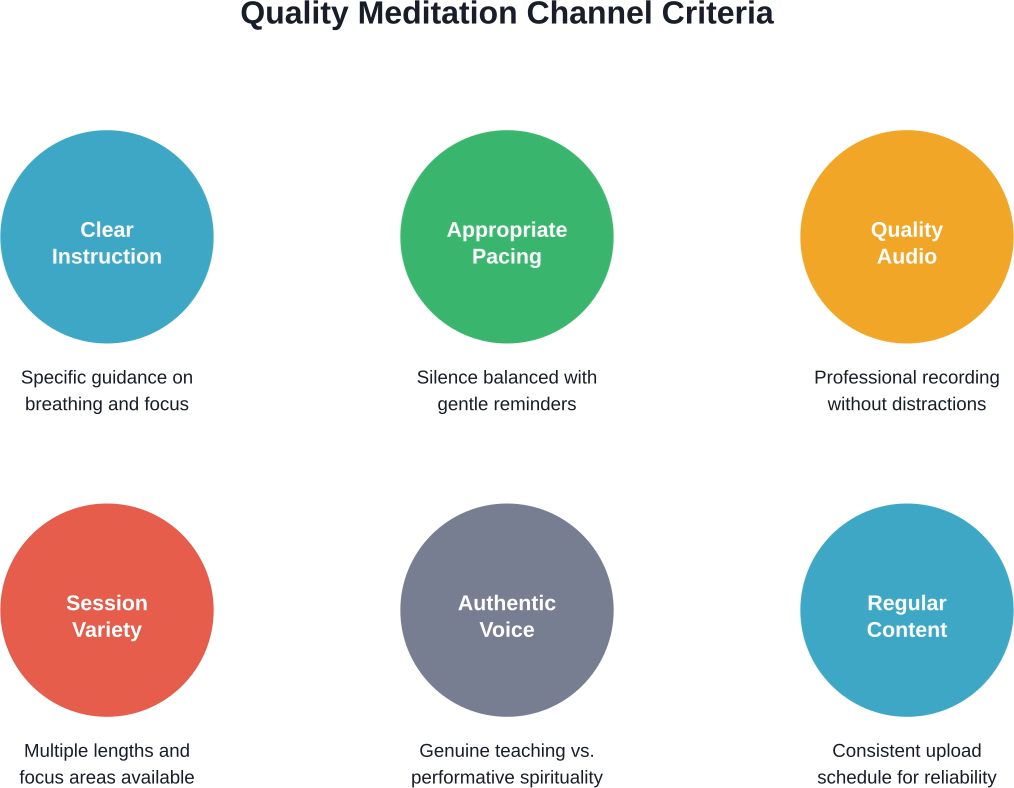
Downloading videos or subscribing to channels represents just the first step. Actual practice requires strategy.
Start with 10 to 15 minutes daily, as recommended by the Mayo Clinic. Consistency at shorter durations beats sporadic longer sessions. Three 10-minute sessions per week will produce more benefit than one 60-minute session.
Research on meditation habit formation shows that linking practice to existing routines increases adherence. Meditating immediately after morning coffee or before bedtime leverages habit-stacking principles.
Create playlists for different situations: morning energizing, midday reset, evening wind-down, sleep preparation. This removes decision fatigue when motivation runs low.
Track practice frequency without judgment. Missing days happens. The goal is pattern recognition, not perfection. Notice what circumstances support practice versus what derails it.
YouTube meditation serves most practitioners well, but certain situations call for additional support.
Chronic pain sufferers may need specialized instruction beyond general relaxation. NCCIH research shows mindfulness meditation reduces pain through specific neural pathways. Working with trained instructors ensures proper technique application for medical conditions.
Individuals with trauma histories should approach meditation carefully. While The Mindful Movement and similar channels incorporate trauma-informed practices, working with therapists who understand meditation's interaction with PTSD provides necessary safety.
Advanced practitioners eventually need in-person instruction or retreats. Video meditation develops foundational skills, but subtle technique refinement requires direct feedback.

YouTube channels are one of the most popular ways to find guided meditations, relaxing music, and mindfulness exercises. They make it easy to explore different meditation styles and teachers.
Mesmerize offers a focused meditation environment with guided sessions, calming audio, and slow visual breathing patterns designed to help you relax and stay present.
The app provides:
If you want a dedicated space for meditation without distractions, try Mesmerize - you can download it on the App Store or Google Play.
The best meditation YouTube channel is ultimately the one that gets used consistently. Great Meditation's deep relaxation approach resonates with some practitioners. Others connect better with The Mindful Movement's therapeutic focus or Yoga With Adriene's accessible style.
Experimentation isn't scattered practice—it's strategic exploration. Try each recommended channel for one week of daily practice before judging effectiveness. Notice which teaching styles maintain engagement and which voices feel grating after repeated exposure.
Track what times of day work best and which session lengths fit realistically into existing schedules. The meditation practice that happens beats the perfect practice that remains theoretical.
YouTube's free access removes barriers that kept meditation limited to those who could afford classes or apps. Quality instruction now sits accessible to anyone with internet connection. The only remaining barrier is showing up consistently.
Start with one channel. Set a recurring calendar reminder. Commit to two weeks of daily practice before evaluating results. The investment costs nothing except time—and research shows that time returns dividends in stress reduction, improved focus, and better emotional regulation.
The best meditation YouTube channel for 2026 isn't about finding the perfect instructor. It's about discovering which approach supports consistent practice, then building that practice into daily life until it becomes as automatic as morning coffee.
I canceled my subscription with Headspace and I now pay for Mesmerize instead. I was hooked after the free trial! I love how customizable the sounds, meditations, and visuals are! Using this app has honestly become my favorite part of my day! ☺️ It helps me relax, meditate, visualize, sleep, and it does wonders for my anxiety/phobia/ocd tendencies. Thank you Mesmerize for giving us this amazing mental health tool! I told my therapist about this app and have been telling all my friends too. It’s just so helpful!
This is the second or third app in the mindfulness and meditation realm, and it’s the most scientific approach I have found. I have found these combinations of open monitoring, and focused attention meditation techniques are the most viable for those suffering from more severe forms of sleep, pain, and anxiety dysfunction one may be suffering from. Many of these approaches are used by professionals in a cognitive behavioral therapy setting. A truly complete approach in mindfulness and meditation.
I suffer from clinical depression and sometimes I get into a bad headspace but this app has really helped me whenever I’m in a bad mood I turn on the app listen to some person taking about breathing and look at cool figures on my phone and it makes me feel so much better I would highly recommend this app it’s worth the money
It didn’t take but five minutes of using this app to buy a yearly subscription. Worth it on so many levels. Easy to manipulate to what I like. Massive library of music, videos, etc.
Clear your mind and relax with a unique audio visual meditation experience.


.jpeg)