Learn what kundalini meditation is, how the seven chakras play in, and how to start safely in 2026. Get the step-by-step guide and try it today.
.webp)
Quick Summary: Kundalini meditation combines breathwork, mantra, movement, and focused attention to awaken energy said to sit coiled at the base of the spine, guiding it upward through the seven chakras. It's rooted in Kundalini yoga as taught by Yogi Bhajan and blends physical postures with meditative stillness. Most people practice it for stress relief, heightened focus, and a sense of spiritual connection, though intense sessions can occasionally trigger strong emotional or physical reactions. Starting with short, guided sessions is generally the safest way in.
Kundalini meditation is a practice built around the idea that dormant energy — often called "kundalini energy" — rests coiled at the base of the spine. Through specific breathing patterns, chanting, and body movement, practitioners attempt to release that energy and move it upward through a series of energy centers known as chakras.
The word "kundalini" comes from Sanskrit and roughly translates to "coiled snake," a nod to how this energy is imagined at rest. Unlike simple breath-focused mindfulness, kundalini practice is deliberately activating. It's less about quieting the mind and more about stirring something up, then learning to sit with whatever surfaces.
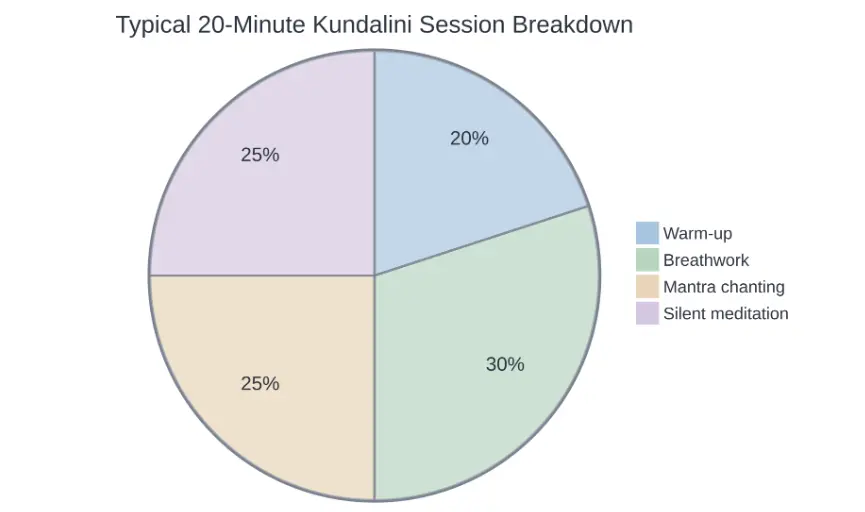
Kundalini yoga, popularized in the West by Yogi Bhajan in the late 1960s, is the broader system that houses this style of meditation. A typical class blends dynamic postures (kriyas), rhythmic breathing (pranayama), mantra, and a closing meditation. The meditation piece can also stand alone, which is why so many guided audio sessions exist purely for kundalini meditation without the yoga postures attached.
Central to kundalini practice is the chakra system — seven energy centers running from the base of the spine to the crown of the head. Each one is associated with different qualities: survival and grounding at the root, creativity near the sacral area, personal power at the solar plexus, love at the heart, communication at the throat, intuition at the third eye, and spiritual connection at the crown.
Kundalini meditation aims to move energy sequentially through these centers, clearing blockages along the way. Whether or not someone accepts the metaphysical framework, the sequential structure gives the practice a clear narrative arc that many people find easier to follow than open-ended mindfulness.
People often ask how kundalini compares to mindfulness meditation, transcendental meditation, or newer visual meditation formats. The honest answer is that they share a goal — calmer mind, better presence — but get there through different mechanics.
For anyone who finds the abstract chakra language hard to hold onto, a more structured, guided approach can help. Visual meditation apps that pair sound with imagery — like the sessions inside the 10-minute guided meditation — offer a similar sense of structure without requiring familiarity with Sanskrit terminology.

Kundalini meditation can involve breathing, focused attention, movement, sound, and mantra. Mesmerize can support the quieter parts of a session with visual breathing, calming music, and customizable soundscapes.
Mesmerize includes:
👉 Download Mesmerize for iPhone or for Android to try visual meditation for free.
Research on kundalini yoga specifically is thinner than research on general mindfulness, but existing studies and long-standing anecdotal reports point to a consistent set of benefits. None of these are guaranteed outcomes — they're patterns practitioners and small studies have noted.
These outcomes overlap heavily with what's reported for other meditation styles, which suggests the shared ingredient — sustained, focused attention on breath and body — may matter more than the specific spiritual framing. Anyone curious about the underlying mechanics can look at the broader research summarized on the science behind visual meditation, which covers how attention-based practices affect the nervous system regardless of tradition.
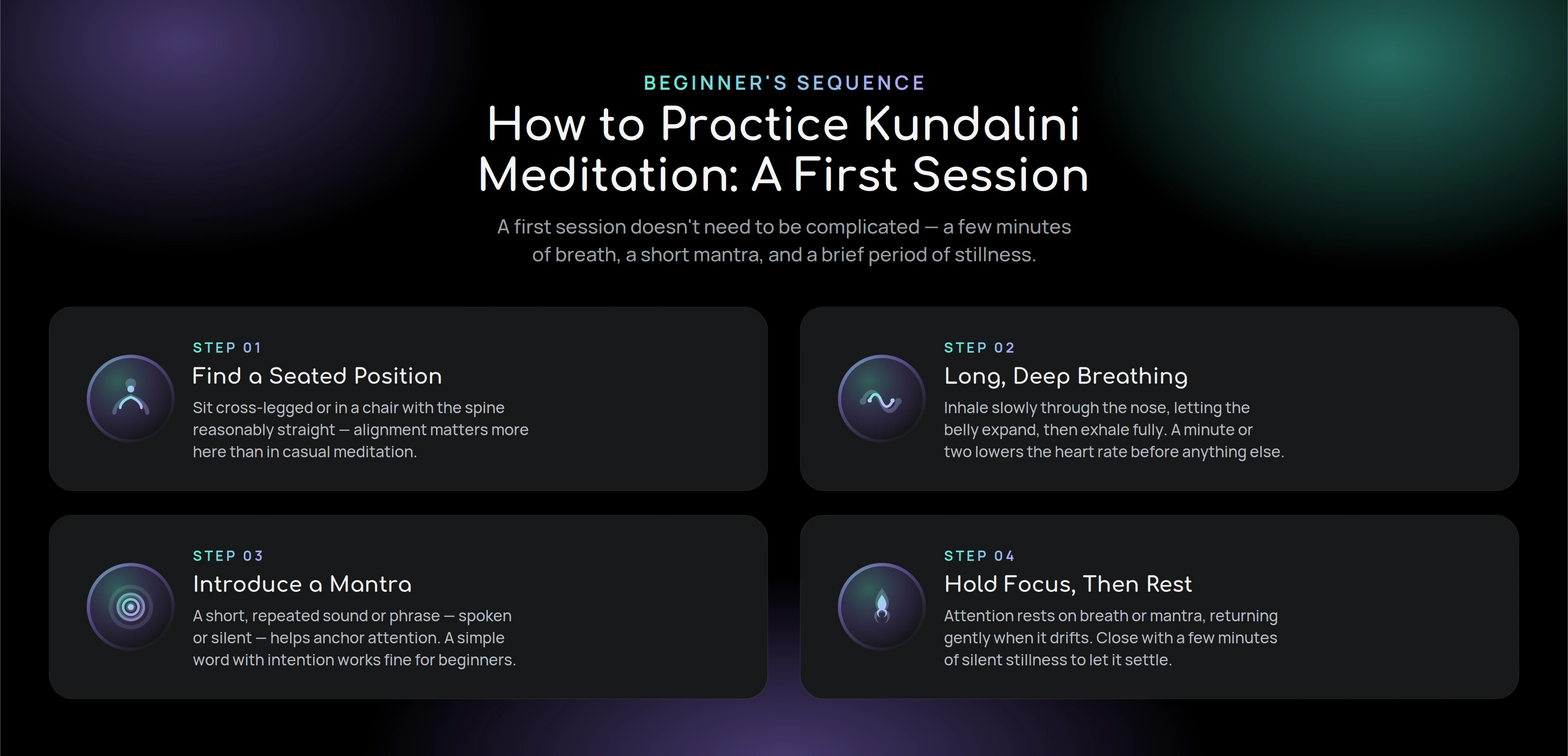
A first kundalini meditation session doesn't need to be complicated. Most teachers recommend starting small — a few minutes of breath, a short mantra, and a brief period of stillness — rather than attempting a full hour-long kriya on day one.
Sit cross-legged or in a chair with the spine reasonably straight. The spine's alignment matters here more than in casual meditation, since energy is imagined moving along it.
Inhale slowly through the nose, letting the belly expand, then exhale fully. A minute or two of this alone tends to lower the heart rate and settle the nervous system before anything else begins.
A short, repeated sound or phrase — spoken aloud or silently — helps anchor attention. Traditional kundalini mantras are in Gurmukhi, but a simple word repeated with intention works for beginners.
This is the meditative core: attention rests on the breath, the mantra, or a specific chakra point, returning gently whenever it drifts.
A few minutes of silent rest lets whatever surfaced during the session settle. Skipping this step is a common reason people feel unexpectedly wired afterward rather than calm.
Kundalini practice has a reputation for being more intense than other meditation styles, and that reputation isn't entirely undeserved. Because the technique deliberately stirs energy and emotion rather than just observing it, some practitioners report strong physical or emotional reactions — tingling, shaking, sudden waves of grief or euphoria, even temporary disorientation. This is sometimes described as a "kundalini awakening."
Most teachers agree these reactions are rare and usually mild when sessions stay short and consistent. Problems tend to show up when someone jumps straight into long, intense practices without building up gradually, or attempts advanced techniques without guidance. People with a history of psychosis, severe trauma, or certain anxiety disorders should talk to a mental health professional before diving into intensive kundalini work — this isn't a practice to force through discomfort.
Not everyone wants — or needs — the full spiritual framework to get value out of the underlying techniques. Slow breathing, focused attention, and a closing rest period are useful on their own, chakra symbolism aside.
For people who'd rather ease in with something more structured and less abstract, a guided audio-visual format can lower the barrier to entry considerably. Sessions built around visuals and sound, rather than memorized mantras, give the mind something concrete to follow. Options and formats are worth comparing across available subscription plans before committing to a longer routine, and the app itself can be tried after a free download for iOS or Android.
A few habits tend to undermine kundalini practice before it has a chance to click.
Consistency, more than intensity, is what tends to produce noticeable results over weeks and months. A daily ten-minute habit generally outperforms an occasional hour-long session in terms of felt benefit.
Kundalini meditation isn't a quick trick — it's a layered practice with roots stretching back centuries and a modern following that keeps growing. The chakra imagery and energy language can feel unfamiliar at first, but the underlying mechanics — breath control, focused attention, and consistent practice — are grounded in habits that show up across nearly every meditative tradition.
Whether the goal is spiritual exploration or simply a calmer evening routine, starting small and staying consistent beats chasing dramatic experiences early on. For those who want a gentler on-ramp before committing to a full kundalini practice, browsing meditation guides and wellness articles or checking current pricing options for a structured guided app can make the first few weeks a lot less intimidating.
I canceled my subscription with Headspace and I now pay for Mesmerize instead. I was hooked after the free trial! I love how customizable the sounds, meditations, and visuals are! Using this app has honestly become my favorite part of my day! ☺️ It helps me relax, meditate, visualize, sleep, and it does wonders for my anxiety/phobia/ocd tendencies. Thank you Mesmerize for giving us this amazing mental health tool! I told my therapist about this app and have been telling all my friends too. It’s just so helpful!
This is the second or third app in the mindfulness and meditation realm, and it’s the most scientific approach I have found. I have found these combinations of open monitoring, and focused attention meditation techniques are the most viable for those suffering from more severe forms of sleep, pain, and anxiety dysfunction one may be suffering from. Many of these approaches are used by professionals in a cognitive behavioral therapy setting. A truly complete approach in mindfulness and meditation.
I suffer from clinical depression and sometimes I get into a bad headspace but this app has really helped me whenever I’m in a bad mood I turn on the app listen to some person taking about breathing and look at cool figures on my phone and it makes me feel so much better I would highly recommend this app it’s worth the money
It didn’t take but five minutes of using this app to buy a yearly subscription. Worth it on so many levels. Easy to manipulate to what I like. Massive library of music, videos, etc.
Clear your mind and relax with a unique audio visual meditation experience.


.jpeg)