Discover what Lavendaire meditation is, how Aileen Xu's guided sessions work, and how to build a daily practice. Explore alternatives and start today.

Quick Summary: Lavendaire meditation refers to the guided meditation content created by Aileen Xu through her YouTube channel, The Lavendaire Lifestyle podcast, and the Resonance app, focusing on positive energy, self-love, and manifestation. These sessions typically run five to twenty minutes and blend visualization, affirmations, and breathwork to help listeners reset their mindset. This guide breaks down what makes Lavendaire's approach distinct, how to use it effectively, and what alternatives exist for those wanting a more immersive, visual experience.
Search "guided meditation for positive energy" on YouTube and one name keeps surfacing: Lavendaire. Aileen Xu's calm, encouraging voice has guided millions of people through morning resets, confidence boosts, and gratitude practices over the past decade. Her content sits at an interesting intersection — part lifestyle brand, part mindfulness teacher, part personal development coach.
So what exactly is "Lavendaire meditation," and is it worth building into a daily routine? This guide covers where the practice came from, how the sessions are structured, what the Resonance app adds to the mix, and how to decide whether audio-only guidance is enough or whether a more visual approach might serve a routine better.
Lavendaire is the personal brand of Aileen Xu, a content creator who built an audience around intentional living, productivity, and self-growth. Her meditation work grew out of that broader lifestyle platform rather than starting as a standalone wellness business — which explains why her sessions often weave in affirmations and goal-setting language alongside traditional relaxation cues.
Most of her guided meditations live in three places: her YouTube channel, The Lavendaire Lifestyle podcast (available on Spotify and other platforms), and more recently, the Resonance app, which bundles meditations, affirmations, and sound healing into a subscription product. The YouTube videos tend to be free, standalone sessions anywhere from five to twenty minutes long, while the podcast often frames meditations within a themed challenge, like a 30-day series on inner power or confidence.
Not all guided meditation sounds the same. Some teachers lean heavily into silence and breath counting; others talk almost continuously. Lavendaire's sessions sit closer to the second camp — steady narration, gentle pacing, and a strong emphasis on mental imagery.
A typical session moves through a few recognizable stages:
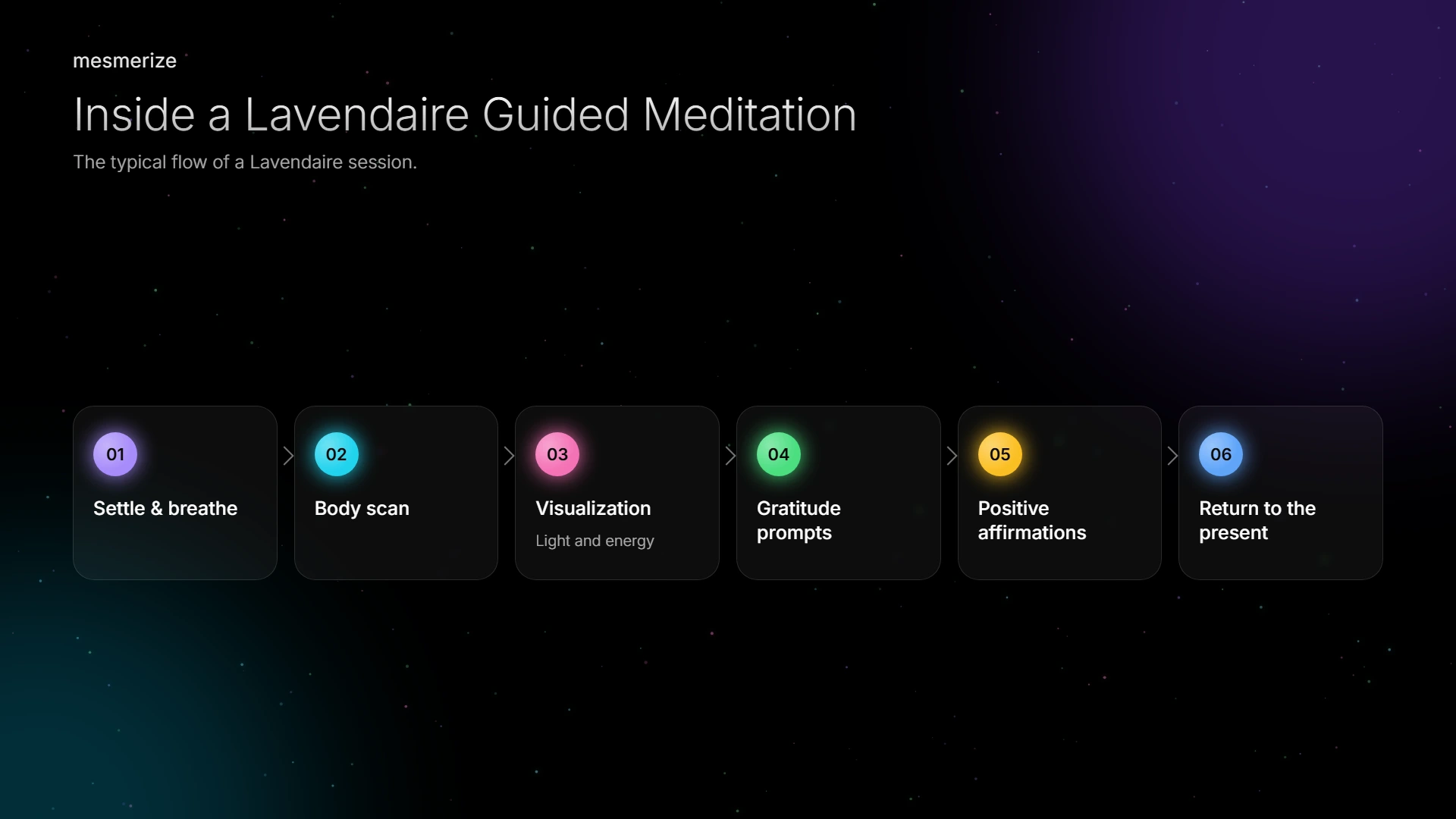
This blend of visualization and affirmation is why her content ranks so well for "meditation for positive energy" searches rather than, say, "meditation for pain relief" or clinical anxiety protocols. It's designed for people who want an emotional and mental reset more than a strictly therapeutic intervention.
This is arguably her most recognized piece of content, reportedly reaching millions of views on YouTube. It's built for people short on time — a quick visualization and affirmation sequence meant to set the tone before the day gets busy. Short sessions like this work well as a habit-builder precisely because they're low-friction; five minutes is an easy task even on a chaotic morning.
Longer episodes slow the pacing down and add more layers — full body relaxation, extended visualization, and sometimes a themed focus like inner power, intuition, or releasing anxiety. These suit a dedicated sit-down practice rather than a rushed morning routine.
Through the podcast, Lavendaire has run structured challenges that string daily themed meditations together over a month. The format borrows from habit-building research: consistency over intensity, with each week shifting focus (confidence one week, gratitude the next, for example).
For listeners who want more than occasional YouTube videos, Lavendaire launched Resonance — an app billed as a sound sanctuary combining meditations, affirmations, and healing frequencies into an ongoing daily practice. It's essentially the subscription evolution of her free content, aimed at people who've resonated with the free episodes and want a more structured, app-based routine.
That's a familiar pattern across the meditation app space: free audio content builds trust, then a paid app deepens the relationship with features like streak tracking, curated playlists for focus or sleep, and journaling prompts. It's worth comparing a few options before committing, since different apps emphasize different senses and techniques.
Lavendaire's content, like most guided meditation, relies entirely on voice and sound. That works well for many people — closing the eyes and listening removes visual distraction entirely. But some practitioners find pure audio sessions hard to stay engaged with, especially if the mind tends to wander during long stretches of narration without any sensory anchor.
This is where audio-visual approaches differ. Apps like Mesmerize pair guided audio with generative visuals, giving the mind something to softly focus on rather than relying purely on imagination to construct the "light" or "energy" being described. For visual thinkers, or for anyone who's tried audio-only meditation and found their attention drifting, a visual layer can make it easier to stay present. Mesmerize's research page goes into more detail on why visual stimuli can support focus during meditation.
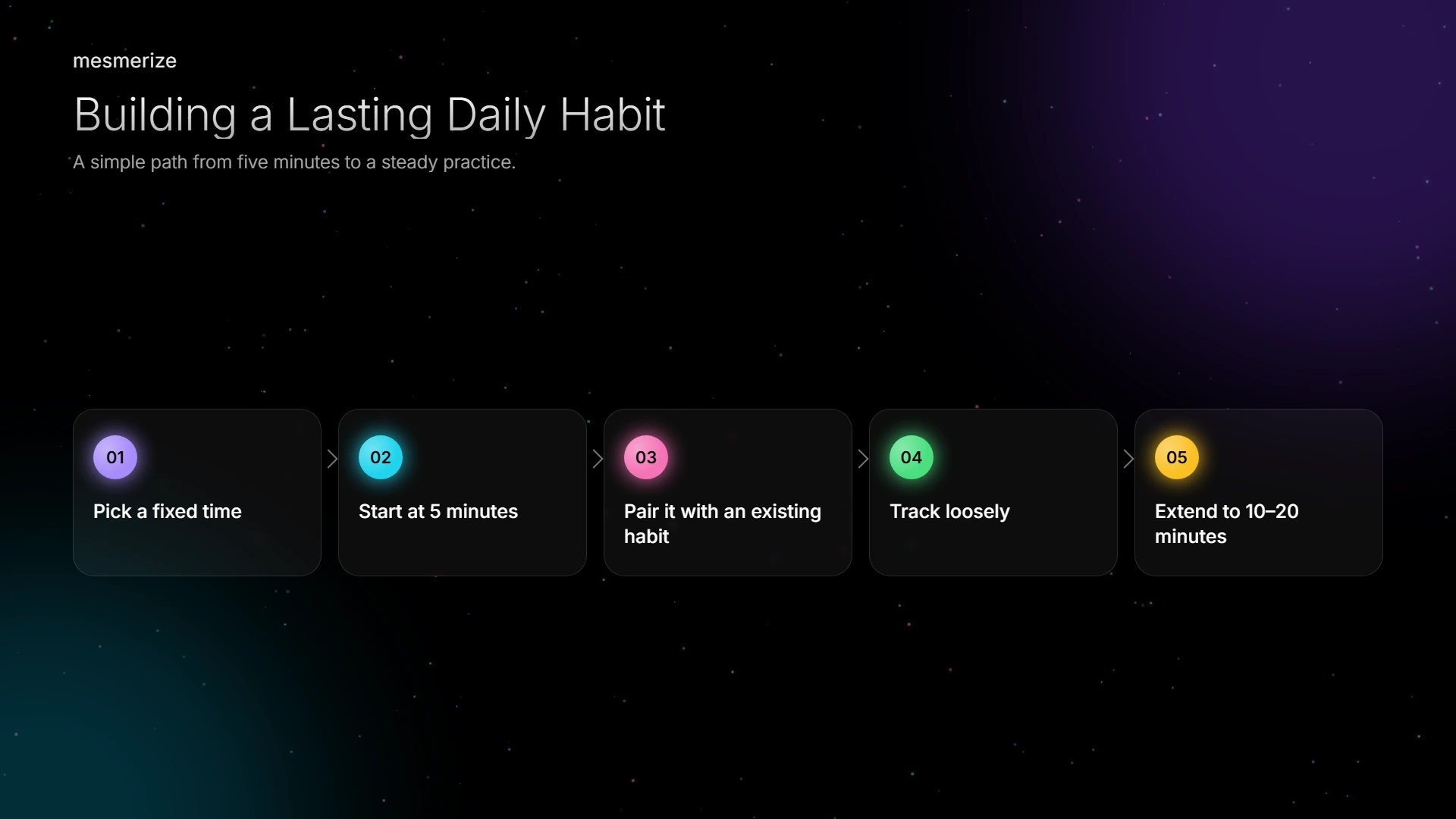
Consistency matters more than session length. A five-minute morning meditation done daily tends to outperform an occasional 30-minute session done once a week, simply because the brain responds to repetition. A few practical starting points:
Those new to the habit might find a structured starting point helpful — Mesmerize's 5-minute meditation guide covers a similar short-session approach, while the 10-minute meditation guide works for those ready to extend their practice.

If you enjoy Lavendaire's approach to mindfulness, personal growth, and intentional living, you might also appreciate exploring different ways to meditate. At Mesmerize, we provide guided sessions, affirmations, and visual tools to help you take a moment for yourself during a busy day.
Our app includes features you can use in your self-care routine:
Download our Mesmerize app on iOS or Android and bring a few minutes of mindfulness into your everyday self-care routine.
Positive-energy meditations are great for mindset shifts, but they're not designed to treat clinical anxiety, insomnia, or chronic stress. If racing thoughts at bedtime or persistent anxious energy are the issue, it's worth looking at content built specifically for those goals — sessions designed around sleep and relaxation or anxiety relief tend to use different pacing and language than a morning energy boost. Likewise, anyone meditating to improve concentration at work might get more targeted value from a session built around focus and concentration rather than a generic gratitude practice.
Neither approach is objectively "better" — it comes down to what helps a particular mind settle. Those who respond well to spoken affirmations and visualization scripts will likely enjoy the Lavendaire style. Those who find pure audio hard to stay anchored to might prefer pairing meditation with visuals, which is where a tool like Mesmerize fits in. Anyone curious can explore the available plans or simply download the app to compare the experience directly.
Lavendaire's meditation content has earned its popularity for a reason — it's accessible, warmly delivered, and genuinely useful for anyone wanting a quick mental reset or a gratitude-focused morning routine. The 5-minute morning meditation in particular has clearly struck a chord with a huge audience over the years.
That said, no single style of meditation fits everyone. Those who find their mind wandering during audio-only sessions, or who want more targeted content for sleep, anxiety, or focus, might benefit from pairing guided narration with a visual element. Browsing the Mesmerize blog is a reasonable next step for anyone wanting to explore different approaches before settling on a daily practice that actually sticks.
I canceled my subscription with Headspace and I now pay for Mesmerize instead. I was hooked after the free trial! I love how customizable the sounds, meditations, and visuals are! Using this app has honestly become my favorite part of my day! ☺️ It helps me relax, meditate, visualize, sleep, and it does wonders for my anxiety/phobia/ocd tendencies. Thank you Mesmerize for giving us this amazing mental health tool! I told my therapist about this app and have been telling all my friends too. It’s just so helpful!
This is the second or third app in the mindfulness and meditation realm, and it’s the most scientific approach I have found. I have found these combinations of open monitoring, and focused attention meditation techniques are the most viable for those suffering from more severe forms of sleep, pain, and anxiety dysfunction one may be suffering from. Many of these approaches are used by professionals in a cognitive behavioral therapy setting. A truly complete approach in mindfulness and meditation.
I suffer from clinical depression and sometimes I get into a bad headspace but this app has really helped me whenever I’m in a bad mood I turn on the app listen to some person taking about breathing and look at cool figures on my phone and it makes me feel so much better I would highly recommend this app it’s worth the money
It didn’t take but five minutes of using this app to buy a yearly subscription. Worth it on so many levels. Easy to manipulate to what I like. Massive library of music, videos, etc.
Clear your mind and relax with a unique audio visual meditation experience.