Discover how to choose, play, and care for a meditation bowl. Get expert tips on singing bowls for yoga, stress relief, and calm—start your practice today.
.webp)
Quick Summary: A meditation bowl, often called a Tibetan singing bowl, is a metal or crystal bowl that produces a sustained resonant tone when struck or rubbed with a mallet, used to deepen focus, mark meditation intervals, and support relaxation. The right bowl depends on size, material, and the tone that feels most calming to you, while proper technique with a wooden or rubber-tipped striker matters more than price. Bowls work well alongside breathwork or guided practices, and pairing sound with visual meditation tools can extend the calming effect well past the final chime.
There's a particular sound that seems to slow everything down. Someone taps a metal bowl, and the room shifts. That's the appeal of a meditation bowl — it doesn't ask for much, just a few seconds of attention, and it delivers a tone that lingers long after the strike.
Meditation bowls (commonly known as Tibetan singing bowls) have been used for centuries across parts of the Himalayas, Nepal, and Tibet, originally for ritual and ceremonial purposes and now, worldwide, as a practical tool for meditation, yoga, and stress relief. Whether the goal is a quieter mind before bed or a clean signal to start and end a sitting practice, understanding how these bowls work — and how to actually use one — makes a real difference.
A meditation bowl is a bowl-shaped instrument, usually made from a blend of metals or occasionally crystal, that produces a sustained tone when its rim is struck or circled with a mallet. Traditional metal bowls are often described as handcrafted, sometimes hammered by hand in small workshops in Nepal, using alloys that can include copper, tin, and trace amounts of other metals. Crystal bowls, by contrast, are cast from quartz and tend to produce a purer, more sustained tone at a single pitch.
They're sometimes called singing bowls, prayer bowls, or Himalayan bowls, and while the names get used loosely, the function is the same: strike or rub the bowl, and it "sings" — producing a fundamental tone along with overtones that create that layered, almost humming quality people associate with sound baths.
These terms overlap a lot in casual use, but there are real distinctions worth knowing before buying one.
The reasons vary, but a few come up constantly among practitioners and teachers.
None of this replaces clinical treatment for anxiety or sleep disorders, but as a low-effort ritual, it's hard to beat. For people who want a more structured, guided approach to winding down, pairing a bowl session with something like a guided anxiety relief session can extend that calm well beyond the last chime.

Meditation bowls are often used to create a steady, calming atmosphere during breathing and mindfulness exercises. Mesmerize offers soundscapes, relaxing music, visual patterns, and guided sessions that can support a similar meditation routine.
Mesmerize includes:
👉 Download Mesmerize for iPhone or for Android to try visual meditation for free.
Buying a bowl online can feel like a gamble — photos rarely capture how a bowl actually sounds. A few practical factors narrow things down fast.
Smaller bowls (around 4-5 inches) produce higher, brighter tones and are easier to travel with. Larger bowls (7 inches and up) produce deeper, slower vibrations that some people find more grounding. Neither is objectively better — it comes down to what tone actually settles the nervous system for a given person.
Handcrafted metal bowls, particularly those made using traditional hand-hammering techniques, tend to have richer overtones than machine-pressed versions. That said, machine-made bowls are usually more consistent in tuning and often more affordable, which matters for beginners who aren't ready to invest heavily.
Most starter sets come with a wooden or felt-tipped mallet and a cushion. Check whether the cushion is actually functional (some are decorative and too thin to dampen vibration properly) and whether the mallet suits both striking and rim-rubbing techniques.
Technique matters more than most beginners expect. Two basic methods exist, and both are worth learning.
A common mistake is rushing the rim motion or changing pressure mid-circle — both interrupt the resonance. Slow, steady, and patient works far better than fast and forceful.
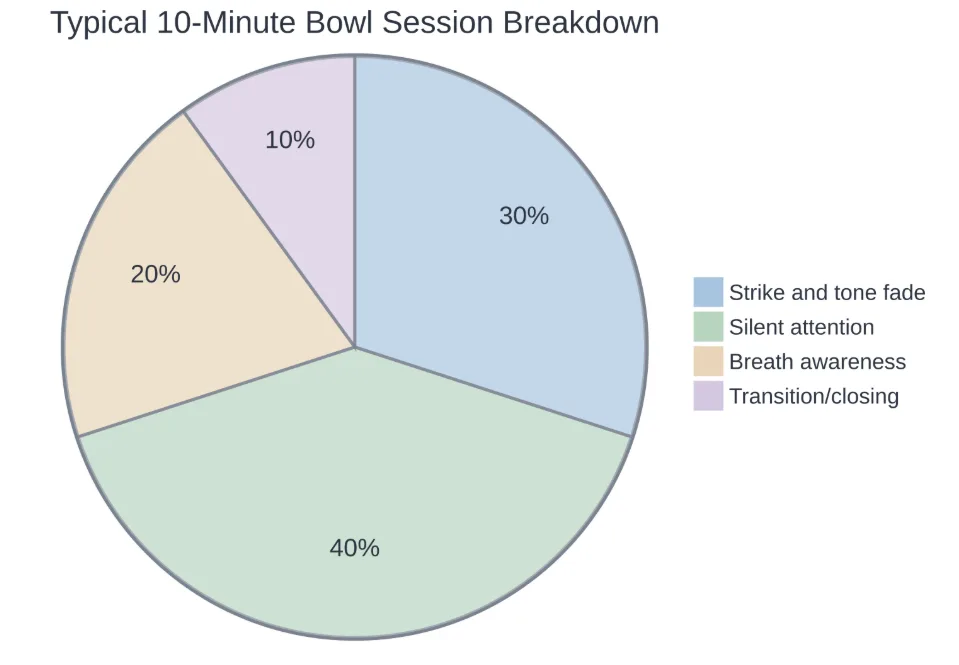
A simple five-minute routine: sit comfortably, strike the bowl once, and follow the tone until it fully disappears. Then sit in the silence that follows for thirty seconds before striking again. Repeat three to five times. It sounds almost too simple, but that's really the point — the practice works because there's nothing else to manage.
Sound baths — group sessions where a practitioner plays multiple bowls in sequence — have grown popular in yoga studios and wellness centers. The idea borrows from the concept that different tones correspond to different chakras or energy centers, though this framework is spiritual rather than scientifically established. That doesn't make the experience less valuable for people who find it relaxing; it just means the benefits are best understood as sensory and psychological rather than medically proven.
What does have more direct backing is the general effect of slow, low-frequency sound on the body's stress response — many people report a genuine drop in heart rate and muscle tension during and after a bowl session, similar to what's reported with other slow-paced relaxation techniques.
Sound isn't the only sensory anchor available. Visual tools, guided audio, and apps offer different — sometimes complementary — routes into the same calm state.
Plenty of people combine approaches — a bowl to open a session, then a visual or guided track to hold attention for the middle stretch. Apps like Mesmerize build on that idea, offering an audio-visual relaxation experience designed to keep the mind anchored the way a bowl's fading tone does, but for longer stretches of time. Anyone curious about the mechanism behind that kind of visual approach can look at the research behind visual meditation to see how it compares to traditional sound-based practice.
Metal bowls are fairly forgiving, but a few habits keep them sounding their best.
Crystal bowls need gentler handling — they chip more easily than metal and should never be struck hard directly on the rim.
A meditation bowl works best as a ritual marker, not necessarily as the entire practice. For deeper focus work — the kind needed for studying, creative work, or long stretches of concentration — many people find a structured session more useful than sound alone. A quick focus-oriented meditation program can slot in right after the bowl's opening tone fades, giving the mind a clear next step instead of drifting.
Sleep is another area where bowls get used, often as a way to signal "wind-down time" has started. But sustaining that calm through the night usually takes more than a single tone. Pairing the ritual with dedicated sleep meditation content tends to carry the relaxation further than sound alone can manage.
For anyone building a full evening or morning routine around this kind of tool, browsing the different meditation plan options available through an app can help match the format — audio, visual, or guided — to whatever the bowl practice is missing.
A meditation bowl isn't a magic fix, but it doesn't pretend to be one either. It's a simple, physical ritual — strike, listen, breathe — that gives the mind something honest to hold onto for a few minutes. That's often exactly what a scattered day needs.
For anyone wanting to build on that ritual with a more guided, structured approach to relaxation, focus, or sleep, exploring what's available through the Mesmerize app or browsing current purchase and subscription options is a reasonable next step. And for more on how sound, visuals, and guided practice fit together, the Mesmerize blog covers plenty of related ground.
I canceled my subscription with Headspace and I now pay for Mesmerize instead. I was hooked after the free trial! I love how customizable the sounds, meditations, and visuals are! Using this app has honestly become my favorite part of my day! ☺️ It helps me relax, meditate, visualize, sleep, and it does wonders for my anxiety/phobia/ocd tendencies. Thank you Mesmerize for giving us this amazing mental health tool! I told my therapist about this app and have been telling all my friends too. It’s just so helpful!
This is the second or third app in the mindfulness and meditation realm, and it’s the most scientific approach I have found. I have found these combinations of open monitoring, and focused attention meditation techniques are the most viable for those suffering from more severe forms of sleep, pain, and anxiety dysfunction one may be suffering from. Many of these approaches are used by professionals in a cognitive behavioral therapy setting. A truly complete approach in mindfulness and meditation.
I suffer from clinical depression and sometimes I get into a bad headspace but this app has really helped me whenever I’m in a bad mood I turn on the app listen to some person taking about breathing and look at cool figures on my phone and it makes me feel so much better I would highly recommend this app it’s worth the money
It didn’t take but five minutes of using this app to buy a yearly subscription. Worth it on so many levels. Easy to manipulate to what I like. Massive library of music, videos, etc.
Clear your mind and relax with a unique audio visual meditation experience.


.jpeg)