Looking for meditation clipart that actually looks good? Here's where to find free and licensed images, plus tips on picking the right style for your project.
.webp)
Quick Summary: Meditation clipart ranges from simple line-art lotus poses to detailed watercolor illustrations, and it's available through free sites like Freepik and Pixabay or paid libraries like iStock and Getty Images. The right choice depends on licensing needs, visual style, and how the image will be used — print, web, or app design. Always check the commercial-use terms before publishing, since "free" doesn't always mean unrestricted.
Anyone building a wellness website, a yoga studio flyer, or a mindfulness app has probably typed "meditation clipart" into a search bar and gotten overwhelmed. There are literally hundreds of thousands of options across dozens of sites, and most of them look nearly identical — a cross-legged figure, hands in a mudra, maybe a lotus flower floating nearby. So how do you pick something that actually fits your project instead of grabbing the first result?
This guide walks through where the good stuff actually lives, what licensing terms mean in practice, and how to think about style so the clipart doesn't clash with everything else on the page.
The term gets used loosely. Technically, clipart refers to pre-made graphic elements — usually simple, often cartoon-style — meant to be dropped into documents, slides, or designs without much editing. But search results for meditation clipart also pull in vector illustrations, stock photos, line icons, and even hand-painted digital art. That's a wide net.
For most projects, it helps to separate the category into a few practical buckets:
Knowing which bucket a project actually needs saves a lot of scrolling later.
There's no shortage of sources, but they differ quite a bit in quality, licensing, and cost. Here's a rundown of the categories worth knowing.
Sites like Freepik, Pixabay, and Vecteezy host large libraries of meditation-themed vectors and illustrations, and much of it is free for personal or even commercial use — though attribution requirements vary. Freepik in particular tends to require a credit line unless a premium subscription is active, so it's worth reading the fine print before publishing anything commercially.
iStock and Getty Images carry enormous collections of meditation illustrations, often with more polish and consistency than free alternatives. These are royalty-free licenses, meaning a one-time payment covers ongoing use, but the images usually aren't exclusive — the same graphic could show up on a competitor's site too. For brands that need something more distinctive, that's a real drawback.
For app interfaces or small UI touches, dedicated icon sets tend to work better than full illustrations. They're built for consistency across a whole set, so a meditation icon will visually match a sleep icon or a breathing icon from the same pack — something general clipart libraries rarely guarantee.
Meditation clipart can help illustrate calm, breathing, mindfulness, and relaxation. Mesmerize takes a more immersive approach with animated visuals that can be paired with music, narration, nature sounds, or custom breathing patterns.
Mesmerize includes:
👉 Download Mesmerize for iPhone or for Android to explore visual meditation for free.
Here's the thing though — most licensing disputes over clipart don't come from stolen images, they come from misunderstood terms. "Free" clipart usually falls into one of a few categories, and mixing them up can cause real problems for a business.
Before publishing meditation clipart on a client site, a product page, or printed merchandise, it's worth double-checking the specific license attached to that specific file — not just the general policy of the site it came from. Terms can differ image by image, especially on marketplaces that aggregate content from multiple contributors.
Meditation content tends to aim for calm, and clipart should reinforce that rather than fight it. A jagged, high-contrast cartoon style can undercut the whole point of a mindfulness page, even if the subject matter is technically correct.
A few style considerations that make a real difference:
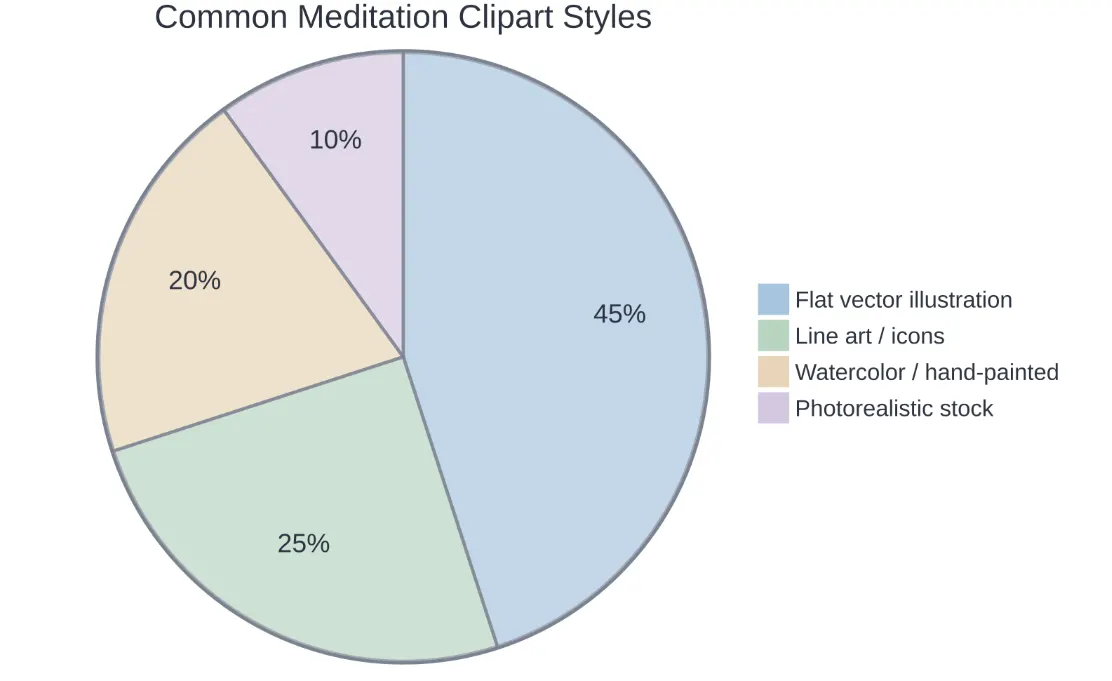
Common style breakdowns across most meditation clipart libraries look roughly like this:
Not every project actually needs clipart. Sometimes a custom illustration or a real photo communicates the message better — it depends on budget, timeline, and brand goals.
For a company building something like a visual meditation experience, custom illustration or even motion design usually wins out over generic clipart — consistency and brand feel matter more once an audience is actually using a product regularly, not just glancing at a blog thumbnail.
Clipart is decorative, but the imagery someone sees while thinking about meditation can shape how approachable the practice feels. A page cluttered with clichéd lotus-pose graphics might actually make meditation feel more intimidating to a beginner than it needs to be — like it's a whole aesthetic lifestyle rather than a five-minute breathing exercise.
That's part of why visual design matters beyond just looking nice. Apps designed around calming visuals, rather than static clipart, can make a bigger difference for people trying to build a consistent habit. Mesmerize's approach to visual meditation backed by research leans on moving imagery rather than flat illustrations, precisely because dynamic visuals tend to hold attention differently than a static picture of someone sitting cross-legged. For readers curious about the difference between decorative clipart and functional meditative visuals, it's worth exploring how visual entrainment techniques actually work.
Anyone using clipart to represent a meditation routine on a blog or landing page might also consider linking out to actual practice resources — for example, pointing toward sleep-focused meditation sessions or anxiety relief programs rather than leaving the imagery as pure decoration with nowhere to go.
None of this is complicated, but it's easy to skip when a deadline is close. Slowing down for even ten minutes to check style consistency and licensing terms tends to save headaches later.
Meditation clipart isn't hard to find — the harder part is finding something that actually fits the tone, licensing needs, and visual consistency a project requires. Free sites cover casual and low-stakes use well; paid royalty-free libraries make more sense for anything client-facing or long-term. And for teams building actual meditation products rather than just decorating a webpage, custom or animated visuals tend to outperform static clipart in the long run.
For anyone wanting to go beyond static images and actually experience how visual design supports a meditation practice, it's worth browsing Mesmerize's meditation plan options or checking out the Mesmerize blog for more on how visuals and mindfulness intersect.
I canceled my subscription with Headspace and I now pay for Mesmerize instead. I was hooked after the free trial! I love how customizable the sounds, meditations, and visuals are! Using this app has honestly become my favorite part of my day! ☺️ It helps me relax, meditate, visualize, sleep, and it does wonders for my anxiety/phobia/ocd tendencies. Thank you Mesmerize for giving us this amazing mental health tool! I told my therapist about this app and have been telling all my friends too. It’s just so helpful!
This is the second or third app in the mindfulness and meditation realm, and it’s the most scientific approach I have found. I have found these combinations of open monitoring, and focused attention meditation techniques are the most viable for those suffering from more severe forms of sleep, pain, and anxiety dysfunction one may be suffering from. Many of these approaches are used by professionals in a cognitive behavioral therapy setting. A truly complete approach in mindfulness and meditation.
I suffer from clinical depression and sometimes I get into a bad headspace but this app has really helped me whenever I’m in a bad mood I turn on the app listen to some person taking about breathing and look at cool figures on my phone and it makes me feel so much better I would highly recommend this app it’s worth the money
It didn’t take but five minutes of using this app to buy a yearly subscription. Worth it on so many levels. Easy to manipulate to what I like. Massive library of music, videos, etc.
Clear your mind and relax with a unique audio visual meditation experience.


.jpeg)