
Simple, science-backed meditation tips to lower stress, calm your mind, and feel more balanced even on your busiest days.
.webp)
Stress has a way of sneaking into everything. It shows up in your shoulders during meetings, in your jaw when you’re stuck in traffic, in that low hum of tension you can’t quite name.
Meditation isn’t about escaping your life or sitting cross-legged for an hour while pretending your thoughts don’t exist. It’s about learning how to steady yourself in the middle of it all. A few intentional minutes can shift how your body responds to pressure. Not magically. Not instantly. But reliably.
This isn’t about becoming a different person. It’s about helping your nervous system settle down so you can think clearly, breathe easier, and handle what’s in front of you without spiraling.
Before we talk about meditation, it helps to understand what stress is doing under the surface.
When your brain detects a threat - and that threat can be an angry email just as easily as a physical danger - it activates the fight-or-flight response. A small structure in the brain called the amygdala signals that something requires urgent attention. Hormones like adrenaline and cortisol are released.
Your heart rate rises. Blood pressure increases. Breathing becomes faster and shallower. Muscles tense. Digestion slows.
This system is not bad. It kept our ancestors alive. The problem is not the stress response itself. The problem is that it gets triggered constantly in modern life and rarely fully switches off.
Chronic activation of this system has been linked to:
Over time, the body forgets what a relaxed baseline feels like. That is where meditation becomes useful.
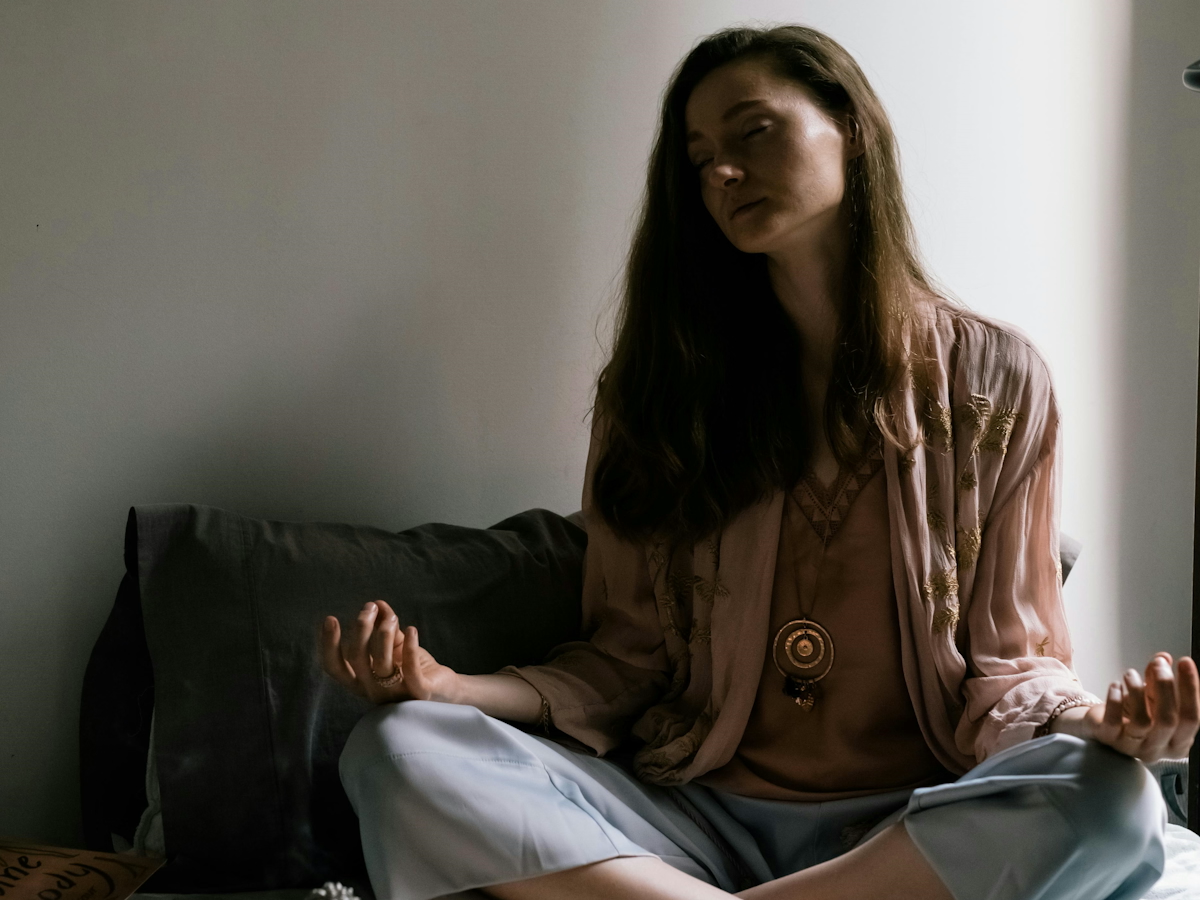
A lot of people give up on meditation for the same reason they hesitate to start it. They think they are supposed to clear their mind completely. The moment they sit down and thoughts keep coming, they assume they are doing it wrong.
But meditation is not about stopping thoughts. It is about noticing them without getting dragged around by them.
When you focus on your breath, you quickly realize how active your mind is. Plans, worries, random memories. That is not a failure. That is the point. The practice is simply this: notice that your attention wandered and gently bring it back. Then do it again. And again.
That repetition is the training. Each time you return to the breath instead of chasing a thought, you are strengthening your ability to stay steady under pressure. Over time, this makes you less likely to spiral when stress shows up.
Of course, it does not always feel smooth. Most beginners run into a few predictable obstacles:

At Mesmerize, we built this app for people who struggle to switch off. When stress runs high, sitting quietly and focusing on your breath can feel almost impossible. The mind keeps racing. The body stays tense. So we created a different entry point into meditation - one that feels engaging rather than effortful.
Our approach combines immersive visuals, carefully designed soundscapes, guided narration, and customizable breathing patterns to help the nervous system slow down in a natural way. Instead of trying to silence your thoughts, you give your attention something steady and calming. Visual breathing guides support a slower rhythm. Layered audio softens mental noise. Quick presets make it simple to begin, even if you only have a few minutes.
Mesmerize was designed to make meditation more accessible, especially in moments of real stress. Whether you are trying to fall asleep, steady a racing heart, or reset after a long day, the aim is straightforward - help you shift from tension to calm in a way that feels intuitive and sustainable.
Meditation is often described as calming, but that word barely scratches the surface. Over the past few decades, research has shown that consistent practice leads to measurable changes in how the brain and nervous system respond to stress.
One of the most important shifts happens in the amygdala, the part of the brain involved in detecting threats. Regular mindfulness practice has been associated with reduced amygdala reactivity. In simple terms, the brain becomes less jumpy.
You still notice problems and pressure, but you are less likely to feel instantly overwhelmed or hijacked by them. The alarm system becomes more balanced.
Meditation also activates what is known as the relaxation response, a term introduced by Dr. Herbert Benson to describe the physiological opposite of fight-or-flight. When this response begins, the body shifts in several noticeable ways: heart rate slows, blood pressure decreases, cortisol levels drop, muscles gradually release tension, and digestion improves.
Instead of remaining in a constant state of alert, the body moves into recovery mode. Over time, this helps rebalance a nervous system that may have been operating in high gear for too long.
Another marker researchers look at is heart rate variability, or HRV. This measures the variation between heartbeats and reflects how flexible the autonomic nervous system is.
Higher HRV is generally linked to better stress resilience. Even shorter mindfulness programs have been shown to improve HRV, suggesting that you do not need extreme practice lengths to see physiological benefits.
On a psychological level, many people notice improved emotional regulation. That does not mean becoming detached or numb. It means creating a bit more space between what happens and how you respond.
That space allows for choice rather than automatic reaction. And under stress, that difference matters.
Because of these effects, meditation is often used as a supportive tool for people dealing with stress-related conditions, including anxiety disorders, chronic pain, high blood pressure, irritable bowel syndrome, sleep difficulties, and depression relapse prevention.
It is important to be clear, though. Meditation is not a replacement for medical treatment. If you are managing a physical or mental health condition, it should be used as a complementary practice and ideally discussed with a healthcare professional. For some individuals, especially those with severe trauma or intense anxiety, certain techniques may need to be adapted.
You do not need to lock yourself into one style. Stress relief meditation comes in different forms, and it is worth experimenting to see what fits.
This is the simplest starting point.
You sit comfortably and bring your attention to the sensation of breathing. The air moving in. The air moving out. The rise and fall of your chest or belly.
When your mind wanders, and it will, you gently return to the next breath.
This practice trains focus and calms the nervous system.
In a body scan, you move your attention slowly through different parts of your body. You notice sensations without labeling them good or bad.
You might start at your feet and work upward. Or begin at the crown of your head and move down.
This technique is particularly helpful if stress shows up physically in your shoulders, jaw, or stomach.
Instead of focusing only on the breath or physical sensations, this practice involves silently repeating simple phrases such as "May I be safe," "May I be healthy," and "May I be at ease," and then gradually extending those same wishes to others. It may feel unfamiliar at first, but over time it can soften self-criticism and reduce stress connected to tension in relationships.
You do not have to sit still to meditate.
In walking meditation, you move slowly and deliberately. You pay attention to the sensation of your feet touching the ground. The shift of weight. The rhythm of your steps.
This is helpful for people who find seated meditation uncomfortable or restless.
Structured breathing exercises can quickly calm the nervous system.
Some common ones include:
These are practical tools for high-stress moments at work or before sleep.

Meditation does not remove pressure from your life. Deadlines will still exist. Conversations will still feel uncomfortable at times. Uncertainty will not disappear.
What changes is your internal response. Instead of reacting instantly, you gain a brief pause. Instead of escalating a stressful thought, you notice it. Instead of resisting every uncomfortable emotion, you allow it to move through without adding extra tension.
That shift reduces the additional strain we often create ourselves. Much of our exhaustion comes not only from events, but from replaying them, resisting them, or judging ourselves for how we handled them. Meditation gradually softens that pattern.
Stress is unavoidable. Constant overwhelm does not have to be.
There is no universal number.
Traditional mindfulness programs often involve eight weeks of structured training, daily sessions of around 45 minutes, and weekly group meetings. This approach is well studied and effective, but it requires significant time.
More recent research suggests that shorter sessions practiced consistently can still improve measurable stress indicators, including heart rate variability. The nervous system responds to repetition more than intensity.
If you are just beginning, start with 3 to 5 minutes per day. Once that feels steady, extend to 10 or 15 minutes if it suits you. Increase gradually rather than forcing longer sessions too soon.
Technique is rarely the real barrier. Structure is.
Without a simple plan, meditation tends to get pushed aside by urgent tasks. The solution is integration.
Attach your practice to something already fixed in your routine, such as your morning coffee. Decide in advance how long you will sit so you are not negotiating with yourself each day. If choosing a method feels draining, use a short guided session. Keep your setup minimal and practical.
You do not need a perfect environment. You need something you can repeat.
If you prefer clear structure, try this four-week progression.
Keep the plan straightforward. Progress matters more than intensity.
Formal sessions build the skill. Stressful situations are where that skill matters most.
Informal mindfulness is not about adding extra practice time. It is about applying what you have trained in real situations. When tension rises, that is your cue.
Before responding to a sharp email, take one slow breath. When your shoulders tighten in a meeting, notice the sensation instead of reacting immediately. While waiting for important news, focus on your breathing rather than rehearsing worst-case scenarios. If a conversation begins to escalate, pause for a moment and feel your feet on the ground before speaking.
These small interruptions reduce automatic stress reactions. Instead of running on impulse, you create a brief moment of steadiness. Under pressure, even that small shift can change the outcome.
Stress is not going anywhere. There will always be emails, decisions, conversations, and days that stretch longer than expected. Meditation does not promise a stress-free life. What it offers is something more useful - the ability to stay steadier inside it.
Over time, even a few minutes a day can retrain how your nervous system reacts. You begin to notice tension sooner. You pause more often. You recover faster. The shift is not dramatic or theatrical. It is subtle. But subtle changes repeated daily reshape your baseline.
If you take one thing from this, let it be this: start small and stay consistent. Meditation for stress relief does not need to look impressive. It needs to be something you can return to, especially on the days when you feel like you need it most.
I canceled my subscription with Headspace and I now pay for Mesmerize instead. I was hooked after the free trial! I love how customizable the sounds, meditations, and visuals are! Using this app has honestly become my favorite part of my day! ☺️ It helps me relax, meditate, visualize, sleep, and it does wonders for my anxiety/phobia/ocd tendencies. Thank you Mesmerize for giving us this amazing mental health tool! I told my therapist about this app and have been telling all my friends too. It’s just so helpful!
This is the second or third app in the mindfulness and meditation realm, and it’s the most scientific approach I have found. I have found these combinations of open monitoring, and focused attention meditation techniques are the most viable for those suffering from more severe forms of sleep, pain, and anxiety dysfunction one may be suffering from. Many of these approaches are used by professionals in a cognitive behavioral therapy setting. A truly complete approach in mindfulness and meditation.
I suffer from clinical depression and sometimes I get into a bad headspace but this app has really helped me whenever I’m in a bad mood I turn on the app listen to some person taking about breathing and look at cool figures on my phone and it makes me feel so much better I would highly recommend this app it’s worth the money
It didn’t take but five minutes of using this app to buy a yearly subscription. Worth it on so many levels. Easy to manipulate to what I like. Massive library of music, videos, etc.
Clear your mind and relax with a unique audio visual meditation experience.


.jpeg)
.webp)
.webp)


