Discover the best meditation gadgets of 2026 — biofeedback headbands, breathing tools, and apps. Compare options and start your practice today.
.webp)
Quick Summary: Meditation gadgets in 2026 range from biofeedback headbands like Muse and Mendi to handheld breathing tools like Moonbird and immersive audio-visual apps such as Mesmerize. The best pick depends on whether the goal is measurable brain training, physical calm through touch and breath, or an easier way to actually sit still long enough to relax.
Sitting cross-legged on a cushion, eyes closed, waiting for "calm" to arrive used to be the only version of meditation most people knew. That's changed. A whole category of hardware now promises to make meditation faster to learn, easier to stick with, and — for the data-obsessed — measurable in real time.
The question isn't really whether these gadgets work. Some genuinely do, backed by decent research. The real question is which one fits a specific goal: better sleep, less anxiety, sharper focus, or simply proof that a session actually happened. This guide breaks down the categories, compares the standouts, and points toward the setup that's likely to stick.
Most meditation gadgets on the market in 2026 fall into a handful of buckets. Understanding the categories makes it far easier to shop with intention instead of just grabbing whatever's trending on social media.
These sit on the forehead and read electrical activity from the brain, then translate it into audio cues — birds chirping when the mind wanders, rain sounds when it settles. Muse is probably the best-known name here, and its multi-sensor headband has been a fixture on "best meditation devices" lists for years. Mendi takes a slightly different approach, using near-infrared sensors to measure blood oxygenation in the prefrontal cortex, framing itself more as brain training than pure meditation support.
These devices genuinely help visual learners and anyone who responds better to numbers than vibes.
Moonbird is a small, egg-shaped device that expands and contracts in the palm of a hand, guiding breath pace without a screen or sound. Sensate works differently — it rests on the chest and uses low-frequency vibration to stimulate the vagus nerve, aiming to shift the body out of fight-or-flight mode. Neither requires learning a technique. Both lean on the body's own response to rhythm and touch rather than mental effort.
BrainTap and InnerBalance pair headphones or ear clips with guided audio sessions, sometimes layered with light pulses designed to nudge brainwaves toward a relaxed state. This category overlaps heavily with meditation apps, and it's arguably the easiest entry point for people who don't want to fuss with sensors or calibration.
Visual meditation apps sit in a similar space but lean harder into sight rather than sound. Mesmerize, for instance, uses an audio-visual relaxation experience delivered straight through a phone or tablet screen — no extra hardware to charge or pair. Sessions can be customized around specific goals, whether that's winding down for sleep, easing anxious thoughts, or sharpening focus before a demanding task.

Meditation gadgets range from breathing tools and sound machines to apps designed for relaxation and focus. Mesmerize brings visuals, guided sessions, soundscapes, sleep stories, breathing patterns, and focus music into one mobile app.
Mesmerize includes:
👉 Download Mesmerize for iPhone or for Android to try visual meditation for free.
Not every meditation tool involves a battery. Cushions, eye pillows, and singing bowls remain staples for a reason — they address comfort and ritual, two things that plenty of high-tech gadgets overlook entirely. A stiff back or an uncomfortable seated position will derail a session faster than any lack of biofeedback data.
These low-tech accessories pair surprisingly well with high-tech devices. A comfortable cushion paired with a guided audio-visual session, for example, removes two common excuses — discomfort and not knowing where to start — in one go.
The honest answer: it depends on the device and the person. Biofeedback tools like Muse have research behind their underlying EEG technology, though independent, large-scale studies on the consumer products themselves are still fairly limited. Breathing devices lean on well-documented physiology — slow, paced breathing does measurably lower heart rate and activate the parasympathetic nervous system. That part isn't controversial.
Where it gets murkier is long-term habit formation. A gadget that feels novel for two weeks and then sits in a drawer isn't accomplishing much, no matter how sophisticated its sensors are. This is probably the single biggest factor separating "coolest gadget" from "gadget people actually keep using."
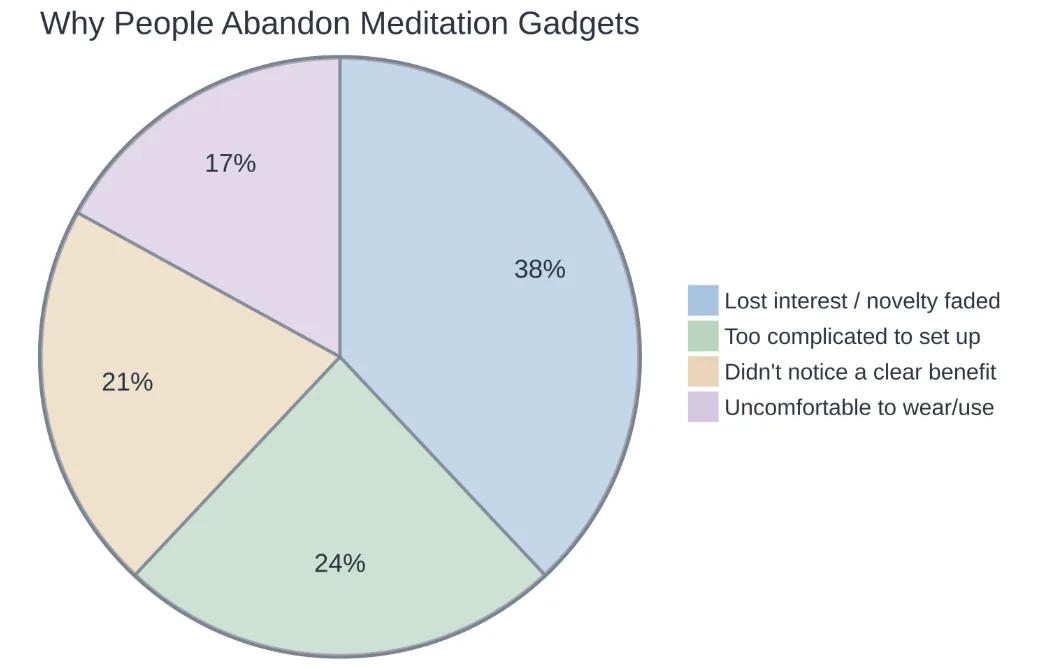
Instead of chasing the trendiest device on a "coolest gadgets" list, it helps to start from the actual problem being solved. Trouble falling asleep points toward a different tool than trouble concentrating at work.
For people who want structure without strapping on sensors, a guided visual meditation app tends to lower the barrier to entry considerably. Mesmerize's research page covers the science behind why visual stimuli can guide the brain into a meditative state, which is worth a look for anyone skeptical that a screen can genuinely replace or complement traditional seated practice.
Buying a device is the easy part. Actually using it consistently is where most people fall off. A few practical habits make a real difference:
Anyone curious about a low-commitment way to test this out can simply download the app and try a session before deciding whether a dedicated hardware device is worth the extra investment. Pricing and plan details for ongoing use are outlined on the plans page, and full purchase options sit on the buy page for those ready to commit.
The trend for 2026 leans toward integration rather than isolation. Instead of a single-purpose gadget, more products now combine breathing guidance, audio, and visual elements into one experience, often accessible through a phone rather than a standalone piece of hardware. That shift makes sense — fewer devices to charge, fewer apps to juggle, and a lower price of entry for anyone just testing whether meditation tech is worth it at all.
Wearables aren't disappearing, though. If anything, biofeedback is getting more precise as sensors improve, and some smartwatches now fold basic guided breathing and heart-rate-variability tracking directly into their existing hardware. So the line between "meditation gadget" and "everyday wearable" keeps blurring.
Meditation gadgets aren't a shortcut to enlightenment, and nobody selling one should claim otherwise. What they offer is friction reduction — an easier on-ramp for people who find silent, unguided sitting intimidating or just plain boring. Whether that on-ramp looks like a brainwave-reading headband, a breathing egg in the palm of a hand, or a guided visual session pulled up on a phone, the honest metric of success is simple: does the habit stick past week two?
For anyone still deciding where to start, testing a flexible, no-hardware option first is a low-risk move. Browsing more meditation and wellness guides is a solid next step before settling on a routine that actually fits.
I canceled my subscription with Headspace and I now pay for Mesmerize instead. I was hooked after the free trial! I love how customizable the sounds, meditations, and visuals are! Using this app has honestly become my favorite part of my day! ☺️ It helps me relax, meditate, visualize, sleep, and it does wonders for my anxiety/phobia/ocd tendencies. Thank you Mesmerize for giving us this amazing mental health tool! I told my therapist about this app and have been telling all my friends too. It’s just so helpful!
This is the second or third app in the mindfulness and meditation realm, and it’s the most scientific approach I have found. I have found these combinations of open monitoring, and focused attention meditation techniques are the most viable for those suffering from more severe forms of sleep, pain, and anxiety dysfunction one may be suffering from. Many of these approaches are used by professionals in a cognitive behavioral therapy setting. A truly complete approach in mindfulness and meditation.
I suffer from clinical depression and sometimes I get into a bad headspace but this app has really helped me whenever I’m in a bad mood I turn on the app listen to some person taking about breathing and look at cool figures on my phone and it makes me feel so much better I would highly recommend this app it’s worth the money
It didn’t take but five minutes of using this app to buy a yearly subscription. Worth it on so many levels. Easy to manipulate to what I like. Massive library of music, videos, etc.
Clear your mind and relax with a unique audio visual meditation experience.


.jpeg)