Learn sacral chakra meditation with a step-by-step script, mantras, yoga poses, and tips to unblock creativity and emotional flow. Start your practice today.

Quick Summary: Sacral chakra meditation is a focused breathing and visualization practice aimed at the body's second energy center, located below the navel, which governs creativity, pleasure, and emotional flow. Regular practice combines breathwork, orange-light visualization, mantra sound, and sometimes 417Hz music to release stored tension and restore a sense of ease around change and desire. Most sessions run 10 to 20 minutes and can be done seated, lying down, or paired with gentle hip-opening yoga.
Something feels stuck. Maybe it's creative work that won't come together, or a string of relationships that follow the same disappointing pattern. In yogic philosophy, that stuck feeling often traces back to the sacral chakra — the energy center tied to pleasure, creativity, and how comfortably a person moves through change.
Sacral chakra meditation isn't mystical window dressing. It's a structured practice: breath, attention, and sometimes sound, directed toward a specific area of the body and a specific set of emotional themes. Done consistently, it gives restless creative energy somewhere useful to go.
In the traditional chakra system, the sacral chakra is called Svadhisthana, a Sanskrit word often translated as "one's own place" or "dwelling place of the self." It sits roughly two inches below the navel, in the area of the lower abdomen and pelvis.
Where the root chakra deals with survival and stability, the sacral chakra governs everything more fluid: creativity, sensuality, emotional expression, and the capacity to adapt when life shifts. It's associated with the element of water, which fits — water moves, adjusts to its container, and never stays rigid for long.
Imbalance shows up differently from person to person, but a few patterns come up again and again. A blocked sacral chakra can look like creative blocks that drag on for months, difficulty feeling pleasure even during enjoyable activities, or an unusual resistance to change of any kind.
On the opposite end, an overactive sacral chakra can show up as emotional volatility, over-attachment to pleasure-seeking, or using creativity and relationships to avoid sitting with discomfort.
The mechanism is fairly simple, even if the language around it sounds esoteric. Meditation slows the nervous system, directs attention to a specific body region, and pairs that attention with imagery, breath, or sound associated with a particular emotional theme. Over repeated sessions, that focused attention tends to loosen the grip of stored tension — whether you describe that in energetic terms or purely psychological ones.
Here's the thing though — results rarely happen in a single sitting. Like any practice that touches emotional material, sacral chakra work tends to unfold gradually, with small shifts in mood or creative output showing up over weeks rather than minutes.
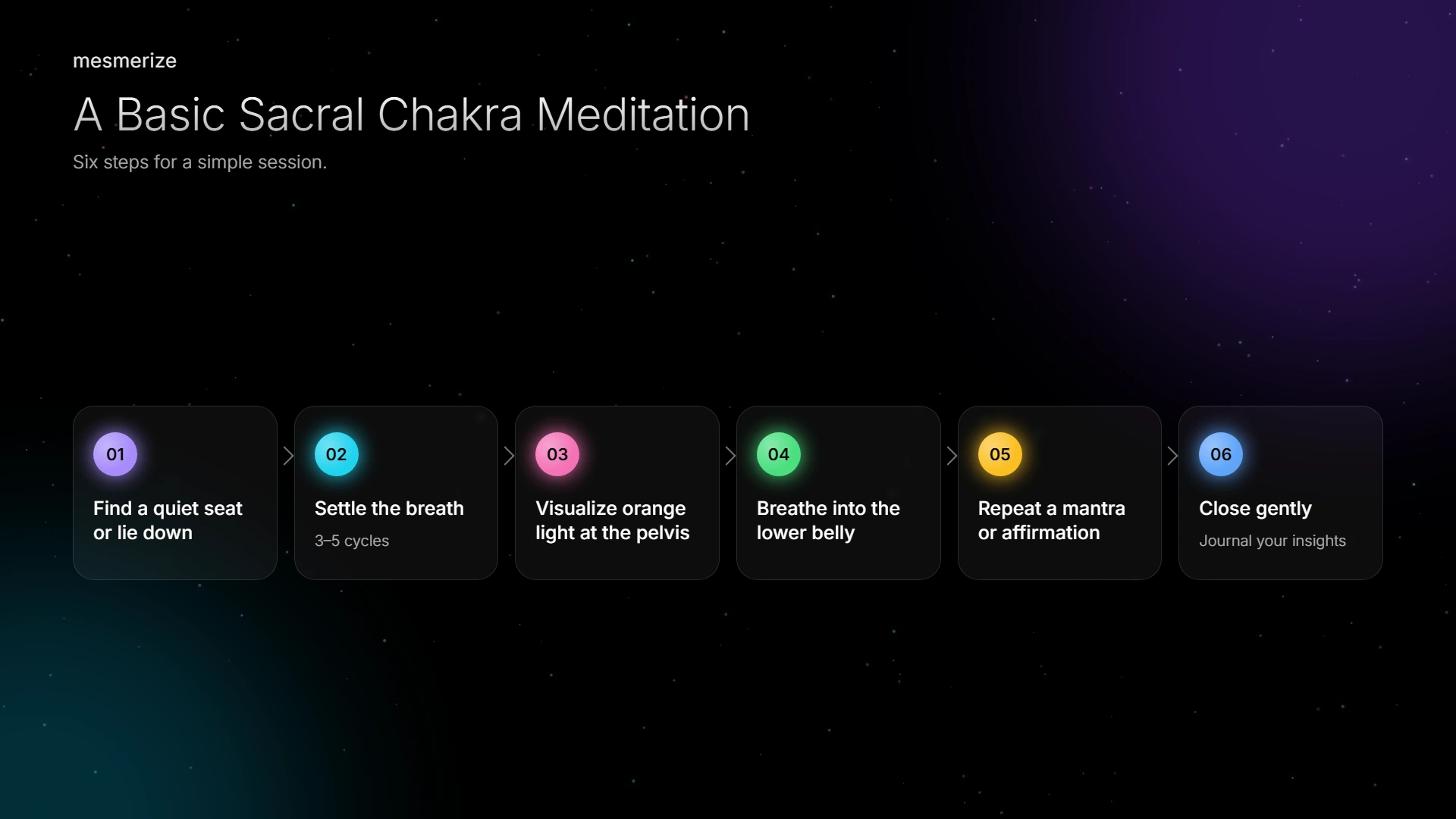
This version works for beginners and takes about 15 minutes. No props required, though a cushion or folded blanket under the hips helps if sitting cross-legged is uncomfortable:
For those who find silent sitting difficult, pairing the visualization above with an audio-visual format can make it easier to stay anchored. A guided session with layered visuals and sound — the kind of format used in anxiety-relief meditation sessions — gives the mind something concrete to follow instead of drifting.
Sound plays a bigger role in sacral chakra work than in some of the other centers, partly because this chakra is so closely tied to emotional expression. A few options, each suited to different moods:
Whichever sound is used, it's worth treating it as a tool for attention rather than a guaranteed energetic switch. The real work is still the breath and the visualization sitting underneath it.
Movement before meditation often makes the stillness afterward easier to access, especially for anyone who holds tension in the hips. A short sequence of hip-openers tends to pair well with sacral chakra work:
Five to ten minutes of these poses, followed directly by the seated meditation above, often produces a noticeably deeper sense of release than meditation alone.
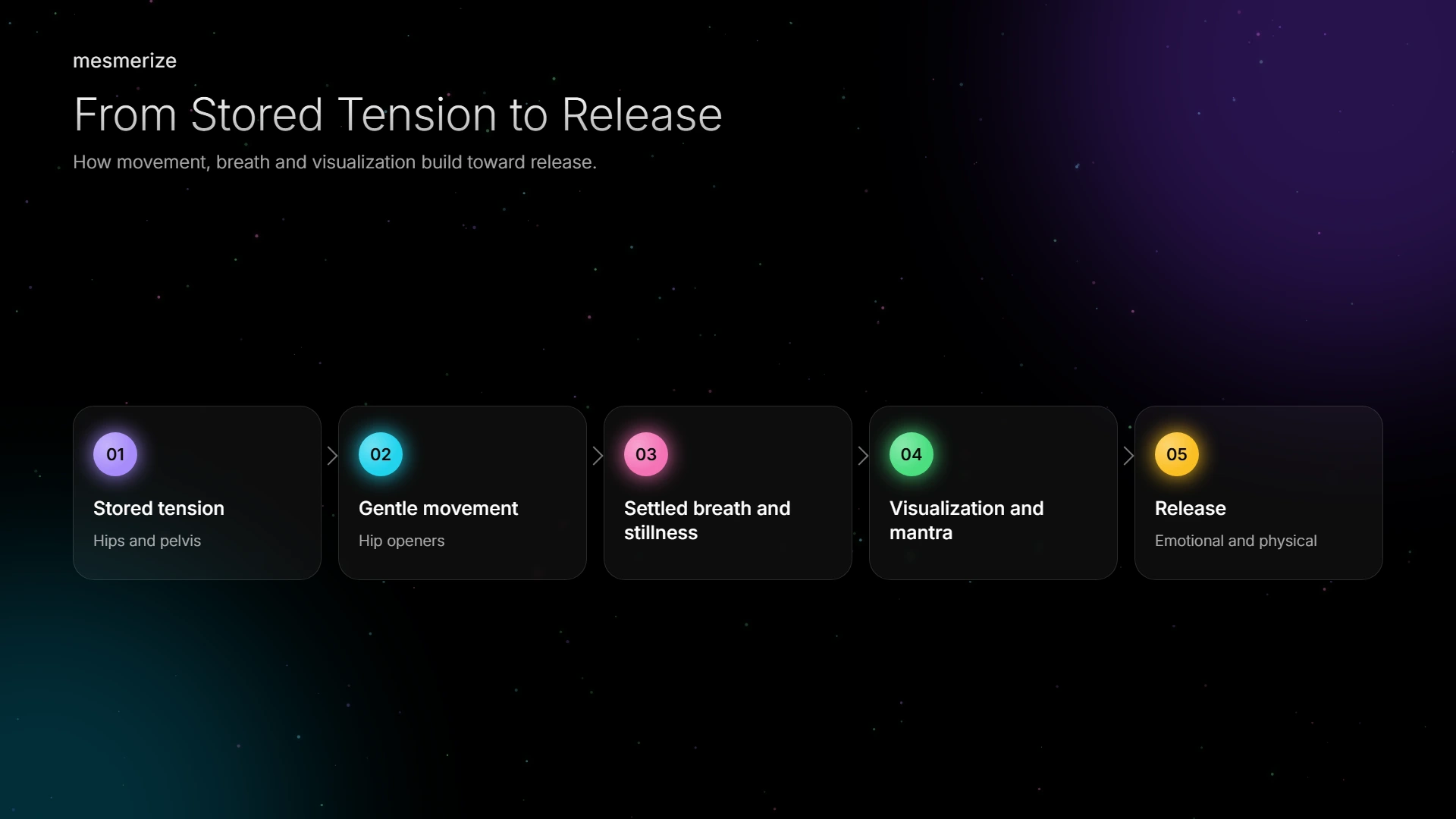
A single 20-minute session is a reasonable starting template, but the breakdown matters more than the total time. Spending the whole block on visualization, with no settling period, tends to leave the mind too scattered to actually drop in.
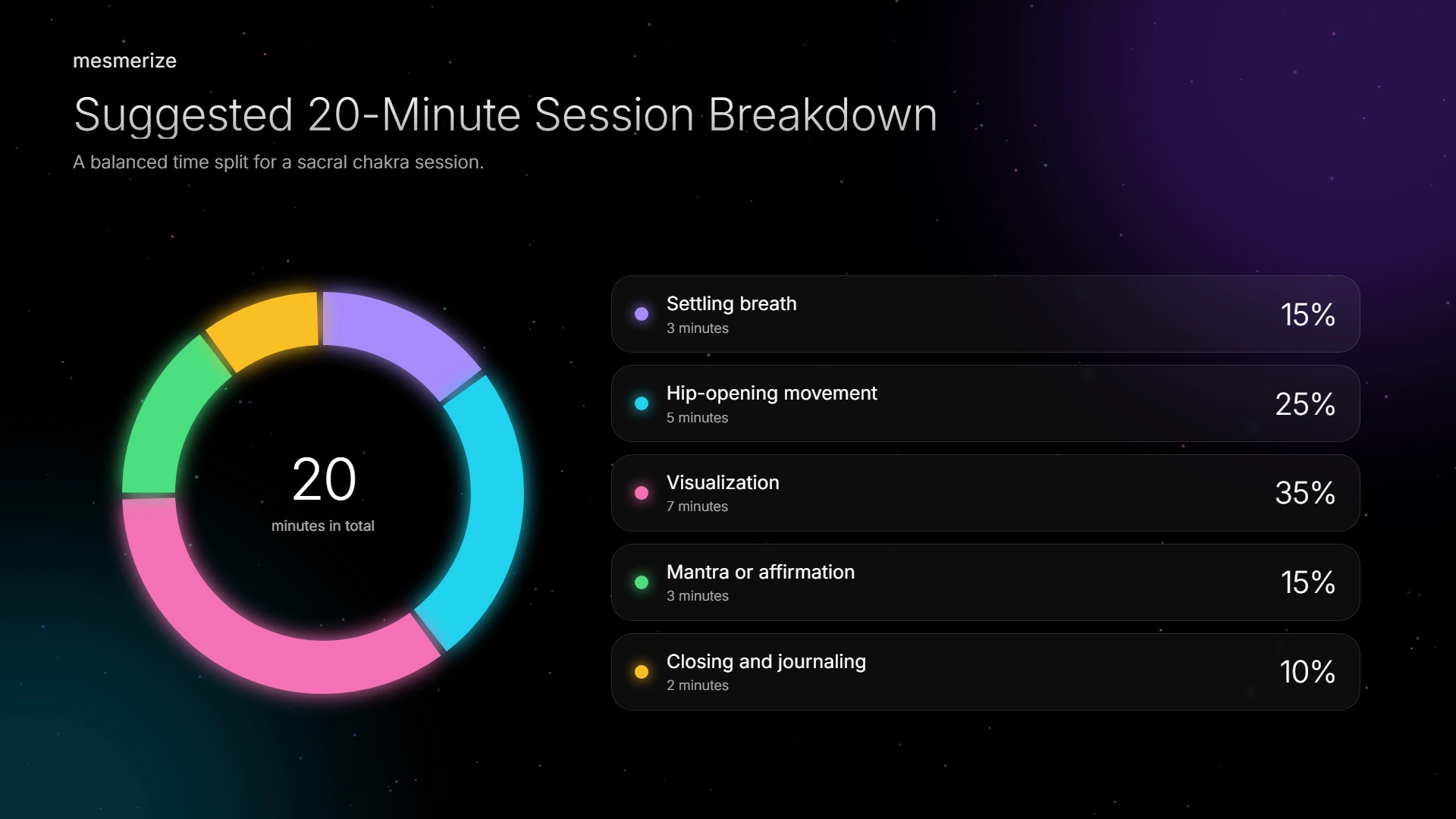
Consistency beats intensity here. Three short sessions a week, kept up for a month, tend to shift mood and creative flow more reliably than one long, occasional session. For anyone building a broader meditation habit alongside this practice, shorter guided formats — like a five-minute meditation or a ten-minute beginner session — can fill in on busier days without breaking the rhythm.
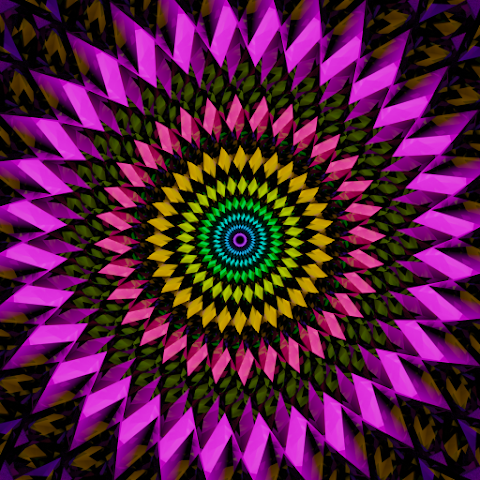
Sacral chakra meditation often involves visualization, breathing, and reflecting on emotions and creativity. At Mesmerize, we offer visual meditation and relaxation tools that you can incorporate into your personal practice, even though our app isn't specifically designed for chakra work.
You can personalize your sessions using:
Download our Mesmerize app on iOS or Android to explore visual meditation and create a relaxing space for personal reflection.
Not everyone meditates well in total silence, and that's fine. Some minds settle faster with a visual anchor — slow-moving color, light, and rhythm that mirrors the breath. That's part of why audio-visual formats have grown popular alongside traditional seated practice; they give wandering attention a gentle place to land instead of fighting to clear the mind by force. Anyone curious about the research behind that approach can look at the science of visual meditation before deciding which format suits them.
For sacral chakra work specifically, warm, flowing orange or amber visuals synced to breath pacing tend to reinforce the imagery used in the meditation itself, which can make the practice feel more immediate than mental visualization alone.
Sacral chakra meditation isn't a quick fix, and it was never meant to be one. It's a steady, repeatable practice: breath directed into the lower belly, attention on a specific emotional theme, and enough patience to let the effects build over weeks instead of expecting them in one sitting.
Start small. Fifteen minutes, three times a week, is plenty to begin noticing whether creativity and emotional flexibility start loosening up. For anyone who wants structure around that practice — guided pacing, visual anchors, breath cues built in — exploring a guided meditation app or browsing available session plans can make the habit easier to sustain than going it alone with a script and a timer.
I canceled my subscription with Headspace and I now pay for Mesmerize instead. I was hooked after the free trial! I love how customizable the sounds, meditations, and visuals are! Using this app has honestly become my favorite part of my day! ☺️ It helps me relax, meditate, visualize, sleep, and it does wonders for my anxiety/phobia/ocd tendencies. Thank you Mesmerize for giving us this amazing mental health tool! I told my therapist about this app and have been telling all my friends too. It’s just so helpful!
This is the second or third app in the mindfulness and meditation realm, and it’s the most scientific approach I have found. I have found these combinations of open monitoring, and focused attention meditation techniques are the most viable for those suffering from more severe forms of sleep, pain, and anxiety dysfunction one may be suffering from. Many of these approaches are used by professionals in a cognitive behavioral therapy setting. A truly complete approach in mindfulness and meditation.
I suffer from clinical depression and sometimes I get into a bad headspace but this app has really helped me whenever I’m in a bad mood I turn on the app listen to some person taking about breathing and look at cool figures on my phone and it makes me feel so much better I would highly recommend this app it’s worth the money
It didn’t take but five minutes of using this app to buy a yearly subscription. Worth it on so many levels. Easy to manipulate to what I like. Massive library of music, videos, etc.
Clear your mind and relax with a unique audio visual meditation experience.