Discover what Transcendental Meditation really involves, how the mantra technique works, and what science says. Start your own practice today.
.webp)
Quick Summary: Transcendental Meditation (TM) is a mantra-based technique developed by Maharishi Mahesh Yogi, practiced for about 20 minutes twice a day while sitting comfortably with eyes closed. It works by letting the mind settle inward toward a quiet, restful state rather than forcing concentration, and many practitioners report reduced stress and clearer thinking over time. TM requires certified instruction and a personal mantra, which sets it apart from free, app-based meditation styles like guided or visual meditation.
Somewhere between a spiritual practice and a stress-management tool sits Transcendental Meditation, or TM for short. It's been around since the late 1950s, championed by celebrities, studied by universities, and taught in living rooms and corporate offices alike. But what actually happens during those 20 minutes with closed eyes? And is it worth the fairly steep cost of learning it?
This guide breaks down what TM really is, how the technique works, what the research says, and how it compares with other forms of meditation — including simpler, app-guided approaches that don't require a certified teacher or a private mantra.
Transcendental Meditation is a specific, standardized form of silent meditation developed by Maharishi Mahesh Yogi in India before being brought to the West in the late 1950s. Unlike mindfulness meditation, which typically asks practitioners to observe thoughts or focus on breath, TM uses a mantra — a sound with no particular meaning — repeated silently in the mind.
The goal isn't concentration. It's the opposite, really. Practitioners are taught to let the mantra fade naturally as the mind settles into quieter and quieter levels of activity, eventually arriving at what TM teachers call "transcendence" — a state of restful alertness where the active, thinking mind goes quiet but awareness remains.
Sessions run twice daily, roughly 20 minutes each, done sitting comfortably with eyes closed. No special posture, no chanting aloud, no physical exertion. That simplicity is part of what made it so popular through the 1960s and 70s, and it's a big part of its appeal today.
Maharishi Mahesh Yogi introduced TM as a modernized, secularized version of ancient meditative practices rooted in Vedic tradition. He founded organizations to train teachers and standardize the technique so it could be taught consistently around the world. Today, TM instruction is still delivered through certified teachers following that same structured curriculum, which is one reason the practice has stayed remarkably consistent for decades.

Transcendental meditation is typically practised with a mantra in a quiet setting. Mesmerize is not a replacement for formal instruction, but its calming visuals, soundscapes, and breathing tools can help create a relaxed environment before or after a session.
Mesmerize includes:
👉 Download Mesmerize for iPhone or for Android to try visual meditation for free.
Learning TM isn't a do-it-yourself affair. It's taught in a structured course, usually over several sessions with a certified instructor, and it includes a mantra assigned specifically to the individual. That's a meaningful difference from most free meditation apps, where a single guided track serves everyone.
Here's roughly what a session looks like once someone has been trained:
That "letting go" instruction trips a lot of newcomers up. Most people assume meditation means fighting off distraction. TM teachers insist on the opposite — effortlessness is the whole point, and straining to concentrate actually works against the technique.
TM mantras are typically drawn from a set of traditional Sanskrit sounds, assigned by the instructor based on factors specific to the individual rather than picked by the practitioner. They're meant to be personal and are traditionally kept private, which has fueled a fair bit of curiosity — and skepticism — about the method over the years. The mantra itself carries no meaning; its value lies purely in the repetitive sound pattern, which is thought to help the mind disengage from analytical thinking.
TM is one of the more heavily studied meditation styles, partly because its founders funded and encouraged research from early on. Multiple studies over the decades have examined its effects on blood pressure, anxiety, and markers of stress, with a number reporting measurable improvements among regular practitioners.
That said, independent reviewers have flagged methodological concerns in some of the earlier TM-funded research — small sample sizes, lack of blinding, and so on. Later, more rigorous trials have shown more modest but still meaningful effects, particularly around stress reduction and cardiovascular markers. Nobody claims TM is a medical treatment, and it isn't positioned as one, but the evidence base for general relaxation benefits is reasonably solid at this point.
For readers curious about the broader science behind meditation and relaxation techniques generally, including visual and audio-guided formats, it's worth reviewing the research summarized on the science behind visual meditation for a comparison point.
TM often gets lumped in with mindfulness or guided meditation, but the mechanics are genuinely different. Here's a side-by-side look.
None of this makes TM better or worse — it's a different tool for a similar goal. Some people respond well to the structure and ritual of a taught mantra practice. Others prefer something more flexible that doesn't require an upfront course or ongoing fidelity to a fixed method.
Visual meditation approaches, like audio-visual relaxation sessions, borrow some of the same underlying goals as TM — quieting the mind, easing nervous system tension — but rely on sensory guidance rather than mantra repetition. That can be an easier entry point for people who find silent, unguided practice difficult to sustain. Apps offering focus-oriented meditation programs or anxiety relief sessions tend to lower the barrier to entry considerably compared with a multi-day certified course.
Ask longtime TM practitioners why they stick with it, and the answers cluster around a few themes: calmer reactions to stress, better sleep, sharper focus during the day, and a general sense of steadiness. Some of these overlap with benefits reported from other relaxation techniques, which suggests the shared ingredient might be consistent daily practice itself, not necessarily anything unique to the mantra method.
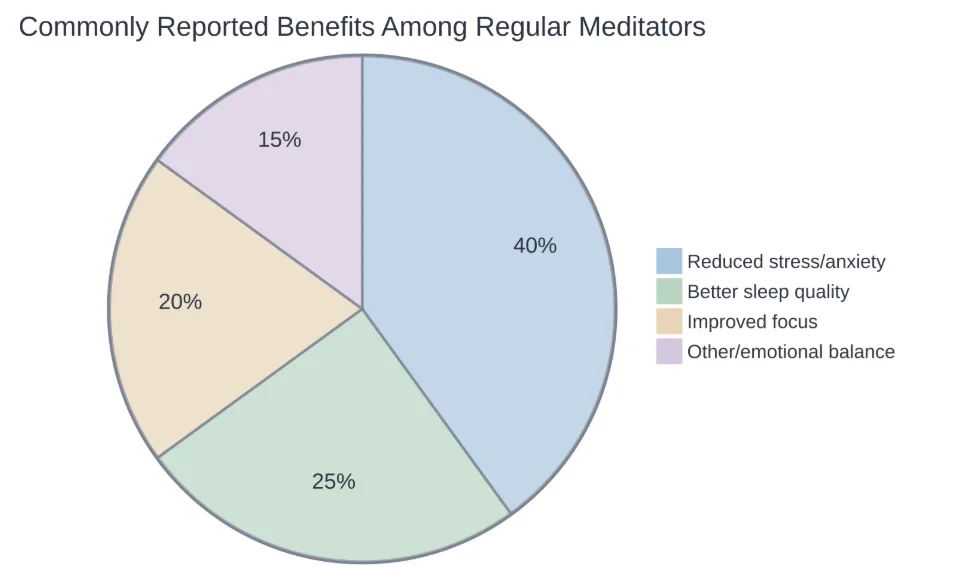
Sleep improvement in particular comes up often in TM communities, and it's a common thread across meditation styles generally. For readers specifically chasing better sleep, dedicated sleep meditation resources can complement or substitute for a mantra-based wind-down routine.
This is where TM diverges sharply from most modern meditation options. Learning TM requires enrolling in a course through a certified teacher or organization, typically spread across a handful of sessions, and it comes with a fee — historically running into several hundred dollars, sometimes more, depending on region and any available discounts. Prices and program structures change, so anyone seriously considering it should check the official TM organization's current course details directly rather than rely on older figures.
By contrast, app-based meditation tools charge a subscription rather than a one-time course fee, and there's no requirement to meet with an instructor. Anyone weighing the cost difference might want to compare meditation plan options and pricing before committing to either path.
It depends heavily on what someone's looking for. TM suits people who want structure, a defined method, and are comfortable with an upfront investment of time and money. It's less appealing for people who want something free, immediate, and flexible enough to fit into an unpredictable schedule.
For those who'd rather test the waters before any financial commitment, downloading a guided meditation app is a low-risk way to build a daily habit first. It's possible to start with something like the Mesmerize app download and see whether daily meditation sticks before investing in a formal TM certification.
Transcendental Meditation has earned its staying power. Decades of consistent teaching, a large body of research, and a loyal community of practitioners all point to a technique that genuinely works for a lot of people. That doesn't mean it's the only path, though, or even the easiest one to start with.
For anyone not ready to commit to a certified course, building a daily meditation habit through a flexible, app-guided option is a reasonable first step — and often reveals whether the deeper commitment of TM training is worth pursuing later. Explore more comparisons and practical guidance on meditation styles over on the Mesmerize blog, or head straight to subscription plans to start a guided practice today.
I canceled my subscription with Headspace and I now pay for Mesmerize instead. I was hooked after the free trial! I love how customizable the sounds, meditations, and visuals are! Using this app has honestly become my favorite part of my day! ☺️ It helps me relax, meditate, visualize, sleep, and it does wonders for my anxiety/phobia/ocd tendencies. Thank you Mesmerize for giving us this amazing mental health tool! I told my therapist about this app and have been telling all my friends too. It’s just so helpful!
This is the second or third app in the mindfulness and meditation realm, and it’s the most scientific approach I have found. I have found these combinations of open monitoring, and focused attention meditation techniques are the most viable for those suffering from more severe forms of sleep, pain, and anxiety dysfunction one may be suffering from. Many of these approaches are used by professionals in a cognitive behavioral therapy setting. A truly complete approach in mindfulness and meditation.
I suffer from clinical depression and sometimes I get into a bad headspace but this app has really helped me whenever I’m in a bad mood I turn on the app listen to some person taking about breathing and look at cool figures on my phone and it makes me feel so much better I would highly recommend this app it’s worth the money
It didn’t take but five minutes of using this app to buy a yearly subscription. Worth it on so many levels. Easy to manipulate to what I like. Massive library of music, videos, etc.
Clear your mind and relax with a unique audio visual meditation experience.


.jpeg)